

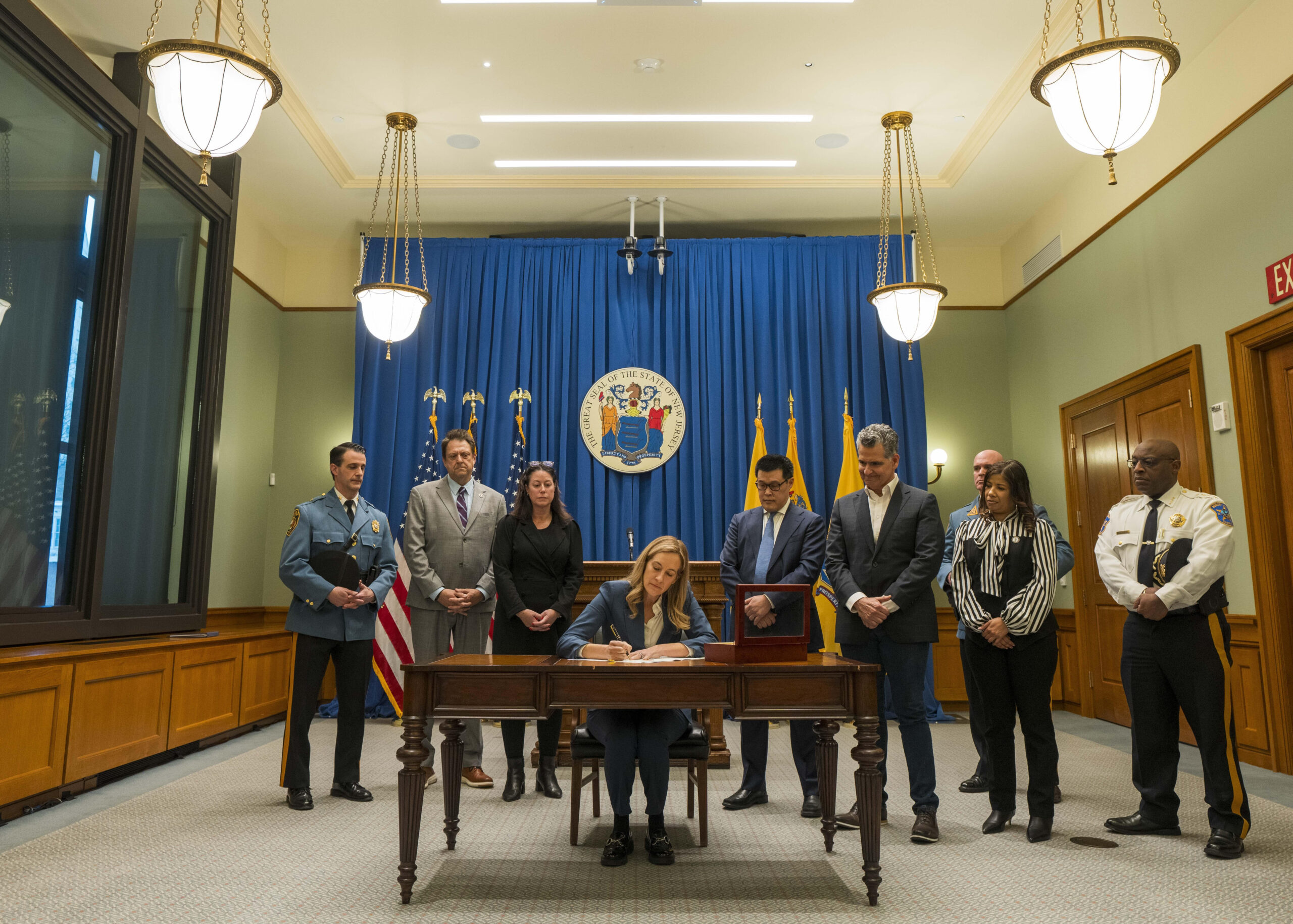
New Jersey officials are advancing a series of actions and proposals aimed at restricting how federal immigration agents operate on public property, including new executive orders, proposed legislation, and revived bills now moving again through the State Legislature.
Gov. Mikie Sherrill last week signed Executive Order No. 12, prohibiting federal immigration agents from using nonpublic areas of state-owned property — such as government offices, state universities, child-care centers, and residential medical facilities — as staging or operational sites unless authorized by a judicial warrant.
The order was announced alongside Acting Attorney General Jennifer Davenport and Acting Human Services Commissioner Dr. Stephen Cha.
“I take seriously my responsibility to keep New Jersey residents safe,” Sherrill said in announcing the action. “This executive order will prohibit ICE from using state property to launch operations.”
While states cannot block federal immigration enforcement itself, they retain authority over how their own property and facilities are used. Officials said the order is intended to clarify that federal civil immigration operations cannot be based on state-controlled sites without proper legal authorization.
Reporting portal and rights guidance launched
As part of the same initiative, the Attorney General’s Office launched a public reporting portal allowing residents to document interactions with federal immigration agents, including alleged civil-rights violations or warrantless enforcement actions. Officials said information submitted may be used in investigations or legal proceedings.
The state also released multilingual “Know Your Rights” guidance for residents encountering federal agents.
Davenport said the effort is intended to preserve public trust and accountability.
“When federal immigration officers violate the law and sow fear in our communities, they undermine public trust in law enforcement,” she said.
Legislature advancing related measures
Separately, lawmakers are moving to codify similar limits in statute.
Assemblywoman Annette Quijano announced legislation that would prohibit publicly owned or controlled property — including municipal and county facilities — from being used as staging or operational sites for federal civil immigration enforcement.
“Public property exists to serve our communities — not to be used in ways that spread fear,” Quijano said.
The bill would require the state to identify affected properties and provide standardized signage indicating the locations may not be used for immigration enforcement staging.
Assemblywoman Verlina Reynolds-Jackson, who represents Mercer and Hunterdon counties, supported the broader policy direction in a statement accompanying the governor’s action.
“These measures taken today will help safeguard New Jerseyans from unlawful enforcement practices and clear overreach by ICE,” Reynolds-Jackson said.
Previously vetoed bills moving again
The Assembly Public Safety and Preparedness Committee also advanced three previously vetoed immigration-related bills last week, reviving proposals rejected by former Gov. Phil Murphy in January before he left office.
All three measures passed committee on party-line votes of 5-2 and now head to Senate committees.
One of the bills, known as the “Law Enforcement Officer Protection Act,” would require law-enforcement officers — including federal agents — to reveal their faces and present identification when detaining or arresting individuals, with exceptions for undercover or tactical operations. The package of bills also limits certain forms of cooperation in civil immigration enforcement, and creates additional transparency provisions intended to clarity the authority of officers operating in the state. Supporters say the measures are intended to increase accountability and ensure residents can safely access public services without fear of immigration enforcement actions tied to government facilities. Opponents have argued the bills could interfere with federal authority.If approved by the Legislature, the measures would go to Sherrill’s desk.