
Fall is here, and with it, the leaves are starting to morph into their bright autumnal colors; I have just the place for you to enjoy that splendor. When my brother and I were young, my parents used to take us to Bowman’s Tower in Bucks County on a regular basis. My brother became obsessed with the tower, and it seemed that we climbed it at least once a month growing up.
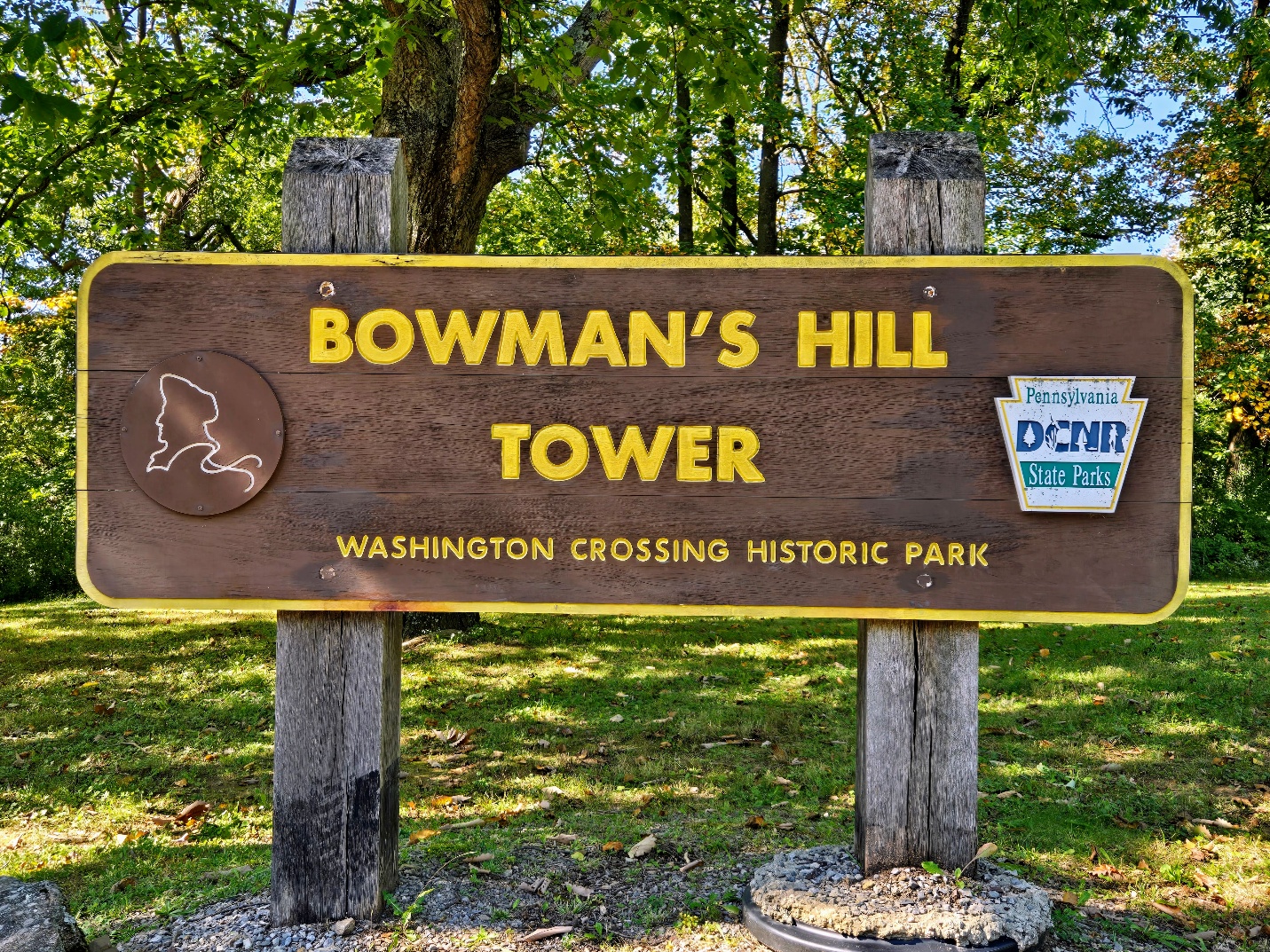
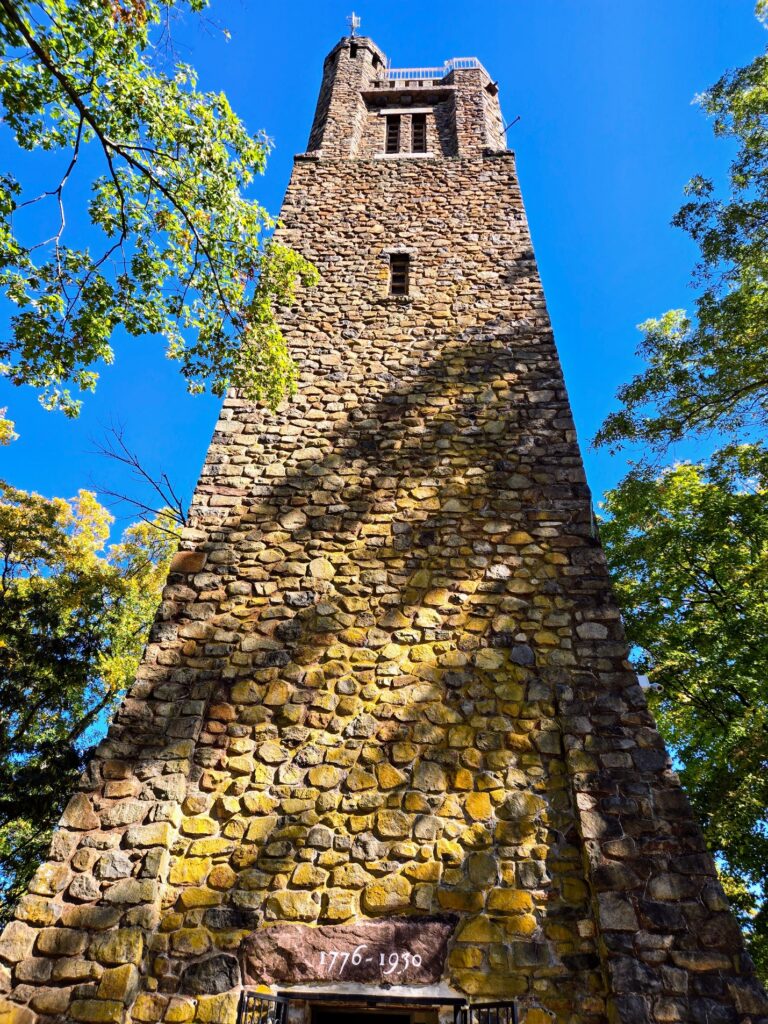
If you are not familiar, Bowman’s Tower is a 125-foot-tall stone tower, built between 1929 and 1931, located in the Washington Crossing Historic Park in Upper Makefield. It is administered by the Pennsylvania Department of Conservation and Natural Resources. The tower itself is located just northeast of the summit of Bowman’s Hill.
Now, the hill that the tower sits on is interesting in itself, at least to me. Formed over 220 million years ago, the hill is an exposed top of an igneous rock intrusion resulting from ancient tectonic shifts. I happened to have studied and visited various igneous intrusions during college, when I thought I might major in Geology, so I find that interesting; maybe you do too, or maybe you’d just like me to get on with the story…
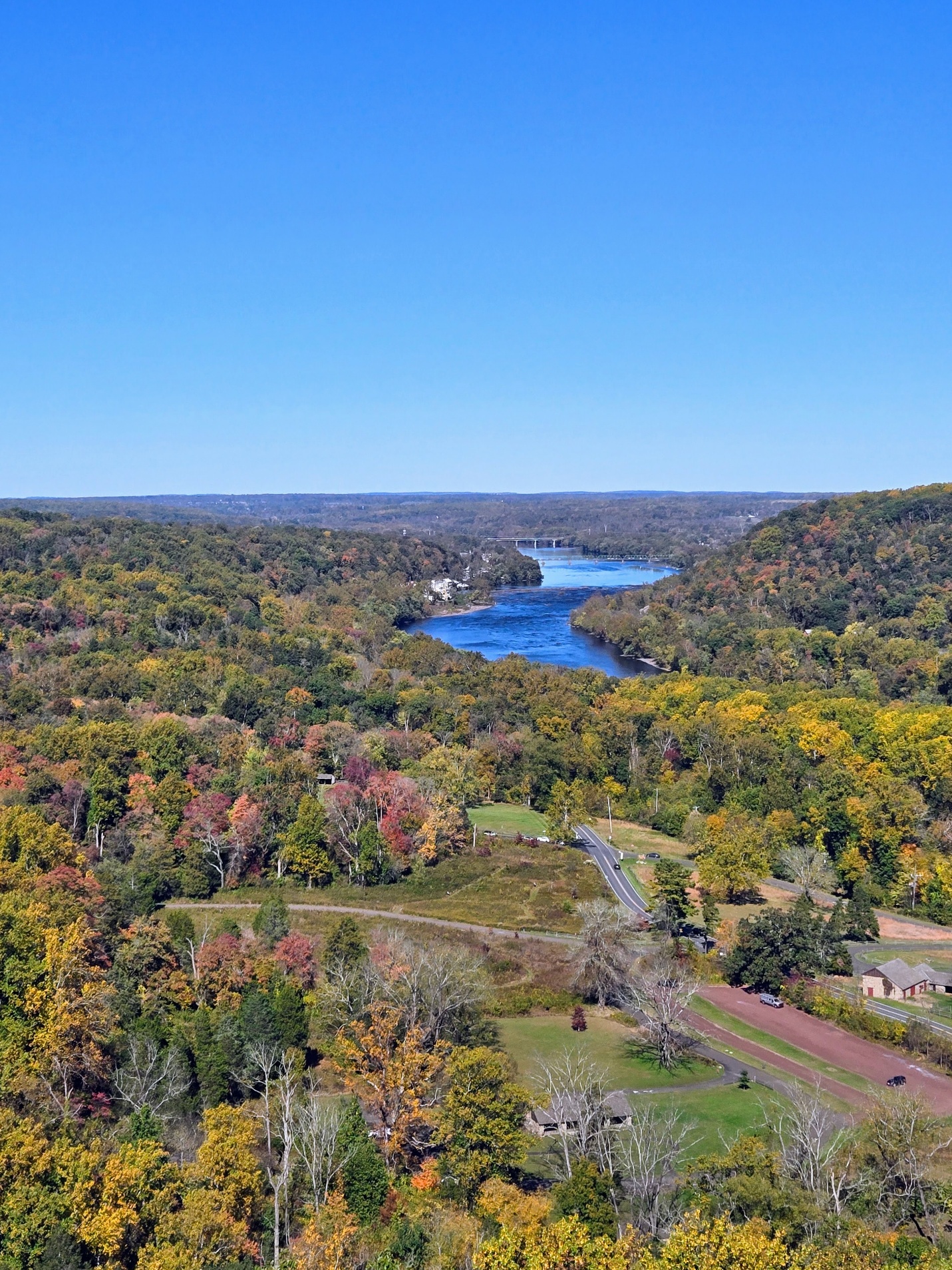
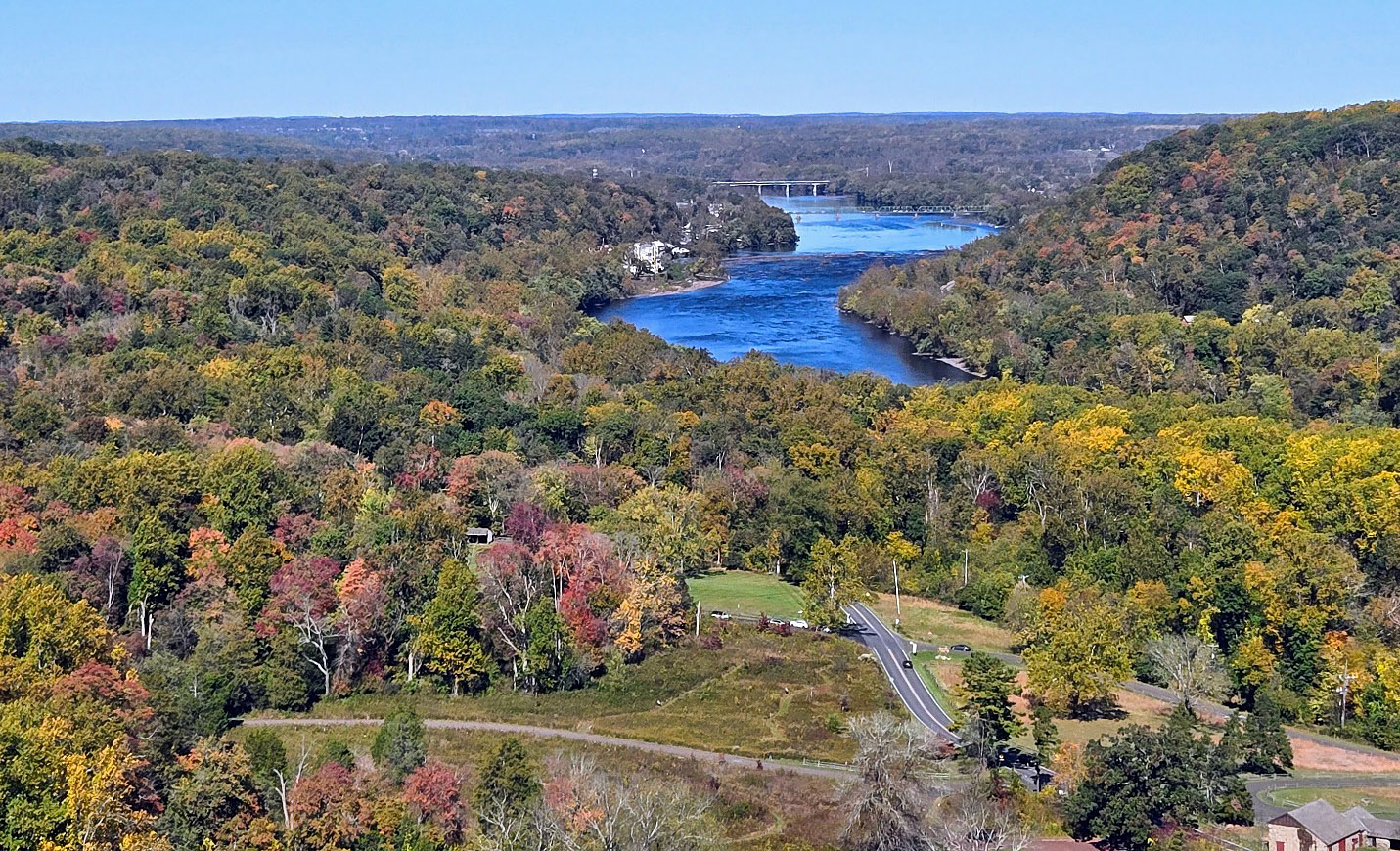
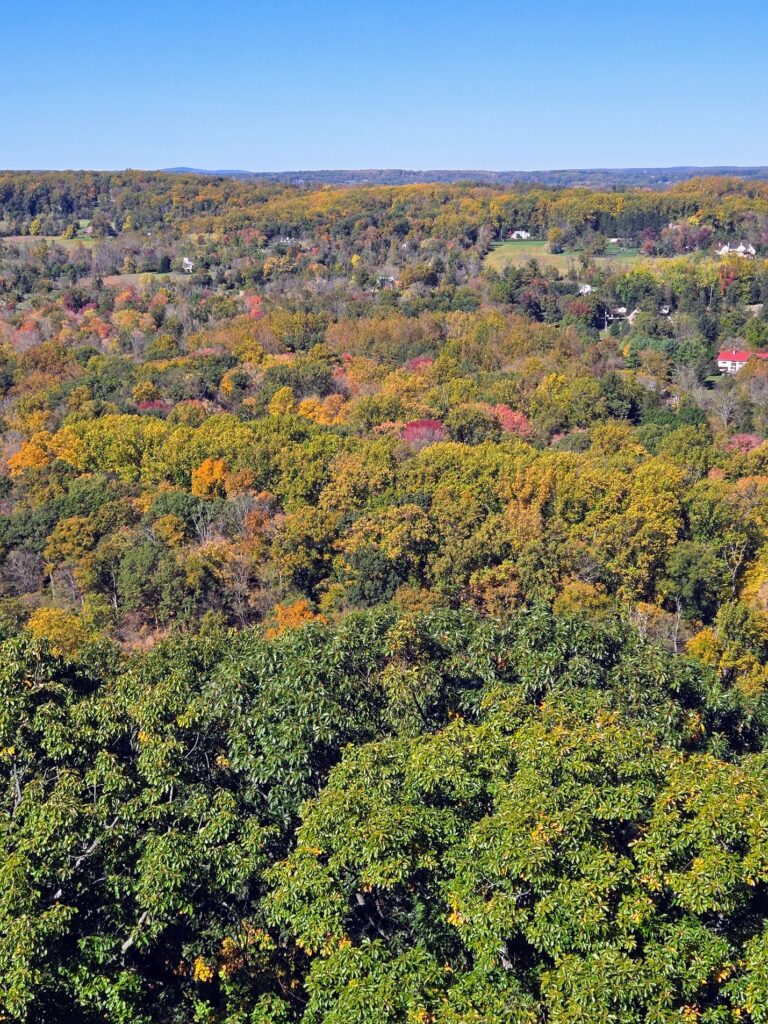
View from the Top
There was no elevator when we were kids, but that was fine with my parents, who thought the 125 foot climb up the spiral staircase to the top was good for our health, and I guess you can’t argue with that. And every time, once we reached the top, where the open air viewing platform is, we were always glad we had made the climb, because at the top, it seemed that we could see the whole world, and my uncle, who always joined us, would give us each a penny to throw off the tower for good luck.
I also had a recollection of a school field trip to the Tower in elementary school; I can almost remember boarding the bus, but I wasn’t certain. Polling many former HVRSD students on Facebook, many DO remember the field trip… some remember going from Hopewell Elementary, some remember going from Bear Tavern, but just as many don’t remember it at all, but I guess it did happen!
Now, the origin of the name “Bowman’s Hill” and Bowman’s Tower is also interesting. It turns out that no one really knows for sure, but there are theories. The most prevalent theory is that it was named for John Beaumont, who in 1743 had the patent to much of the land covering the hill, and that the name slowly morphed into “Bowman’s Hill”. Note that in French, “Beau Mont” means “beautiful mountain”, so that seems like a reasonable explanation. There is a second theory involving Captain Kidd! A popular local myth claims that Bowman’s Hill was named after Dr. John Bowman, a ship’s surgeon for the pirate Captain Kidd, though historians have (unfortunately in my opinion) fairly-well debunked that connection.
For those who can’t make the climb up the stairs, there is now an elevator, installed in the 1980s, but make note: the elevator takes visitors about three-quarters of the way up the tower, after which, one must still climb the narrow 23-step spiral staircase to reach the outside observation deck.
Construction of the Tower took two years to complete, with more than 2,400 tons of materials used, including native stone, cut stone, 500 tons of sand and over 200 tons of cement. The entirety of the work was done by Washington Crossing Park Commission employees, at a total cost of around $100,000.
After the tower’s construction, workers planted almost 30,000 seedlings in the area to reforest the hill; the goal of the project was to make the hill look as it did in Washington’s days. Those seedlings have now grown into full height trees on Bowman’s Hill.
I hadn’t been to the tower in years, but once we had reached the top, all I could think of was James Cagney’s famous line from the film “White Heat”… “Made it, Ma! Top of the world!”
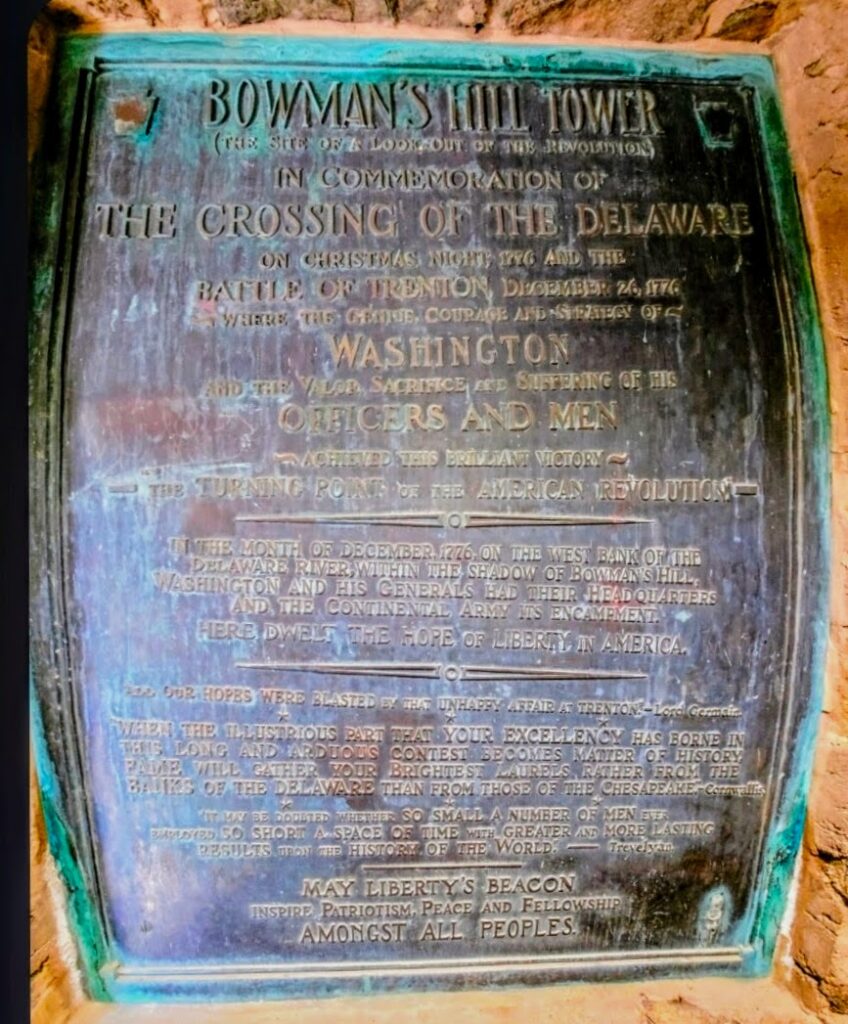
An engraved plaque on the ground floor of the tower reads, “Bowman’s Hilll Tower, the site of a lookout of the Revolution, in commemoration of the Crossing of the Delaware on Christmas Night 1776 and the Battle of Trenton, December 26, 1776, where the genius, courage and strategy of Washington, and the valor, sacrifice and suffering of his officers and men achieved this brilliant victory. The turning point of the American Revolution”. In other words, the tower was built to commemorate the site (not the tower, which had not been built yet) of this important Revolutionary War lookout.
If you have time after your climb (or elevator ride) up the tower, you can also visit the Bowman’s Hill Wildflower Preserve as well! It is just adjacent to the Tower, and since we had time, we did. The Bowman’s Hill Wildflower Preserve is a 134 acre nature preserve, botanical garden, and accredited museum. There are miles of trails at the preserve, some of which meander along the stream that runs through it. We spent about two hours wandering the trails the day we went. It is easy to buy a combination ticket for both the tower and the preserve. The preserve is open daily, except for major holidays, April–June, and closed on Tuesdays July–March. Note: an $12 admission fee for the preserve is charged to if you just want to walk the preserve. The cost to go up the tower is $10/adult and $5/child.
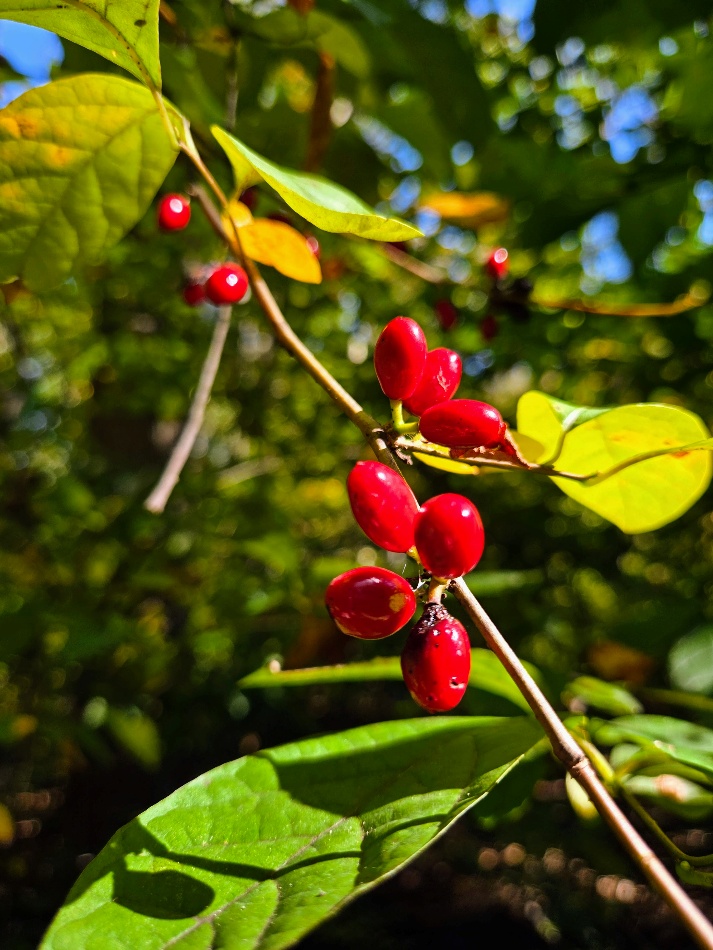
Below are some of the flowers and sights we saw in the preserve a few weeks ago.

There are interpretive signs throughout the Preserve, and they even have a “Story Book Trail” for children.
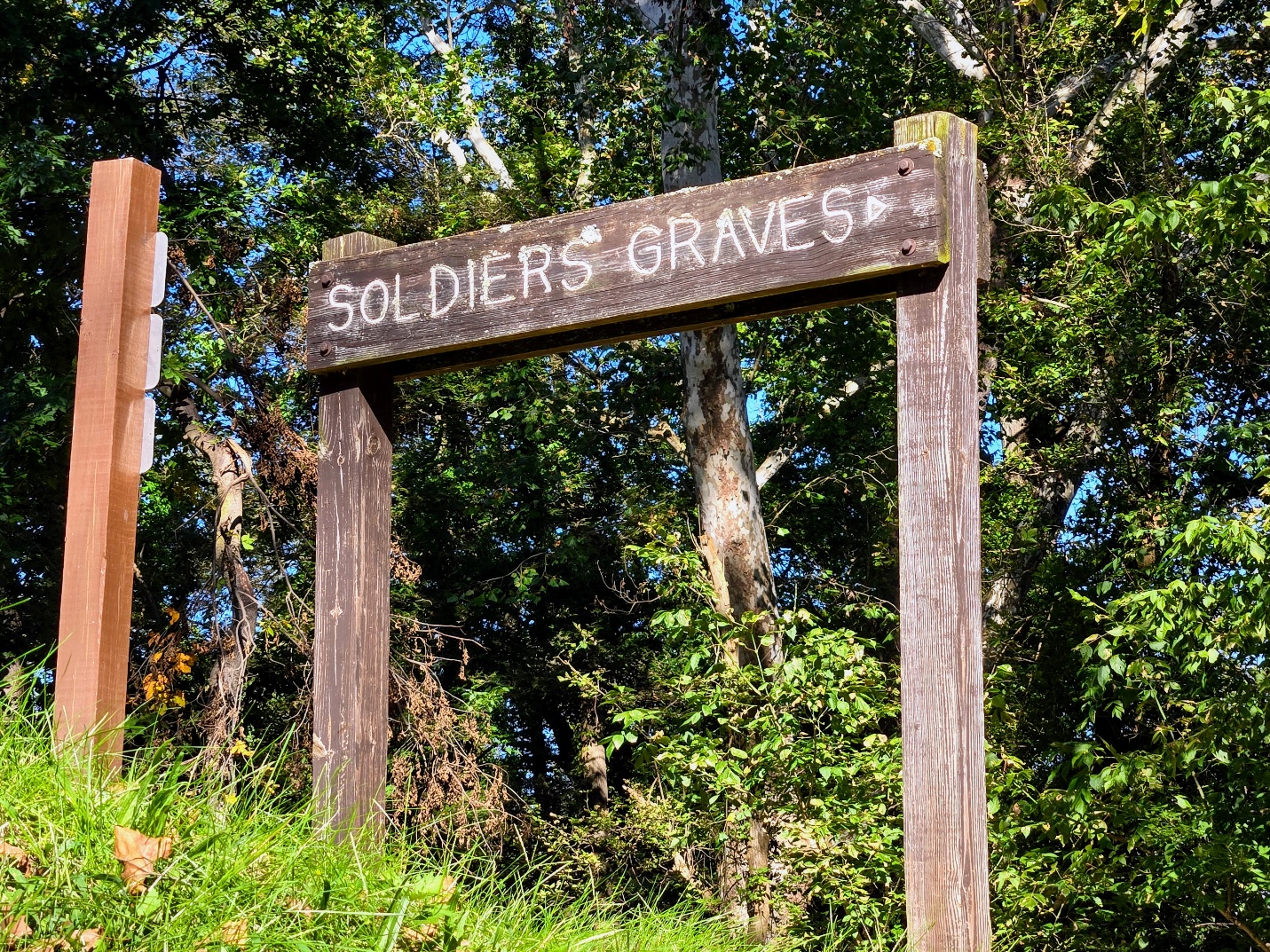
Now, if you have extra time, there is even more to see. Just down the road from the tower, is a cemetery with the graves of unknown soldiers from the Revolutionary War. There is a prominent sign that you will not miss.
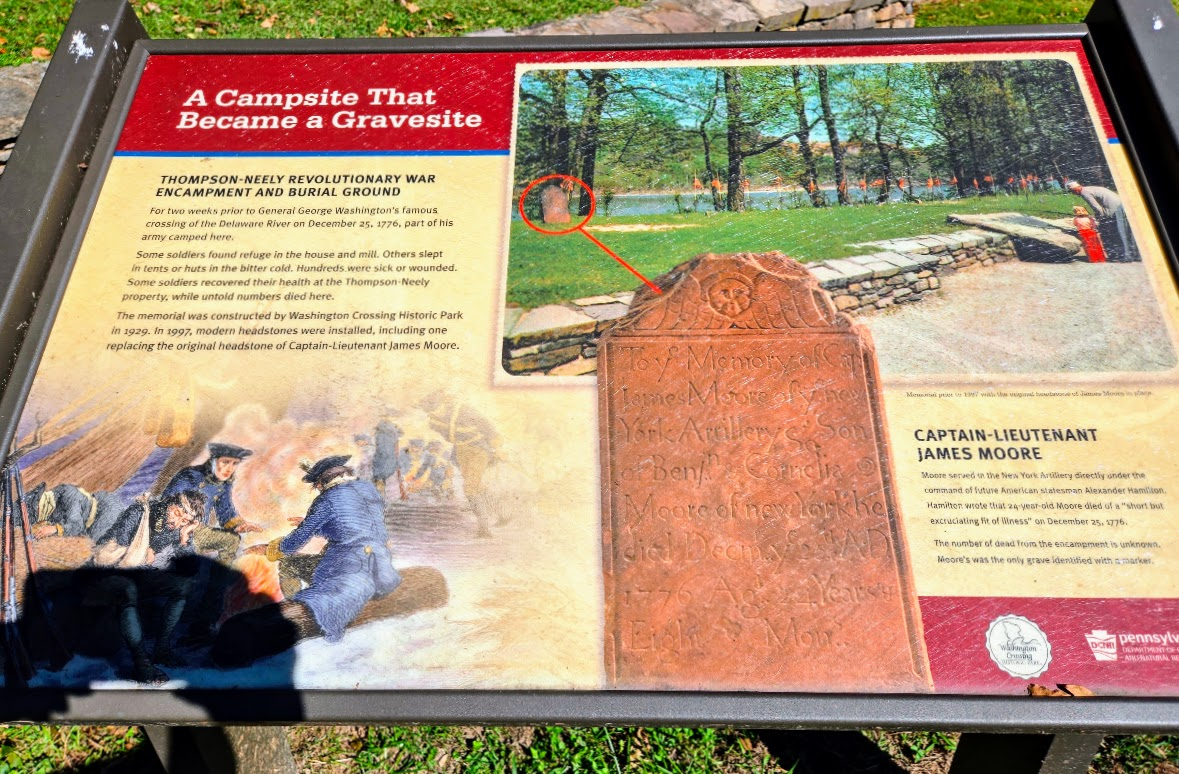
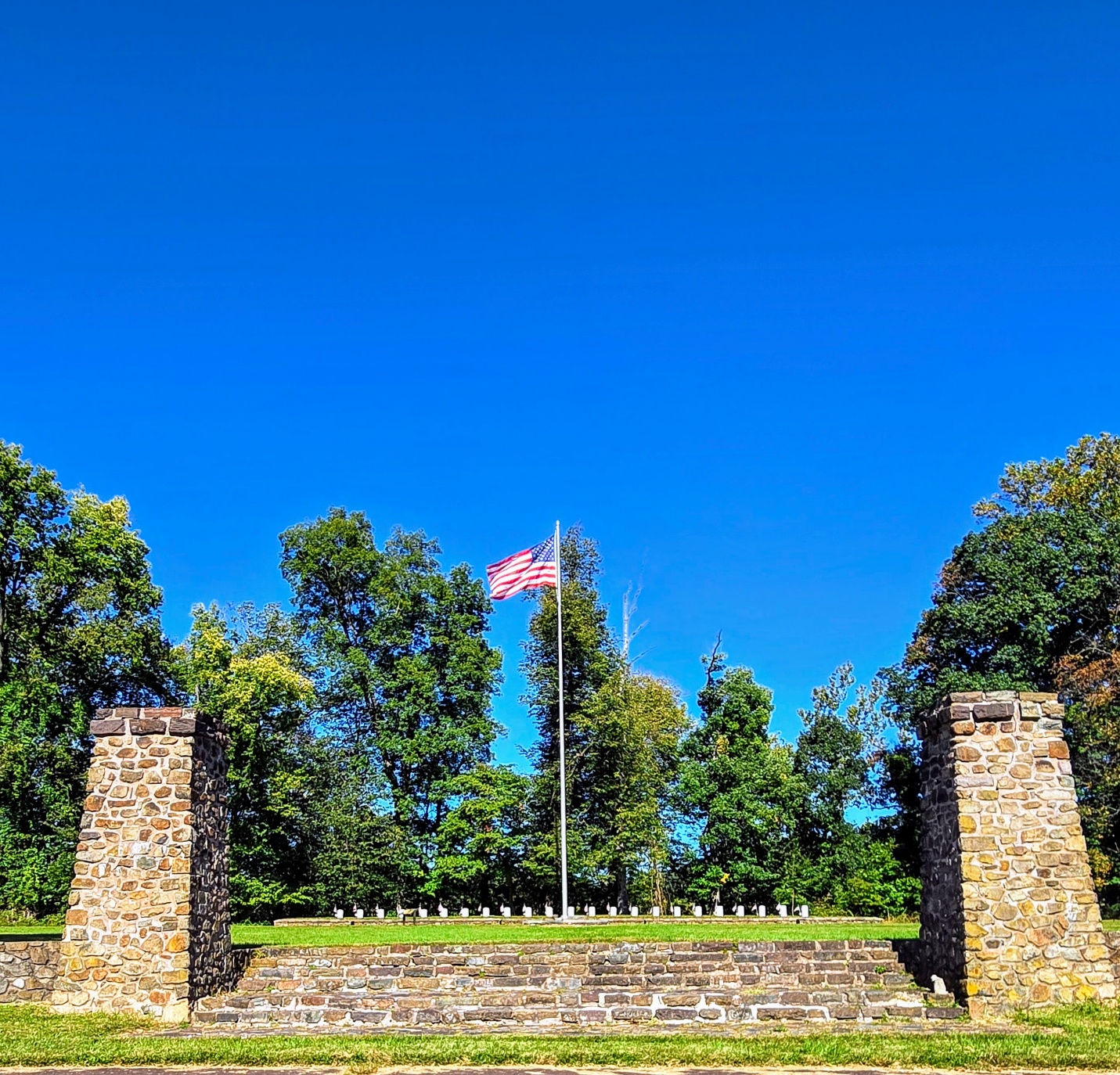
The cemetery lies just down the road from the tower in the upper section of the park (near the Thompson-Neely House). Here, there are the graves of 22 or 23 Continental soldiers who died from hypothermia, disease, and exposure during the brutal winter encampment of December 1776, just before George Washington’s famous Christmas night crossing of the Delaware River.
Only one soldier’s identity is actually known: Captain James Moore, a 24-year-old artillery officer from Alexander Hamilton’s company who passed away on Christmas Day, 1776. The rest simply read, “Unknown Soldier Continental Line Rev War Dec 1776”.
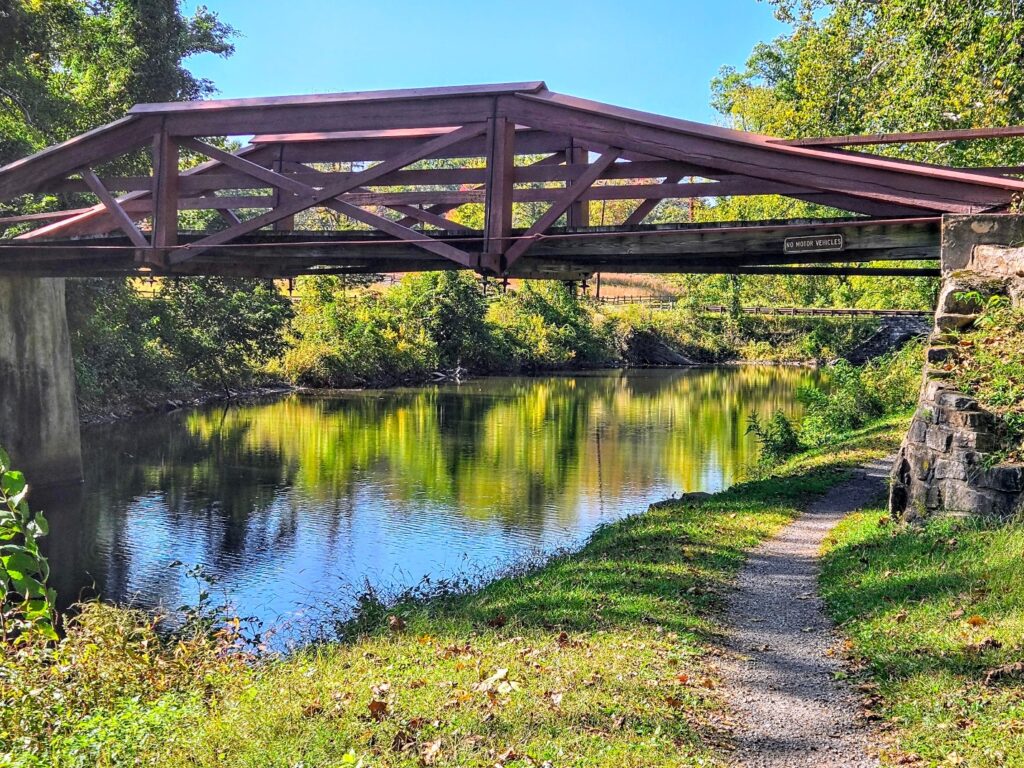
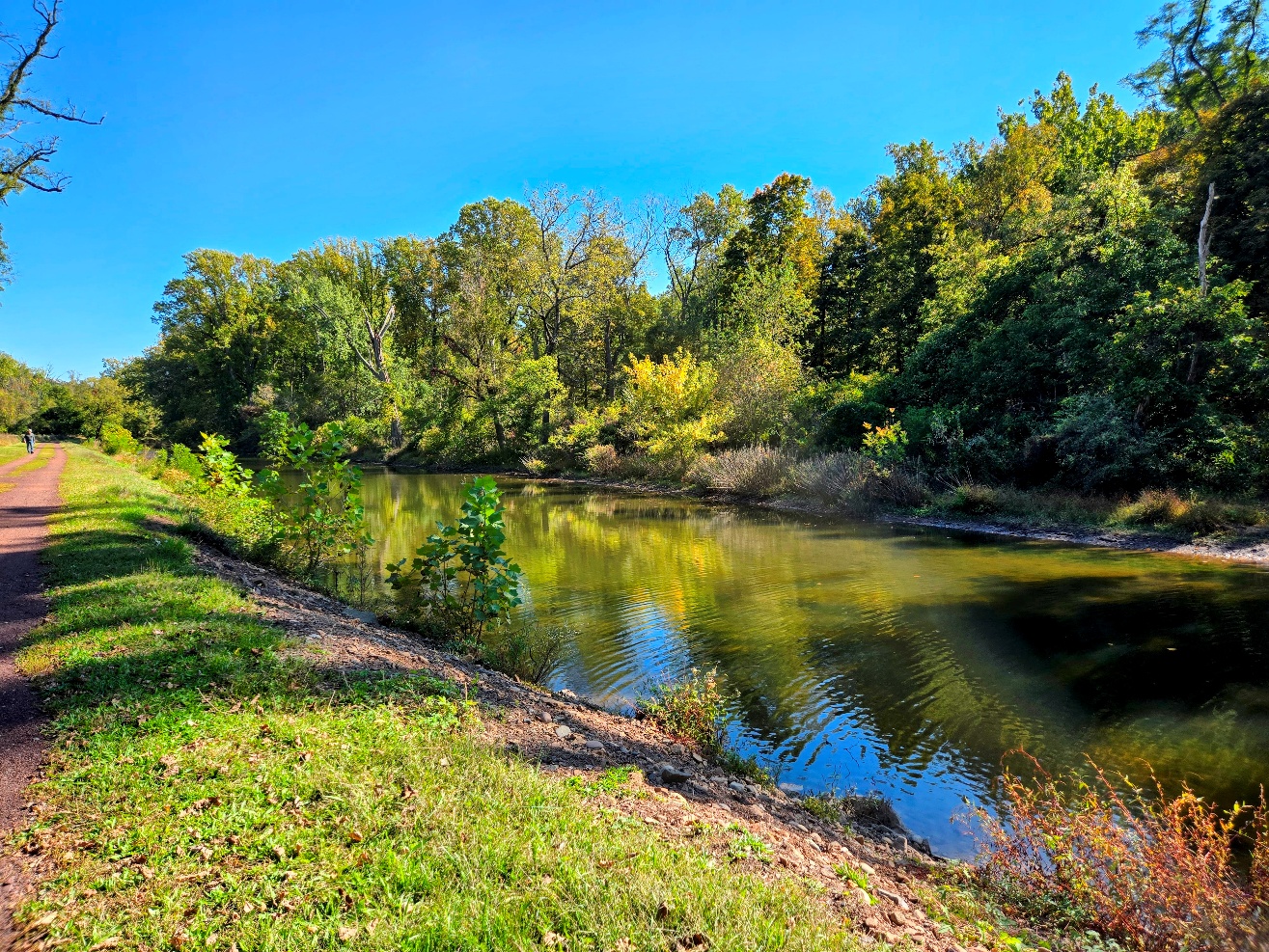
Along the canal path also lies the beautiful Thompson-Neely Bridge.
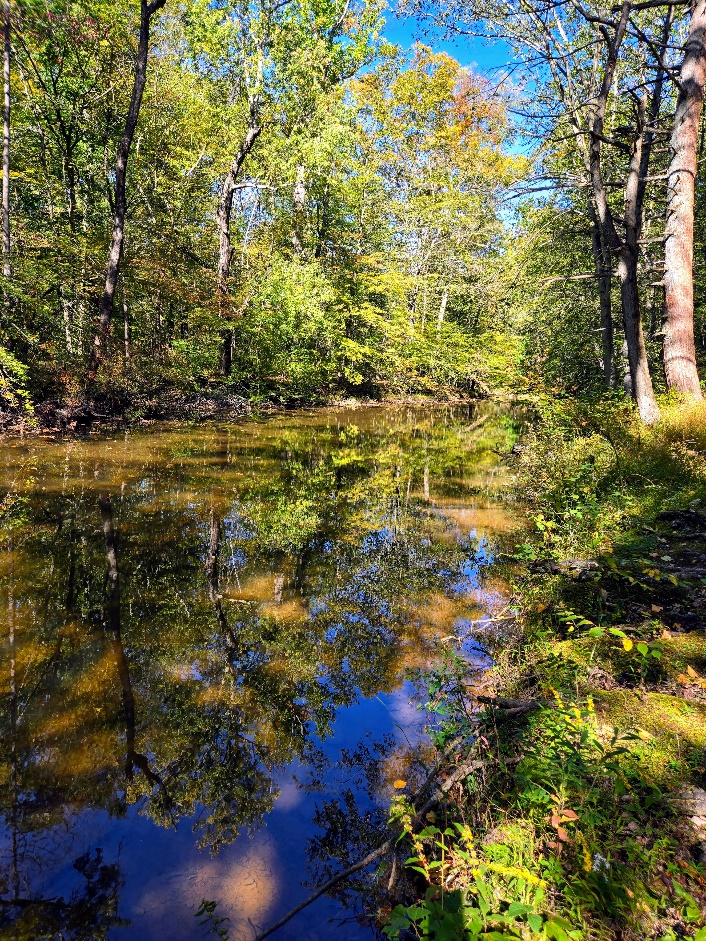
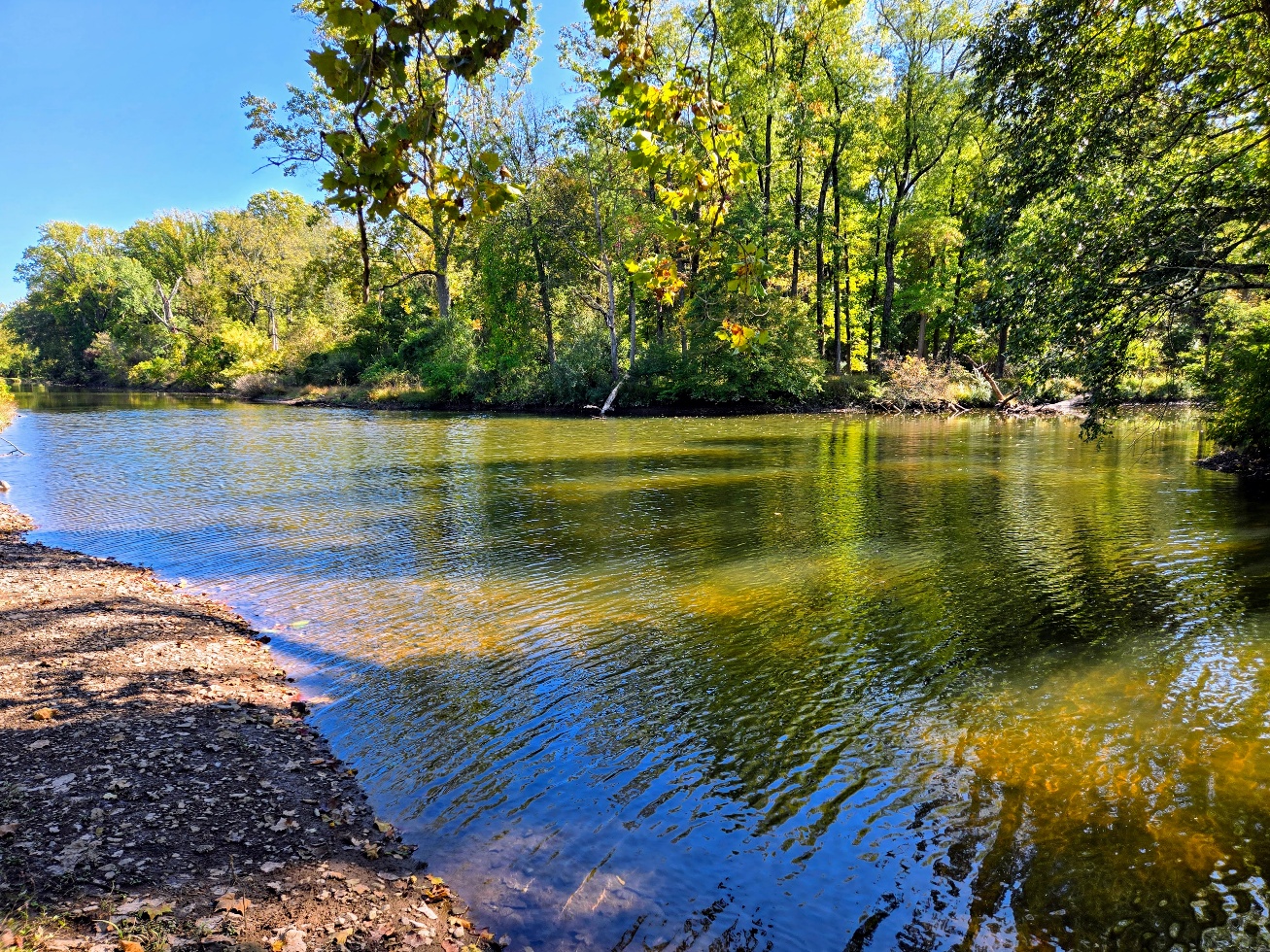
This is my favorite bridge in the whole area. It is a “camelback” style bridge, featuring a distinct central hump that historically allowed passage for loaded canal boats navigating underneath. It is one of only six remaining authentic camelback bridges left along the entirety of the Delaware Canal. And if you still have more time, the waterways along the canal are just breathtaking.
The next few weeks should bring spectacular color, so take some time climb a tower, walk a preserve, stroll along the canal, and visit the graves of brave men who fought to gain our freedom.
Photos by Kim Robinson