
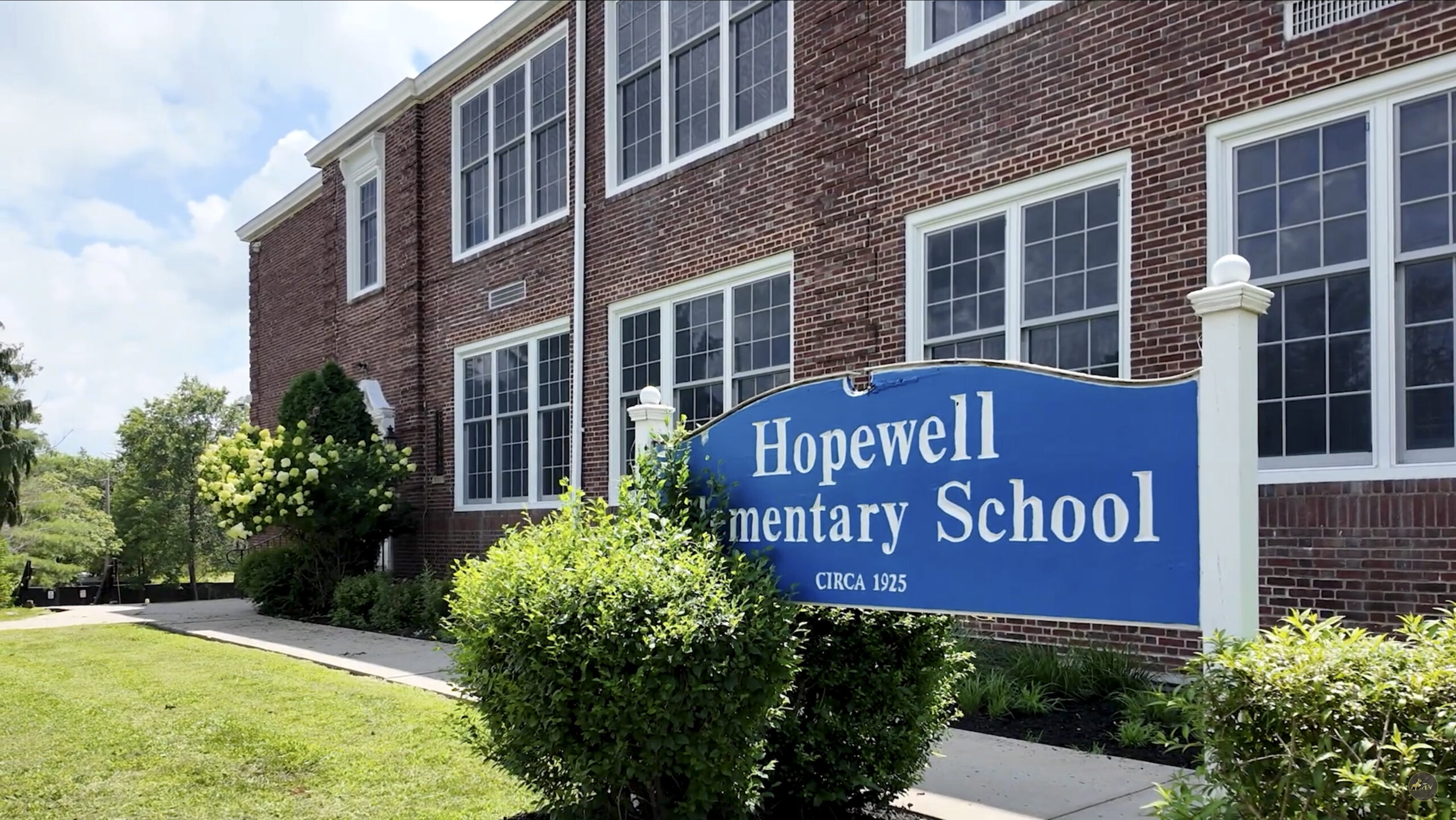
The Hopewell Valley Regional School District (HVRSD) has had all six of its schools certified as National Wildlife Federation (NWF) Wildlife Habitats. The milestone marks a significant step in the district’s ongoing commitment to sustainability, environmental education, and the creation of wildlife-friendly spaces across its campuses.

In partnership with Hopewell Valley Gardens for Wildlife, the district planted Quercus rubra—the Northern Red Oak and New Jersey’s official state tree—at each school earlier this year. The trees provide critical habitat for native pollinators, birds, and other wildlife while also adding more trees to the school grounds.
“Healthy habitats and healthy communities go hand-in-hand,” said Dr. Rosetta Treece, superintendent of the Hopewell Valley Regional School District. “Through projects like these, we’re restoring our connection with the environment and empowering the next generation to be stewards of the natural world.”
A community effort toward certification
The district’s certification contributes to the broader Hopewell Valley Gardens for Wildlife initiative, which seeks to earn the entire Hopewell Valley—Hopewell Township, Pennington Borough, and Hopewell Borough—designation as a National Wildlife Federation Community Wildlife Habitat™.
“We’re thrilled to see the district’s progress and the community’s growing enthusiasm,” said Kirsi Bhasin, community leader with Hopewell Valley Gardens for Wildlife. “As a community, we’ve already earned 179 of the 225 points needed to reach full certification as a National Wildlife Federation Community Wildlife Habitat. We’d love to see even more residents, organizations, and places—whether it’s a park, place of worship, or local farm—join in by certifying their properties. Every habitat, big or small, helps bring us closer to our goal.”
Since 1973, the National Wildlife Federation has helped millions of people make their landscapes more hospitable for wildlife through its Certified Wildlife Habitat program. To date, the NWF has certified more than 250,000 sites nationwide—including homes, schools, businesses, and parks—each designed to provide the four essentials every species needs to thrive: food, water, cover, and places to raise young.
How residents can help
Residents across the Hopewell Valley can support the effort to reach community certification by transforming their own yards or shared spaces into wildlife-friendly habitats. According to the NWF’s habitat checklist participants can qualify their property by ensuring it includes:
- Food sources: at least three natural options such as native plants, seeds, berries, or nectar-producing flowers.
- Water sources: a birdbath, rain garden, or nearby pond or stream that provides clean water for wildlife.
- Cover: natural shelter like dense shrubs, evergreen trees, or brush piles to protect animals from predators and weather.
- Places to raise young: features such as mature trees, meadows, host plants for caterpillars, or nesting boxes.
- Sustainable practices: at least two environmentally friendly actions, such as planting native species, conserving water, reducing pesticide use, or composting garden waste.
Each certified site contributes points toward the Hopewell Valley’s community goal. Residents can certify their property online at NWF.org/Certify and learn more about the local initiative at hvgardensforwildlife.weebly.com.
For more information about the National Wildlife Federation’s Community Wildlife Habitat network, visit www.nwf.org/community.