

New Jersey baked under temperatures in the 90s on Thursday, with the heat index nearing 100 degrees in parts of the state—including Mercer County, where a Heat Advisory was in effect. While slightly cooler weather is expected Friday and Saturday, forecasters warn that another stretch of extreme heat will begin Sunday and could persist through the middle of next week.
The National Weather Service issued the advisory Thursday morning, warning that “hot temperatures and high humidity may cause heat illnesses.” Officials urged residents to stay hydrated, limit outdoor activities, and check on vulnerable neighbors. A severe band of thunderstorms swept through the region Thursday evening, knocking out power to residents across the Hopewell Valley—further underscoring the dangers of extreme summer weather.
As climate change fuels more frequent and intense heat waves, state agencies are highlighting the dangers of extreme heat and the resources available to help residents stay safe.
“Extreme heat is one of the deadliest climate-related threats facing New Jersey,” said Environmental Protection Commissioner Shawn M. LaTourette. “It’s not just about discomfort—it’s about protecting our health and infrastructure. Our goal is to help New Jerseyans recognize the real dangers of extreme heat and take meaningful steps to stay safe.”
“Rising temperatures come with real health risks,” added Acting Health Commissioner Jeff Brown. “Heat exposure can worsen conditions like asthma, diabetes, and heart disease. Understanding those risks and knowing how to protect yourself and others can save lives.”
Understanding Extreme Heat
Periods of extreme heat—defined as three or more days with temperatures at or above 90°F—can lead to dehydration, heat exhaustion, and heat stroke. New Jersey is warming faster than the global average, with projections showing more frequent, longer-lasting heat waves by 2050. Urban areas with dense development and minimal tree cover are particularly vulnerable to the “heat island” effect, where pavement and buildings trap and radiate heat.
The impacts go beyond health. Extreme heat can strain infrastructure, warp roads and rail lines, increase wildfire risk, and stress ecosystems and agriculture.
Those Most at Risk
Older adults, infants, people with chronic health conditions, outdoor workers, and those without air conditioning face the greatest risk during heat events. Heat-related illness can develop quickly and may become life-threatening if untreated.
Mental and behavioral health risks also rise during extreme heat. Studies show links to increased emergency visits, higher suicide rates, and worsened symptoms among people with existing mental health conditions.
How to Stay Safe
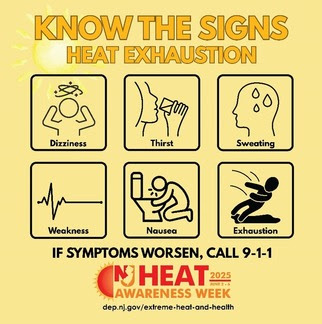
- Recognize the symptoms of heat exhaustion or heat stroke—dizziness, fatigue, nausea, excessive sweating—and get to a cool place and hydrate. Seek medical help if symptoms worsen.
- Stay hydrated: Drink water frequently—about one cup every 15 minutes when active outdoors. Avoid sugary drinks and alcohol.
- Use cooling resources: Find relief at public libraries, senior centers, malls, and splash pads. Visit NJ 211’s Cooling Centers or use Chill Out NJ to locate options near you.
- Check on neighbors: Especially seniors or those with mobility challenges. Make sure they have access to fans or air conditioning.
- Never leave people or pets in vehicles: On an 80-degree day, temperatures inside a parked car can reach 100 degrees in under 10 minutes.
Statewide Planning and Support
To address the growing threat, New Jersey has implemented the Extreme Heat Resilience Action Plan, one of only a few such plans in the U.S. The strategy coordinates agency efforts to reduce heat-related risks across health, infrastructure, and community systems.
The state also launched Heat Hub NJ, a public resource with guidance on extreme heat safety, planning tools for municipalities, and real-time information about cooling resources and emergency alerts.
“The Murphy Administration is committed to making the state more resilient to the many impacts of climate change,” said Chief Resilience Officer Nick Angarone. “Extreme heat poses both immediate and long-term risks, and our job is to help ensure that New Jersey communities are equipped to respond.”
For more information and resources, visit: https://heathub.nj.gov