
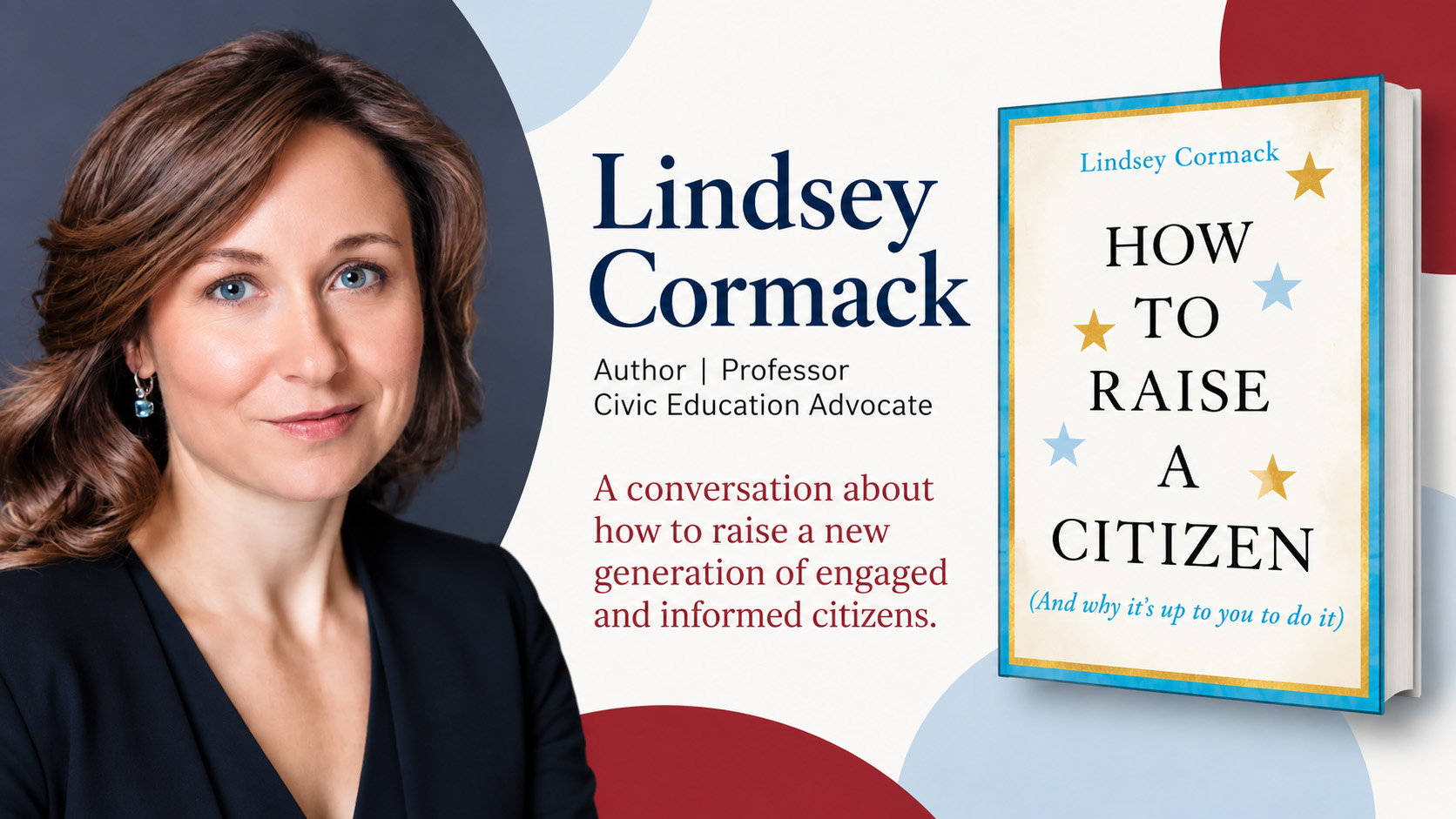
When Lindsey Cormack began looking closely at what young people know about American government, she wasn’t starting with struggling students.
Cormack, an associate professor of political science at Stevens Institute of Technology, was teaching students she describes as bright, motivated learners headed toward successful careers. Yet year after year, a basic pretest in her introductory American politics course produced troubling results.
“This is not a hard test of American history or anything,” Cormack said. “It’s like the very basics of government.”
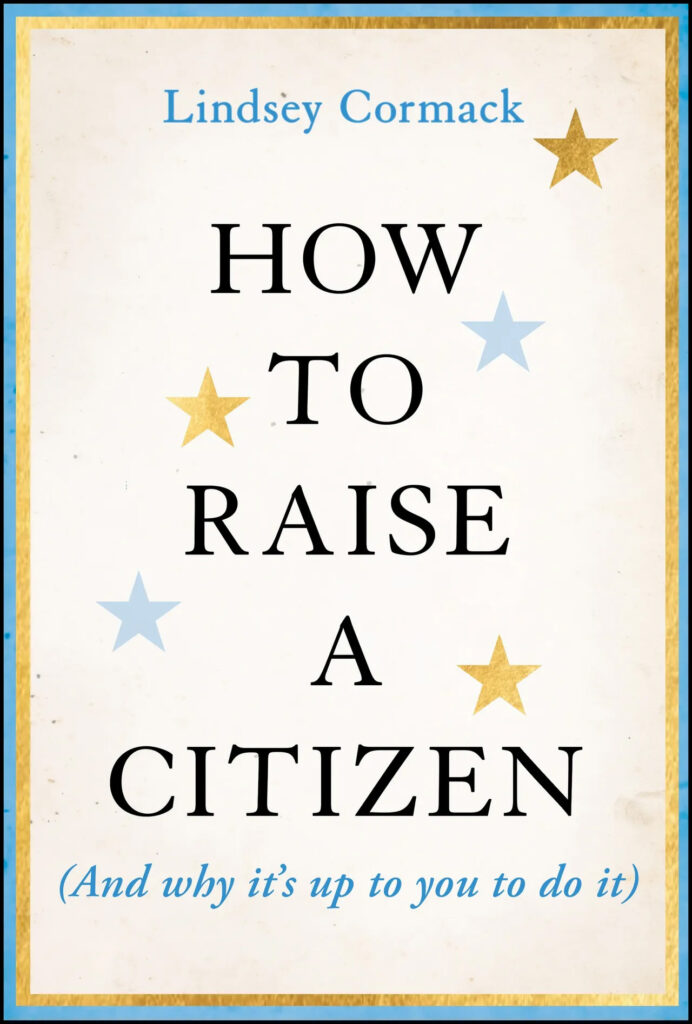
That experience eventually led Cormack and six student research assistants to examine civics curricula across the country and interview teachers in 47 states. What they found helped shape her book, How to Raise a Citizen (And Why It’s Up to You to Do It).
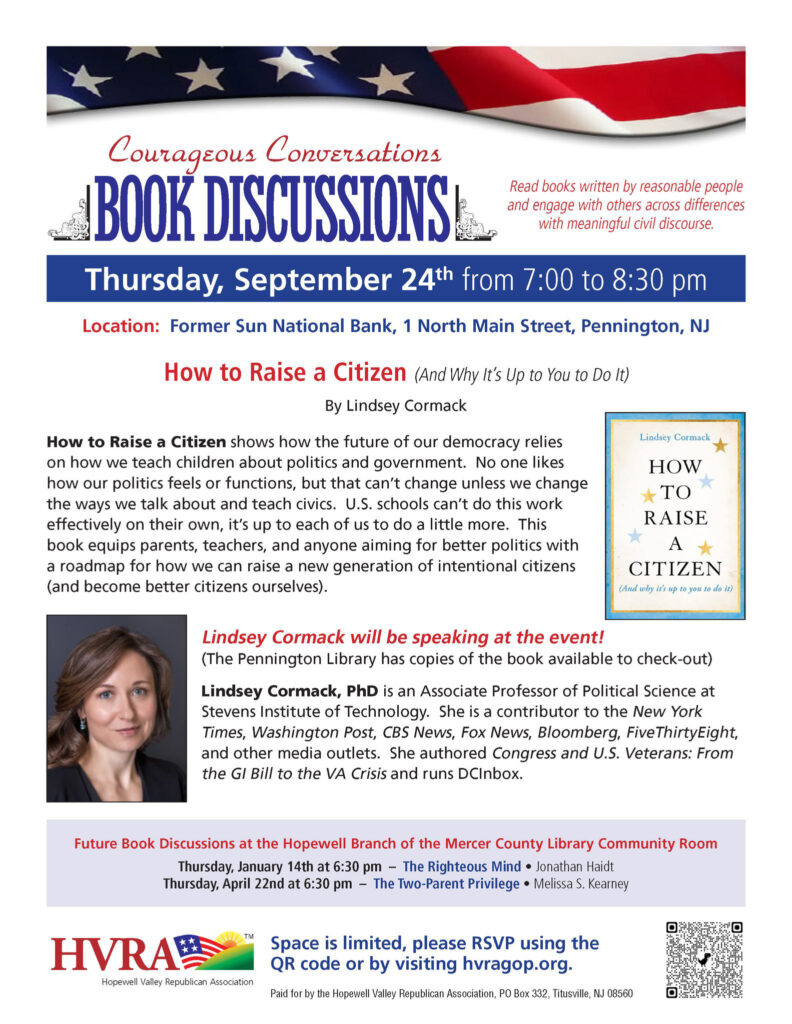
Cormack will bring that conversation to Pennington Thursday evening as the featured speaker in the Hopewell Valley Republican Association’s Courageous Conversations Book Discussions series.
The program will begin at 7 p.m. at the former Sun National Bank building, 1 N. Main St., Pennington. Cormack will speak about the book and her work, followed by a question-and-answer session moderated by MercerMe Editor Seth Siditsky. A book signing and civics education resource table will follow the program.
Learning the rules before choosing a team
Cormack’s central argument is not that parents should tell their children what to believe politically. Instead, she argues that families have a role in helping children understand how government works, how decisions get made and how citizens can participate.
She describes the distinction as teaching children the rules of a game rather than telling them which team to play for.
“The goal is to teach them, like, here are the rules of the game,” Cormack said. “Here’s how you participate in these things. How do decisions get made? Not necessarily, these are the decisions that ought to get made because my values or my ideological viewpoints point that way.”
Cormack said the research for the book began after seeing gaps in the civic knowledge of students entering her classes. She and her research assistants initially expected to identify states that were doing civic education particularly well and examine what others could learn from them.
Instead, she said, they concluded that schools alone weren’t adequately filling the gap.
“If we really want to have a politics that feels and functions better, we’re going to have to make sure that children understand from places outside of school what that looks like,” Cormack said. “So it’s a combination of knowledge and know-how.”
Starting close to home
That doesn’t require turning the dinner table into a nightly political science lecture.
Cormack recommends beginning with things children already notice around them. A pothole, a playground problem or another local issue can become an opportunity to ask who is responsible for fixing it and how a resident could bring the problem to that person’s attention.
“Local stuff totally does make civics more tangible,” Cormack said. “It’s like so much more immediate and quality-of-lifey.”
Taking children to a municipal meeting or courthouse, introducing them to a local official or simply helping them understand what a mayor does can make government less abstract, she said.
“They can go see the person who’s making that decision,” Cormack said. “It’s so much harder to get into national politics like that.”
Cormack also argues that avoiding political conversations altogether is increasingly unrealistic in a world where children have immediate access to social media, YouTube and other online sources.
“I understand the impulse,” she said of parents wanting to steer clear of politics. But children who don’t get answers from adults can seek them elsewhere.
“Our silence is a signal of disregard, and it’s not as protective as it might feel, because kids are trying to make sense of their world,” she said.
A conversation across differences
Thursday’s event is part of a book discussion series organized through the Hopewell Valley Republican Association’s civics education committee.
Organizer Sylvia Kocses said the effort grew in part from her interest in creating opportunities for people with different political viewpoints to communicate respectfully.
“There’s more to you than whether you’re a red or a blue. There’s more to me whether I’m a red or a blue,” Kocses said. “That’s really, really part of it, is to get back the idea that we can live in community and have diverse ideas, but still have dignity and respect.”
Kocses said Cormack’s book particularly resonated with her after realizing gaps in her own knowledge of government and the nation’s founding documents.
The group had originally envisioned the selection as another community book discussion, she said. When Cormack agreed to come to Pennington herself, organizers expanded it into a speaker event.
Cormack said she hopes people don’t view civic education as belonging to either political party.
She doesn’t describe the book as simply bipartisan or nonpartisan. She prefers “prepartisan” — understanding the system before deciding which political team to support.
“Civic life does not belong to one party or one political perspective,” Cormack said.
That means learning to listen, participate, compromise and work with people who see issues differently, she said.
“Instead of seeing our opposition as enemies,” Cormack said, “we need to see them as worthy opponents.”
If you go
What: Courageous Conversations Book Discussion featuring Lindsey Cormack, author of How to Raise a Citizen (And Why It’s Up to You to Do It)
When: Thursday, Sept. 24, 7 to 8:30 p.m.
Where: Former Sun National Bank, 1 N. Main St., Pennington
Program: Cormack will speak beginning shortly after 7 p.m., followed by a Q&A moderated by MercerMe Editor Seth Siditsky. A book signing and civics education resource table will follow.
Registration: Space is limited and advance registration is requested through the Hopewell Valley Republican Association.