

With a crowded field of candidates and a key ballot-access deadline looming, the race to succeed longtime U.S. Rep. Bonnie Watson Coleman is beginning to take shape as Democratic hopefuls fan out across the district to introduce themselves to voters.
That dynamic was on display last week at The College of New Jersey, where a coalition of progressive organizations hosted a candidate forum in New Jersey’s 12th Congressional District. The event brought together more than a dozen candidates for a wide-ranging discussion of policy priorities, campaign themes, and the direction of the district following Watson Coleman’s planned retirement.
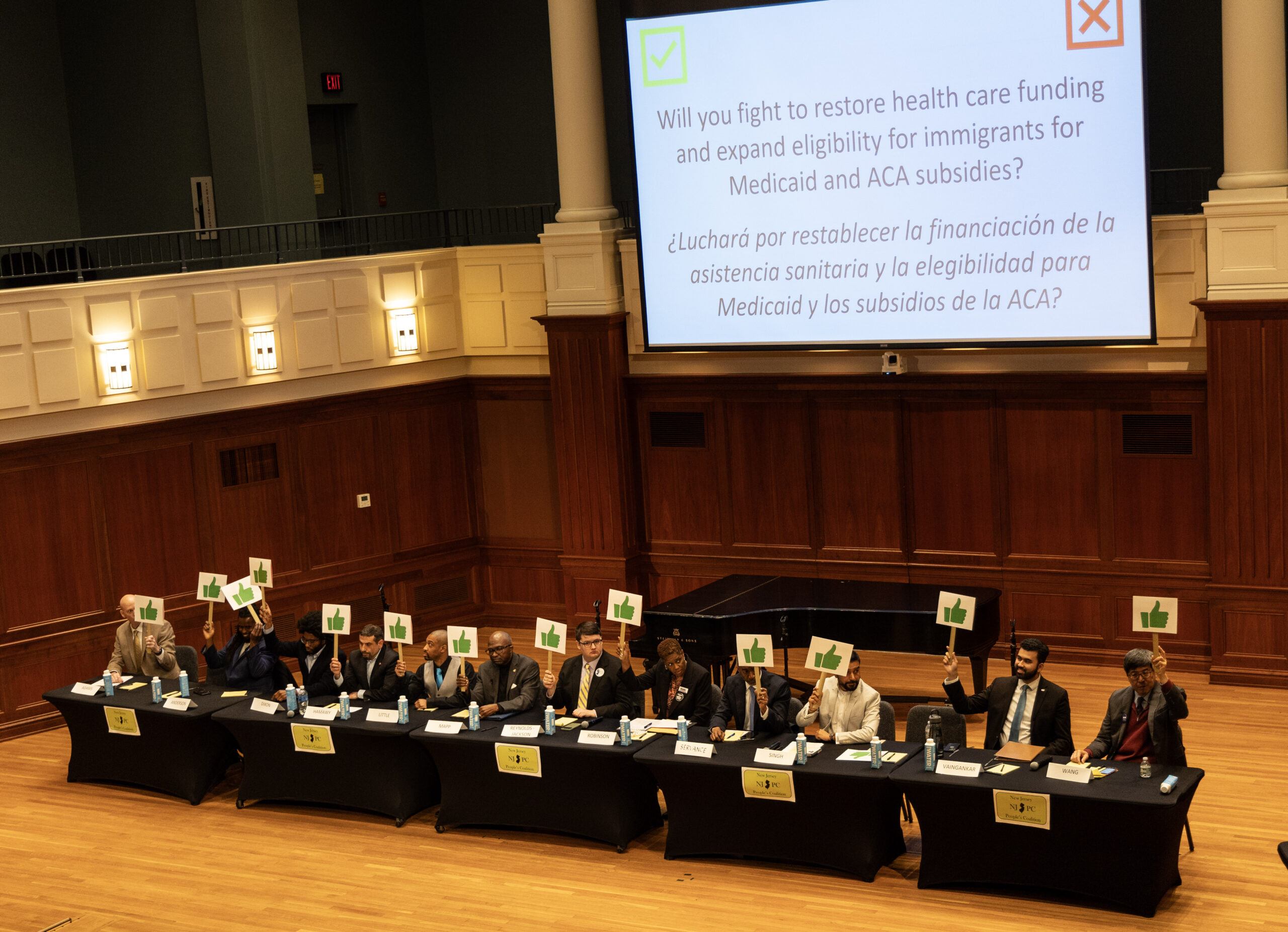
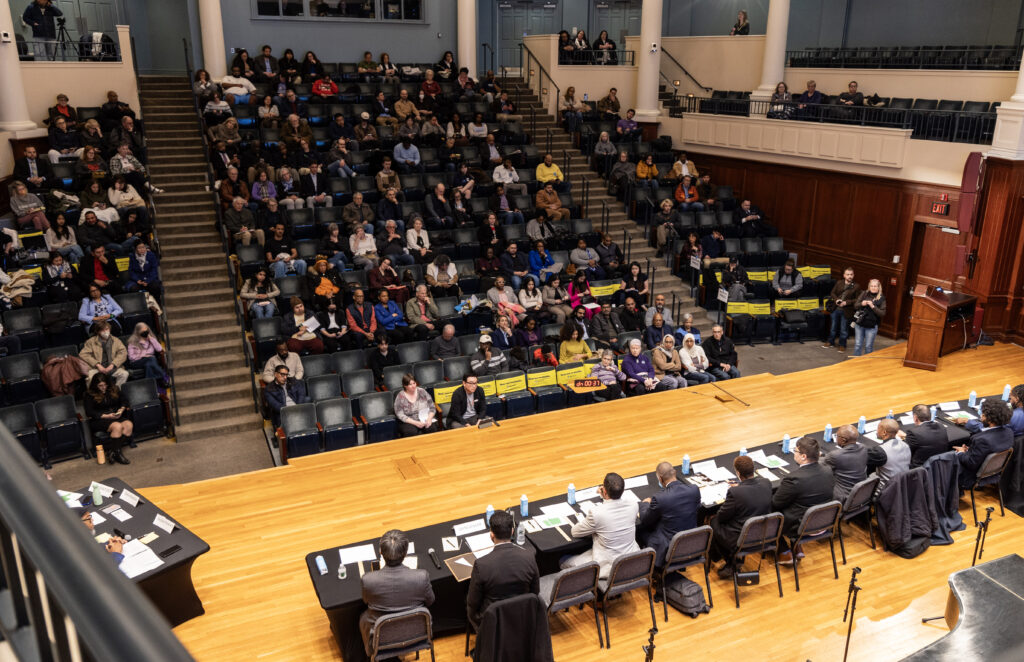
Inside the Mayo Concert Hall on campus, candidates sat shoulder-to-shoulder across a long stage, fielding questions on topics ranging from foreign policy and immigration to artificial intelligence and economic inequality. Audience members filled much of the seating bowl, with a Spanish-language interpretation section set aside to broaden access. While attendance was steady and the crowd engaged, it was not at capacity-level.
For some in attendance, the forum marked their first opportunity to see multiple candidates in person rather than through campaign advertising or online messaging. Several candidates lingered after the formal program ended, speaking with voters in the lobby and continuing conversations that had begun during the tightly moderated session.
Not all invited candidates ultimately appeared. Organizers said Republican candidates Darius Mayfield and Gregg Mele did not attend, and Democrat Sue Altman withdrew shortly before the event citing concerns with the format. Assemblywoman Verlina Reynolds-Jackson was unable to attend in person due to a prior commitment but sent a surrogate. Audience members and organizers alike expressed disappointment at the absences, saying the unusually large field makes opportunities for side-by-side comparison especially valuable.
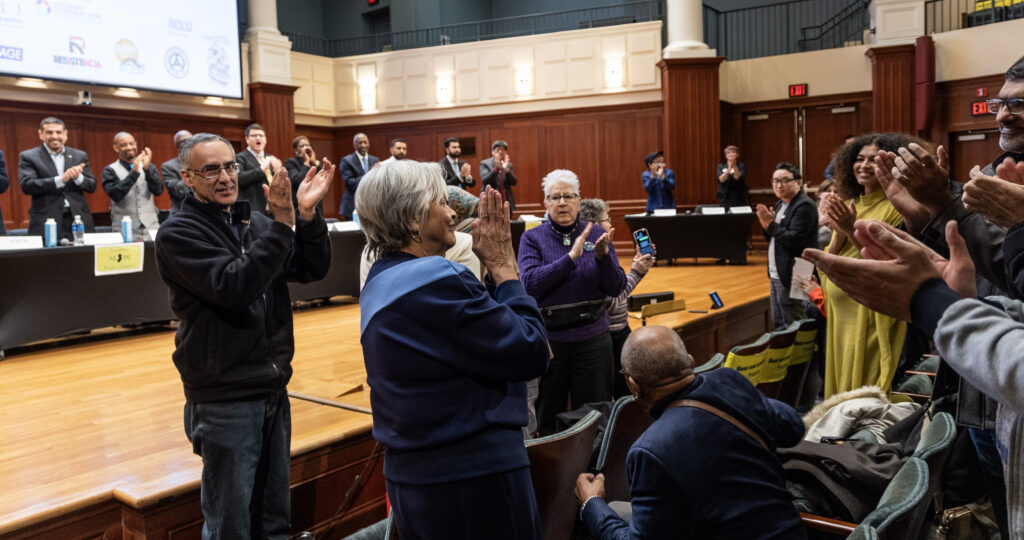
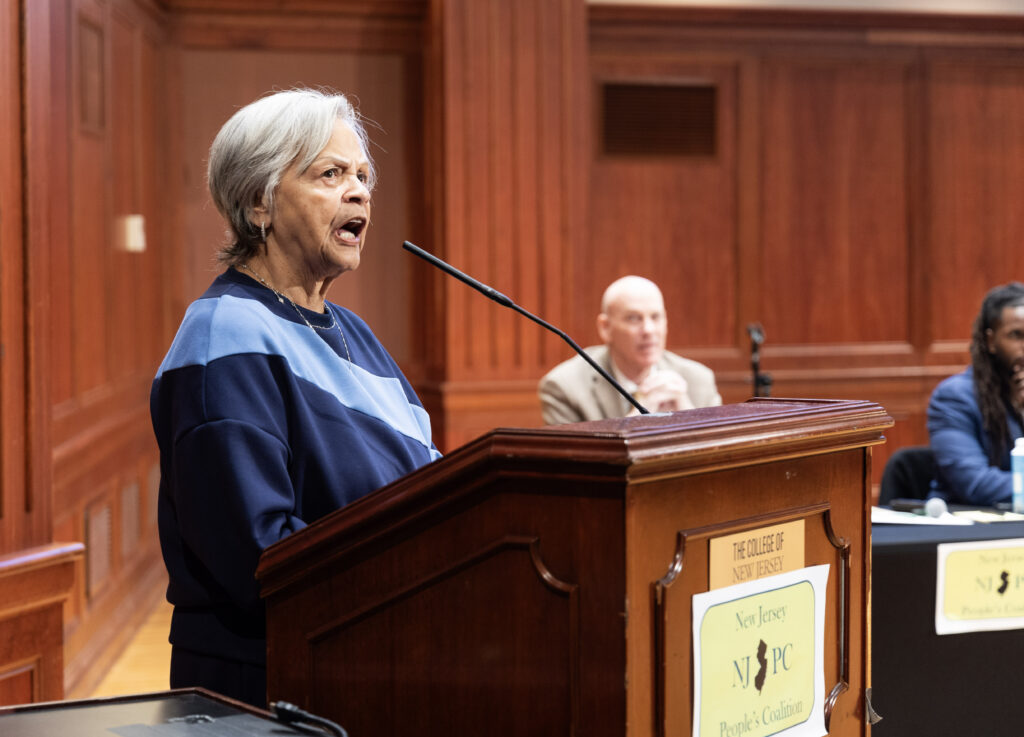
Watson Coleman, who attended and delivered remarks, later described the forum as a meaningful step in helping voters begin to evaluate the candidates.
“I thought the forum was well thought out. The diversity of the collaborators mirrored the great diversity of the district,” she in comments after the event. “I’m a bit disappointed that not all the candidates attended because people deserve to hear what they have to say.”
She also noted the sheer size of the candidate field presents both opportunities and challenges for voters.
“There are a lot of candidates. They were all thoughtful and gave smart answers,” Watson Coleman said. “My advice would be for them to get together and think about what’s best for the district, and who brings the best campaign to the November election. Fewer candidates would also allow future forums and debates to dive a little deeper into the issues.”
Ballot deadline raises stakes
The forum came at a critical early stage in the campaign calendar. Candidates seeking to appear on the June primary ballot must submit at least 500 valid petition signatures by the filing deadline Monday, a threshold that could cause some candidates to drop out of the race.
The unusually large number of contenders reflects both the political significance of the open seat and recent structural changes in New Jersey’s primary election system. With the longstanding county-line ballot format eliminated, campaigns are navigating a more fluid and unpredictable landscape in which name recognition, grassroots organizing, and issue positioning may play a larger role.
Organizers of the TCNJ forum said their goal was to help voters better understand where candidates stand before the campaign enters a more intense phase.
Devra Keenan, a co-moderator and member of the New Jersey People’s Coalition, said the event was conceived as a voter-education initiative after Watson Coleman announced her retirement and the candidate field quickly expanded.
“We felt that by hosting a large and public forum we could get the candidates on record on issues important to progressive voters such as economic justice, civil rights, foreign policy and technology regulation,” Keenan said.
She added that the coalition — formed by activists and community leaders from across the district — also sought to reflect the district’s demographic diversity in both its organizing team and the issues raised during the discussion.
Early policy contrasts begin to take shape
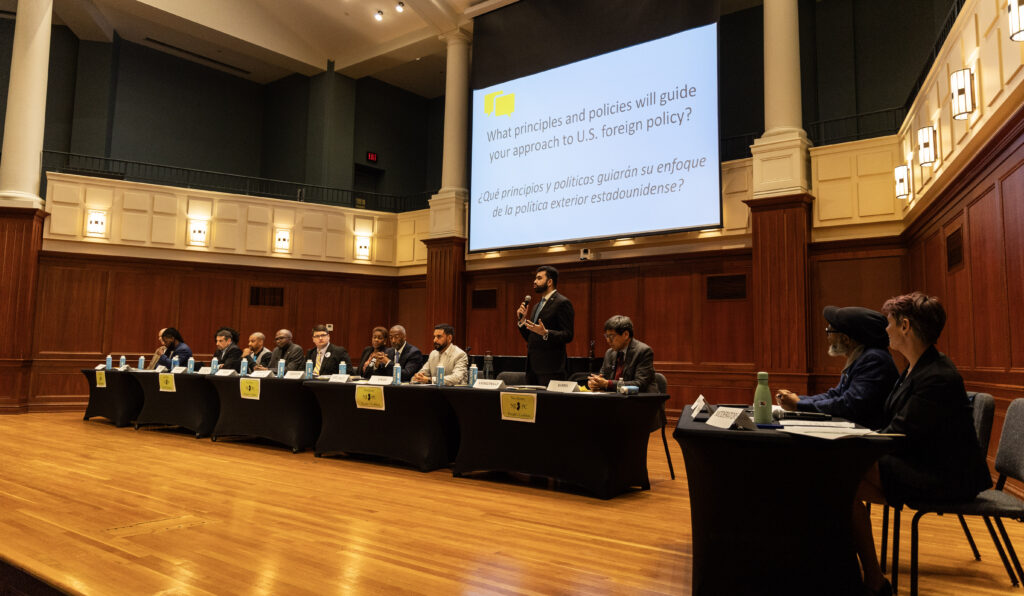
Although the forum’s structured format limited extended exchanges, differences in emphasis began to emerge as candidates responded to questions spanning domestic policy, global affairs and emerging technology.
During a rapid-response segment, candidates were asked to signal their positions on a series of policy prompts using handheld paddles projected on a screen behind the stage. On questions related to expanding access to certain federal programs and restoring funding reductions, many candidates indicated support, while several used remarks in other sections to clarify how such policies should be implemented or funded.
Foreign policy responses also revealed varied approaches to the United States’ role abroad. Some candidates emphasized the importance of strengthening alliances and maintaining humanitarian commitments in global conflicts, while others focused on ensuring that international engagement remains aligned with domestic economic priorities.
Another discussion centered on the growth of artificial intelligence and the expansion of large-scale data centers — an issue with both national policy implications and local relevance in central New Jersey. Candidates referenced the economic potential of emerging technology sectors alongside concerns about energy demand, environmental impact and the need for federal regulatory frameworks that balance innovation with community protections.
To supplement the time-limited format, organizers posted candidate responses online, allowing voters to compare positions more fully across a wide range of issues.
A transition moment for the district
Watson Coleman’s retirement will end more than a decade of congressional representation and decades more of public service in state government, marking a generational transition for one of New Jersey’s most diverse districts.
The primary winner is expected to hold a significant advantage in the general election given the district’s political makeup, heightening the importance of early campaign milestones such as ballot access, fundraising, and coalition-building.
Forum organizers said they are considering additional events, including potential virtual candidate interviews, as the race develops and the field narrows.
Other groups of democrats and progressive groups have held forums already and more are expected as the primary ballot takes shape.