

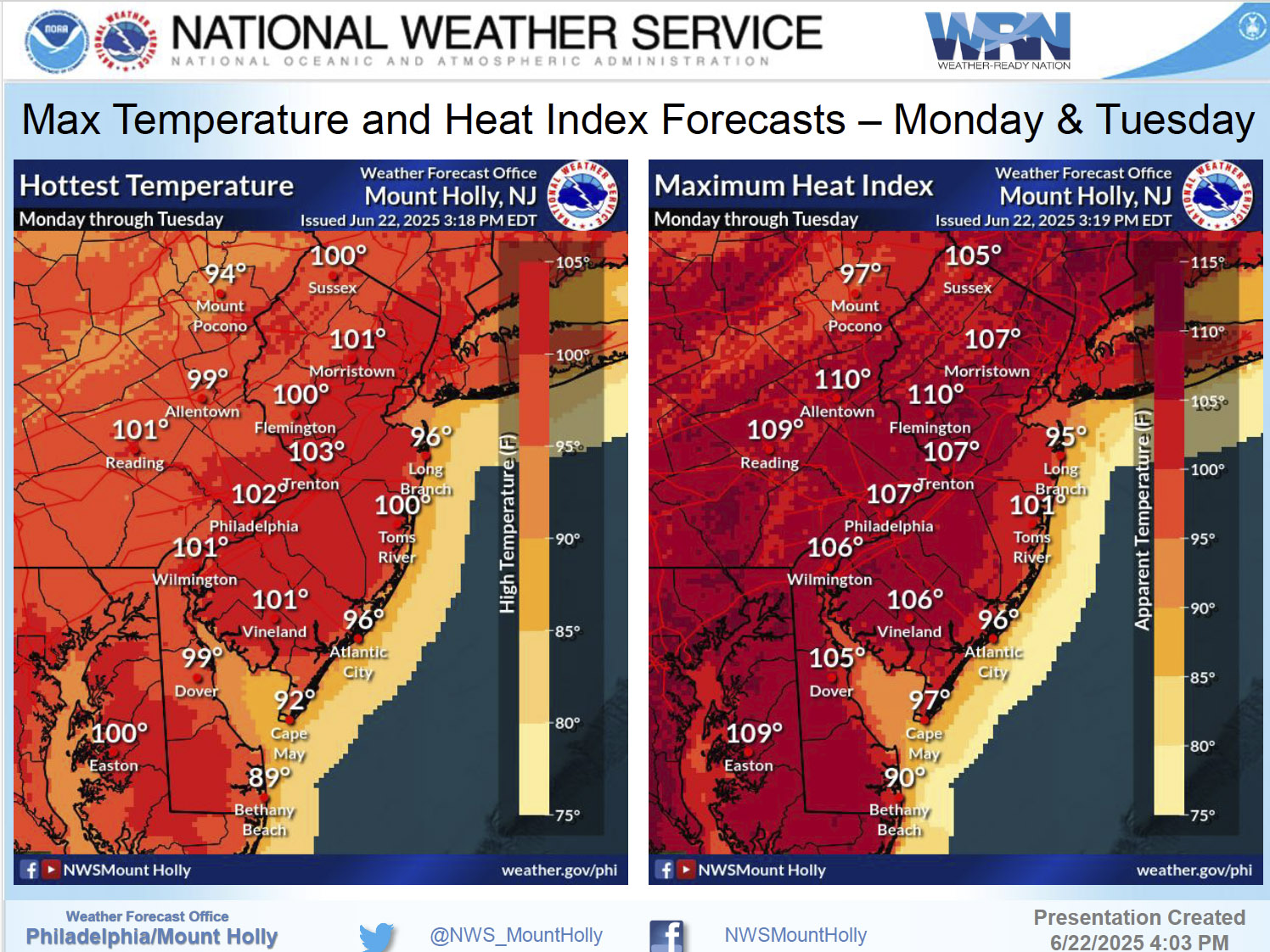
New Jersey is bracing for several more days of dangerous heat, with temperatures expected to climb into the upper 90s and heat index values reaching as high as 110 degrees in some areas. The extreme heat is forecast to continue through Wednesday, with Monday and Tuesday likely to be the hottest and most hazardous.
The National Weather Service has issued Excessive Heat Warnings and Heat Advisories for much of the state. In Mercer County, where a Heat Advisory was already in effect last week, the heat index on Thursday reached near 100 degrees. A severe band of thunderstorms that evening knocked out power to parts of the Hopewell Valley—underscoring the combined risks of extreme heat and summer storms. Some residents remained without electricity for more than 40 hours, compounding the health risks.
“This is a prolonged heat wave with an extreme risk of heat-related illnesses,” the NWS office in Mount Holly said in a briefing issued Sunday. “Multiple consecutive days of extreme heat and humidity will likely exacerbate the impacts.”
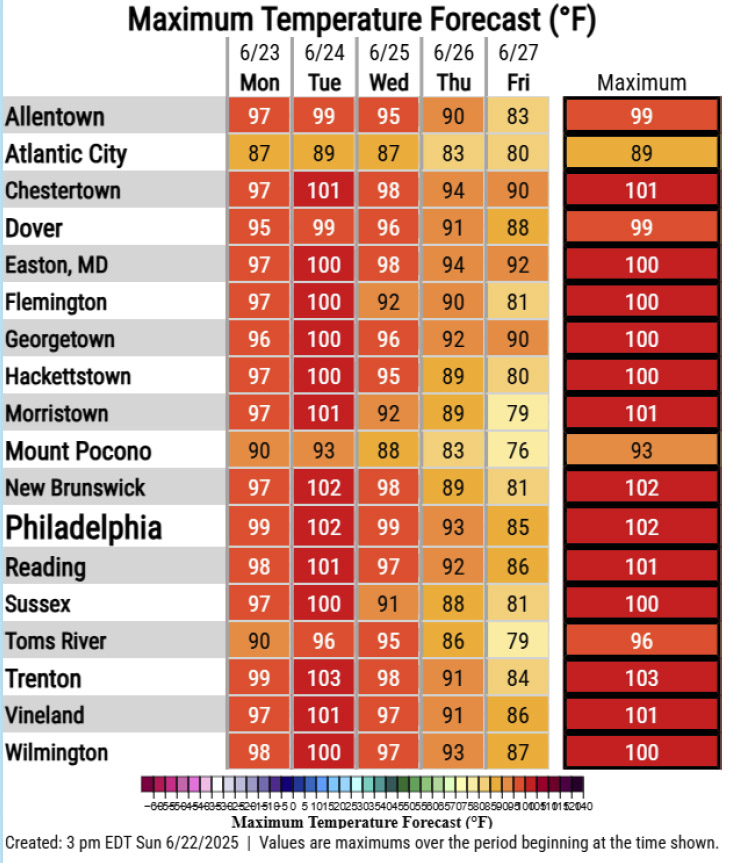
High temperatures Monday and Tuesday are expected to reach between 95 and 100 degrees, with little overnight relief. Low temperatures are forecast to remain in the mid 70s to near 80, raising health concerns for those without access to air conditioning.
State officials continue to emphasize the dangers of extreme heat, particularly for vulnerable populations.
“Extreme heat is one of the deadliest climate-related threats facing New Jersey,” Environmental Protection Commissioner Shawn M. LaTourette said last week. “It’s not just about discomfort—it’s about protecting our health and infrastructure.”
Acting Health Commissioner Jeff Brown added: “Rising temperatures come with real health risks. Heat exposure can worsen conditions like asthma, diabetes, and heart disease. Understanding those risks and knowing how to protect yourself and others can save lives.”
How to Stay Safe
The New Jersey Department of Health and Hopewell Township are urging residents to take the following precautions during the extreme heat:
- Drink water frequently, about one cup every 15 minutes when active outdoors.
- Wear loose, light-colored clothing.
- Avoid outdoor activity during peak heat hours (typically 11 a.m. to 4 p.m.).
- Stay indoors with air conditioning or in a cooled public facility.
- Recognize the signs of heat-related illness, including dizziness, nausea, excessive sweating, and confusion.
- Never leave children or pets in vehicles, even for a short time.
Hopewell Township has opened its Municipal Services Building as a public cooling station, available Monday through Friday from 8:30 a.m. to 4:30 p.m. The facility is open to all residents seeking relief from the heat.
Additional cooling centers are available statewide. Residents can call 2-1-1 or visit HeatHub.NJ.gov for real-time locations and updates.
Understanding the Risks
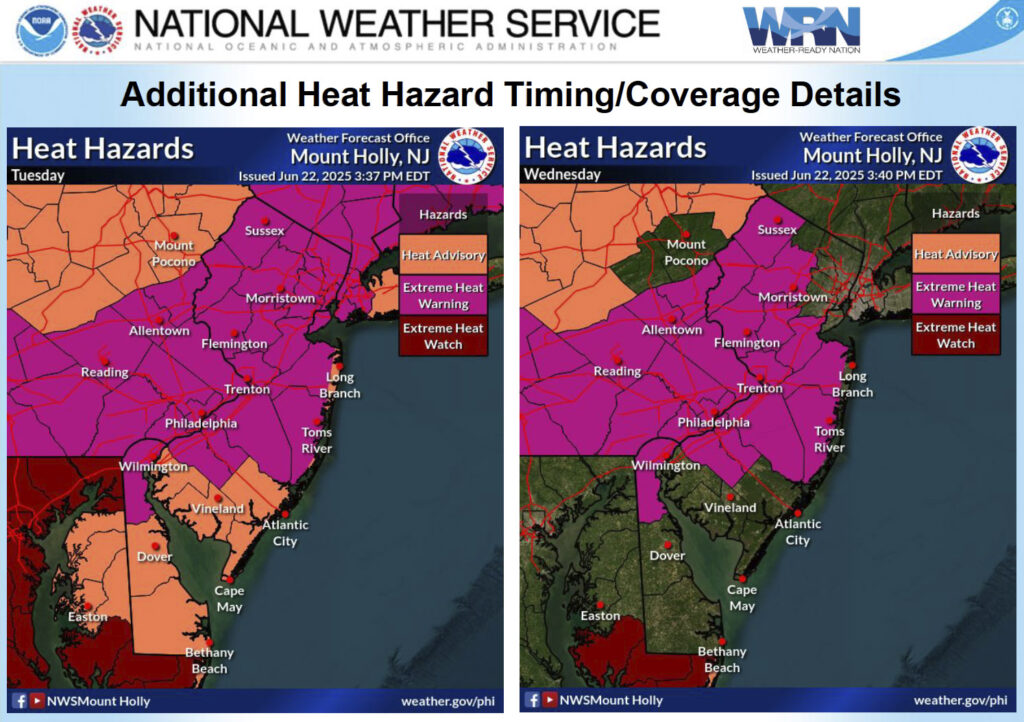
Older adults, infants, people with chronic medical conditions, outdoor workers, and individuals without air conditioning face the highest risk of heat-related illness. Mental and behavioral health concerns also rise during periods of extreme heat, with research linking it to increased emergency visits and worsened psychiatric symptoms.
Extreme heat—defined as three or more days with highs above 90°F—is becoming more common in New Jersey. The state is warming faster than the global average, and projections show that heat waves will become longer and more frequent by 2050. Urban areas with limited tree cover are particularly vulnerable to the “heat island” effect, where paved surfaces trap and radiate heat.
Statewide Planning and Support
To help communities prepare for increasingly severe heat events, New Jersey implemented the Extreme Heat Resilience Action Plan, one of only a few such state strategies in the U.S. The plan coordinates efforts across health, housing, infrastructure, and emergency systems.
The state also launched Heat Hub NJ, an online platform offering safety guidance, planning tools, and emergency alert information.
“The Murphy Administration is committed to making the state more resilient to the many impacts of climate change,” said Chief Resilience Officer Nick Angarone. “Extreme heat poses both immediate and long-term risks, and our job is to help ensure that New Jersey communities are equipped to respond.”