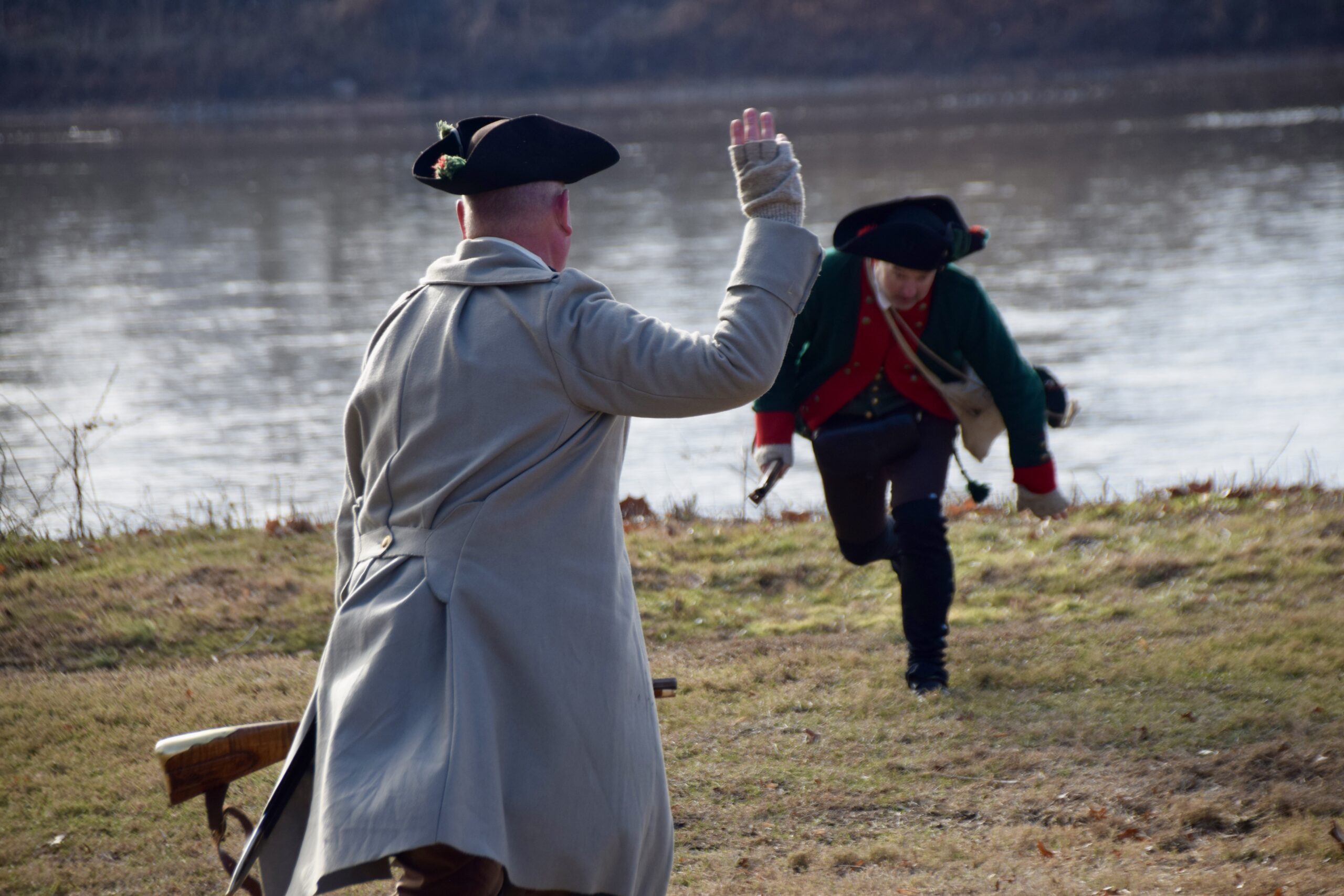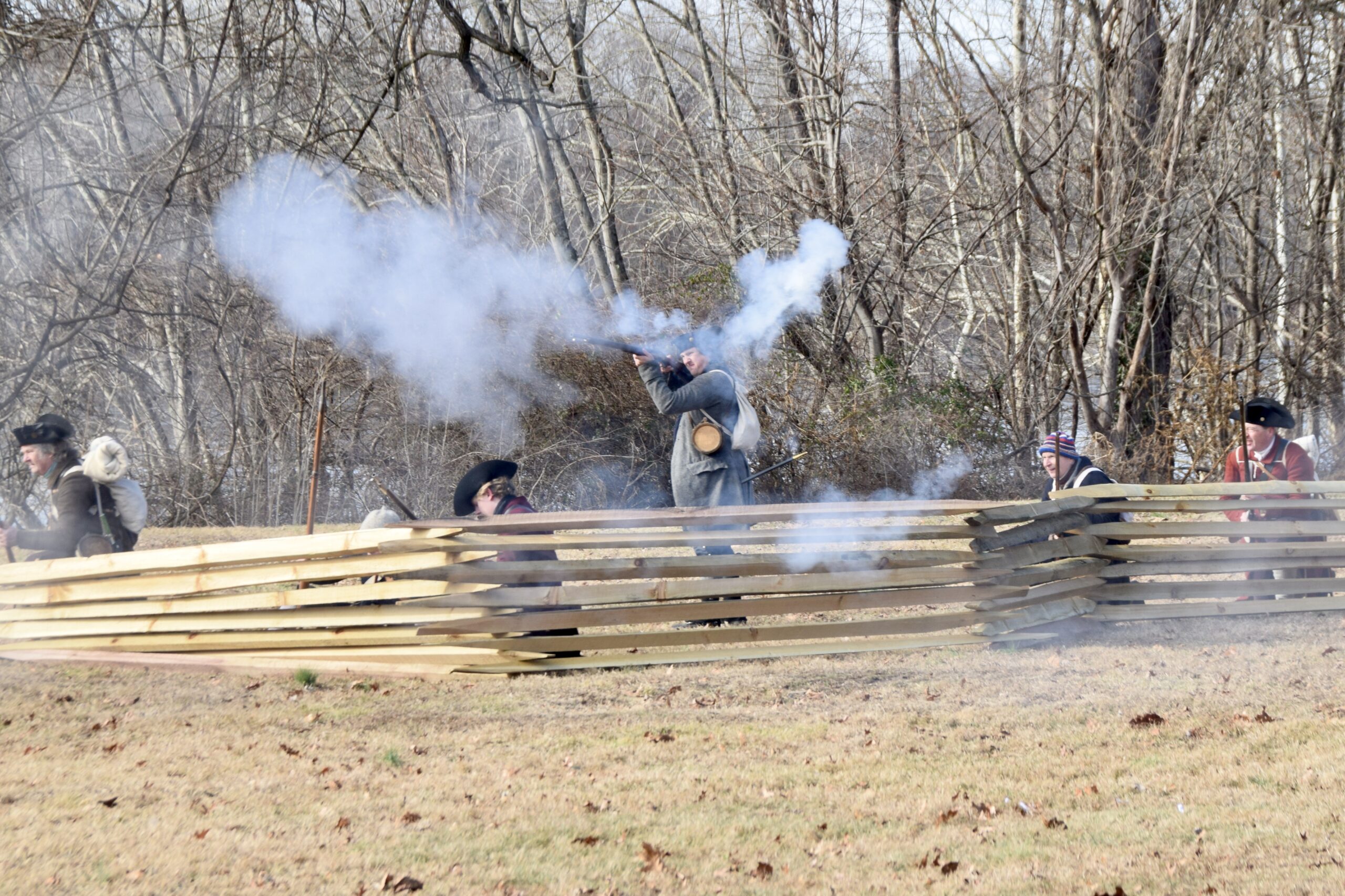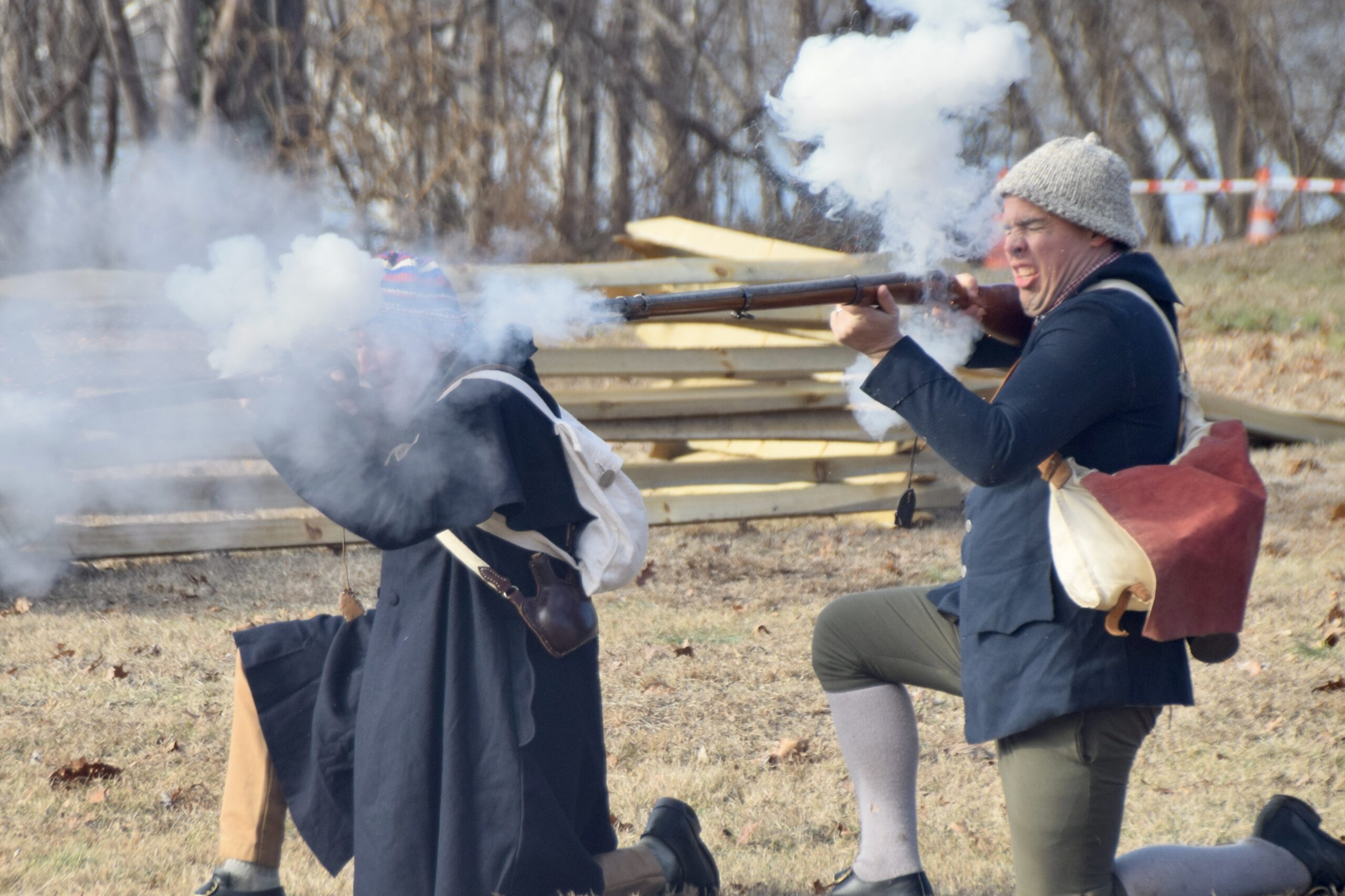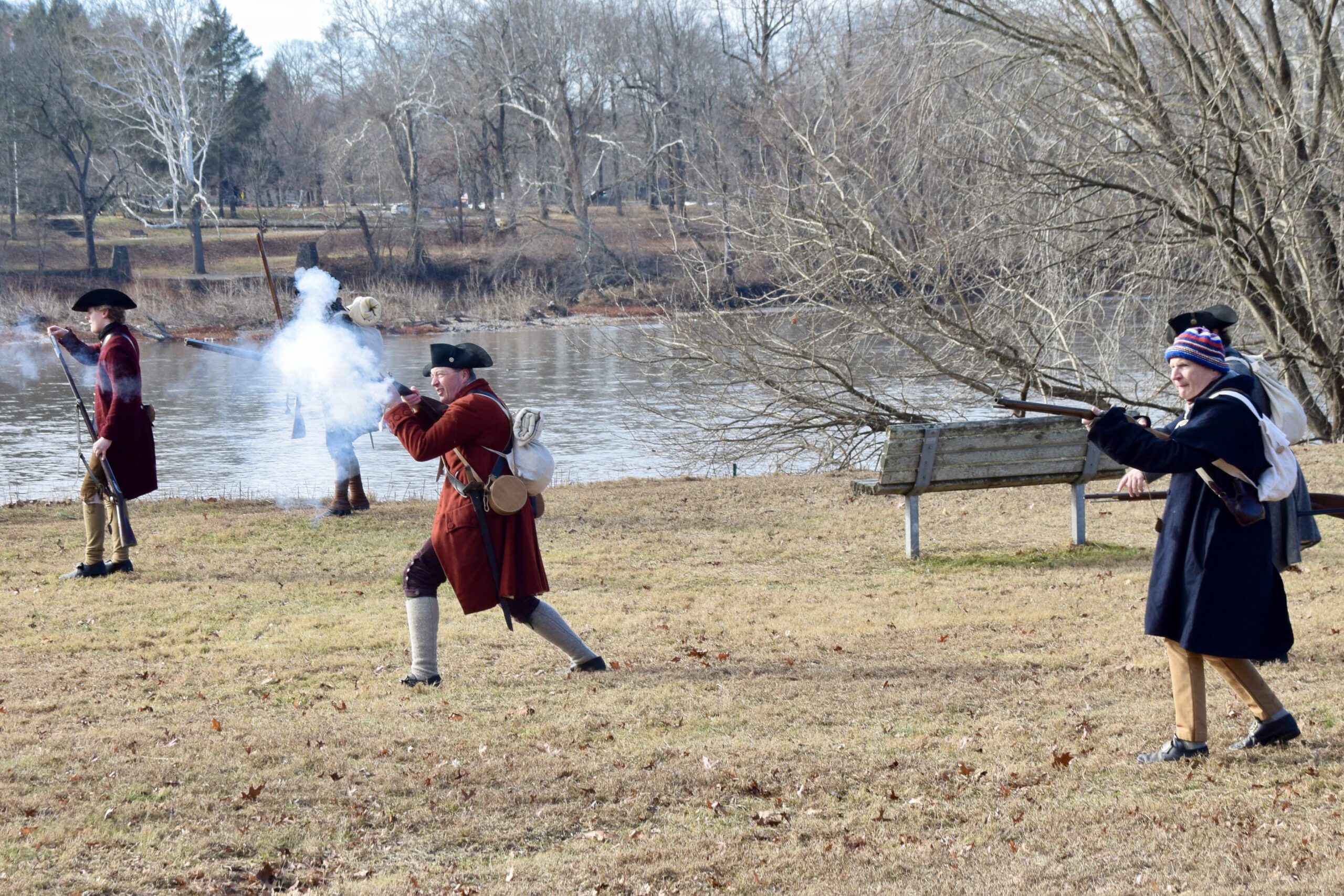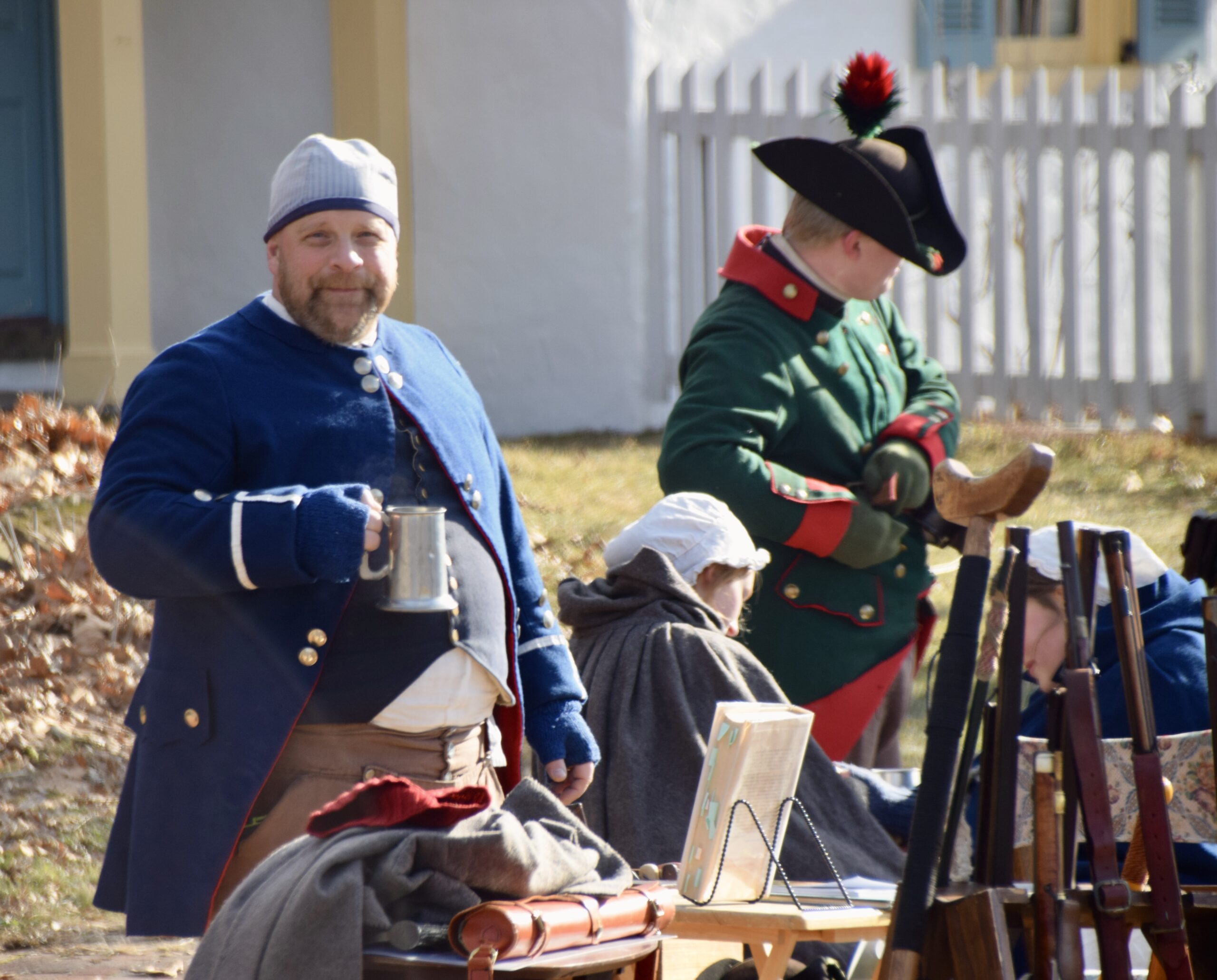

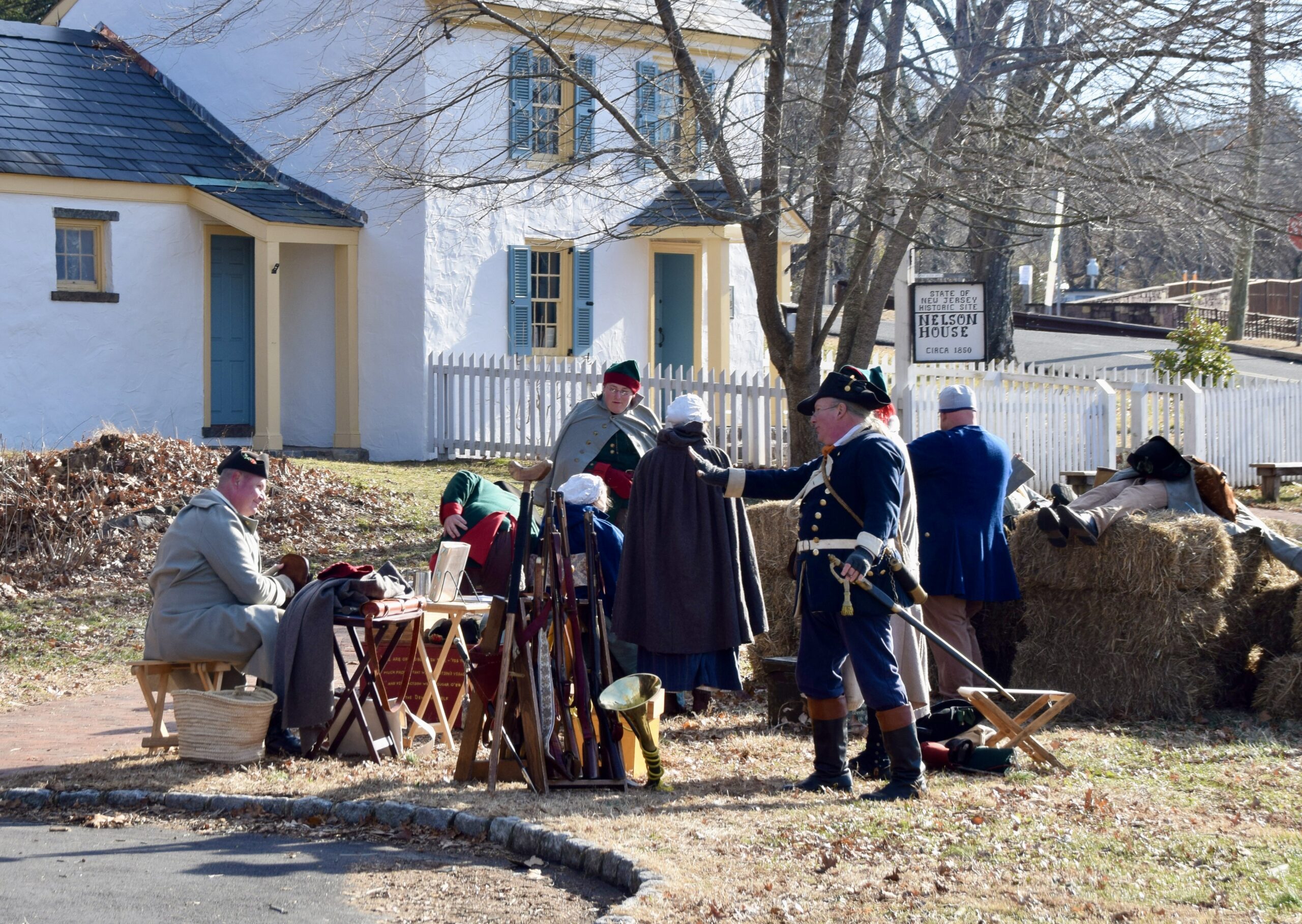
Visitors to Washington Crossing on Saturday stepped into the winter of 1776 as Von Prueschenk’s Hessian Regiment set up camp along the Delaware River, offering demonstrations and skirmish reenactments that highlighted the role of German Auxiliary troops in the American Revolution.
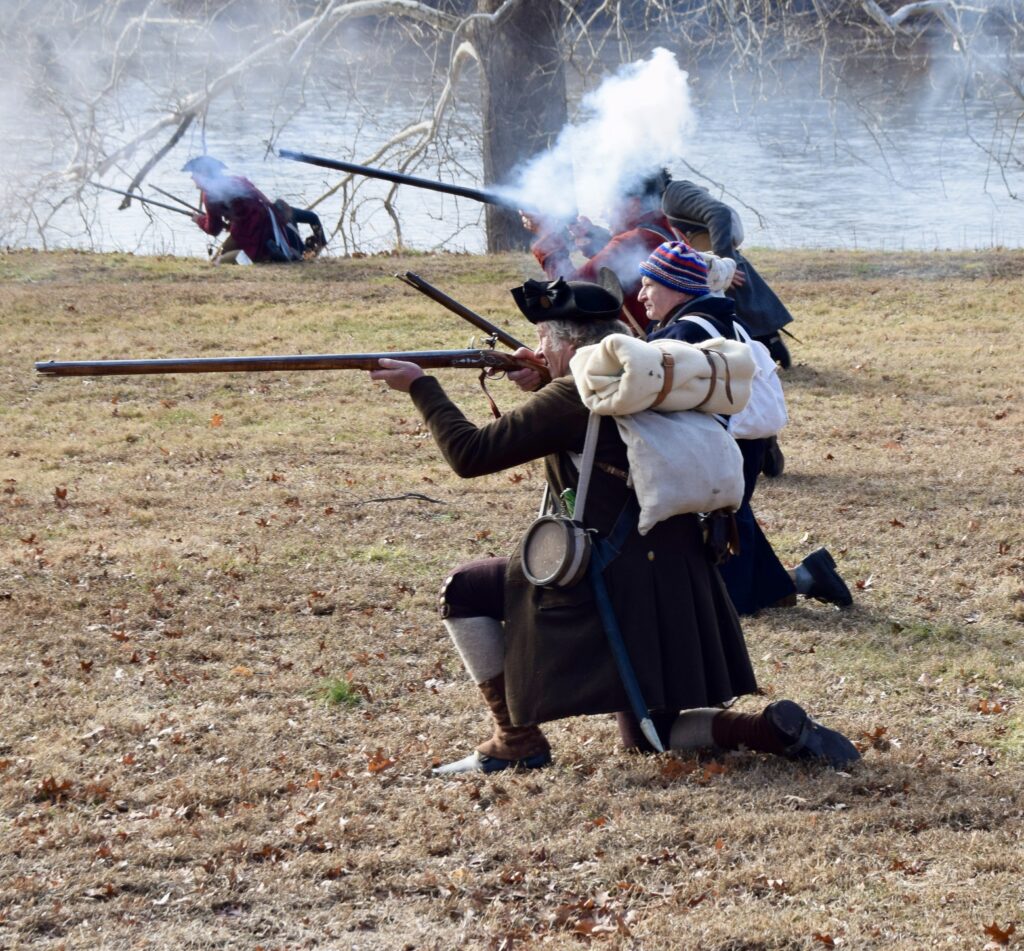
From 11 a.m. to 3 p.m., reenactors shared the sights and routines of Hessian camp life, with musket drills and scheduled tactical encounters throughout the day with another group as a Continental patrol. The program took place near the Nelson House on River Drive, just steps from the New Jersey entrance to the Washington Crossing Bridge.
Why These Skirmishes Matter: Setting the Stage for Washington’s Victory
The demonstrations offered a living backdrop to the events leading up to the Battle of Trenton, a pivotal moment that reshaped the American Revolution — and, as historians often note, the course of world history.
Hessians were professional soldiers from several German states who were hired by the British to fight in the American Revolution. Well-trained and heavily relied upon by Britain to reinforce its overseas campaigns, roughly 30,000 Hessian troops ultimately served in North America. Their presence in places like Trenton made them a central part of Washington’s 1776 campaign and a key focus of Sunday’s demonstrations.
By late December 1776, Washington’s army was in dire condition. Troops were deserting, morale had collapsed, and soldiers lacked food, shoes, blankets, and proper winter clothing. British and Hessian forces occupied much of the region, including Trenton, Princeton, Hopewell, and Lawrenceville, forcing New Jersey’s leading patriots — including John Hart, Richard Stockton, and John Witherspoon — into hiding.
It was under these conditions that Washington made his bold decision to cross the Delaware River on Christmas night, planning to strike the Hessian brigade stationed in Trenton. While Hessian officers spent the evening celebrating the holiday, the Continental Army silently crossed the icy Delaware at McConkey’s Ferry, arriving in present-day Ewing Township before marching eight miles south toward Trenton.
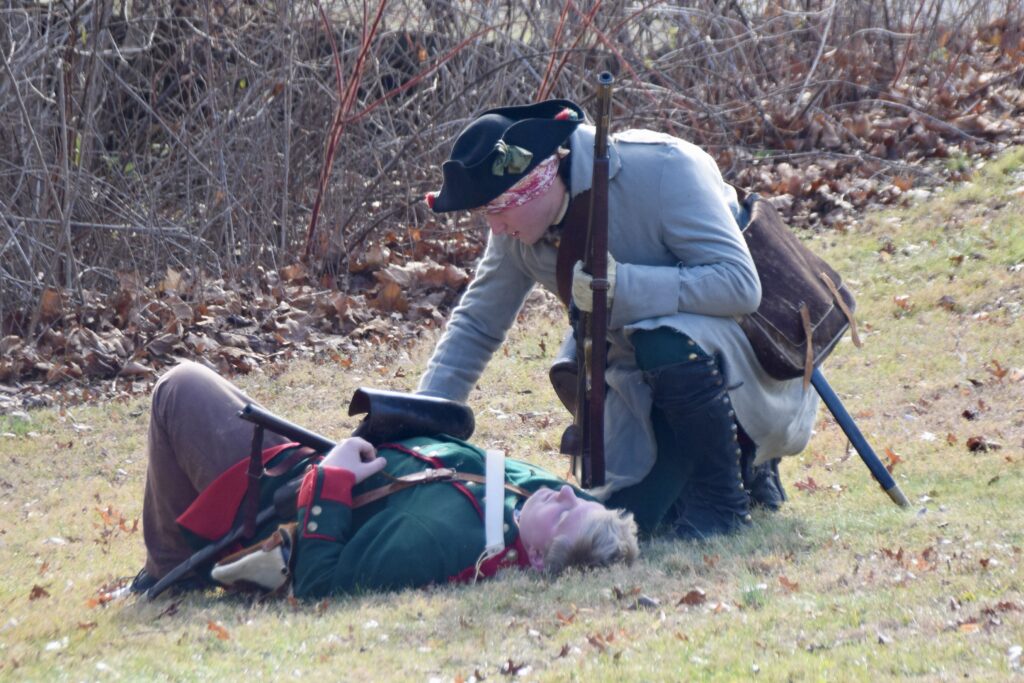
In the morning, Washington’s forces launched their attack. The battle was swift and decisive: five Hessian officers and sixteen privates were killed, and 918 Hessian troops were taken prisoner. American casualties were few — two men reportedly froze to death, and several, including a young James Monroe, were wounded.
For the first time, the ragged Continental Army proved it could defeat a professional European force. The victory electrified the colonies, reversed the momentum of the war, and cemented Trenton’s place as one of the most consequential battlefields in American history.
Sunday’s reenactment brought visitors closer to that moment, offering a chance to see Hessian soldiers as they would have moved, drilled, and fought during the historic campaign.
Photos by Mike Chipowsky, additional reporting by Seth Siditsky