

The Hopewell Township Committee voted unanimously Friday morning to adopt a revised Housing Element and Fair Share Plan (HEFSP), finalizing the township’s strategy for meeting affordable housing obligations through 2035.
The approval, made during a special public meeting at the municipal building, ensures the township meets a state-mandated June 30 deadline—a critical benchmark for avoiding “builder’s remedy” lawsuits that could allow high-density development without local control. The Planning Board approved the plan one day earlier following months of preparation and two meetings this week that included public comment.
“This is about preserving our ability to plan responsibly for our community, rather than having those decisions made for us through litigation,” said Mayor Courtney Peters-Manning.
All five Township Committee members—Peters-Manning, Deputy Mayor David Chait, Michael Ruger, Uma Purandare, and Kevin Kuchinski—supported the plan, with Ruger calling it “far better than the alternatives that could have emerged through the courts.”
Community Response: Frustration, Fear, and Acknowledgment
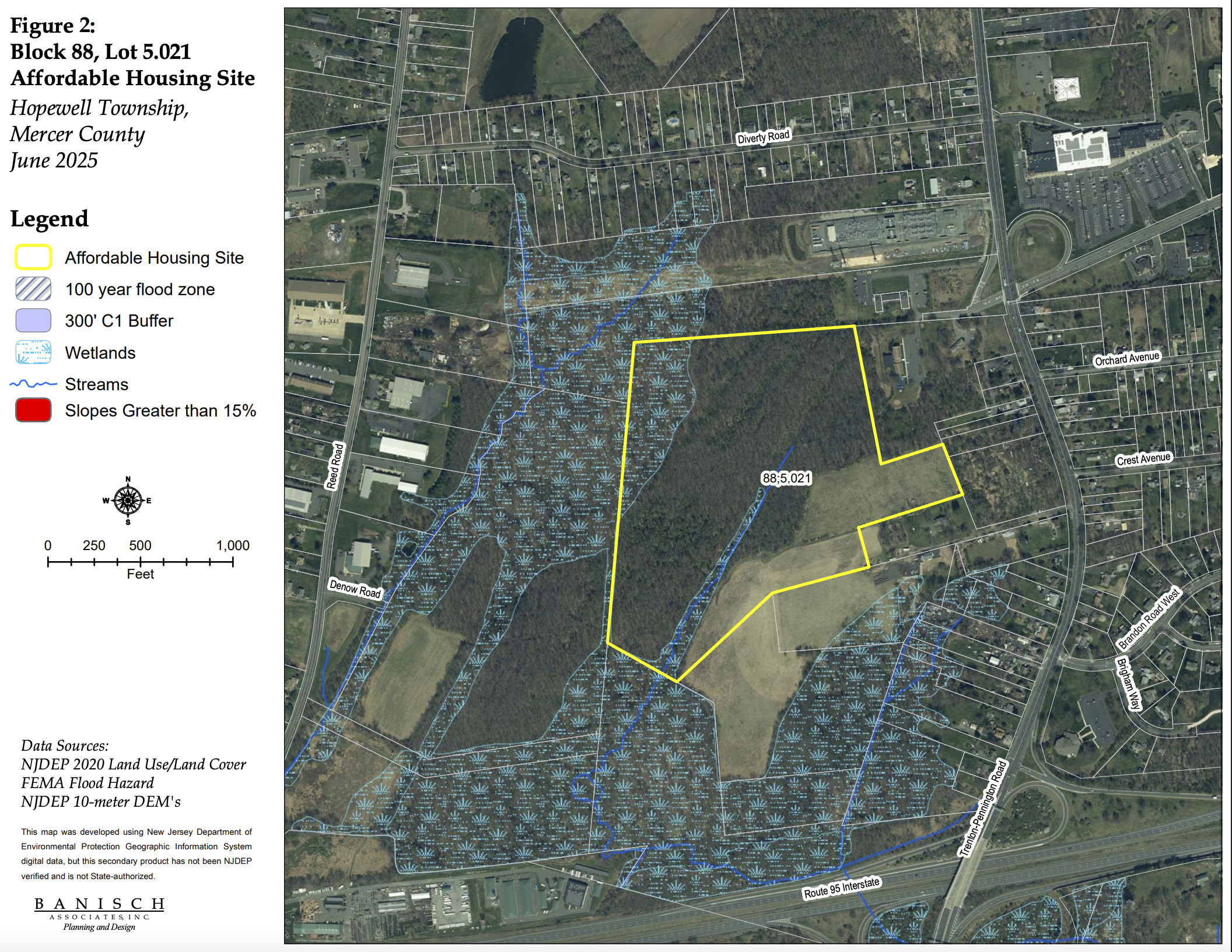
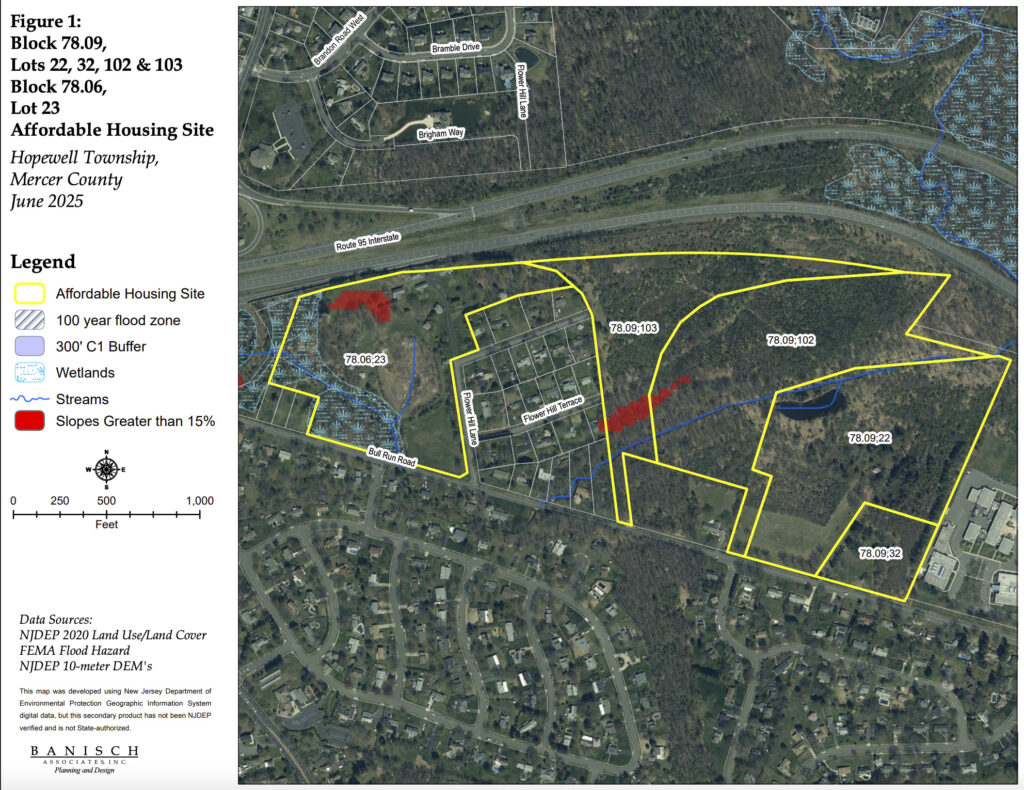
Many of the more than 40 residents who attended Friday’s meeting in person came from the Bull Run Road and Flower Hill neighborhoods, along with several Ewing Township residents whose properties abut the Hopewell Township border. As they had throughout the Planning Board discussions earlier in the week, they voiced deep concerns about traffic congestion, environmental impacts, stormwater flooding, and the potential transformation of quiet, rural neighborhoods.
One described a growing sense of anxiety over the loss of neighborhood character, saying the peace and open space that drew them to the area now feel at risk.
Allison Richman, who lives near the Shabakunk Creek on Bull Run Road, warned of worsening flooding in her neighborhood and said the figures presented by the Township underestimated existing environmental pressures. “Every time we get more than three inches of rain in less than a couple hours, it floods. It comes up to my house—and it didn’t do that before,” Richman said. “There are wetlands back there that need to be protected. There’s old-growth forests that are unique.”
Some speakers acknowledged the Township’s legal obligations under state mandates but said the process still left them feeling sidelined and pressured by the pace and scope of proposed changes.
Committee members acknowledged the emotion in the room.
“This is not a green light for development,” said Deputy Mayor David Chait. “Every project still has to go through the full planning process, with traffic, sewer, water, and environmental reviews—and the public will be involved at every step.”
Mayor Courtney Peters-Manning echoed that sentiment, noting that passing the plan was required to avoid state penalties and maintain local control. “This plan gives us the best chance to manage development in a way that fits with our community,” she said. “I know it’s not easy to hear that change is coming, but this gives us a framework to make that change responsibly.”
Residents who live near the proposed Bull Run site asked for additional coordination with Ewing Township, particularly around infrastructure capacity and road safety. Several warned of worsening traffic backups and said the existing roads already felt dangerous.
Plan Breakdown: Affordable and Age-Restricted Housing to Dominate This Round
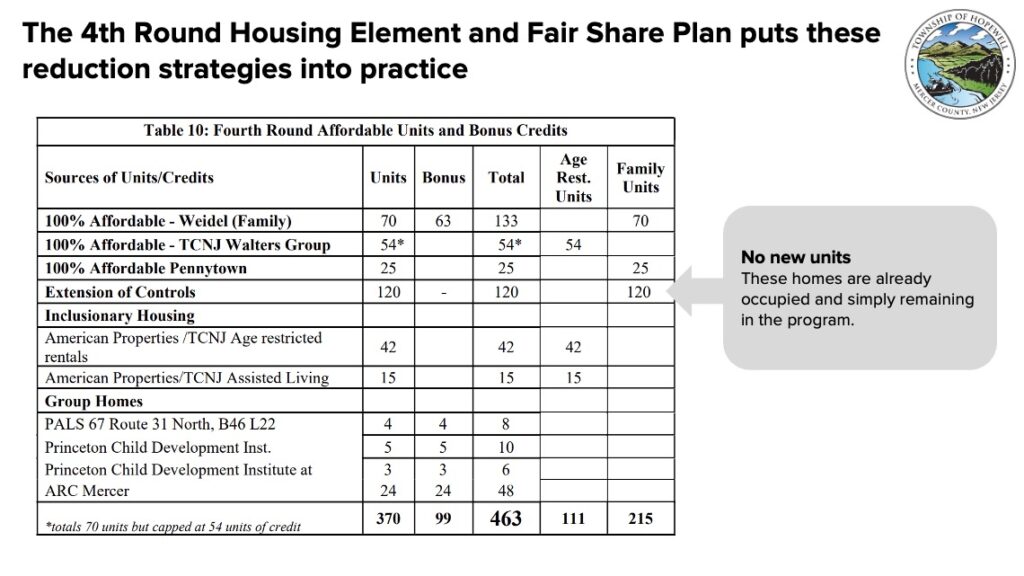
The adopted Housing Element and Fair Share Plan accounts for 469 affordable housing units or credits—surpassing Hopewell Township’s Fourth Round obligation of 449 units, which includes 50 carried over from a prior cycle. The Fourth Round, established by state court settlements and Fair Share Housing requirements, sets the number of affordable homes the Township must plan for through 2035. Because certain types of housing—such as 100% affordable developments, senior housing, or rentals—receive additional “credits” under state rules, the total credit count may differ from the actual number of physical units. By exceeding the 449-unit requirement, officials say the Township reduces its risk of future litigation or court-imposed development.
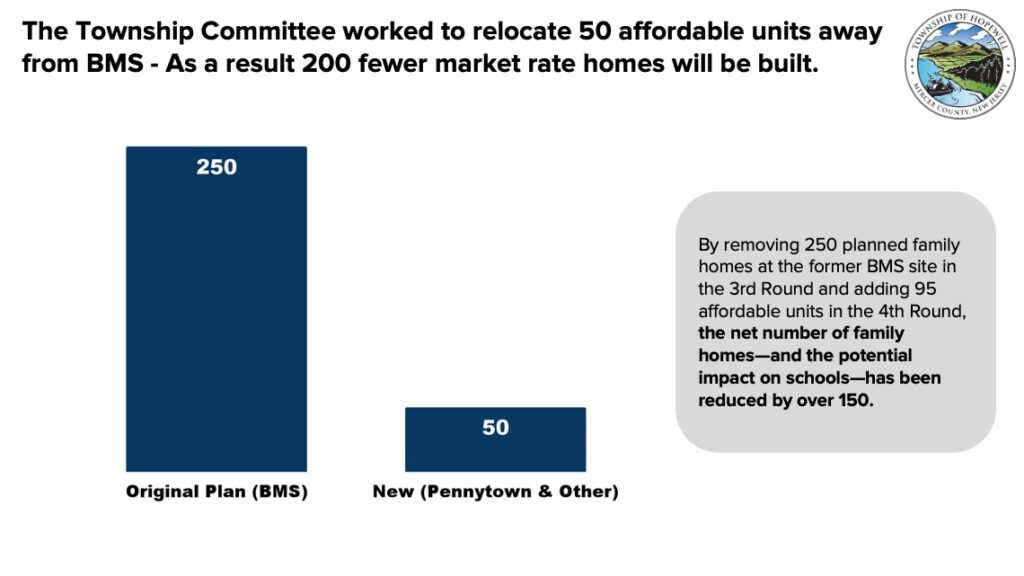
Importantly, only 95 of the units are considered family homes, according to Township officials. Most of the plan relies on 100% affordable developments and age-restricted communities—housing types that typically have less impact on school enrollment.
“There’s been a lot of confusion out there,” said Deputy Mayor David Chait. “Only a small portion of these units are family housing. The rest are age‑restricted or entirely affordable units.”
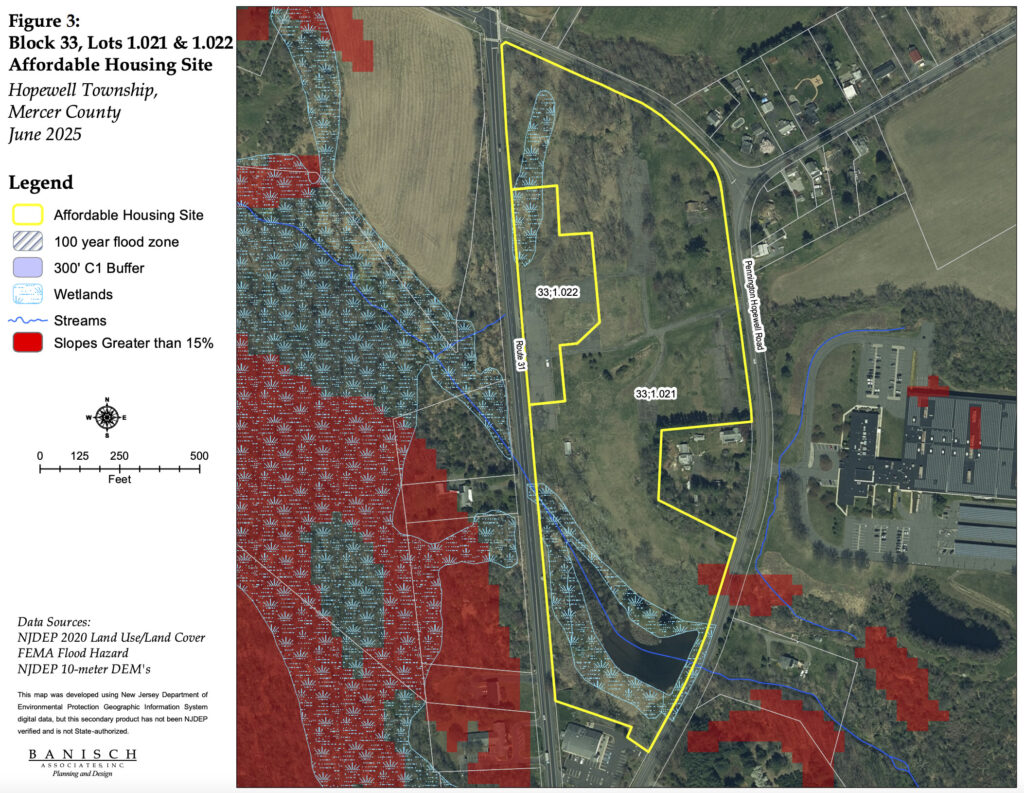
This differs from the community’s experience in earlier rounds of development which included more “inclusionary” projects made up of 80% market-rate and 20% affordable units. These tend to generate more school-age children and related infrastructure demands. Examples of Round Three projects include the Scotch Road corridor and developments near the Pennington ShopRite.
Looking ahead, officials said the most likely projects to move forward first are the 100% affordable housing developments, due to state requirements.
“State rules require 100% affordable developments to be shovel-ready in two years,” said Mayor Courtney Peters-Manning.
Responding to calls from some residents to postpone or reject the plan entirely, Township Committee Member Kevin Kuchinski said the June 30 deadline left no room for delay.
“I’ve heard people say we should just delay or not do this,” Kuchinski said. “That’s not an option. If we missed the deadline, we would lose control—and likely see even more aggressive development.”
Committee Member Uma Purandare emphasized the Township’s ongoing oversight of any development applications: “We can’t stop people from owning land and seeking to build,” she said. “But we will continue to hold developers accountable to the standards and values of this community.”
Next steps
The HEFSP will now be submitted and reviewed by state agencies for final approval. Approval of the plan does not authorize construction. Developers with each project must still apply for individual site plan approvals through the Planning Board, meeting all of the standards through a public review process.
“We’re not done,” said Peters-Manning. “This is just one step in a much longer process—and we’re committed to doing it right.”