

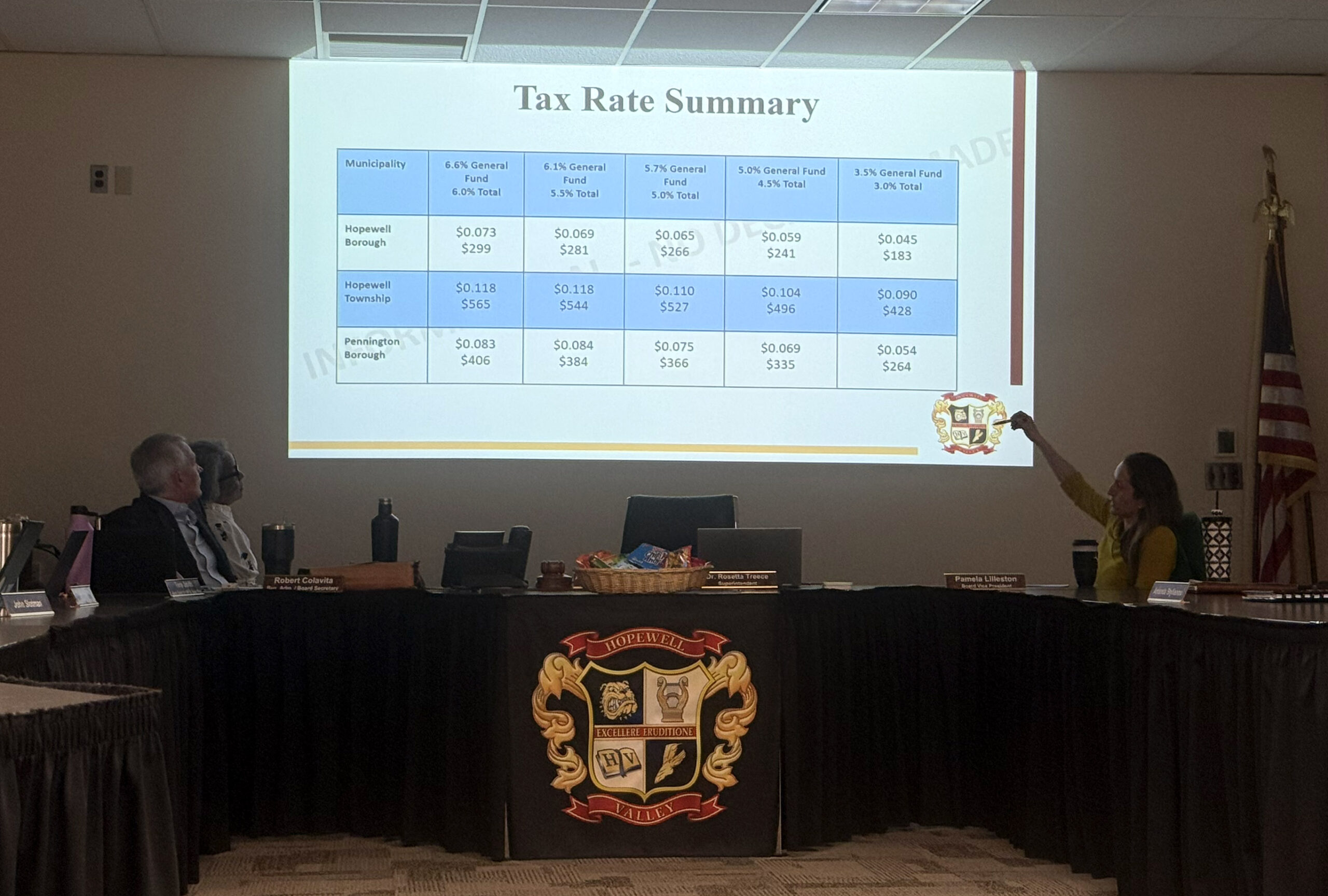
Facing rising fixed costs, enrollment growth, and limited flexibility in local revenue, the Hopewell Valley Regional Board of Education is preparing residents for a challenging budget season that is likely to include both a tax increase and targeted spending reductions.
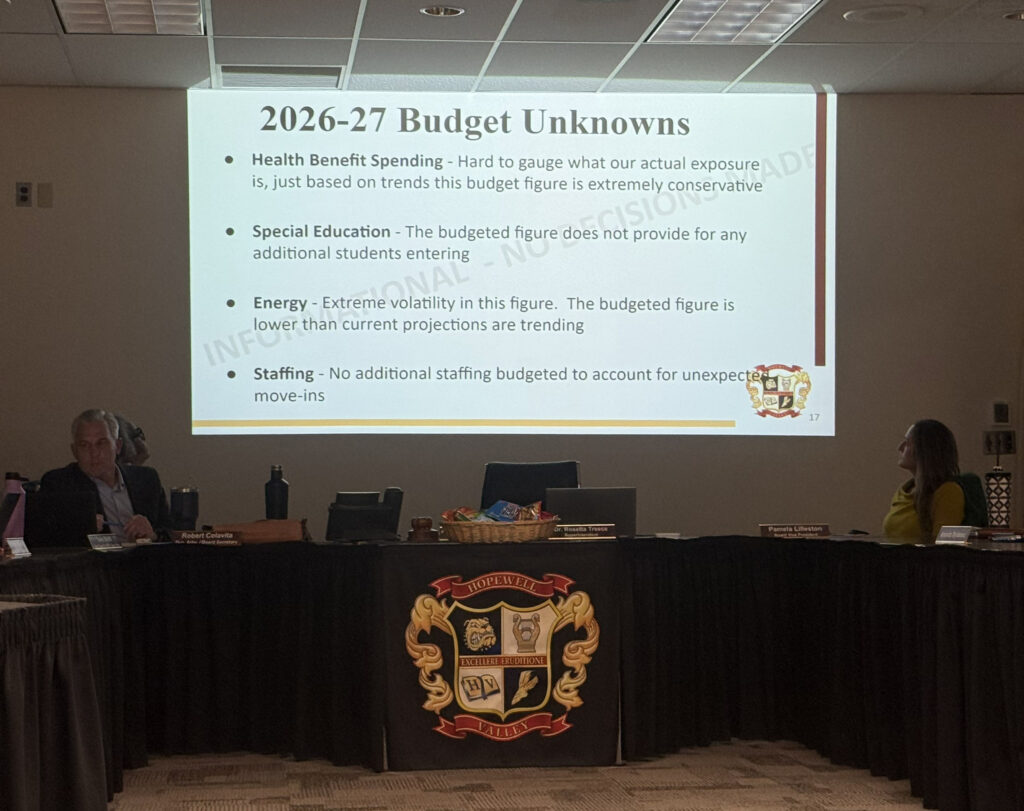
During a March 16 budget strategy work session, held a few days after the district received state aid figures, administrators and board members outlined a financial outlook shaped largely by escalating health care expenses, rising energy costs, inflationary pressures, and structural funding constraints.
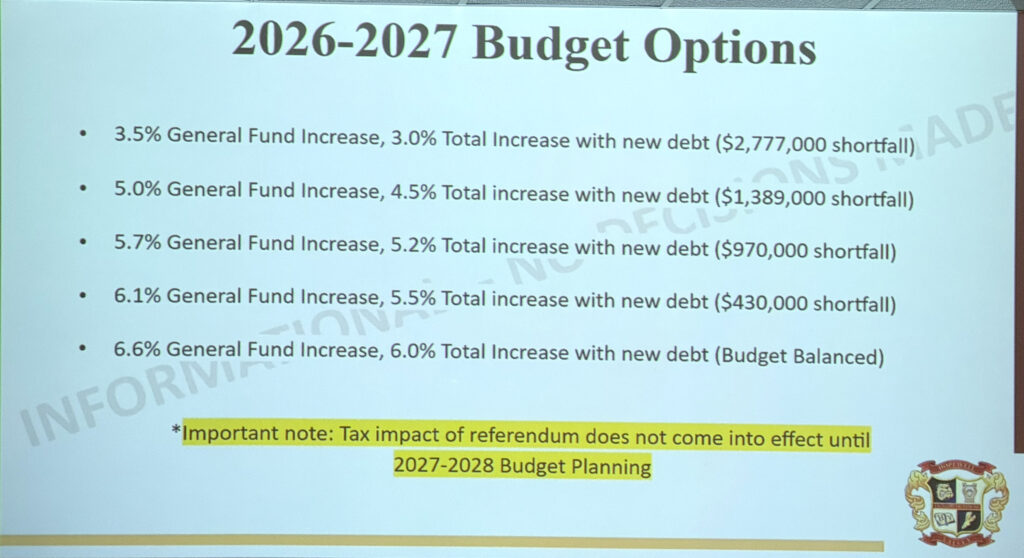
District officials indicated that the current working scenario includes a general fund tax levy increase of roughly 5.7% to 5.8%, even as the district continues to evaluate reductions needed to close a projected budget gap.
Assistant Superintendent for Finance and Board Secretary Robert Colavita told the board that increases in employee health benefits are among the largest drivers of spending growth.
Budget presentation slides showed health care costs rising from approximately $17.3 million in the current year to about $20.4 million next year, reflecting projected increases of 20% to 25%.
Colavita noted that Hopewell Valley’s status as a self-insured district has helped moderate those increases compared with districts participating in the state health benefits plan, where projected premium growth exceeds 30%. Even so, he said, health care costs continue to place significant pressure on the district’s financial planning.
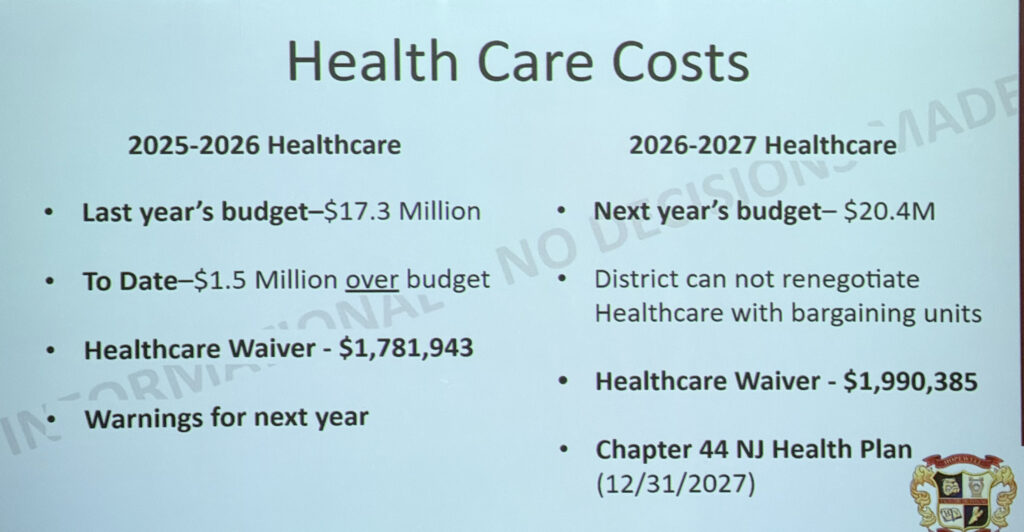
Administrators also explained that contractual and legal structures limit the district’s ability to renegotiate health benefit costs in the near term, with potential changes unlikely before the next round of bargaining discussions expected later in 2027.
Smaller reductions, staffing adjustments under review
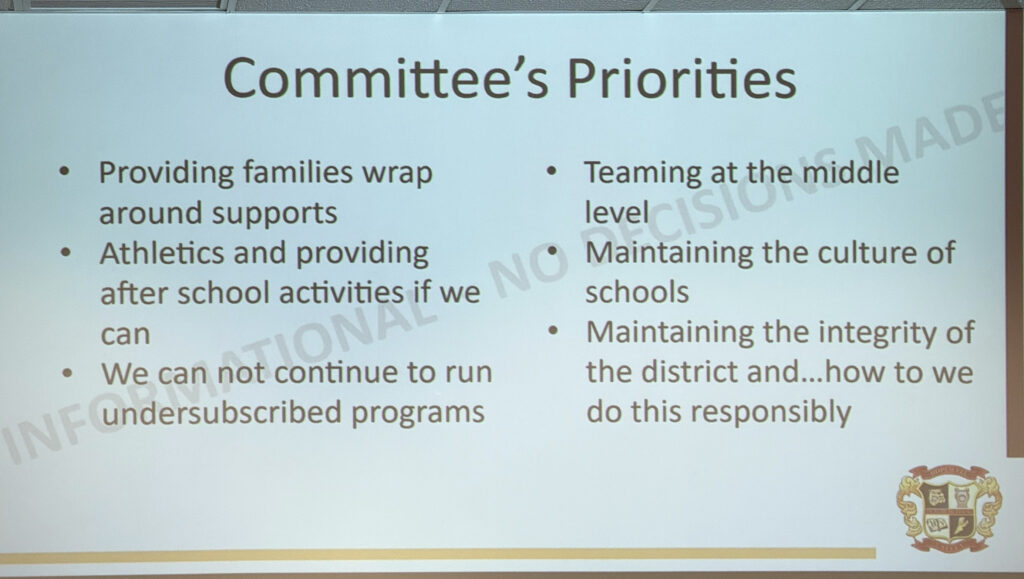
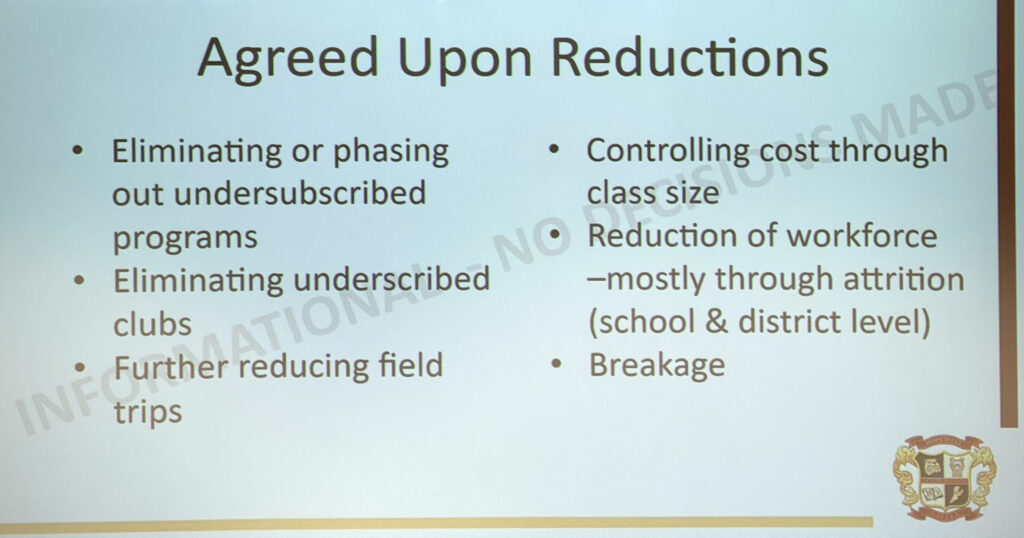
To address the remaining shortfall, district officials reviewed a preliminary list of potential reductions focused largely on discretionary spending rather than sweeping eliminations of core academic programs.
Options discussed included adjustments to departmental budgets, curriculum and instruction allocations, assemblies and guest speakers, subscriptions and supplies, and other non-mandated expenses.
Officials said staffing changes would likely occur primarily through attrition — such as retirements or unfilled vacancies — rather than large-scale layoffs, though specific personnel decisions were not discussed publicly.
Superintendent Dr. Rosetta Treece said the district is working to balance fiscal responsibility with maintaining the strength of its instructional program, emphasizing that decisions are being guided by the goal of preserving overall educational quality while responding to financial realities.
Tax scenarios show increase still leaves gap
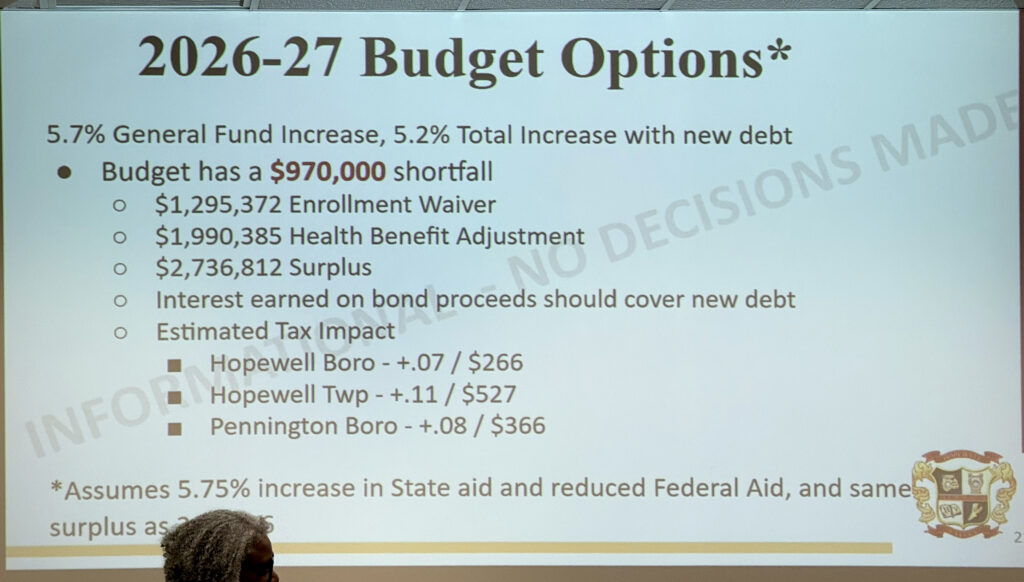
Budget scenarios presented during the session illustrated how different tax levy increases would affect the district’s ability to close the projected deficit.
Even with an increase approaching 5.7%, administrators said the district would still need to make targeted cuts to balance the budget. Lower increases would deepen the shortfall, while higher increases could reduce the need for reductions but raise concerns about affordability. With a 5.7% increase the district is still expecting about a $1 million shortfall.
Board members discussed the importance of identifying a path that maintains core academic priorities while acknowledging the financial pressures facing both the district and taxpayers.
Board member and finance committee chair Mark Peters noted that rising costs tied to health care, inflation, and state policy constraints suggest the district will need consider tax increases above the traditional 2% cap in future years when waivers are available or when the state makes fundamental changes to the system.
Structural pressures extend beyond a single budget
Administrators emphasized that long-term financial planning will continue to be shaped by state funding policies and the limited range of revenue tools available to local school districts.
Under New Jersey law, districts may seek permission to exceed the tax levy cap for certain expenses, including enrollment growth and increases in employee health insurance costs. Officials said those waivers are likely to remain an important factor in future budgets.
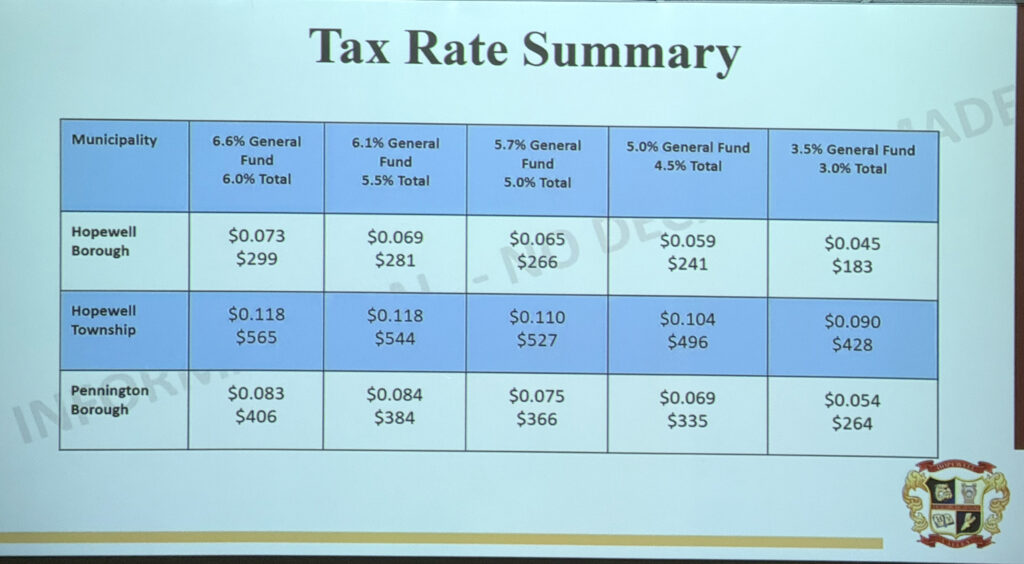
Colavita also told board members that the full tax impact of the district’s 2025 voter-approved facilities referendum has not yet been felt. Because borrowing and project expenditures are phased in over time, taxpayers are expected to see more of the referendum’s cost reflected in school tax bills beginning in 2027, rather than in the upcoming budget year.
District leaders said understanding the distinction between the capital referendum passed last fall, which funds building repairs and expansions, and the annual operating budget, which pays for daily school operations and salaries, will be important as the community evaluates upcoming tax proposals.
Financial pressures reflected in districts across New Jersey
The fiscal challenges facing Hopewell Valley are not unique, with districts across New Jersey confronting rising fixed costs and difficult budget decisions.
In Mercer County, voters in Robbinsville recently rejected a referendum that would have allowed the district to raise approximately $5 million in additional local funding to address an existing budget gap. District officials there have warned that without new revenue, the system may face significant layoffs affecting classroom teachers and staff, along with reductions to athletics and extracurricular programs.
Similar financial pressures are playing out in other parts of the state. In Montclair, voters remain closely divided over a multi-question school funding referendum totaling $17.6 million, with unofficial tallies showing strong support for a one-time tax increase but an extremely narrow margin on a proposed permanent tax hike. Results are pending certification as officials review vote-by-mail ballots.
Growth and PILOT agreements add complexity
Hopewell Valley board members also discussed how residential development is contributing to enrollment growth and increased service demands, particularly in Hopewell Township.
While new housing can generate municipal revenue through long-term Payments in Lieu of Taxes (PILOT) agreements, those funds do not flow to the school district. As a result, officials said the district can raise taxes to meet their budget but the impact of those taxes are not felt by every resident.
Administrators noted that developments such as Hopewell Parc and The Collection have already resulted in the addition of seven new bus routes this year, increasing transportation costs by more than $60,000.
Board members said that when the district seeks additional funding through the tax levy, the burden is felt primarily by residents whose properties are not part of PILOT agreements.
Officials indicated that continued discussions with Hopewell Township leaders will be important as both entities navigate the fiscal impacts of growth. The township has already committed $16.1 million in PILOT revenue toward the planned addition at Bear Tavern Elementary School.
Board member Dr. Amanda Stylianou cautioned that new development should not be viewed as an immediate financial solution to building new wish list items in the community, emphasizing the need to ensure long-term fiscal stability of the core of what makes the community a community before expanding programs or services.
“If we thought of the community as a house,” Stylianou said. “We must make sure our foundation is secure, before we buy new furniture.”
Redistricting discussions signal broader system impact
District leaders also acknowledged that changing enrollment patterns will require future redistricting conversations affecting schools across the district.
Treece said the effects of growth cannot be viewed solely through the lens of individual buildings such as Bear Tavern or Stony Brook. Instead, she noted that planning must consider capacity, transportation logistics, and program balance throughout the district. All four elementary schools will be looking at some redistricting as we look ahead at 2027.
Budget timeline ahead
The board is expected to introduce a full budget at the board meeting on Monday at 6:30pm at the board of education building, with public hearings and additional review scheduled before final adoption.