
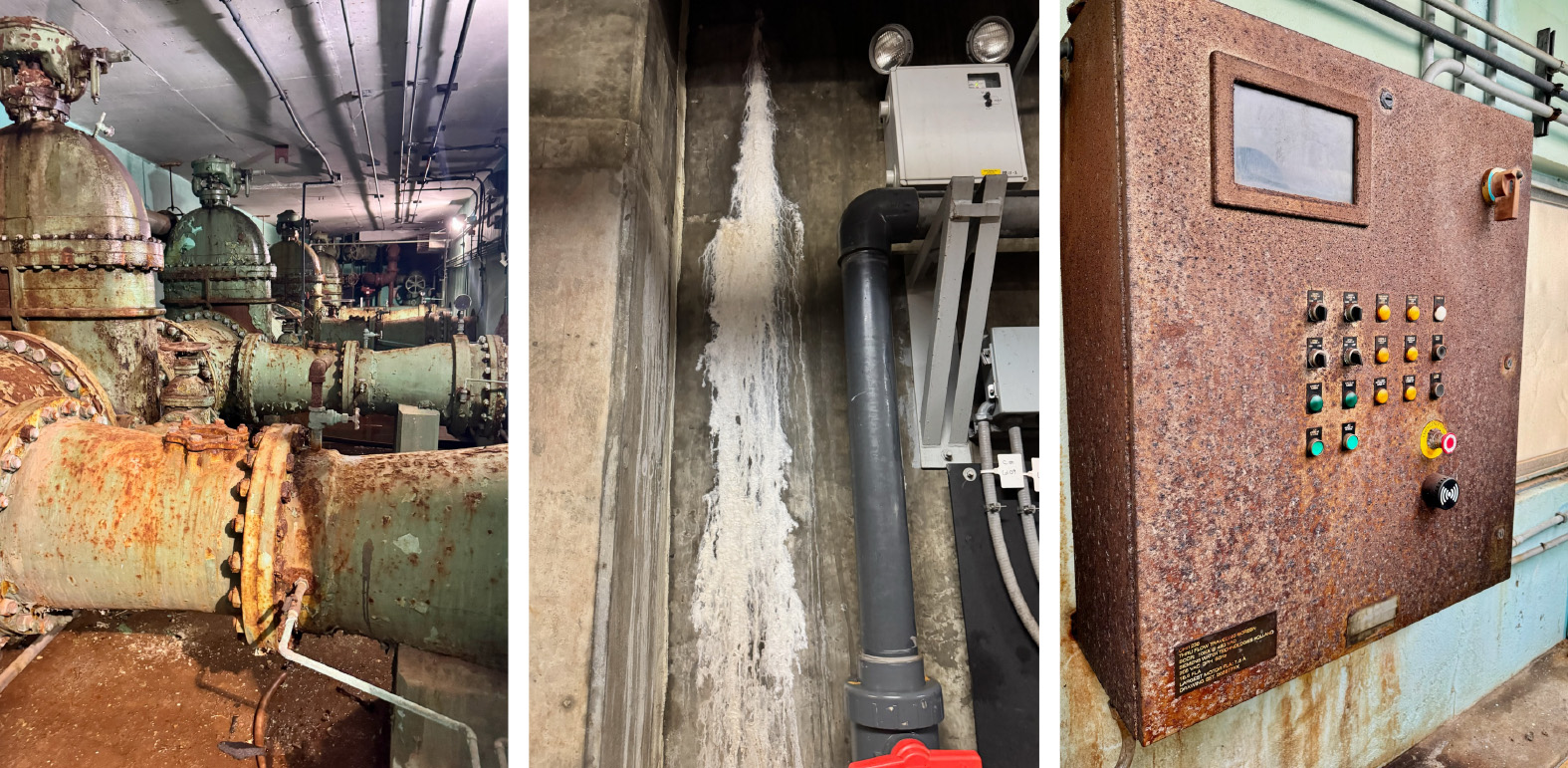
The New Jersey Department of Environmental Protection (NJDEP) is warning that Trenton Water Works (TWW) remains at “extremely high risk of systemic failure,” citing deteriorating infrastructure, poor management practices, and decades of underinvestment. In a July 29 letter to Trenton Mayor Reed Gusciora and City Council, NJDEP Commissioner Shawn LaTourette urged the city to formally commit to a public process to explore restructuring the troubled utility into a regional public water authority.
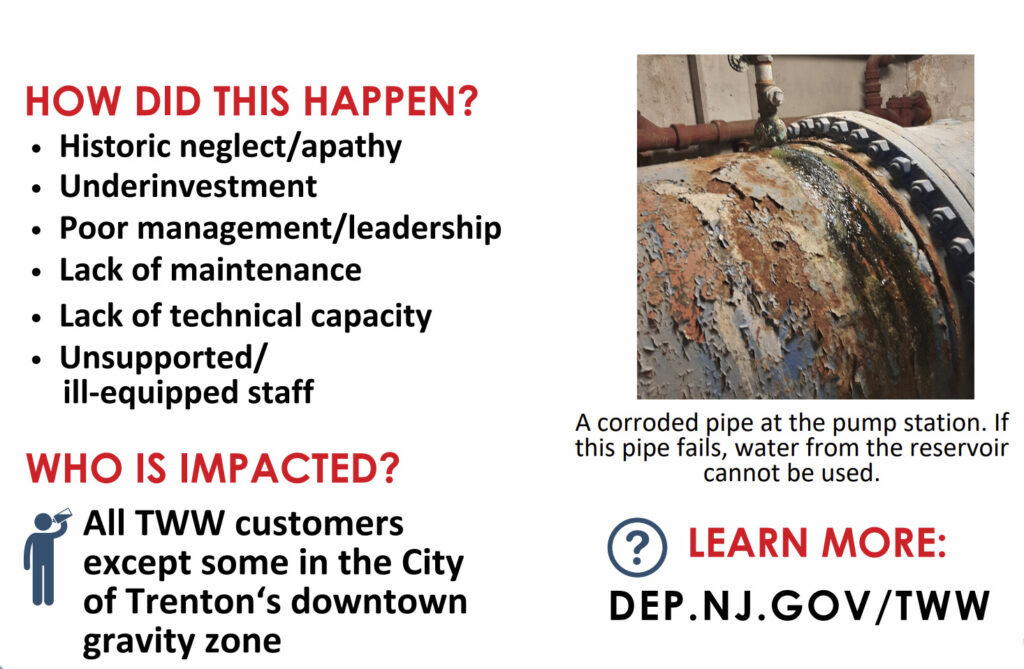
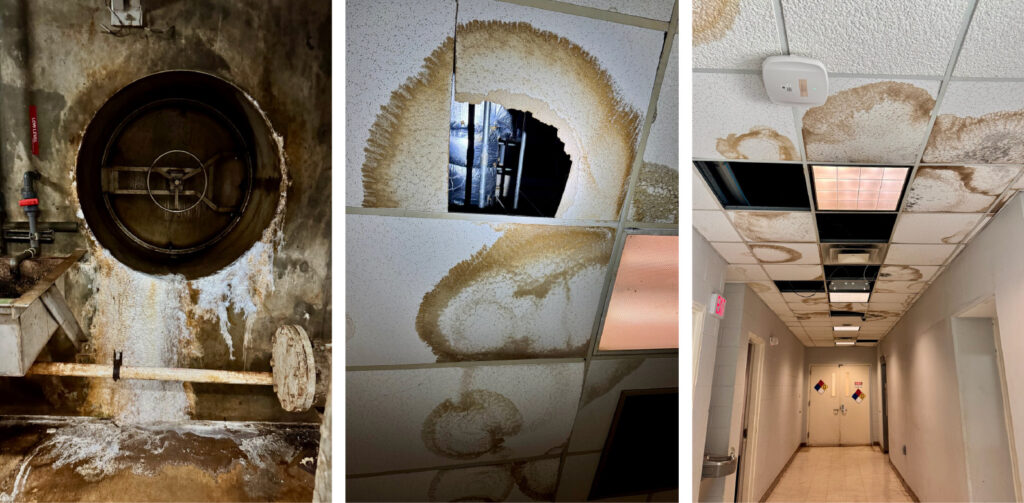
The five-page letter outlines what NJDEP called “grave conditions” at the plant, including corroded equipment, hazardous electrical setups, and a workforce unable to keep pace with basic operations. The agency has provided direct oversight and emergency support at the city-run utility since late 2022, but LaTourette said that support will now be scaled back in favor of heightened enforcement and capital planning oversight.
“While the system is more stable today, the central problem remains,” LaTourette wrote. “TWW is plagued by historic neglect, decades of underinvestment, and operational risks that threaten the reliability of uninterrupted water service to the greater Trenton area.”
Over 200,000 residents are served by TWW—including those in Ewing, Hamilton, Hopewell, and Lawrence—with more than half of those customers live outside Trenton. NJDEP and the mayors of the surrounding municipalities have jointly supported soliciting third-party support to begin an 18- to 24-month regionalization study. But the process cannot move forward without a formal commitment from Trenton, which the state asked to be delivered by Aug. 8.
Mayor Gusciora Pushes Back
In a preliminary statement issued Thursday, Trenton Mayor Reed Gusciora rejected claims that the city has failed to act and accused the state of trying to “strong-arm” the city into relinquishing control of its water system without adequate public input.
“We are not defending the status quo; we are actively working to reverse decades of underinvestment through transparent, sustainable reform,” Gusciora said, pointing to TWW’s ongoing capital improvement plan and organizational restructuring. “What we cannot support, however, is being strong-armed into a predetermined outcome—namely, regionalization—without proper due diligence, public engagement, and accountability.”
Gusciora added that his administration created TWW as a standalone department and brought in experienced leadership. He said a formal response to NJDEP is forthcoming.
Suburban Mayors Call for Immediate Action
Hamilton Township Mayor Jeff Martin and Hopewell Township Mayor Courtney Peters-Manning expressed support for regional restructuring and criticized the current condition of the system.
“The status quo is unsustainable, and public safety is my top priority,” said Mayor Martin. “I remain hopeful that the city’s leadership will put the public health of 200,000 residents at the forefront of their decision-making process.”
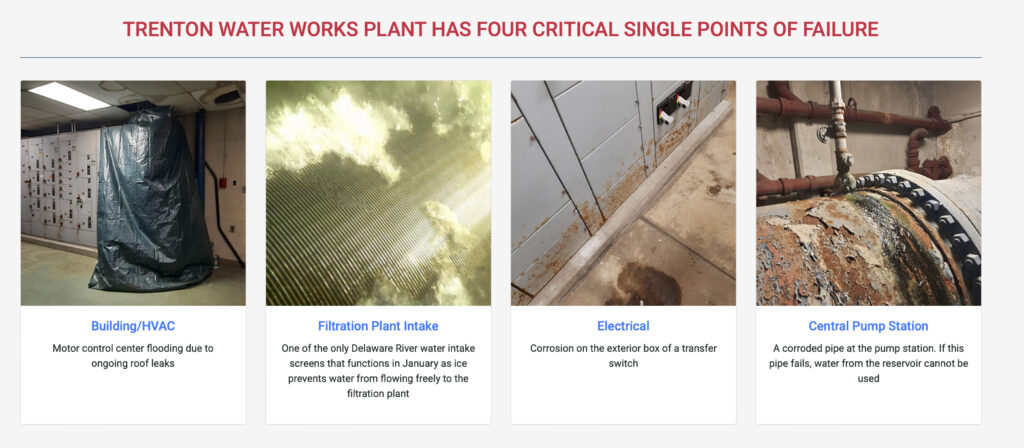
Martin pointed residents to NJDEP’s public website outlining four critical single points of failure identified at the TWW plant, including:
- A leaking roof and broken HVAC system that promote equipment corrosion and unsafe working conditions
- An underperforming filtration plant intake, operating at just 50% capacity
- A failing electrical system
- A central pump station with no backup system
Hopewell Mayor Courtney Peters-Manning endorsed Martin’s statement and emphasized the need for regional representation.
“The waterworks is on the brink of catastrophic failure, and the suburban towns deserve a seat at the table,” she said. “Trenton will be compensated for its assets and a fair and equitable solution is possible. But the time for action is now.”
NJDEP Launches Website for TWW Customers
In an effort to keep residents informed, NJDEP has launched a dedicated website, which includes fact sheets, photos from the facility, and a community FAQ.
According to the FAQ, TWW draws water from the Delaware River, treats it at its filtration plant, and delivers it to homes and businesses in Trenton, Hamilton, Ewing, Lawrence, and Hopewell. The FAQ underscores that although the water is currently safe to drink, TWW has a history of regulatory violations and remains under NJDEP oversight due to serious operational deficiencies.
The most recent violation occurred in late 2024, when TWW exceeded the federal standard for trihalomethanes—chemical byproducts of water disinfection. NJDEP emphasizes that failure at any of four critical infrastructure points could lead to mandatory boil-water notices or full service loss.
A “single point of failure,” NJDEP explains, refers to a part of the system whose breakdown could interrupt water delivery to all customers.
“Customers could be required to boil their water or be without water,” the site warns. “The system has suffered from many years of chronic neglect, underinvestment, and mismanagement.”
More information, including compliance history and reports, is available at dep.nj.gov/trentonwater.
What Comes Next
Trenton City Council has been asked to place the regionalization matter on its Aug. 5 meeting agenda. NJDEP is requesting a written response by Aug. 8 indicating whether the city will move forward with a collaborative public process to explore restructuring.
LaTourette emphasized that NJDEP’s scaled-back role does not mean disengagement, but a pivot toward enforcement and oversight.
“The status quo is dangerously unacceptable and a new path for the utility is an absolute necessity,” the letter concludes. “The people of the greater Trenton area deserve nothing less than your full and unequivocal commitment to this effort.”