
Pennington officials took a step toward submitting the borough’s updated affordable housing plan by holding a joint meeting of the Borough Council and Planning Board to review a revised compliance framework and gather public feedback ahead of a March 15 state deadline.
Mayor Jim Davy opened by capturing why both bodies were convening together. The council, he said, has been weighing “our total numbers of present need and unmet need” while also reviewing “legalities… as well as our legal exposures relative to certain properties.” With planner Jim Kyle now prepared to present an updated plan, Davy told residents the evening was intended to surface questions, hear concerns, and “give the planning board some of its thoughts to proceed to its work in January.”
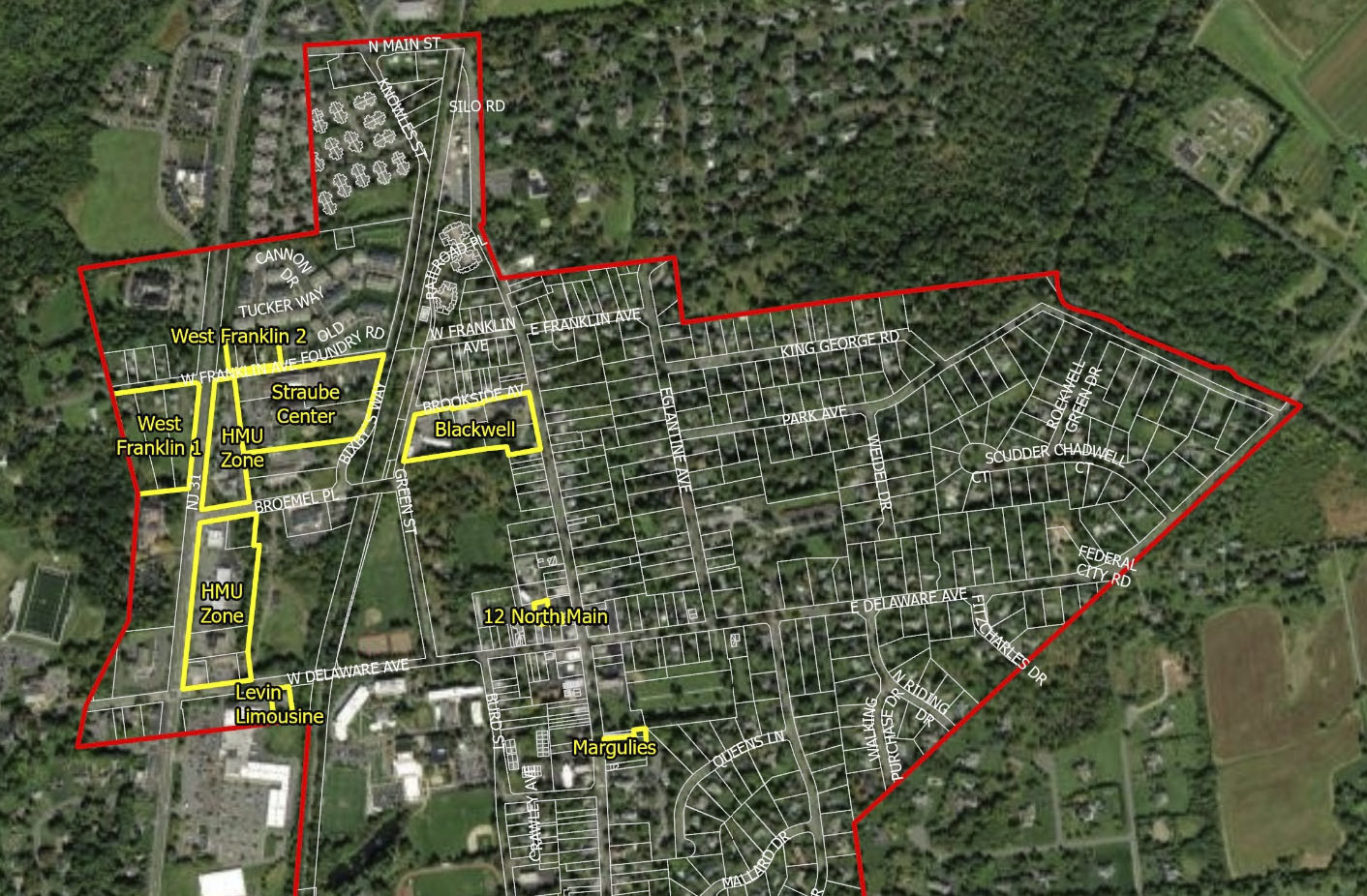
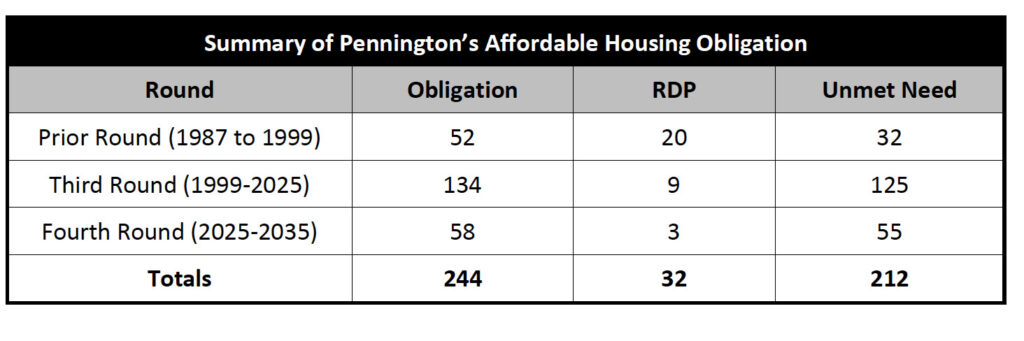
Kyle’s presentation formed the backbone of the meeting, offering the first public walk-through of the December 8 compliance memo, which outlines zoning changes, redevelopment possibilities, and site-specific mechanisms that together could meet Pennington’s entire fourth-round obligation of 58 affordable units and generate 46 credits toward the borough’s outstanding third-round unmet need.
The planner acknowledged upfront that the borough’s earlier plan, adopted under time pressure in June, required deeper engagement and refinement. “It was admittedly a rushed process,” Kyle said, noting that since then, the master plan committee has been meeting “every two weeks or so” to coordinate land-use planning with fair-share requirements. The revised framework, he said, responds both to resident concerns and to Fair Share Housing Center’s request that Pennington “make a better effort to address the unmet need from the third round.”
To do that, the plan relies heavily on inclusionary zoning—moderate-density market-rate projects with a 20% affordable set-aside—rather than large 100% affordable buildings, which Kyle said the borough lacks subsidy capacity to pursue. “Those types of mechanisms… typically require a pretty large subsidy from the municipality,” he explained.
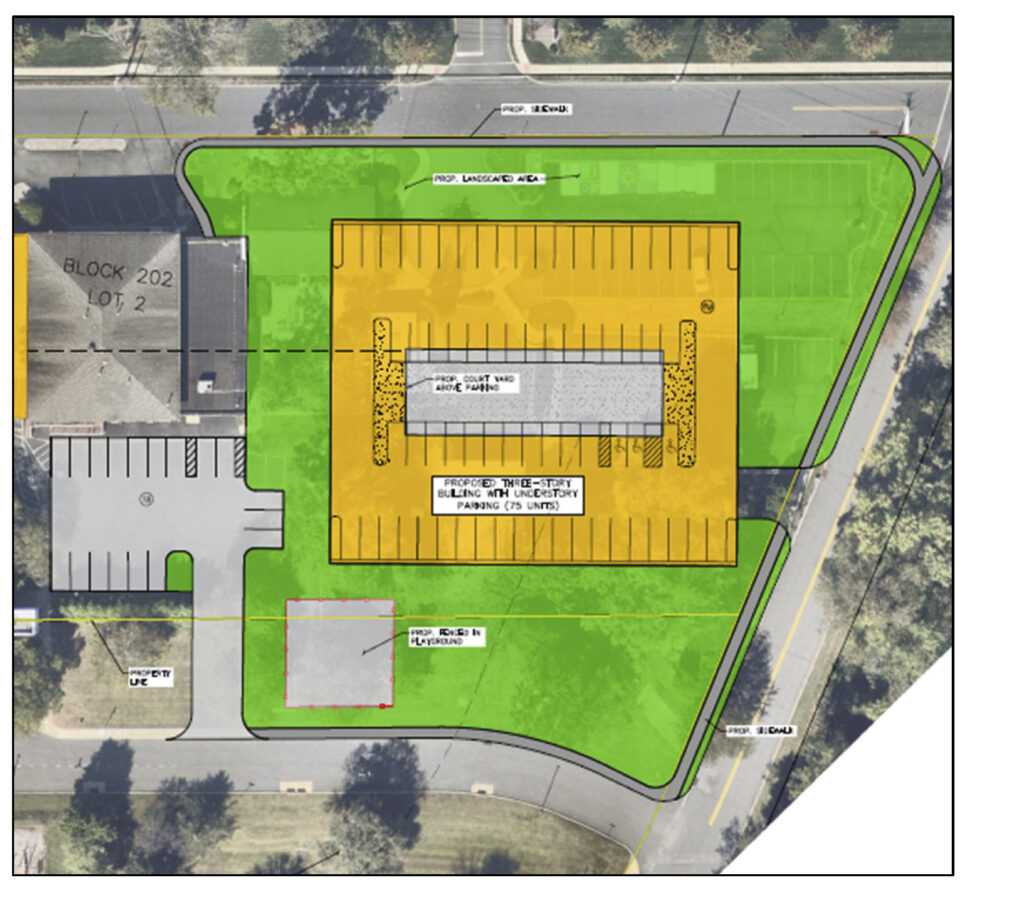
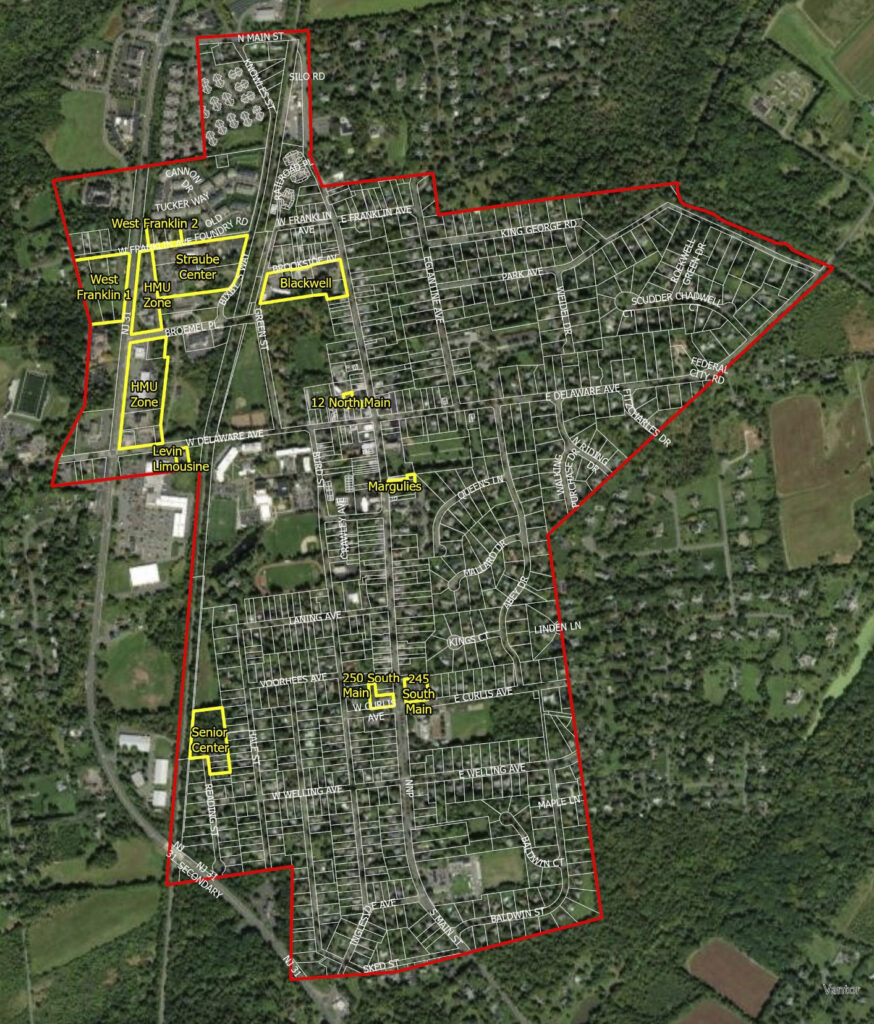
As Kyle moved through the list of potential mechanism including redevelopment at the Straube Center, residential conversions at 12 North Main Street, mixed-use opportunities on South Main, and supportive housing at the Senior Center, the more than 50 attendees were able to hear how these potential projects can work inside the existing borough.
Community reaction: a mix of support, questions, and site-specific concerns
The first public questions came from residents directly affected by particular sites. Russell Myers, who lives near the Senior Center, asked who might ultimately own or operate supportive housing there. Davy stressed that those decisions are far down the road. “We have had no conversations at all with anybody… this is just high-level planning,” he said, adding that public, nonprofit, or private models were all possible.
Other comments reflected broader views of the borough’s housing needs. Christian Davis praised the updated plan as “thoughtful [and] comprehensive,” saying the community “stand[s] at the ready to collaborate and support the efforts” to maintain compliance and reflect shared values.
Sarah Colabi, a Park Avenue resident, urged officials to keep housing diversity at the forefront. “The housing stock has gotten so insanely expensive… I don’t think that I could afford to move into Pennington now,” she said, calling for “smaller properties and apartments of all different sizes and shapes” to support younger and lower-income residents.
Some public concerns focused on traffic, flooding, and neighborhood impacts—particularly near South Main and Curlis Avenue, where mixed-use redevelopment is being considered. Pam Lafferty warned that existing problems with rights-of-way and stormwater “need to be addressed” before allowing new development. “If you don’t think an accident’s going to happen, I promise you it will,” she said.
And Guy Lanciano, a property owner whose site had appeared in earlier planning discussions, expressed disappointment that his land was excluded from the updated framework. “To say that I was somewhat shocked… was really just surprising to me,” he said, urging officials to reconsider. Davy acknowledged the concern and said the borough would revisit the issue after Kyle’s presentation.
Council and Planning Board discussion: redevelopment, zoning philosophy, and future flexibility
After hearing the public, elected officials turned to clarifying the tools they may need as they proceed—particularly redevelopment designations.
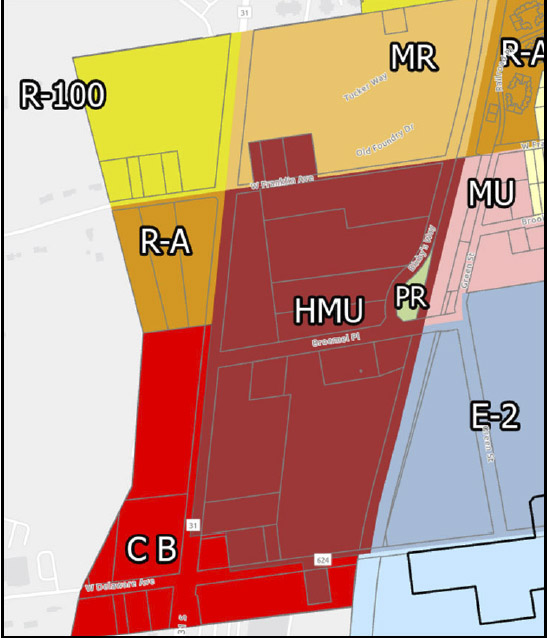
Councilman Chico Marciante asked what benefit the borough receives from declaring a site an area in need of redevelopment. Kyle emphasized that not every property qualifies, and each must be evaluated individually. “It’s really going to be on a case-by-case basis,” he said.
Councilwoman Nadine Stern sought clarity on the Wells Fargo parcel, which is designated an area in need of redevelopment but not part of the housing plan. Could residential still be proposed there? “That’s correct,” Kyle answered. “A proposal could come in… that might include residential,” depending on future applications.
Throughout the conversation, officials returned repeatedly to one theme: zoning must permit opportunities for affordable housing, even if those opportunities are not immediately taken up. As Kyle summarized, “We’re providing zoning opportunity, but people have to take advantage of it.” Councilwoman Kati Angarone added that the borough’s constitutional obligation is “to plan — to not zone to exclude,” describing the new framework as “potentiating development” that may increase fair housing options over time.
What comes next
Davy said the purpose of the joint meeting was to give the Planning Board enough direction to finalize an updated plan at its January 14, 2026 meeting. Under state requirements outlined during the meeting, that updated plan must be posted at least 10 days in advance and will be subject to a public hearing before the board votes on adoption. If approved, the borough must then introduce a series of accompanying zoning ordinances at its February council meeting, followed by additional public discussion at the council’s work sessions and a March 2 public hearing where those ordinances would be considered for adoption.