
The New Jersey Department of Environmental Protection (NJDEP) announced the launch of a new $30 million funding round through its Natural Climate Solutions Grant Program, opening the door for local governments and nonprofits to apply for major support to restore forests, plant trees, and enhance wetlands as tools for fighting climate change.
The funding is split equally between “green carbon” projects—such as forest restoration and urban tree planting—and “blue carbon” projects in coastal areas. Applications open August 4 and will be reviewed on a rolling, first-come, first-serve basis over the next year.
“This unique program empowers communities across New Jersey to pursue natural ways of reducing climate pollutants that worsen the effects of our changing climate,” said NJDEP Commissioner Shawn M. LaTourette. “By investing in blue and green carbon projects, we are reducing greenhouse gas emissions and enhancing the resilience of our coastal and forested landscapes, ensuring cleaner air and healthier communities for generations to come.”
Green Carbon Funding for Inland Communities
For inland municipalities like Hopewell Township and Pennington Borough, the program’s green carbon funding track—also totaling $15 million—offers opportunities for reforestation, afforestation, and community forestry projects. Eligible projects can include:
- Replanting former agricultural land or degraded forests with native tree species,
- Installing deer fencing to protect young tree stands,
- Tree planting in parks, schools, or along streets to mitigate the heat island effect,
- Stormwater mitigation through natural vegetation in urban or suburban environments.
Grant amounts will range from $250,000 to $5 million per project, with a maximum implementation timeline of five years. Proposals that are “shovel ready” will receive higher priority during scoring. Nonprofit organizations and municipalities are not required to provide matching funds, while private landowners must provide a 25% match (cash or in-kind).
Trenton’s Tree Canopy Expansion: A Local Example
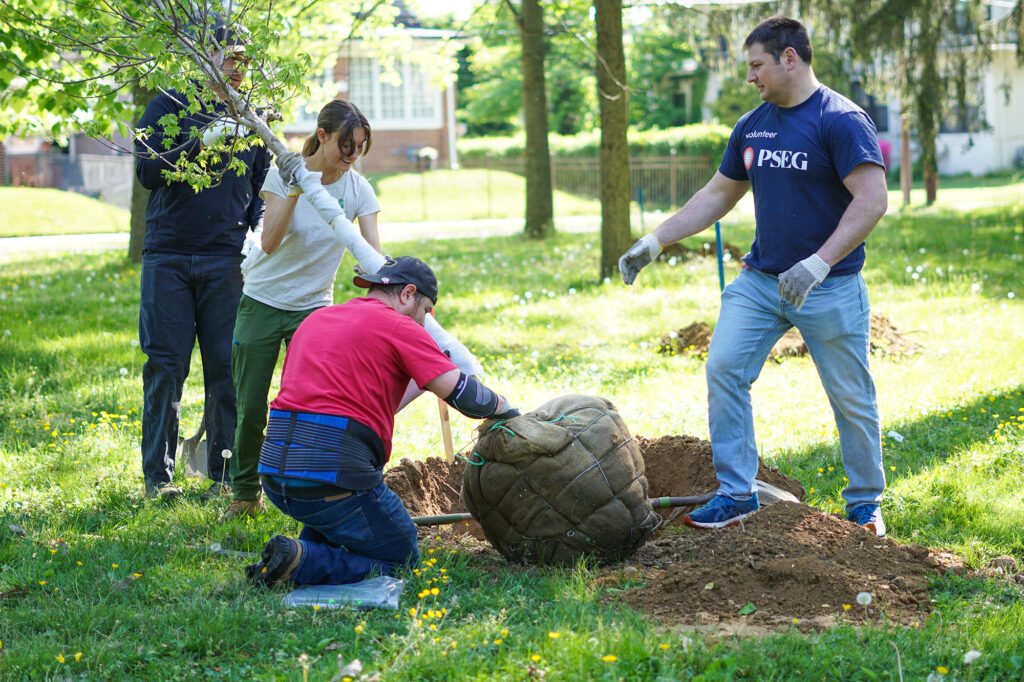
In the first round of Natural Climate Solutions grants, a $1.3 million award went to the New Jersey ConservationFoundation (NJCF) and partners for their “Trees for Trenton” initiative, which aims to plant 1,000 shade trees across 14 neighborhoods in the capital city.
“This incredible partnership is eager to expand our investment in the City of Trenton and make a lasting commitment to a greener, healthier future for residents,” said Jay Watson, the former co-executive director of NJCF and current fellow for conservation justice. “Trees for Trenton is a vital step toward enhancing the lives of our communities and environment.”
The project is a collaboration between NJCF, The Watershed Institute, Isles, New Jersey Tree Foundation, Outdoor Equity Alliance, Friends of Hopewell Valley Open Space, and the City of Trenton. It focuses on areas with little existing tree cover and includes key historic sites such as Cadwalader Park and Mill Hill Park.
“Trees address numerous environmental problems by soaking up floodwaters, capturing carbon dioxide from the air to protect our climate, and cooling our cities in the summer heat,” said Jim Waltman, executive director of The Watershed Institute.
According to the partnership, the 1,000 trees will:
- Sequester nearly 3 million pounds of carbon dioxide by 2050,
- Intercept over 14 million gallons of rainwater, reducing runoff by 2 million gallons,
- Improve shade and air quality in underserved Trenton neighborhoods,
- Aid in the revitalization of historic districts and public spaces.
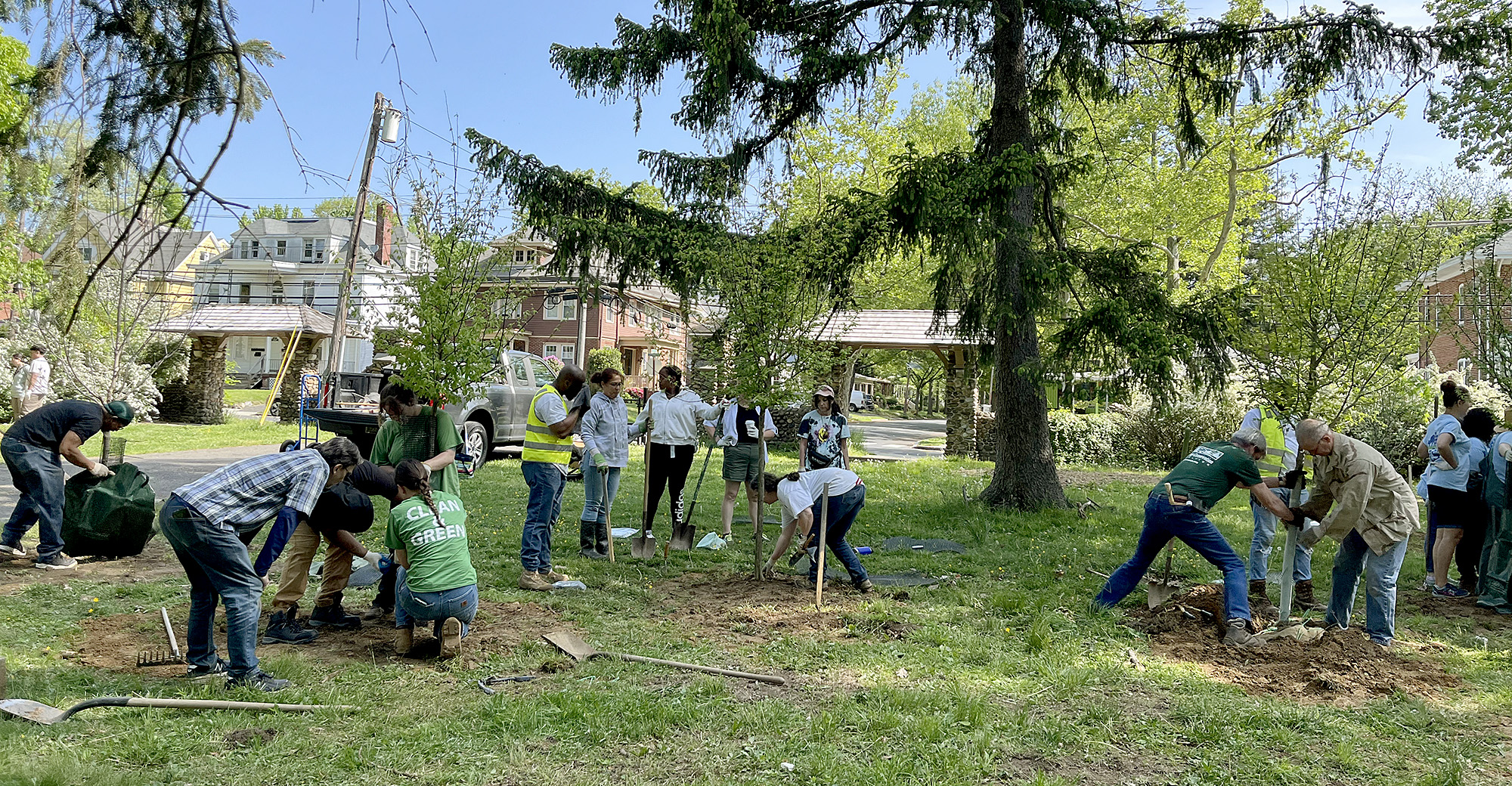
The initiative kicked off in October 2024 with a community planting event in Cadwalader Park, where 100 trees were planted with help from volunteers, city officials, and nonprofit staff.
“We know the lack of trees makes Trenton hotter and more polluted,” said Sean Jackson, CEO of Isles. “Our Trenton Climate Corps team is proud to join with our partners to bring healthy change for our families and climate relief to all of Trenton.”
How to Apply
The NJDEP encourages municipalities, nonprofits, and school districts to begin developing proposals now for round two of the grants. Applicants must submit detailed site plans, budgets, community support letters, and carbon sequestration estimates. A series of public webinars and virtual office hours will be hosted by NJDEP, including an Application Deep Dive on August 4.
Applications must be submitted through the DEP SAGE portal, and awarded projects will be reimbursed as work progresses. All proposals must use native species, meet planting density and survivorship targets, and include long-term maintenance plans.
For more information or to apply, visit: https://dep.nj.gov/climatechange/mitigation/ncs-grant