

By Adam Kimball, NJ State House News Service
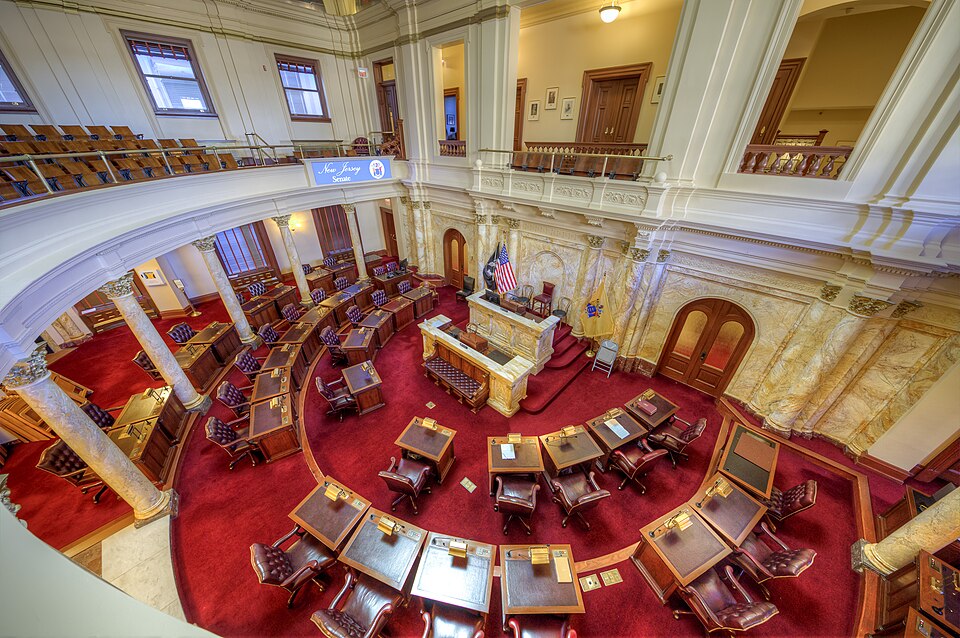
When New Jersey lawmakers reconvene in November from a more than four-month recess, they’ll kick off a race to finish business before the legislative session expires and a new governor is sworn in.
The legislature last met on June 30, when it sent Governor Phil Murphy a record $58.8 billion budget for the 2026 fiscal year. It’s typical for the 80 Assembly and 40 Senate members, after the annual budget signing, to break until September.
This year, though, all Assembly seats are open, and incumbents are campaigning for the Nov. 4 election, in which New Jerseyans also will choose Murphy’s replacement. The governor says he doesn’t “blame them for being out there” seeking votes – but he’s eager for bills to hit his desk.
“There’s a package of four housing bills we would like to see passed and signed,” Murphy said in an interview. “Energy prices continue to be a big priority.”
Also high on the list, he says, is a “bell-to-bell” ban on cell phones in schools, one of the suggestions in a state Department of Education report as a way to curb distractions, social media use and bullying.
At least one school district decided not to wait for action on the bill, S3695, which would compel schools to adopt Department of Education guidelines on cell phones and social media. In Jersey City, with more than 26,000 students, the school board on Oct. 1 unanimously passed a ban on cellphones and other personal communication gadgets during class.
The legislature’s leadership – Assembly Speaker Craig Coughlin, a Democrat from Woodbridge who is seeking a sixth term, and Senate President Nick Scutari, a Democrat from Linden – declined to comment on the recess.
Lawmakers’ pay bump
Other states can go for prolonged periods without lawmaking. Texas, for instance, meets only in odd-numbered years, though the governor holds power to call legislators together. As of Oct. 21, only eight state legislatures were in session, according to StateScape.com, which creates government tracking software.
In New Jersey, the legislature is part time, and most office holders maintain full-time professions that are separate from their elected positions. In January, their pay will rise to $82,000 – a 67% increase from their current salary, thanks to a bill that Murphy signed in 2024.
The current legislative session ends on Jan. 13, 2026, and any bills not acted upon by then must be reintroduced and go through committee hearings and full legislative votes again, and then to Murphy’s replacement to consider.
Some constituents say the State House standstill is aggravating.
“I don’t think it’s reasonable for them not to be meeting, especially with so many issues persisting in our state,” said Zak Zaitz, a 21-year-old Bureau of Alcohol, Tobacco, Firearms and Explosives intern and fire house volunteer from Medford.
Luke Vinci, 22, a business student at Rowan University, said elected officials “should still be meeting.”
“Even if there’s an election happening, it is important for them to be able to consider new laws,” Vinci said.
What Murphy wants
Bills S4451, S1408, S2347 and S2974 comprise the housing package that Murphy is awaiting. The legislation, designed to help ease New Jersey’s high cost of living, would clarify land-use requirements; authorize conversion of some office parks and retail centers into mixed-use developments; allow residential builders to provide fewer parking spaces if public transit is nearby; and encourage development of accessory dwelling units, which are small cottages on residential properties where family members or renters can live.
One stalled energy bill is S4398, which would suspend sales and use taxes and societal-benefits charges on utility bills for four months. The bill – which was introduced in May and has yet to go through committee hearings in both houses – was to take effect on June 1. That’s when New Jersey electricity bills rose as much as 20% as a result of an annual power auction involving electricity wholesaler PJM Interconnection and local utilities.
Were that bill passed as written, ratepayers statewide would have saved $400 million to $470 million, according to an estimate by the Office of Legislative Services.
Other energy bills in committee include A5663, to provide gross income-tax credits for certain energy infrastructure upgrades, and A5656, to compel state agencies to prioritize permit reviews and approvals for projects that will increase electricity supply.
Micah Rasmussen, director of the Rebovich Institute for New Jersey Politics at Rider University, pointed out that in addition to legislation, Murphy has some judicial appointees who have yet to be confirmed. Meanwhile, trial courts have a case backlog.
“I think you could campaign and legislate at the same time, especially because only the Assembly is up for re-election,” Rasmussen said in a phone interview.
Editor’s note: NJ State House News intern Adam Kimball is a Rowan University senior majoring in sports communication and journalism.