

Hopewell Valley Regional School District officials formally began the 2026–27 budget process Monday night, outlining a growing list of financial pressures that are expected to force difficult decisions in the months ahead — even as administrators stressed that no final choices have yet been made.

Although the Jan. 12 Board of Education meeting included only an early-stage budget overview, district leaders made clear that rising fixed costs, particularly health care and benefits, combined with long-term enrollment trends and state funding limits, will shape upcoming discussions.
Assistant Superintendent for Finance and Board Secretary Robert Colavita described the presentation as a starting point, noting that the district is still in the information-gathering phase before more detailed proposals are brought to the board.
Health care costs emerge as a major pressure
Among the most significant challenges highlighted were health care and employee benefit costs, which administrators identified as one of the fastest-growing components of the district’s budget.
Slides presented to the board listed health benefits alongside inflation, special education, transportation, staffing, and insurance as key expenditure variables under consideration. Transportation costs alone are expected to rise by approximately 3.6%, according to the presentation, while health care increases significantly with 20-30% increases expected.
Administrators emphasized that many of these costs are contractual or largely outside the district’s control, limiting flexibility as the board works within the state’s 2% tax levy cap.
Revenue constraints and limited flexibility
On the revenue side, the district outlined several limiting factors, including the tax levy cap, enrollment-based funding constraints, and uncertainty around state aid.
While the district can pursue limited locally generated revenue — such as tuition, facility rentals, athletic and co-curricular fees, and transportation fees — administrators cautioned that these sources are not sufficient to offset rising fixed expenses on their own.
The possible use of surplus funds was also listed as a budget variable, though officials have stressed in past budget cycles that surplus cannot sustainably replace recurring revenue.
Enrollment trends add complexity
Slides presented Monday night showed the board the long-term enrollment decline but how recent numbers are trending upwards with the increase in students back in the district. District enrollment fell from nearly 3,900 students in 2010–11 to the mid-3,400s in recent years, before rebounding to an estimated 3,529 students in 2025–26.
Administrators noted that enrollment trends must be balanced against anticipated growth from new housing, adding uncertainty as the district evaluates staffing levels, program needs, and facility use.
District priorities framed by mission
Despite financial constraints, administrators emphasized that the proposed budget framework is guided by the district’s mission and core commitments.
Slides outlining 2026–27 budget priorities stressed maintaining as many existing programs and services as possible, continuing to meet or exceed state academic standards, fulfilling contractual salary and benefit obligations, and reviewing programs and staffing in light of enrollment changes.
District leaders also emphasized the importance of developing a budget that prepares the district for an “uncertain future,” acknowledging volatility in costs and state funding.
$4.7 million architect payment draws scrutiny
Alongside budget discussion, the board approved a $4.7 million payment to the district’s architectural firm, a referendum-related expense tied to design and planning work for projects approved by voters in November.
Board member Dr. Alex Reznik raised concerns about the size of the payment during the meeting, questioning whether the costs were appropriate at this stage of the process and emphasizing the need for transparency and oversight as referendum projects move forward.
In response, administrators said they would arrange for representatives from the architectural firm to appear at a future committee meeting to review the scope of work, costs, and timeline in greater detail.
Transportation staff recognized for response to bus fire
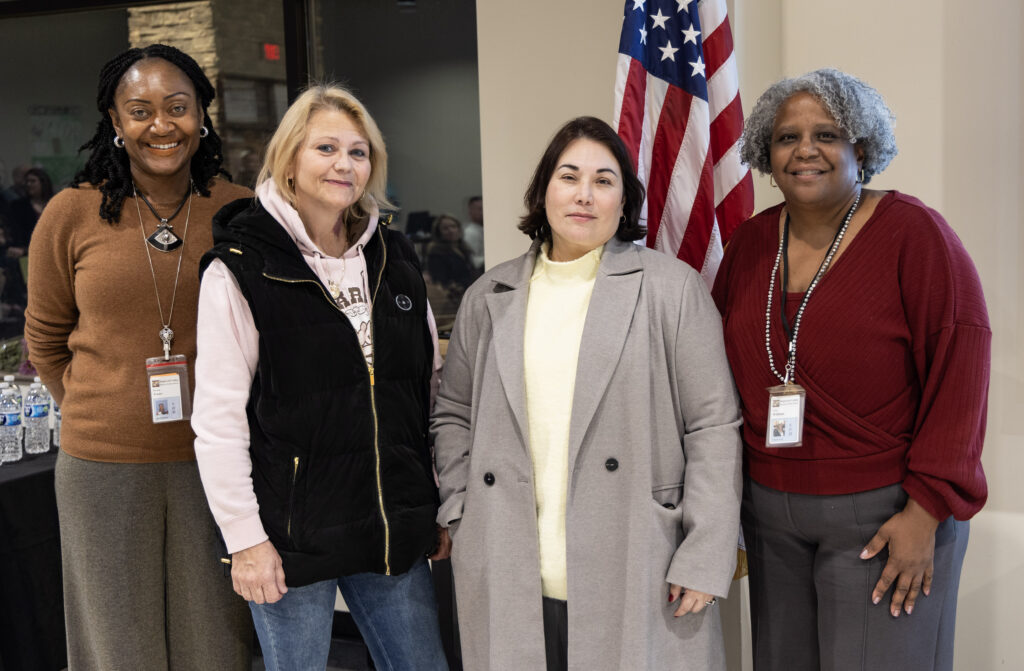
The Board of Education also recognized a group of district transportation employees for their actions during a bus fire in the parking lot behind the Hopewell Valley Regional School District administration building, praising their quick response and professionalism during the incident.
According to remarks at the meeting, the bus caught fire while parked, and transportation staff acted swiftly to secure the area and respond appropriately, ensuring that no students or staff were injured.
Those recognized for their actions were:
- Jaqera Morris, driver
- Kayla Timmons, bus aide
- Dahianna Kane, dispatcher
- Gonzalo Naranjo, bus driver
- Florence Hindermyer, bus driver
Board members and administrators thanked the employees for remaining calm under pressure and following safety protocols, noting that their actions highlighted the critical role transportation staff play in maintaining student safety beyond their daily routes.
Other board business
In additional action Monday night, the board approved routine financial items, including bills, claims, and budget transfers necessary to maintain district operations.
The board also formally accepted a donation of lacrosse jerseys, recognizing the contribution as support for student athletics and extracurricular programs.
Looking ahead
Slides presented Monday night outlined a preliminary timeline for the district’s 2026–27 budget process, signaling that more detailed discussion will take place over the next several months.
According to the presentation, administrators are expected to continue refining budget assumptions through the winter, with additional updates and discussions anticipated at upcoming Board of Education and committee meetings. A tentative budget introduction is expected later this winter, followed by further public review and deliberation in early spring.
The timeline also anticipates a public budget hearing and board adoption later in the spring, in line with the state’s required budget calendar.
Administrators emphasized that the timeline reflects an evolving process rather than finalized decisions, with opportunities for board input and public engagement as financial details become clearer.
With rising fixed costs and limited revenue flexibility, board members indicated that the coming months will be critical in determining how the district balances fiscal responsibility with its commitment to maintaining programs and services.