
Every year at commencement, as Hopewell Valley Central High School seniors prepare to leave the building for the last time, Principal Patricia Riley closes her remarks the same way.
“Please know that you are loved, please know that you will be missed, and please know that you will always have a home at HVCHS.”
Those words — repeated year after year — are more than a closing line. They are the foundation of Riley’s leadership, and the reason she has been named New Jersey’s Visionary Principal of the Year, one of the state’s highest honors for school leaders.
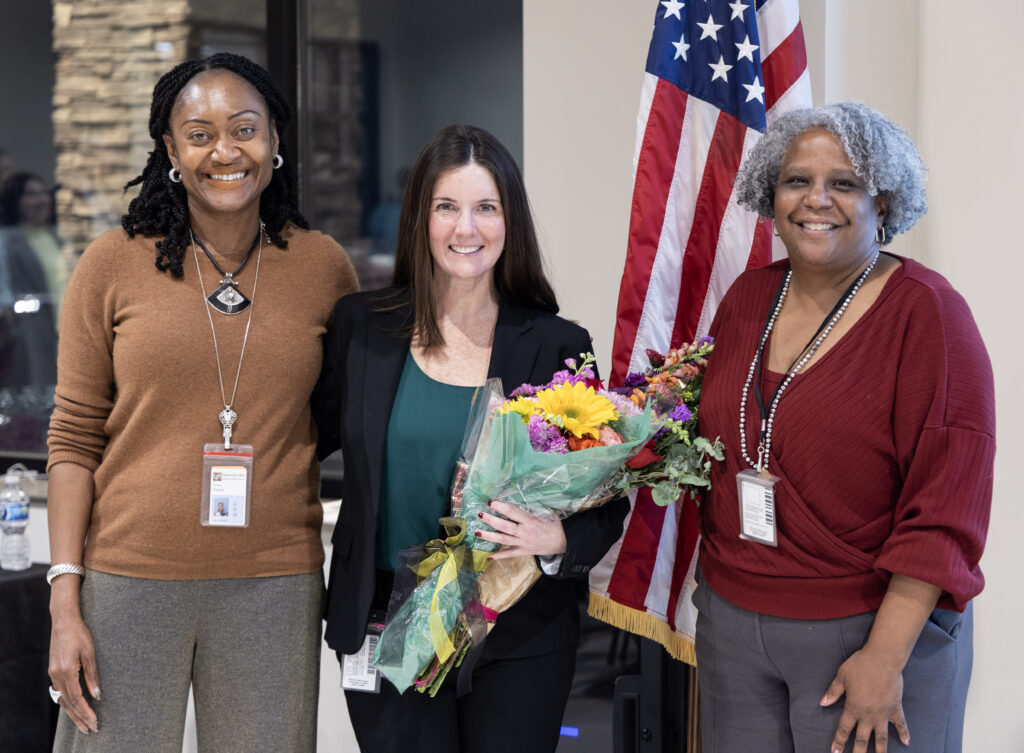
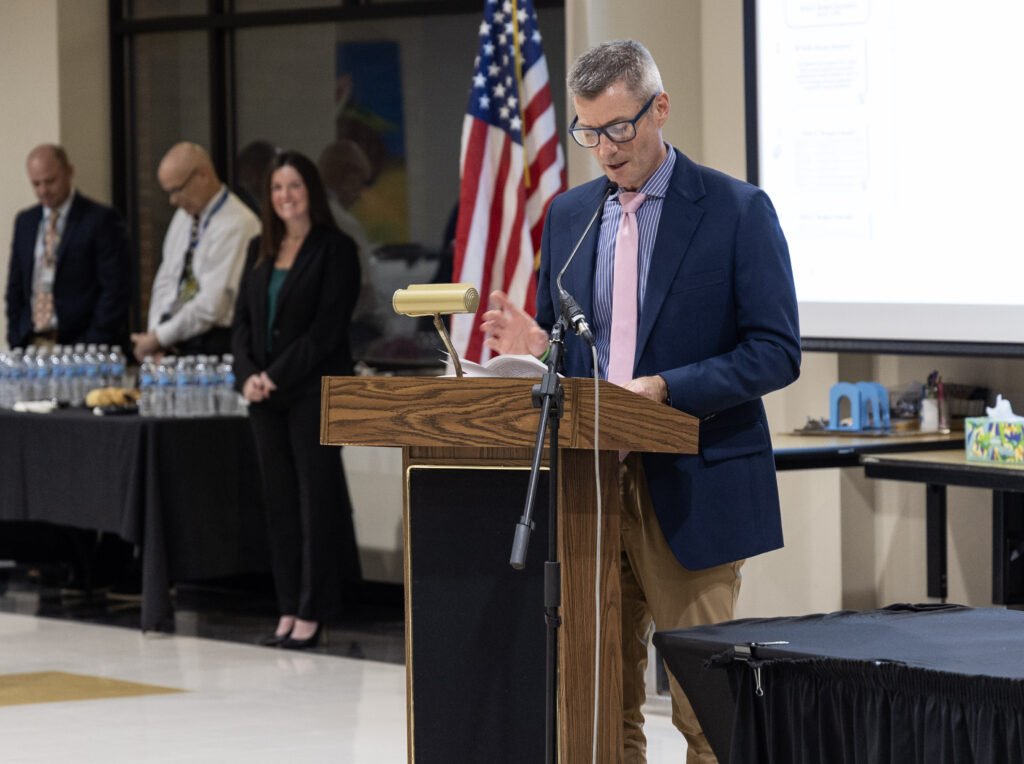
Riley was recognized during the Jan. 12 meeting of the Hopewell Valley Regional School District Board of Education, where administrators and board members praised her for reshaping Central’s culture around inclusion, connection, and student voice. Her school celebrated her last month when the award was announced.
But the recognition, Riley says, is not really about her.
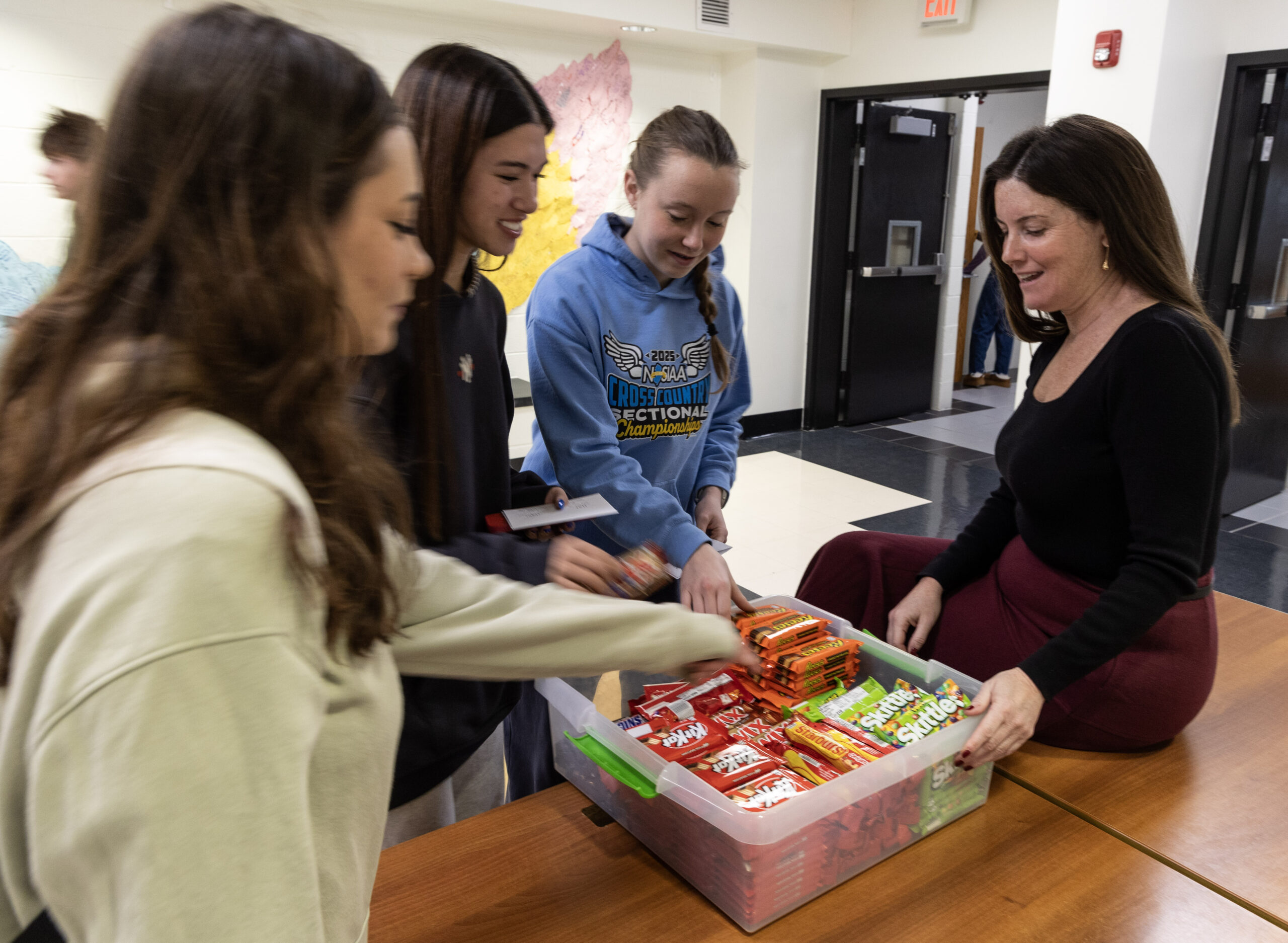
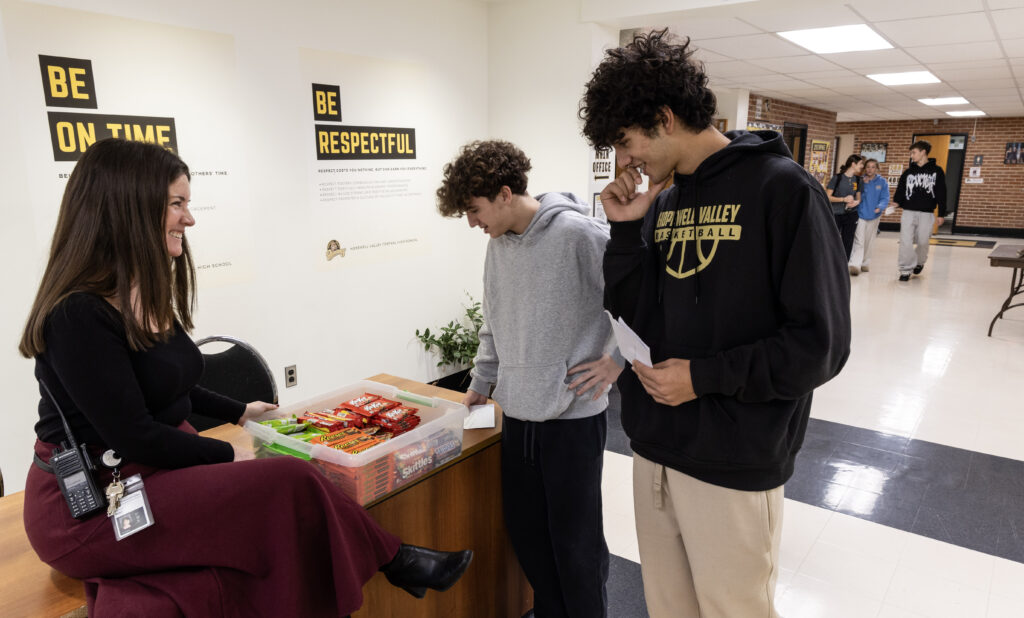
“What I’ve reflected on most is that this award is so much bigger than me,” Riley said in an interview conducted after she handed out birthday candy to students last week. “It’s a reflection of who we are as a school community.”
A rare honor for Hopewell Valley
Riley is only the second educator in district history to receive the Visionary Principal of the Year award. The first was Chris Turnbull, who was honored several years ago for his work with Bear Tavern students and the initiatives he put in place through covid and their fundraising efforts for charitable causes.
Vice Principal Anson Smith told the board that Riley stood out among nominees statewide not for a single program or initiative, but for the way her vision has been sustained and embedded across every aspect of school life.
That distinction matters to Riley, who is quick to credit her staff and students for turning ideas into reality.
“You can write a mission statement,” she said. “You can say the right things. To actually do it — every day, for every student — that’s the work.”
A full-circle return
Riley’s vision for Central is shaped not only by her years as an educator and administrator, but by her own experience growing up in the district. A Hopewell native and graduate of Hopewell Valley Central High School, she returned to the building she once attended as a student — a full-circle moment she reflected on during her interview. Riley spoke about how deeply personal it is to lead the same school that helped shape her, and how that perspective reinforces her commitment to making Central a place where students feel known, supported, and connected. Telling students they will always have a home at HVCHS, she said, carries particular weight when it’s spoken by someone who once sat in those same classrooms.
A vision rooted in being seen
In the personal essay she submitted as part of her application, Riley wrote that her goal as principal has always been simple: every student should feel valued, seen, and connected.
That belief has driven a wide range of initiatives — from positive praise referrals and handwritten notes to students featured in the news, to large-scale celebrations of student character — but Riley says the turning point came when she realized something was still missing.
“Despite all of the celebrations we had in place, I struggled with the fact that every student had not been celebrated,” Riley wrote. “That’s where ‘Every Single One’ came from.”
Through the Every Single One initiative, each of Central’s roughly 1,100 students receives a handwritten birthday or half-birthday note from Riley, delivered personally, along with an invitation to a weekly celebration where they get to select a treat. Last week students came with their card and selected from a variety of confections. Over the course of the year, every student also receives a mailed note of positive recognition — ensuring that no one slips through unnoticed.
“It’s not about grand gestures,” Riley said in an interview. “It’s about making sure students know that someone sees them — really sees them.”
Moving from acceptance to belonging
Riley’s vision has been especially impactful for students who historically were accepted, but not fully included.
In her essay, Riley described noticing a gap between acceptance and meaningful inclusion for students in the Academic Essentials program. Under her leadership, Central expanded Unified Track, launched Best Buddies and Unified Club, and elevated those programs into school-wide moments of celebration — including clap-outs and evening events that centered student joy and visibility.
That work helped Central earn recognition as a National Unified Champion School, one of only two schools in New Jersey to receive the designation.
Riley applied the same thinking to students who didn’t shine academically, athletically, or artistically — students who showed up, participated, and mattered, but were rarely celebrated.
Drawing on Dr. Martin Luther King Jr.’s words that “everyone can be great, because everyone can serve,” Riley created the Service Learning Pathway, giving students a way to be recognized for community involvement regardless of grades or accolades.
“Everyone deserves to be celebrated for who they are,” Riley said. “Not just for what they achieve.”
Listening to students — and acting
Riley’s approach to leadership has also meant giving students a voice in decisions that shape their experience.
At a time when many schools were moving away from parent-teacher conferences, she introduced student-led conferences, reframing students as active participants in their own education.
She also worked with students to advocate for changes to attendance policies, making Hopewell Valley one of the first districts in New Jersey to allow excused mental health days — a shift that grew directly out of student feedback.
Recognizing the emotional toll of the post-COVID school environment, Riley created the Bulldog Student Wellness Center, offering students a supportive space when stress or anxiety interferes with learning.
Culture, and the results that followed
Riley is careful not to reduce culture work to test scores or metrics. Still, the changes at Central have coincided with measurable gains: attendance has exceeded 95% for two consecutive years for the first time in two decades, AP participation has increased, and academic performance has continued to rise.
“To me, attendance says everything,” Riley said. “When students want to be here, it means they feel connected.”
More than an award
Riley downplayed the idea of personal recognition, framing the award as encouragement rather than a capstone.
“This isn’t the end,” she said. “It’s motivation for all of us to keep moving forward.”
For Riley, the work continues quietly — in notes written, conversations held, and students noticed.
And when she tells graduates they will always have a home at Central, it is not a symbolic gesture. It is a promise she has spent years building.