
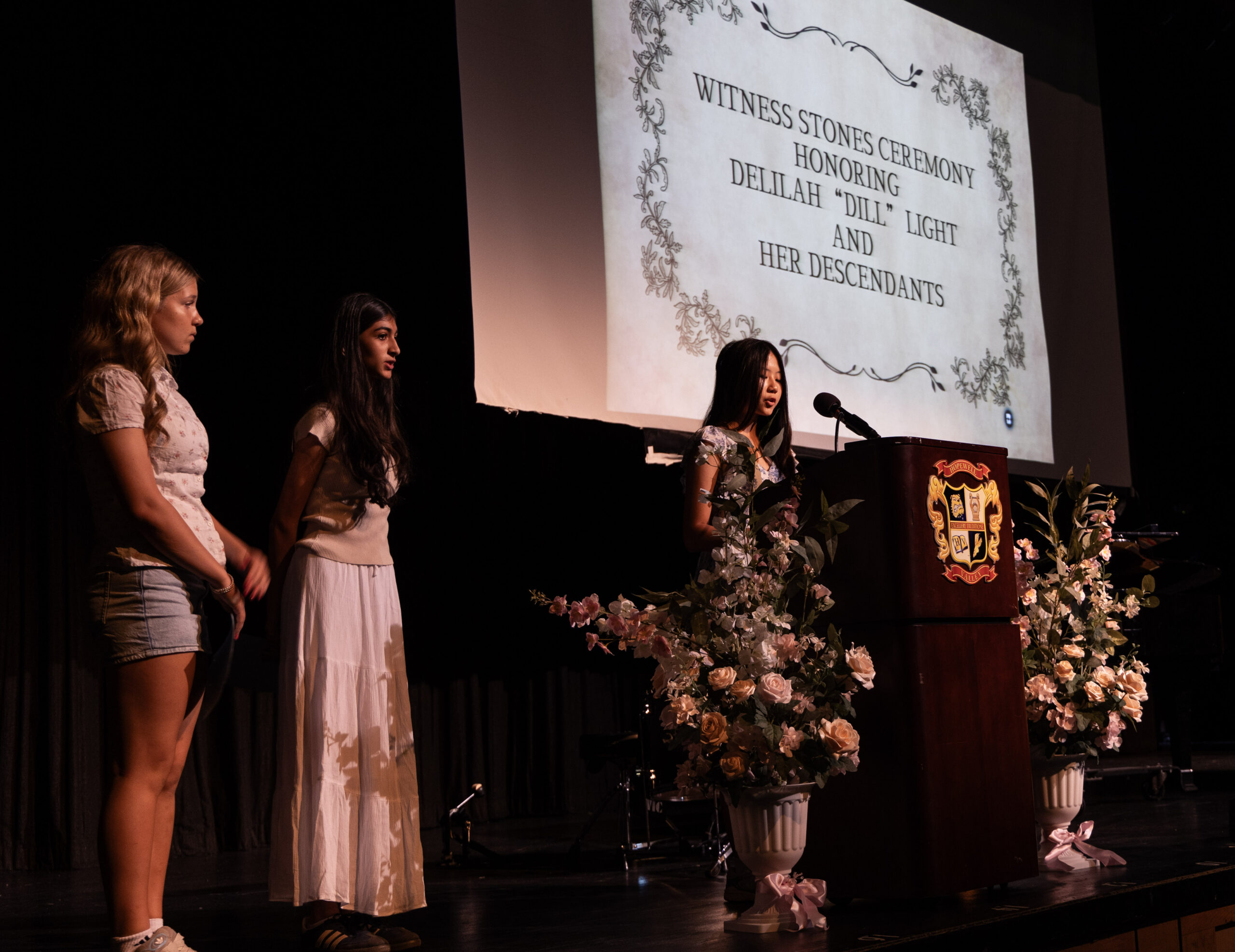
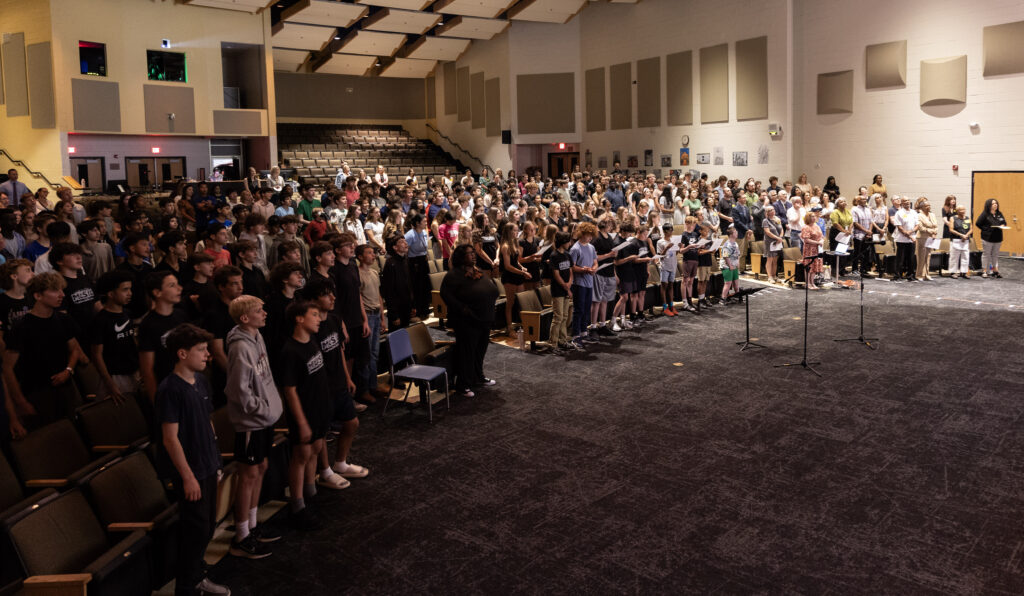
Hundreds of Timberlane Middle School eighth graders gathered Thursday at the Hopewell Valley Central High School Performing Arts Center for the school’s fifth annual Witness Stones ceremony, marking the first time the entire eighth-grade class participated together in the program honoring enslaved people who lived in Hopewell Valley.
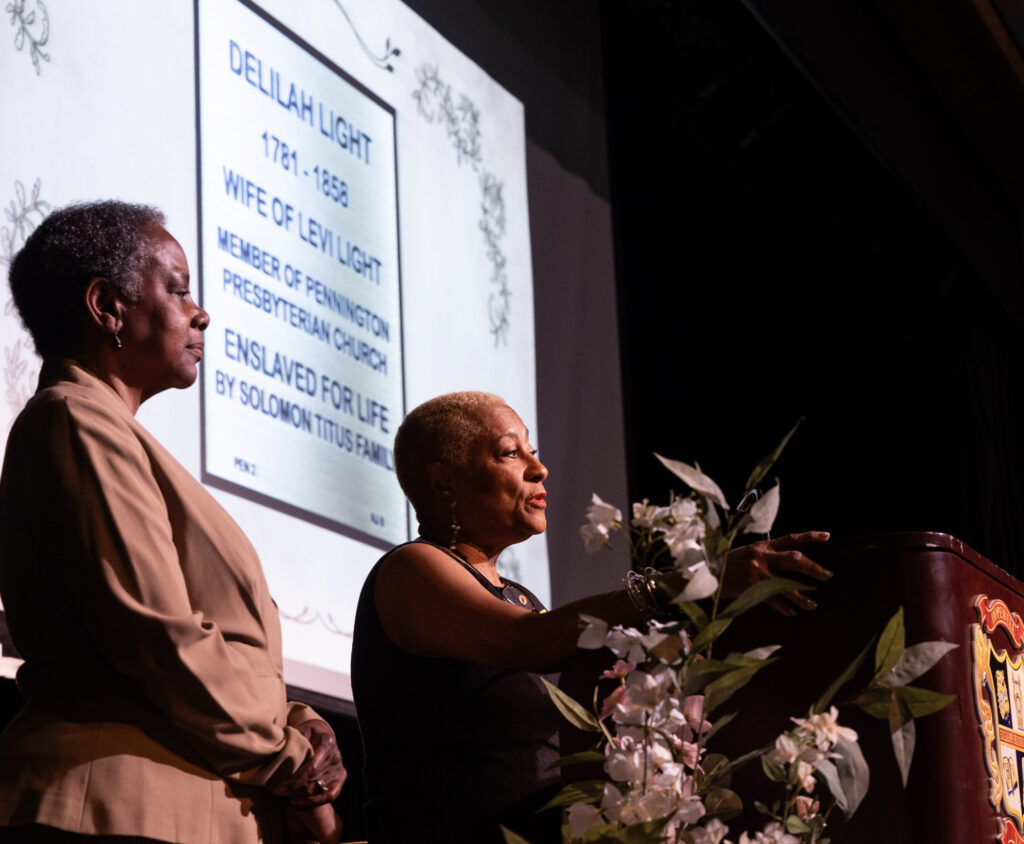
The annual project, launched at Timberlane five years ago as the first Witness Stones program in New Jersey, asks students to research the lives of enslaved individuals who lived in the community and restore their stories to the historical record. This year’s ceremony honored Delilah Light, an enslaved woman who spent much of her life in Hopewell Valley before gaining her freedom late in life.
“This is the first time, even though we’ve performed our Witness Stone ceremony — this will be our fifth time — it’s been a tremendous success. It’s our first time with our entire eighth-grade student body being together to celebrate and experience it,” Timberlane Principal Christopher Turnbull said.
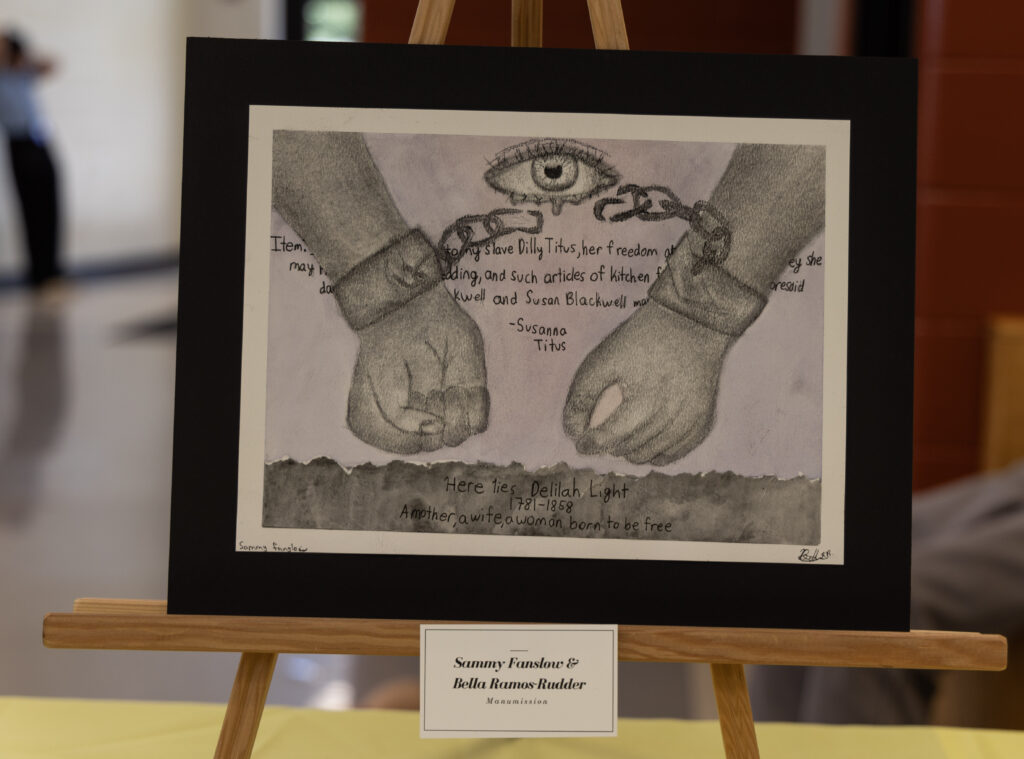
Turnbull said students spent months examining primary source documents, researching Delilah’s life and creating essays, artwork and reflections inspired by what they learned.
“Our Timberlane students read, researched, collaborated, conferred, made meaning with primary sources of history and have critically compared it to their previously understood history of our community and this history of slavery in our state and nation,” Turnbull said. “The goal today is to honor Delilah’s life and for our students to fully understand the past so they can be leaders of a better future.”
The ceremony included musical performances, student presentations, artwork displays and remarks from educators, local officials and community historians.
Bringing Hidden History to Light
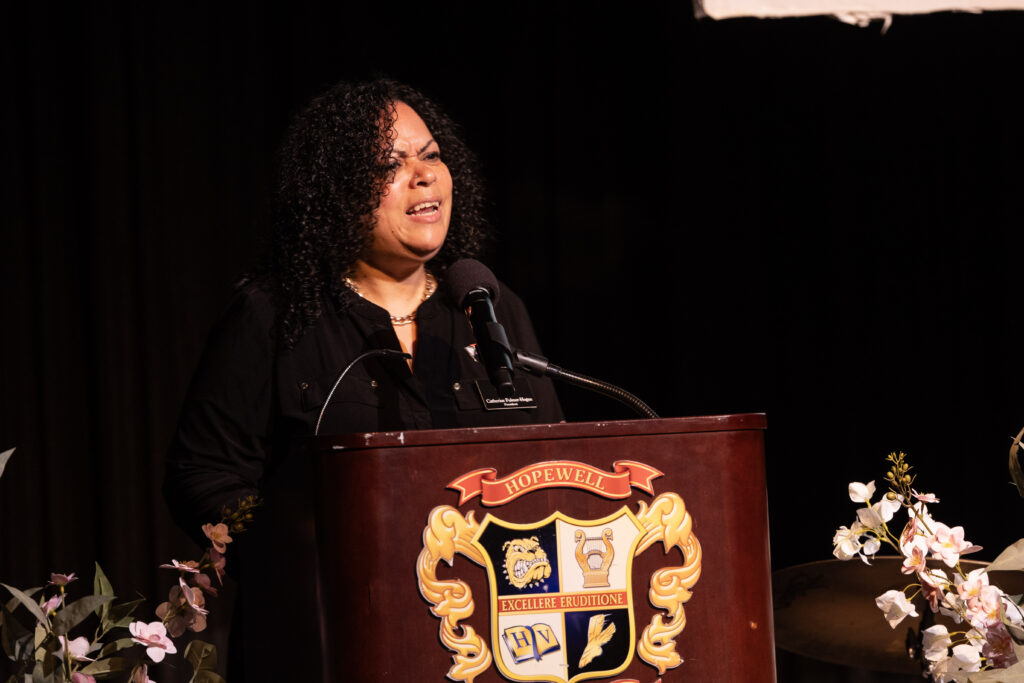
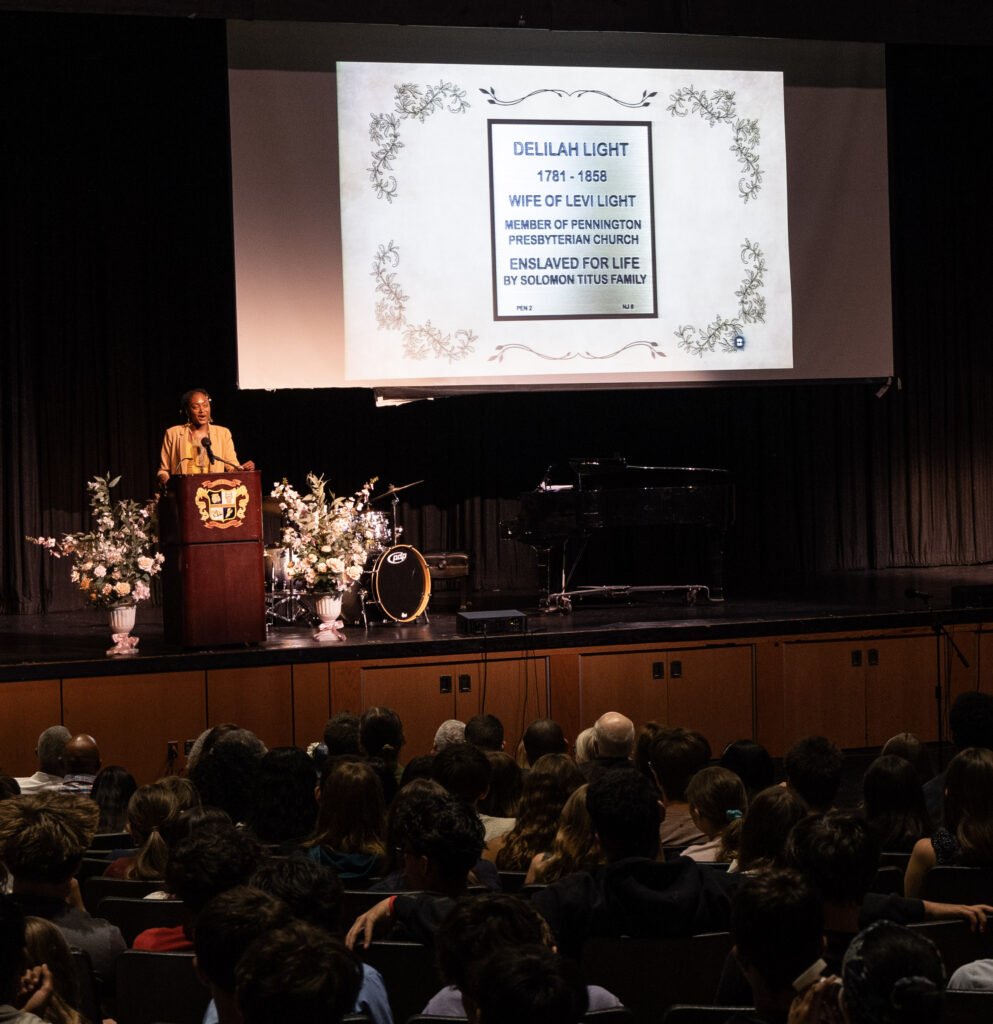
The event’s keynote speaker was Catherine Fulmer-Hogan, president of the Stoutsburg Sourland African American Museum and a lifelong Hopewell Valley resident. Fulmer-Hogan told students that understanding the lives of enslaved people is essential to understanding the community’s history.
“For our school district to decide that we are going to identify humans who endured this, and we are going to amplify their stories and their voices is important,” Fulmer-Hogan said. “Language matters. Words matter.”
She reminded students that Delilah Light was far more than a name found in historical records.
“Delilah was a whole entire person with a life and a family that she loved, with hopes and dreams, however secret, with wants and needs,” Fulmer-Hogan said. “But she spent most of her life meeting the needs of others for free.”
Later, Fulmer-Hogan asked those gathered to repeat together, “Delilah Light matters.”
Who Was Delilah Light?
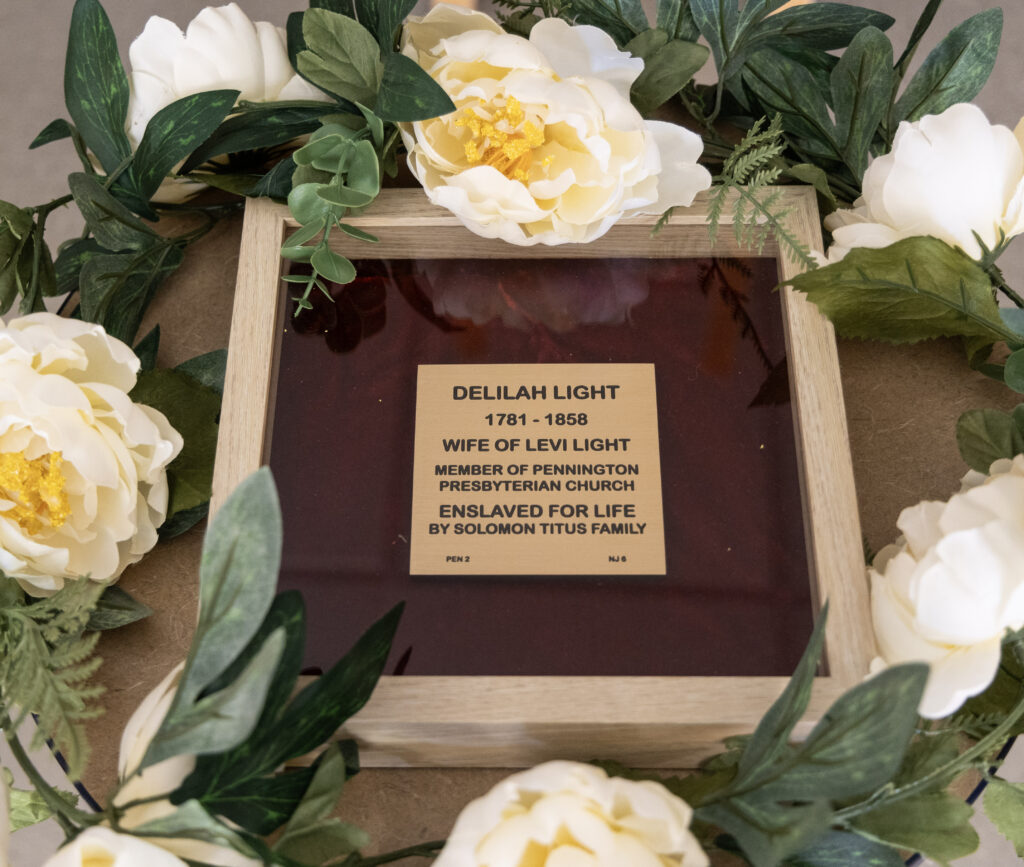
Student researchers found that Delilah “Dill” Light was likely born around 1781, decades before New Jersey began its gradual abolition of slavery. Because she was born before the state’s 1804 Gradual Abolition Act, she would not have automatically qualified for emancipation and spent nearly her entire life enslaved.
Historical records show that Light lived in Hopewell Valley and was enslaved by members of the Thomas and Titus families. Student researcher Sonia Gervasoni said records indicate that Delilah worked in the household, cared for children and remained deeply involved with the local Presbyterian church community.
Researchers also uncovered evidence that Delilah married a man named Levi and may have had a daughter, Maximilla. Like many enslaved families, however, the family appears to have experienced separation. Census and estate records suggest Delilah may not have been permitted to live with her husband and daughter for much of her life.
When slaveholder Solomon Titus died in 1833, his will referred to Delilah simply as “my black woman,” language students noted reflected the dehumanizing reality of slavery. Later records indicate that Susanna Titus provided for Delilah’s freedom in her will. By the 1840 census, Delilah was listed as a free Black resident, although evidence suggests she continued working in the same household after emancipation.
By 1850, Delilah was listed in census records under her own name rather than as property of another person. Her freedom was short-lived; researchers believe she died in 1858 at approximately 77 years old.
Students said Delilah’s story illustrates both the cruelty of slavery and the resilience of those who endured it. Though only fragments of her life remain in historical records, the Witness Stones Project seeks to ensure that her name and story remain part of Hopewell Valley’s history.
Students Reflect on Lessons Learned
Several students spoke about how the project changed their understanding of slavery and local history.
“I’ve always thought of it as something that happened long ago in a place far away from where I live,” student Aarna Desai said. “Through our research project, I discovered a history that was much closer than I imagined.”
Irene Lee said the experience forced her to confront uncomfortable truths.
“Growing up in a privileged area where the population is predominantly white, I believed there was no need for me to be thinking about slavery,” Lee said. “Through this unit, I have learned the importance of remembrance and the strength of enslaved individuals that should never be forgotten.”
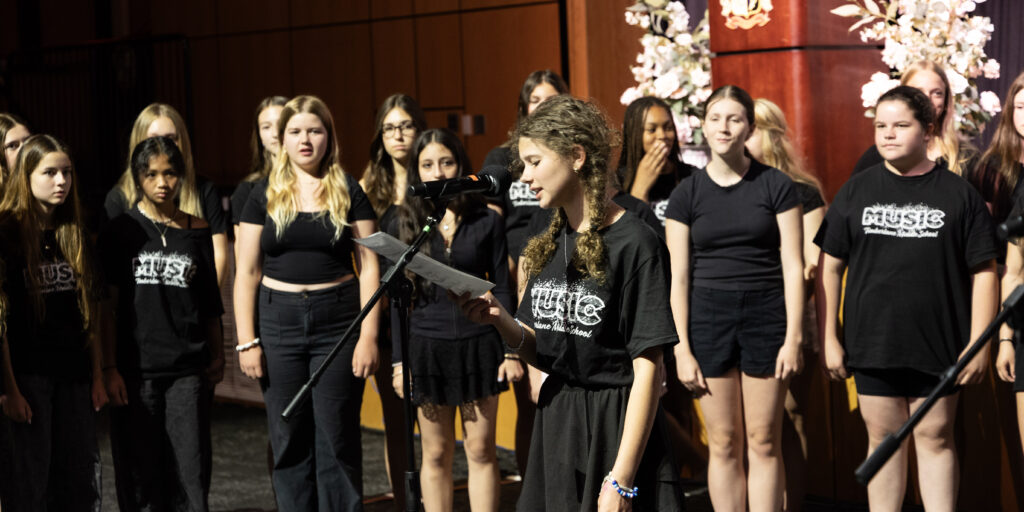
Student Sofia Nishikawa said learning about Delilah’s life helped her understand the human impact of slavery in a way textbooks often cannot.
“Understanding Delilah’s life and her experiences, particularly how she was treated as an object and property rather than human, allowed me to grasp and fully understand” the realities enslaved people faced, she said.
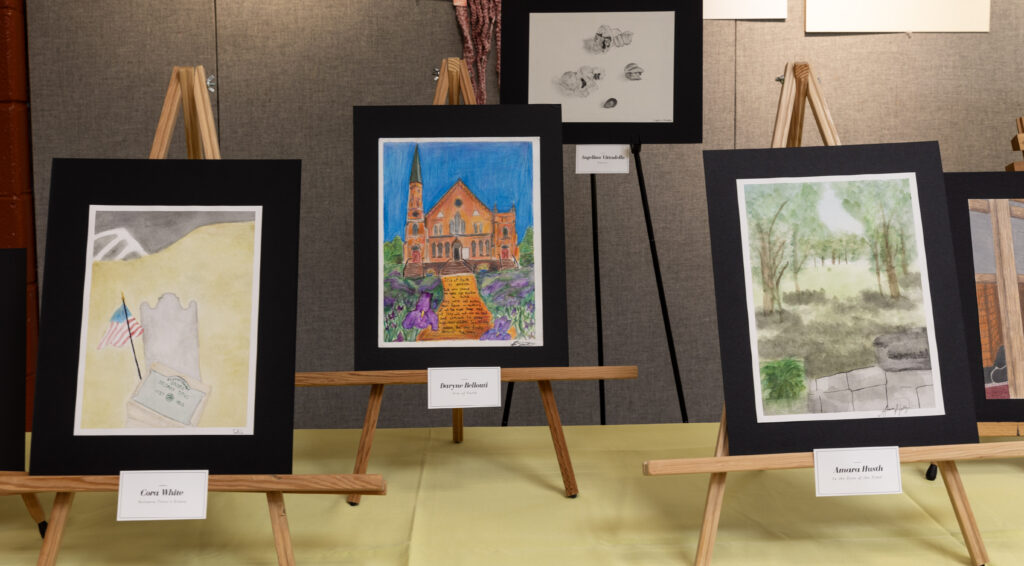
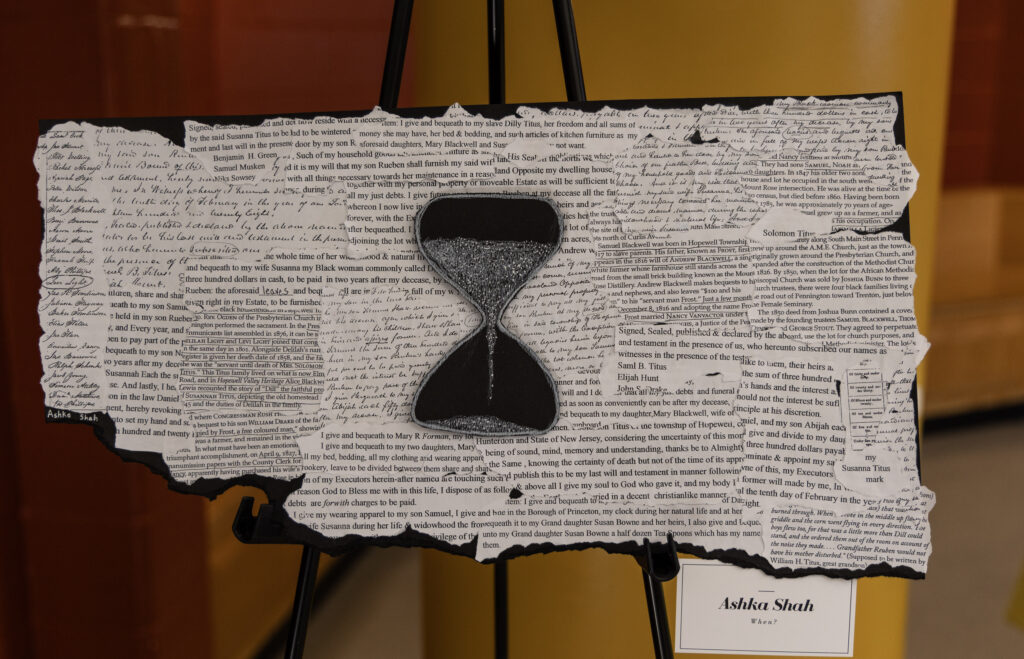
Artwork created by students was displayed throughout the performing arts center, with pieces exploring themes of freedom, resilience, family and faith.
A Partnership Years in the Making
The Witness Stones program in Hopewell Valley grew from a partnership between Timberlane Middle School, the Hopewell Valley Regional School District and the Stoutsburg Sourland African American Museum.
During the ceremony, Superintendent Dr. Rosetta Treece credited Mills and Buck with helping bring the project to the district and creating a learning experience that has become a signature part of the eighth-grade curriculum.
“When I was approached by the founders of the Stoutsburg Sourland African American Museum, Elaine Buck and Beverly Mills, and they came to me and said, ‘Dr. Treece, we have this project,’ I was so grateful when they asked me to do the work,” Treece said. “And they have honored this work from the very beginning.”
Treece said the project challenges students to investigate history through original records while examining how the legacy of slavery shaped communities across New Jersey.
“It’s not Black history; it’s our collective history as Americans,” she said. “We cannot talk about this country and not talk about all of the history of everyone who has lived here.”
The superintendent described Thursday’s event as the culmination of months of research and reflection by students and staff.
“Today’s installation is the culmination of that great work of our teachers learning the history of Delilah Light and the other individuals we’ve researched in the past, rebuilding that history through primary and secondary sources, and then teaching that to the children and having the children grapple with that history,” Treece said.
Honoring a Life, Shaping the Future
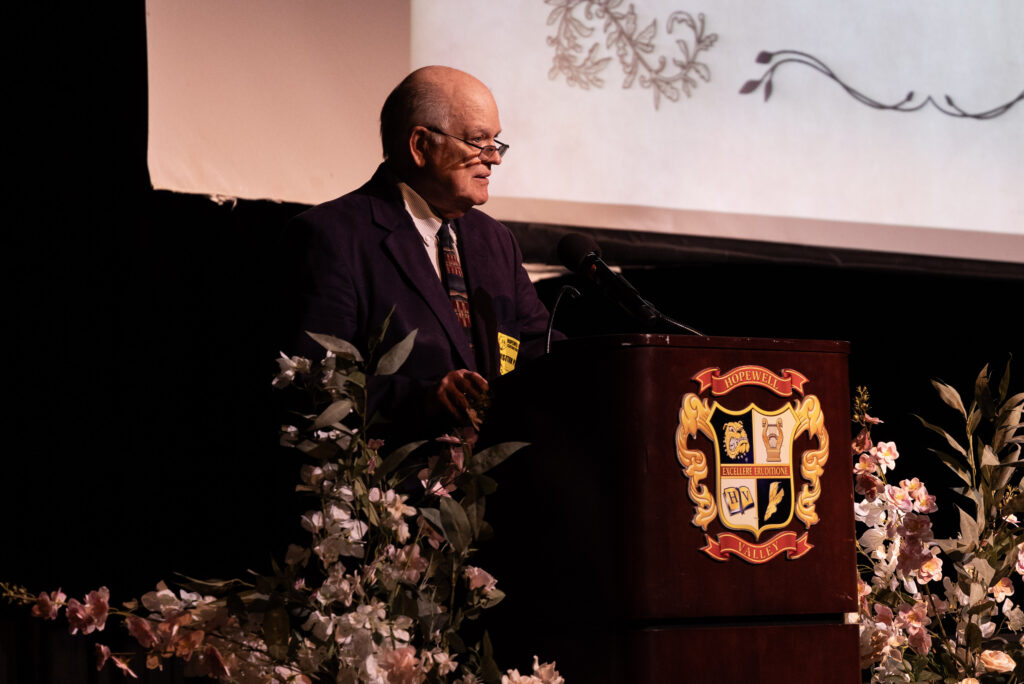
Hopewell Borough Mayor Ryan Kennedy, Pennington Mayor Jim Davy and Hopewell Township Mayor David Chait also addressed students during the ceremony.
Davy noted that Thursday marked the community’s fifth Witness Stones gathering and praised the program’s continued growth.
“That continuity matters,” Davy said. “It tells us something about who we are as a community and who we are choosing to become.”
Chait said the project helps ensure that local history includes the experiences of all who lived here.
“The Witness Stone Project is so special because it matters so deeply,” he said. “It gives visibility to our entire history.”
A Witness Stone commemorating her story will be installed near Pennington Presbyterian Church, creating a permanent reminder of a woman whose story might otherwise have remained hidden in historical records.