
For most Hopewell Borough residents, the June 30 transition to New Jersey American Water happened quietly. Water continued flowing from the tap, and aside from a welcome packet arriving in the mail, there were few visible signs that the Borough’s water system had changed hands.
Now, that transition is becoming much more visible.
Residents have begun receiving their final combined water and sewer bills from the Borough, New Jersey American Water has taken the Borough’s PFAS-affected well offline, and construction is set to begin on the first of several infrastructure projects expected over the coming months as part of the company’s $7 million investment in Hopewell’s water system.

“We’re really executing on figuring out how to do the infrastructure work that we have planned and how to communicate to customers,” New Jersey American Water President Mark McDonough said in an interview with MercerMe. “That’s sort of been our immediate work.”
The $6.4 million sale of the Borough’s water system was approved by voters in November 2025 and officially closed June 30 following approval by the New Jersey Board of Public Utilities.
Water now comes from New Jersey American Water’s regional system
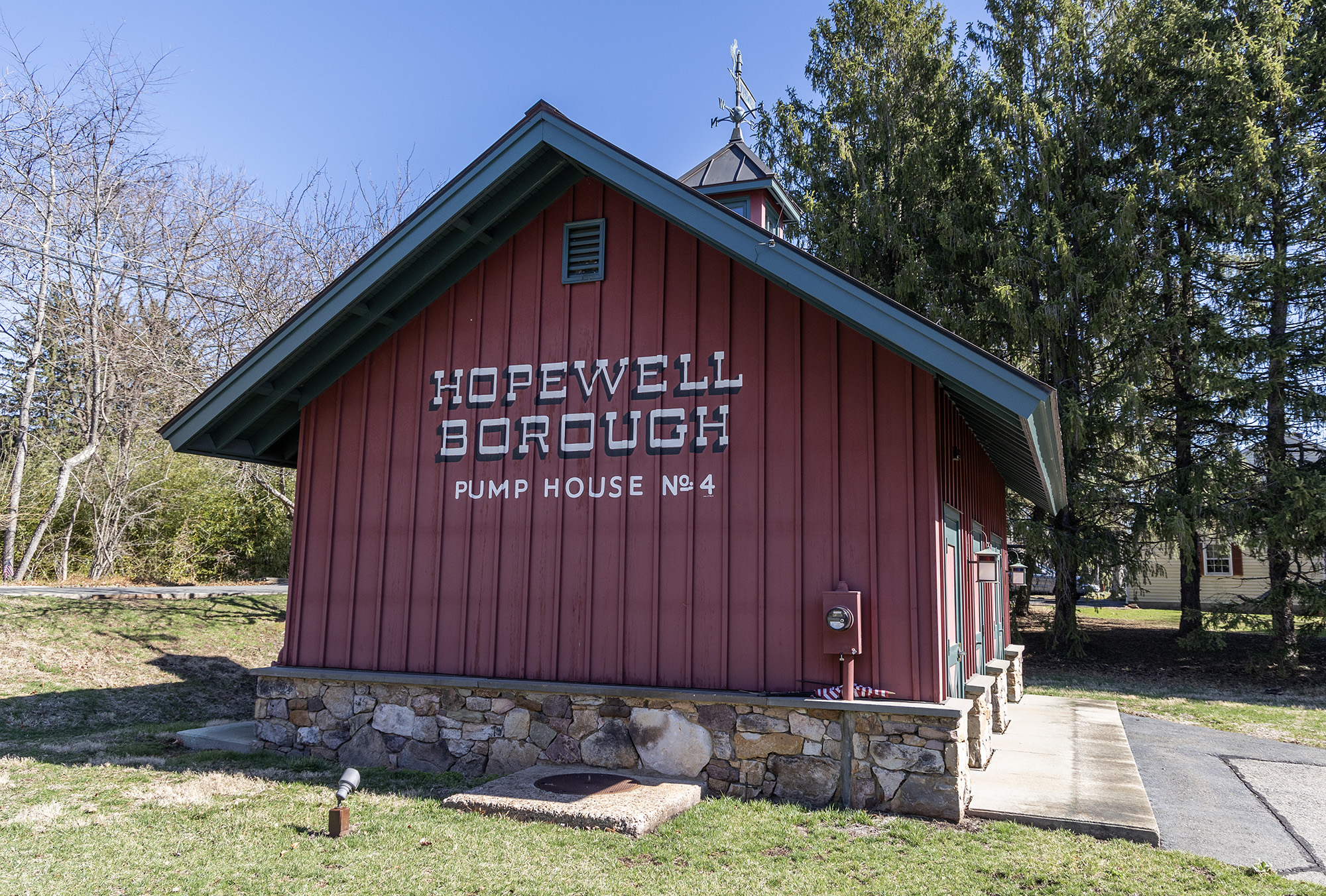
One of the company’s first actions after assuming responsibility for the system was shutting down Well No. 4, the Borough’s only operating well and the source that had elevated PFAS levels.
Hopewell Borough customers are now receiving water through New Jersey American Water’s existing connection to its Canal Road and Raritan-Millstone water treatment plants, which meet current state and federal drinking water standards including treating the water to remove PFAS.
McDonough said transitioning away from the Borough well fulfilled one of the commitments made during the acquisition process.
Looking ahead, he said it’s unlikely the Borough wells will return to service because treating them for PFAS would be significantly more expensive than supplying water through the company’s regional treatment facilities.
“I would never say never,” McDonough said. “But currently, we feel that we have a resilient system that is capable of covering that without the use of those wells.”
The Borough’s water system had long been affected by per- and polyfluoroalkyl substances (PFAS), a group of human-made chemicals that have been used for decades in products such as nonstick cookware, stain-resistant fabrics and firefighting foam. Often called “forever chemicals” because they break down very slowly in the environment, PFAS were detected in Hopewell Borough’s municipal wells—both those that were in service and those already offline—prompting years of treatment planning that was part of the discussion around the future of the Borough’s water system last year. New Jersey
Final Borough bills mark a change for customers
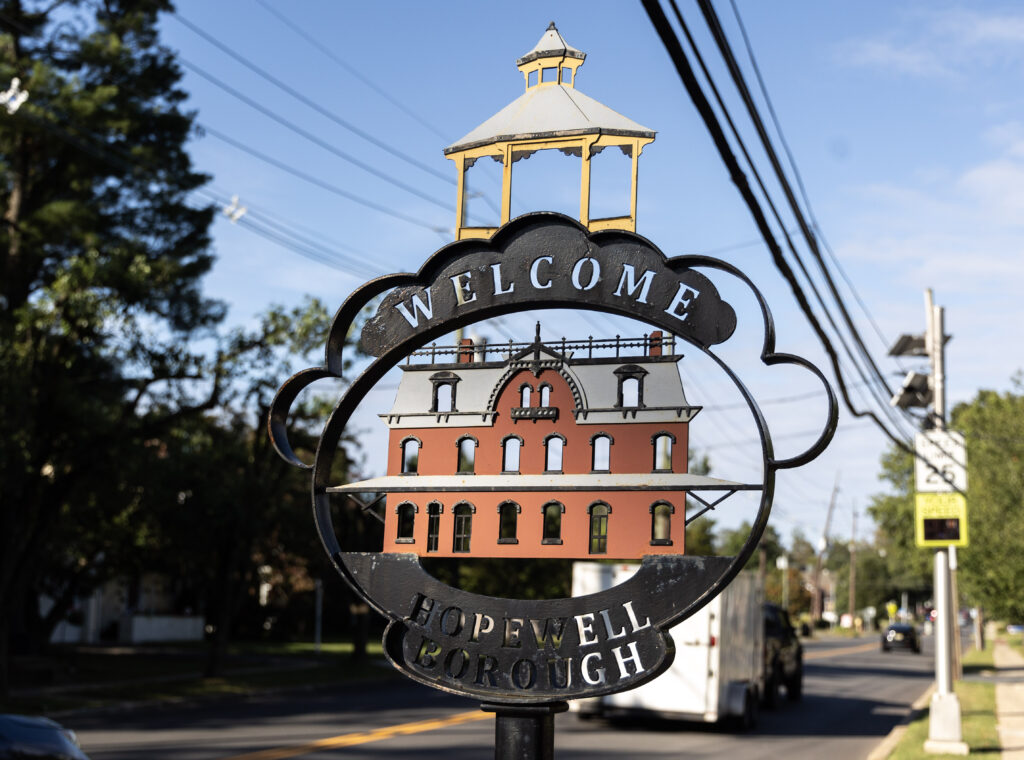
The Borough recently mailed its final combined water and sewer bills, which are due Aug. 10. Payments should still be made through the Borough at Borough Hall, online or by mail.
Future billing will change.
Customers will now receive separate quarterly bills — one from New Jersey American Water for water service and another from the Borough for sewer service.
Questions about water bills, water service and water emergencies should now be directed to New Jersey American Water, while sewer billing and sewer emergencies remain the Borough’s responsibility. After-hours sewer emergencies should continue to be reported through Hopewell Township Police dispatch.
The Borough is encouraging residents to create a MyWater online account with New Jersey American Water and sign up for both company service alerts and Hopewell Valley OEM CodeRED notifications.
McDonough said online accounts will become increasingly important as construction projects move forward.
“If they go in and create a MyWater account … it streamlines their ability to get information, and it will keep them abreast of everything we’re doing because there’s going to be a lot of activity over the next six months to a year.”
Customers who qualify for financial assistance are also now eligible for New Jersey American Water’s H2O Help to Others assistance program.
“I am excited to see that NJAW is hitting the ground running and getting right to work replacing water mains and upgrading lead/galvanized service lines,” Hopewell Borough Mayor Ryan Kennedy said. “Timed with the arrival of the final water bill from the Borough, the transition to their responsibility this month is a big step forward for the area’s infrastructure and our overall affordability. Hopewell Borough will continue to work closely with NJ American Water to minimize the impact of these essential capital projects on residents and businesses, culminating with the much-needed repaving of West Broad Street.”
West Broad Street project starts this month
The first major capital project is expected to begin around July 27 along West Broad Street between Windsor Way and Louellen Street.
The project will replace approximately 2,500 feet of aging six-inch cast iron water main with a new 12-inch ductile iron main.
Construction is expected to continue through the end of September, with final restoration anticipated in December after the roadway has had time to settle before receiving a full repaving.
The work is being coordinated with Mercer County’s paving schedule and local emergency services to minimize traffic disruptions and maintain access to homes whenever possible.
Residents and businesses along the route are expected to receive direct notification before construction begins, with service interruptions handled on a house-by-house basis as individual connections are transferred to the new water main.
Lead service lines and meter upgrades follow
Beginning in early August, New Jersey American Water expects to begin identifying customer service lines throughout the Borough while also upgrading aging water meters.
Crews will install new meter pits near curbs where possible, determine whether individual service lines are made of lead or galvanized steel and replace any that are identified. There will be no direct cost to homeowners for the replacement of lead or galvanized service lines completed as part of the project.
Some homeowners may be asked to provide access to their property or assist by photographing plumbing inside their basements so water experts can determine what type of service line serves the home.
McDonough said the work requires cooperation from residents.
“The primary thing that we preach is patience. Patience, patience, and be ready to be collaborative because we’ll do the work. We have the heavy lift, but we do need access to the property.”
He acknowledged that some work may temporarily disturb lawns and landscaping but said affected areas will be restored after construction.
Building a more resilient system
While residents are likely to notice construction crews over the coming months, McDonough said the long-term goal is for the water system itself to become almost invisible.
“It’s one thing to be able to deliver clean water to the town,” he said. “It’s another thing to then send it out and make sure it’s effectively getting to all the folks.”
Beyond replacing aging infrastructure, New Jersey American Water will continue evaluating the Borough’s system using its pipe prioritization program, which analyzes factors including pipe age, material, break history and overall performance to determine future capital projects.
Rather than replacing pipes solely because they are old, the company plans to prioritize investments where they will have the greatest impact on reliability.
Five years from now, McDonough said he hopes residents simply have dependable water service without thinking much about the infrastructure behind it.
“The acute problems of recapitalization and modernization are all done,” he said. “They’re getting top-quality water … and life is pretty seamless at that point.”