

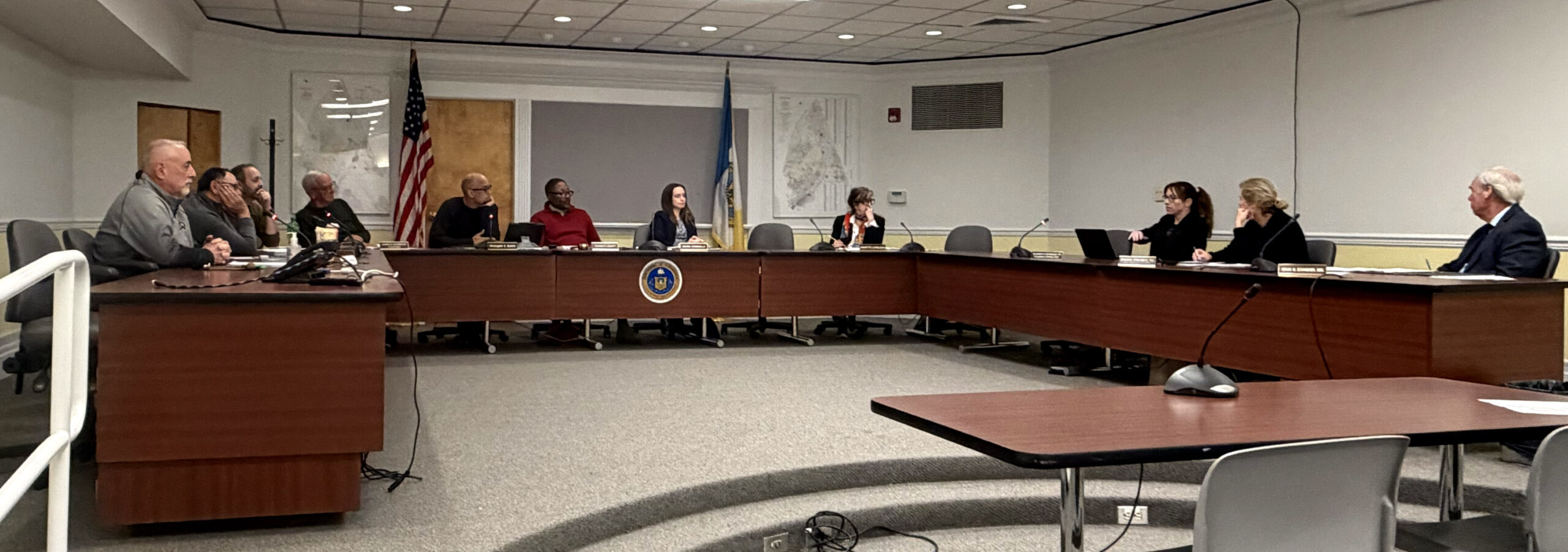
The Lawrence Township Planning Board delayed action on a proposed townshipwide ban on data centers at its Oct. 19 meeting, with members raising questions about the legal implications of an outright prohibition and whether more targeted regulations could address concerns about the facilities’ environmental and infrastructure impacts.
The ordinance, unanimously introduced by Township Council on Oct. 5, would amend the township’s land use regulations to prohibit data centers in all zoning districts. The proposal was referred to the Planning Board for review of its consistency with the township’s master plan before returning to council for further consideration.
While board members acknowledged concerns about data centers’ electricity demands, water consumption and noise, several questioned whether a townshipwide ban was necessary or adequately supported by research.
The discussion comes amid growing scrutiny of data center development across New Jersey, including a 341,000-square-foot facility under construction at the former Princeton Nurseries property along Route 1 in South Brunswick. That project has drawn opposition from neighboring Princeton officials and environmental groups concerned about air pollution, energy demand and diesel-powered backup generators.
Considering a more targeted approach
Rather than prohibit data centers outright, several Planning Board members suggested Lawrence could consider regulations addressing the specific impacts of large-scale facilities.
Clinton Township in Hunterdon County emerged as a potential model during the discussion. That municipality adopted an ordinance Sept. 23 establishing a more restrictive definition of permitted computer and data-processing facilities, distinguishing traditional operations from larger, more resource-intensive data centers.
Under Clinton Township’s ordinance, qualifying facilities cannot exceed 10 megawatts of aggregate on-site peak power supply capacity and must use exclusively air-cooled heat rejection methods. The ordinance also limits the amount of computing power that can be concentrated in server racks and within a facility.
“Clinton Township in Hunterdon County, has strict performance standards which caps the power at 10 mw, and it excludes hyperscale facilities and mandates oderless cooling,” said Planning Board member Maria Connolly. “By adopting this model we can filter out those massive resource consuming facilities that the council wants to stop, and it would still keep the ordinance consistent with our master plan.”
Connolly also raised concerns about the potential legal consequences of a blanket prohibition.
“My concern is the legal justification for it,” Connolly said. “Any kind of outright bans on land use is skating on thin ice. Monroe Township in Gloucester County was hit with a $300 million lawsuit in June after enacting an ordinance just like this.”
The lawsuit referenced during the meeting involves Monroe Township in Gloucester County and Princeton-based Hexa-Builders, which is challenging the municipality’s data center restrictions and seeking damages.
Planning Board member Ken Kiernan questioned whether the township had gathered enough information to justify a ban.
“As much as we state whereas it may happen, where is the research that it does?” Kiernan asked. “Have we looked at what other towns and where it has passed and where it has failed?”
Members also discussed the need for a clearer definition of what constitutes a data center, particularly as the technology and scale of such facilities have evolved.
Township planner Elizabeth “Beth” McManus acknowledged that data centers are not specifically addressed in the township’s existing master plan.
“It raises an interesting issue in the sense that we’ve had data centers around the state for a couple decades, maybe more,” McManus said. “And they were never an issue, and now they are for some very serious consequential changes that they have made.”
Environmental concerns remain
The board’s discussion of alternatives to an outright ban did not eliminate concerns about the potential environmental impacts of data centers.
Representatives from The Watershed Institute in Pennington urged the township to consider the consequences of delaying regulations while further research is conducted.
“I guess our concern at the Watershed is while you are developing these standards even if you can develop them in a short time and that even if you don’t believe there is any room for a data center in Lawrence. An application still might come in, and it would be harder to deny it if you don’t have a ban or standards in place.”
Her comments highlighted a potential challenge facing the township: how to address applications that could be submitted before new regulations are adopted.
Data centers have become a growing land-use issue across New Jersey as demand for computing infrastructure, including artificial intelligence, increases. Climate Revolution Action Network, an environmental advocacy organization, says more than 110 municipalities have taken steps to prohibit data centers, although the specific restrictions vary by community.
What happens next?
The Planning Board deferred action on the proposed ordinance and directed its professionals to conduct additional research, including examining approaches taken by other New Jersey municipalities.
The discussion leaves open whether the board will ultimately recommend the townshipwide prohibition introduced by council or suggest more narrowly tailored regulations addressing energy consumption, water use, noise and other potential impacts.
The Planning Board’s next scheduled meeting is Nov. 2.
The proposed ban has not been adopted by Township Council.