
To the Editor:
New Jersey’s affordable-housing laws were established for an important reason: people should not be excluded from communities simply because they cannot afford expensive homes. The Mount Laurel decisions recognized that municipalities have a responsibility to provide realistic opportunities for low- and moderate-income housing.
That principle remains as important today as it was decades ago. Teachers, firefighters, service workers, young families and retirees should have opportunities to live in the communities they serve.
But affordable-housing requirements have become increasingly intertwined with another public policy: redevelopment incentives, including payments in lieu of taxes, commonly known as PILOT agreements.
These programs were created for different purposes. Affordable-housing laws address economic exclusion, while long-term tax exemptions were intended to encourage investment in areas needing redevelopment. Both serve legitimate public interests. The question is whether their modern application always delivers the benefits originally intended.
Hopewell Parc provides an opportunity to examine that question.
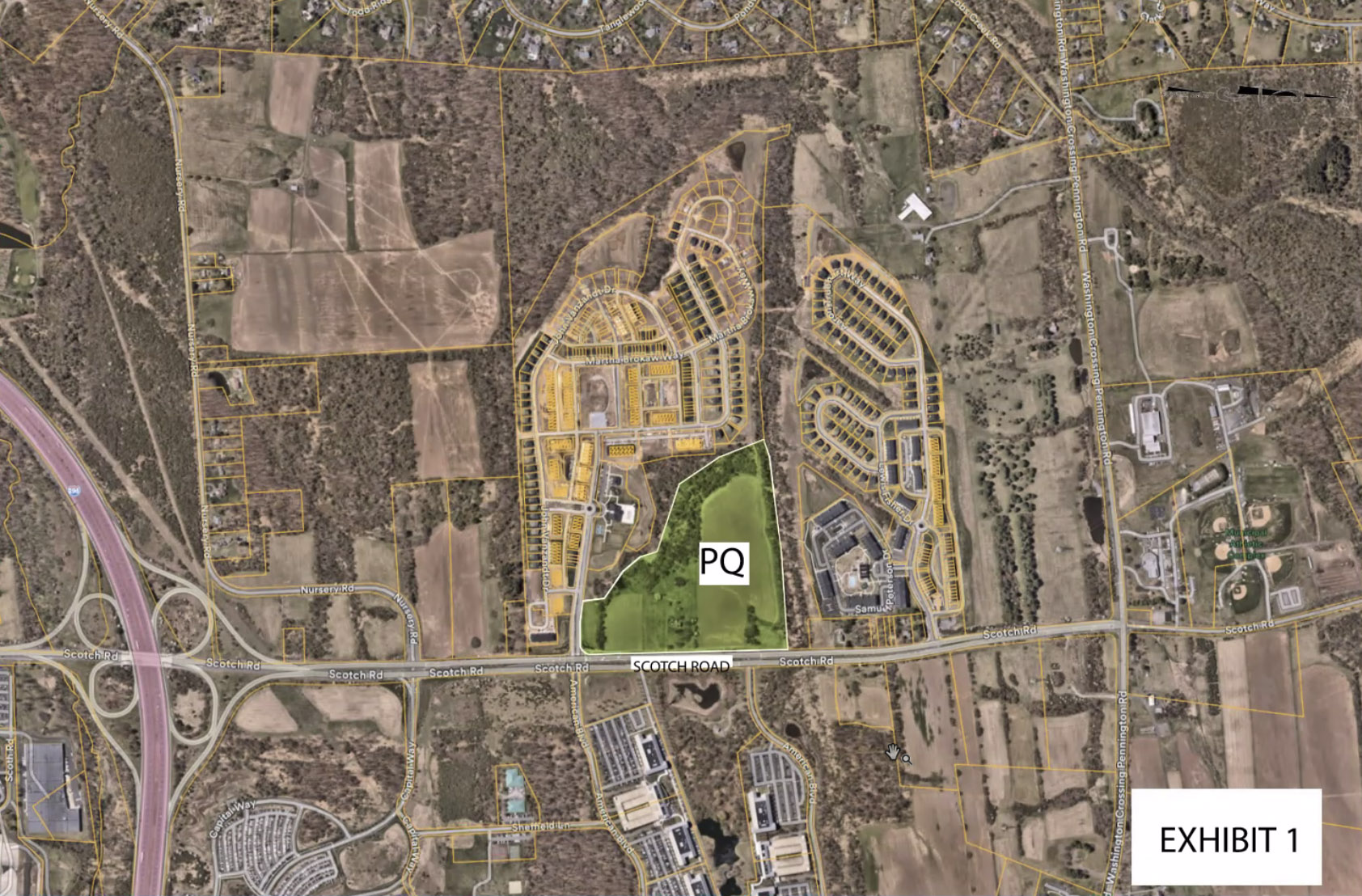
The development includes approximately 1,077 residential units, with at least 216 designated as affordable housing. The remaining majority are market-rate units. Hopewell Township entered into a 30-year PILOT agreement with Lennar, the developer, under New Jersey’s Long Term Tax Exemption Law.
Township officials have explained that the agreement was necessary to make the project financially feasible, support infrastructure improvements and satisfy affordable-housing obligations. They have also stated that projected PILOT payments over 30 years would amount to approximately 93 cents for every dollar otherwise collected through conventional taxation.
Those are legitimate considerations. But the comparison raises another question: How are the financial benefits and long-term costs distributed among the developer, municipality, school district and residents?
Under conventional property taxation, revenues support municipal, county and school budgets through the established tax structure. PILOT agreements operate differently, with negotiated payments directed primarily to the municipality rather than distributed through the conventional property-tax system.
That distinction becomes important when development brings additional students, traffic, infrastructure demands and municipal service costs.
To its credit, Hopewell Township recently approved approximately $20.7 million in projected PILOT-funded support for the Bear Tavern Elementary School expansion. That is a meaningful commitment, and it demonstrates that PILOT revenue can be used to support public education.
However, a commitment toward school construction and financing does not, by itself, answer whether the overall arrangement adequately addresses the community’s financial needs throughout its 30-year term.
What happens as school enrollment changes? How will continuing educational expenses be funded? What about roads, emergency services, stormwater management and other municipal responsibilities?
Developers contribute substantial infrastructure improvements and other payments. Those contributions must be considered in any fair analysis. But residents should be able to see a comprehensive accounting of projected revenues, expenditures and long-term obligations.
Another issue deserves attention: institutional ownership.
In 2023, Hopewell Township approved an arrangement allowing Lennar to transfer the portion of Hopewell Parc containing 270 rental apartments, including 54 affordable units, to an entity affiliated with KRE Acquisition Corp.
The approval also permitted the corresponding redevelopment and PILOT agreement rights and obligations to transfer to the new entity, subject to completion of the transaction.
Ownership changes are not unique to Hopewell Parc. As MercerMe reported in April, the 300-unit Woodmont Forge apartment complex, now known as One Hundred Forge, was sold to a new ownership group for $115.7 million.
These examples illustrate an important feature of modern development financing: the company originally developing a property may not remain its long-term owner, and existing financial arrangements may continue under subsequent ownership.
Institutional ownership is not inherently harmful. Professional property management and rental housing serve legitimate needs. But ownership changes raise reasonable questions about who ultimately benefits from long-term tax incentives and how municipalities protect the public interest when those benefits transfer.
Recent national developments involving Lennar provide additional context.
In 2025, Lennar spun off Millrose Properties as part of a strategy to reduce the amount of capital tied up in land. In 2026, their business arrangements expanded to accommodate purchases of completed homes for rental use.
An October investigation by Hunterbrook reported that Millrose had purchased more than 700 completed Lennar homes across multiple states in approximately one month. The reporting raised questions about the financial implications of those transactions and what they might indicate about housing demand.
Hunterbrook’s affiliated investment fund disclosed short positions in Lennar and Millrose, an important potential conflict of interest that readers should consider when evaluating its conclusions.
There is no evidence presented here that Millrose owns property at Hopewell Parc, nor do those national transactions establish wrongdoing by Lennar. The circumstances elsewhere should not be confused with documented events in Hopewell Township.
Nevertheless, they illustrate how a developer’s business model can evolve during the lifespan of a municipal agreement. A community may approve a development under one set of economic assumptions, only to find that ownership structures, financing arrangements and housing-market conditions change substantially over the following decades.
The relevant public-policy question is whether municipalities have sufficient transparency and safeguards to respond to those changes.
Residents should be able to understand who owns properties receiving PILOT benefits, how ownership transfers affect existing agreements, how PILOT revenues compare with conventional taxation and whether projected financial benefits continue to justify the incentives granted.
Ideally, municipalities would publish accessible, regularly updated financial analyses showing anticipated PILOT revenue, school and municipal expenditures, developer contributions and the assumptions underlying those projections.
None of this requires opposing affordable housing or assuming that developers are acting improperly. Affordable housing is necessary, and private development requires investment and the opportunity to earn a reasonable return.
But public incentives should remain accountable to the public.
As affordable-housing policies and redevelopment incentives increasingly intersect with large developers, institutional investors and complex financing arrangements, we should periodically examine whether they continue to achieve their intended public purposes.
The question is not simply whether an arrangement is legal or whether a development provides affordable units. It is whether the entire financial structure remains fair, transparent and beneficial to the community over time.
If these programs are working as intended, comprehensive public accounting should demonstrate that. And if circumstances have changed, residents deserve the opportunity to examine those changes and ask whether adjustments are warranted.
Because the ultimate measure of public policy should not be how effectively it serves a financial arrangement, but how effectively that arrangement serves the public.
Sincerely,
Dan Opdyke
Hopewell Twp.
Editor’s note: This letter references reporting by Hunterbrook Media, an investigative journalism organization affiliated with Hunterbrook Capital, an investment firm. Hunterbrook disclosed that, at the time of its Oct. 2, 2026, investigation, its affiliated fund held short positions in Lennar and Millrose, meaning it could benefit financially if those companies’ stock prices declined. Those financial interests are relevant context for readers evaluating the investigation. The findings referenced in this letter are attributed to Hunterbrook and are not independent findings by MercerMe or by the author of the letter.