

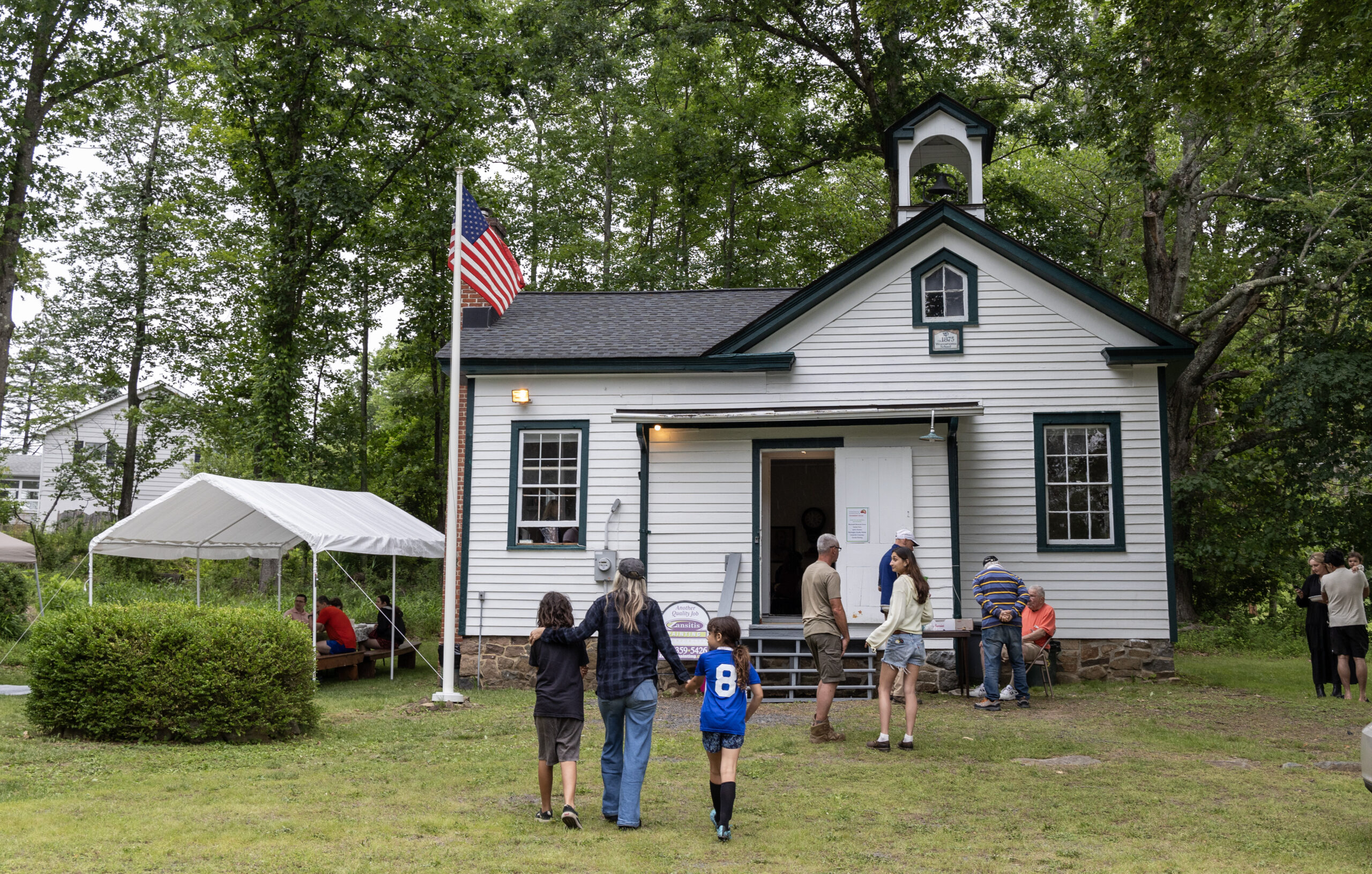
At the corner of Woosamonsa and Poor Farm Roads sits a small white building that has sparked curiosity for generations. The restored one-room schoolhouse, built in 1876 to replace an earlier log structure, once served local children for both weekday instruction and Sunday school. Each June, it opens for just one afternoon — inviting neighbors to step into the past.
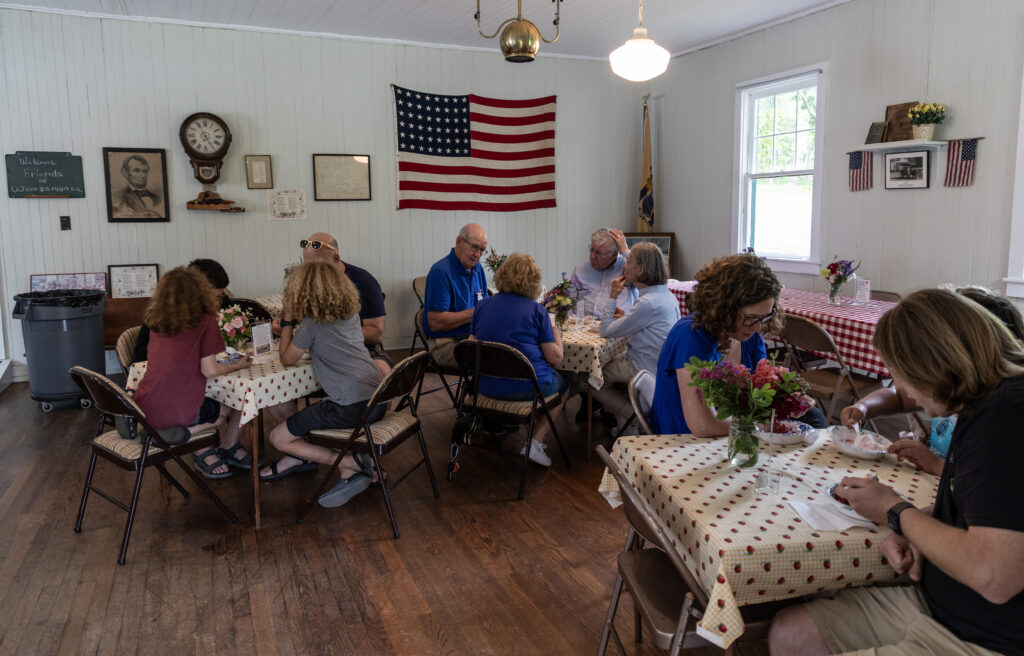
This year’s Woosamonsa Schoolhouse Strawberry Social, held June 8, drew visitors from across Hopewell Valley for the annual fundraiser that helps preserve the historic site. Guests enjoyed fresh strawberry shortcake, and a rare look inside the preserved classroom — complete with original desks, lamps, and slate chalkboards.
Sue Teschke attended with her friend Brenda Reasoner, and both were struck by the building’s character.
“I’ve always wanted to see inside the schoolhouse. The kids were all in here from grades one to eight,” Reasoner said.
One corner featured a bulletin board overflowing with photos, handwritten stories, and vintage memorabilia. Among the materials was a list of early teachers who led classes during the late 19th and early 20th centuries — including Kate Errickson (1879–1882), Emma Vincent (1888–1894), and Julia Wentworth (1906–1911).
Other documents described what life was like for students and educators more than a century ago. In the early 1900s, teachers earned just $37.50 per month. A township record from 1896 warned that teachers who missed time between Christmas and New Year’s would have their pay docked or be required to make up the time. The school also once boasted a library of 85 books. Attendance varied seasonally, with many older boys staying home during the fall and spring to help with farm work and returning to school only during the winter months — when girls made up most of the class.
The Woosamonsa Schoolhouse enrolled between 30 and 63 pupils annually before closing in 1918. In 1922, the building was sold to the newly formed Woosamonsa Association for one dollar.
Today, that same nonprofit still maintains the site with help from local volunteers — nearly all of whom live within walking distance. Their commitment keeps the building open not for private use, but for the broader community.
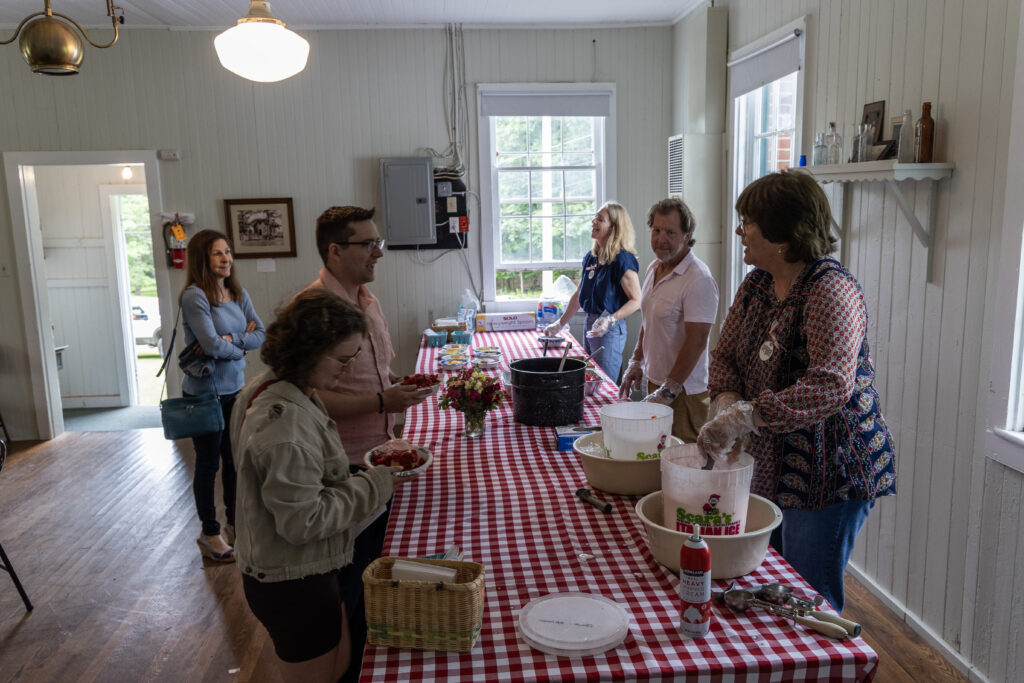
“This is it — our one fundraiser,” said Chris Cane, a longtime trustee who lives just down the road. “It raises a couple thousand dollars a year, enough to cover the electricity, taxes, and insurance. If the weather’s good, we usually sell about 200 tickets.”
Cane, who has served on the board for over a decade, sees the event as a vital link between past and present.
“It brings the community together in a way that I appreciate and enjoy,” he said. “This building is from 1875, and it’s still here and still used — that’s pretty incredible.”
The Strawberry Social has helped fund small but meaningful upgrades. In 2019, a rear-entry ramp was added to improve accessibility — a Girl Scout Gold Award project led by Anna Lauricella and funded in part by the previous year’s event.
Trustee Elizabeth England said the building has occasionally hosted yoga classes and community meetings.
“We’d love to do more,” she said. “People have suggested using it for weddings or photo shoots, and I’d love to bring school groups through. A teacher could say, ‘You have Chromebooks. These kids had slates.’ It’s a great way to show perspective.”
Still, she noted, the primary focus remains on preservation.
“We’ve kept it nonpartisan and community-focused — that’s the spirit of this place.”
For newcomers like Teschke and Reasoner, the shortcake alone was enough to bring them back.
“Oh my gosh, it was delicious,” Reasoner said. “The strawberry sauce made it — there’s nothing like Jersey berries.”
“You see things like this going on nearby, and you should just try it,” added Teschke. “We’ll definitely be back.”
You can learn more and support the schoolhouse at their website.