
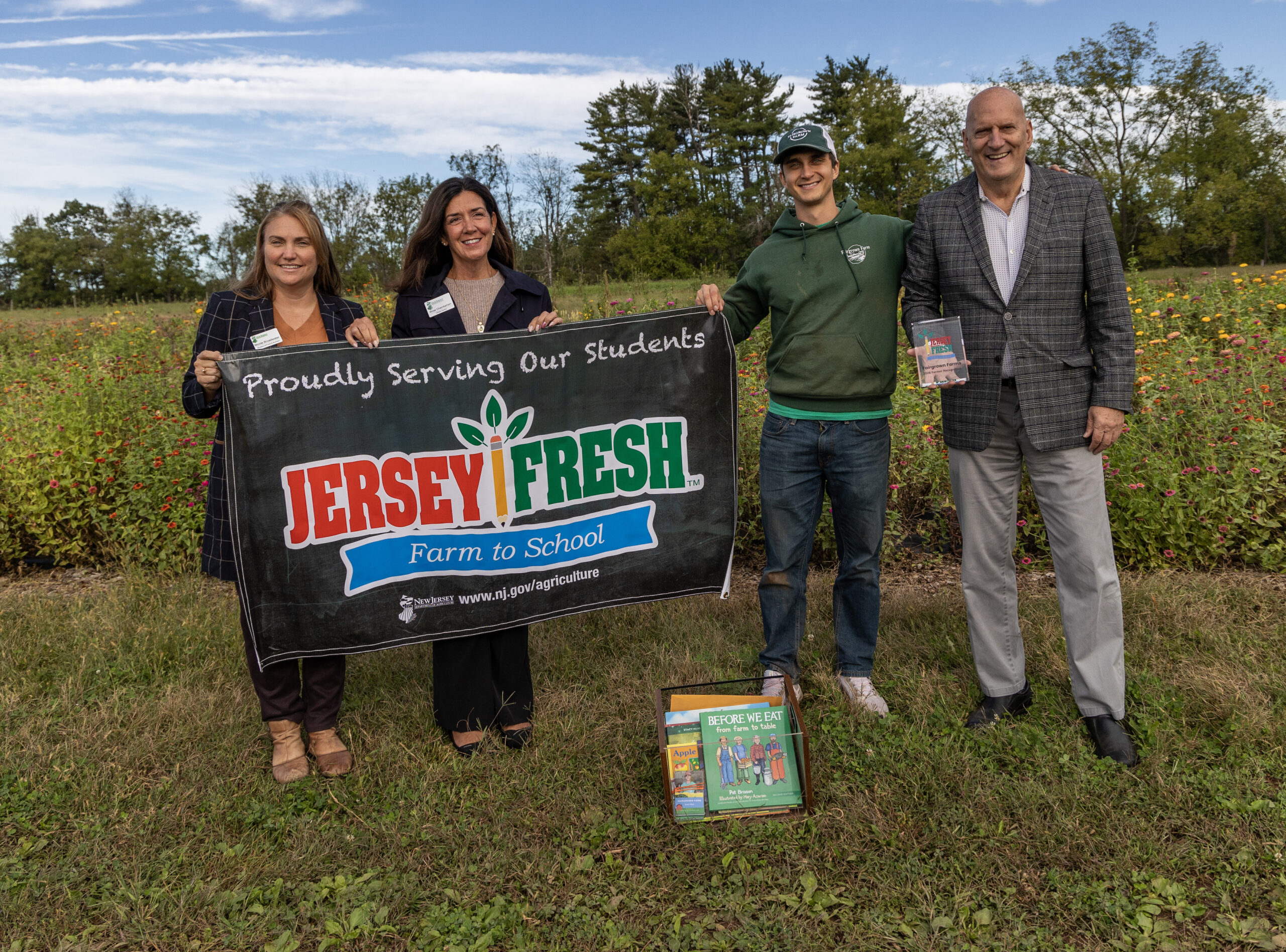
On a bright Friday morning, New Jersey agriculture officials stopped at Fairgrown Farm in Hopewell Township to recognize work that reaches well beyond its fields.
New Jersey Secretary of Agriculture Ed Wengryn presented owner James Klett with the Jersey Fresh Farm to School Farmer Recognition Award, honoring Fairgrown’s efforts to connect local schools and students with agricultural education and locally grown food.
The presentation was part of the New Jersey Department of Agriculture’s 16th annual Jersey Fresh Farm to School Week and Ag Literacy Week, which included visits to schools and farms in Hunterdon, Cumberland and Mercer counties.
For Klett, the recognition touched on a part of farming that has become especially important to him: giving children a chance to understand where their food actually comes from.
“When kids can come out to a farm, pick a carrot out of the ground, and put together that this is where the food is coming from, it changes their relationship with food,” Klett said.
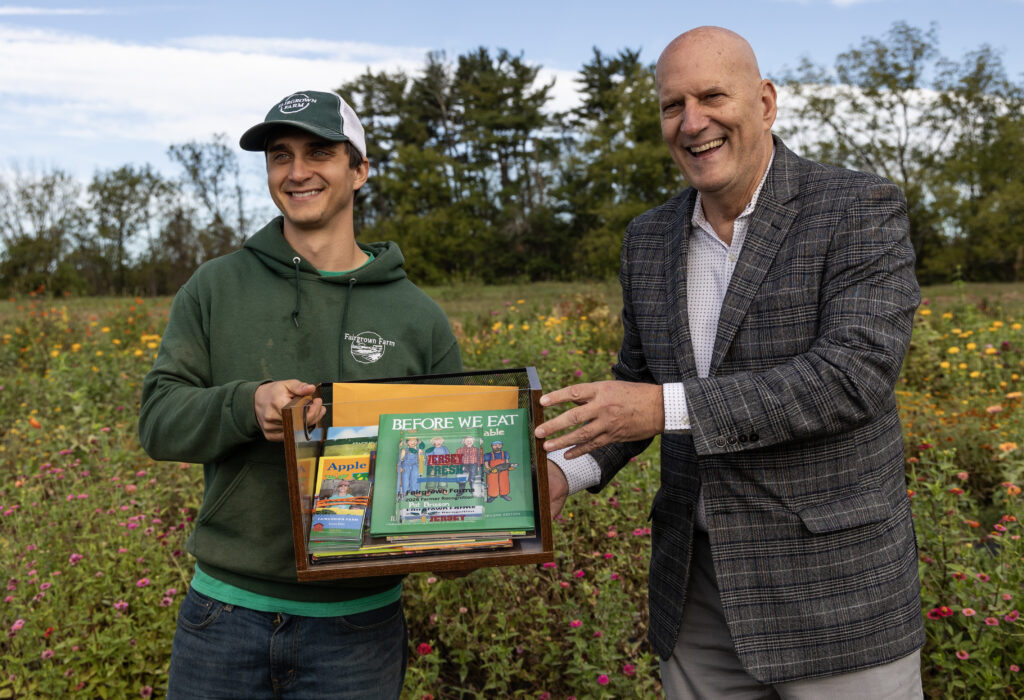
Fairgrown has developed those connections in several ways, from working with schools to giving children opportunities to spend time on the farm. Klett also described ongoing relationships with programs serving students and young adults with special needs, whose participants regularly visit the farm to volunteer and work in the fields.
Wengryn said that connection between farmers and students is at the heart of the state’s Farm to School effort. The program, he said, is not simply about getting locally grown produce into cafeterias, but helping students understand the people and work behind their food.
The recognition also gives the state an opportunity to thank farmers who take that additional step into their communities, Wengryn said.
“It’s our way of saying thank you to the farmers who are coming forward and putting themselves out there into the community, to say, hey, agriculture is important,” he said.
Rose Chamberlain, director of the Department of Agriculture’s Division of Food and Nutrition, said schools also represent an important opportunity for New Jersey farms. With hundreds of school food authorities across the state, she said, farmers have potential partners — and future customers — in their own communities.
“Giving them a taste of the things that you grow and teaching them where their food comes from is going to help the sustainability of agriculture in New Jersey,” Chamberlain said.
One example is already playing out alongside Fairgrown’s CSA distribution in Princeton. Students there are growing produce through a school garden club and operating their own small farm stand alongside Fairgrown’s pickup, selling what they grow to raise money for future garden projects.
Klett said watching students grow something and then discover that they can sell it brings him back to what first excited him about farming.
“They made fifty dollars on the first day, which is going to help them grow more vegetables,” he said. “It’s like the idea that I can grow a tomato and I can sell it and make money. And I just made something from nothing.”
But he said the larger goal goes beyond introducing young people to farming as a business.
“If we can establish a baseline of something that’s fresh and locally grown, then they’ll go the rest of their lives holding that with them,” Klett said. “That, to me, is the most important part of it all — utilizing agriculture not just as an industry to produce food, but as a way to help impact future generations so that we have healthier adults and families.”