

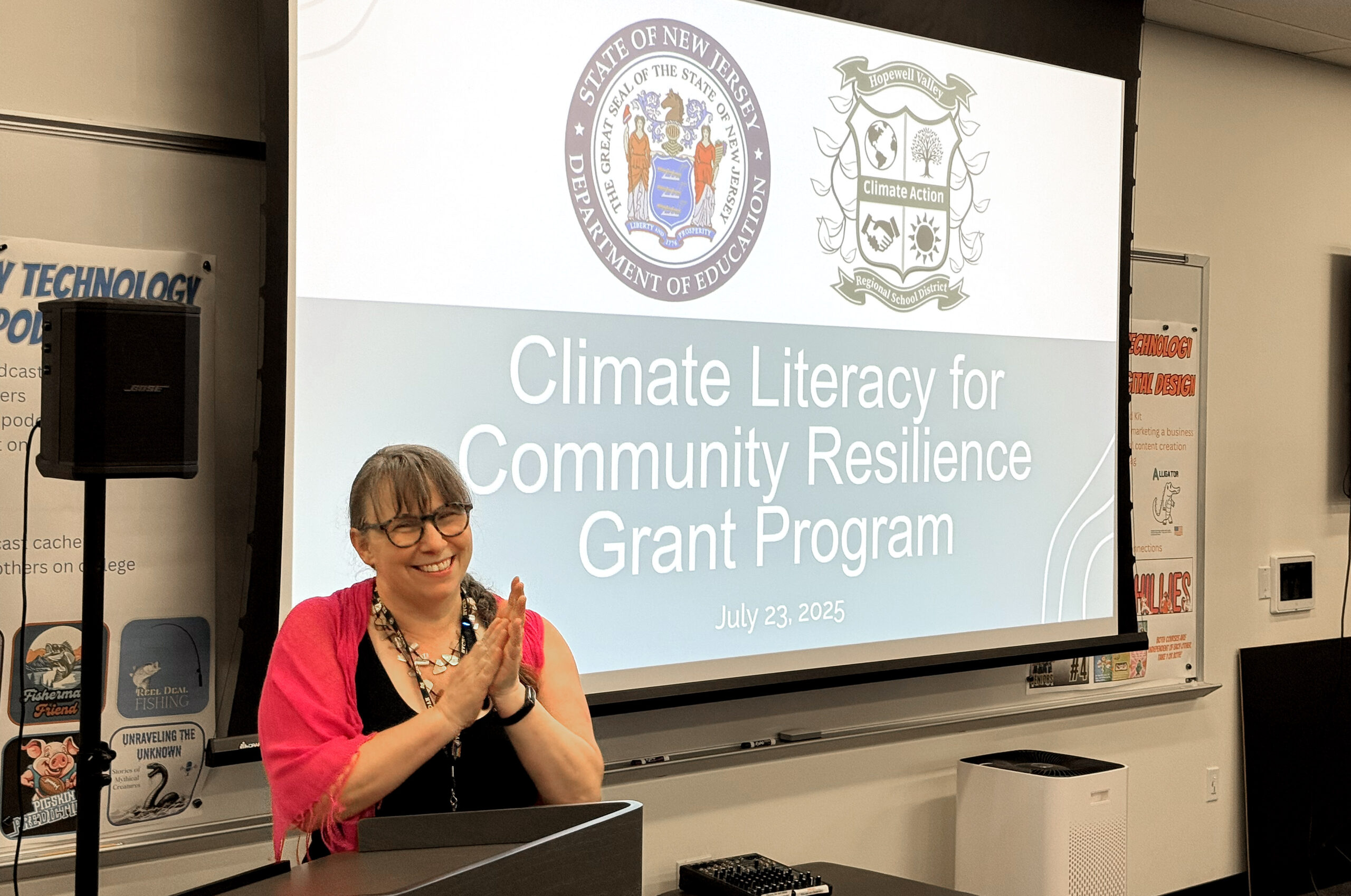
The Hopewell Valley Regional School District has been awarded a $30,000 state grant to expand climate change education and install nature-based infrastructure across its schools, officials announced Wednesday during a public event at the high school.
Funded by the New Jersey Department of Education’s Climate Literacy for Community Resilience (CLCR) competitive grant program, the award supports a year-long project to engage students in designing, planting, and maintaining rain gardens on each of the district’s six campuses.
“This is a competitive grant with strict guidelines, but it’s really going to push us ahead,” said Carolyn McGrath, a visual arts teacher at Hopewell Valley Central High School and co-chair of the district’s Climate Action Committee. “It ticks off a lot of boxes in our district’s Climate Action Plan—especially around green infrastructure and facilities resilience.”
The state’s goals for the CLCR program are to:
- Expand equitable access to high-quality climate change education,
- Encourage student-centered, location-based learning, and
- Build a statewide network of local education agencies sharing best practices.
Hopewell Valley is one of 19 districts awarded funding this year.
From Flooding to Fieldwork
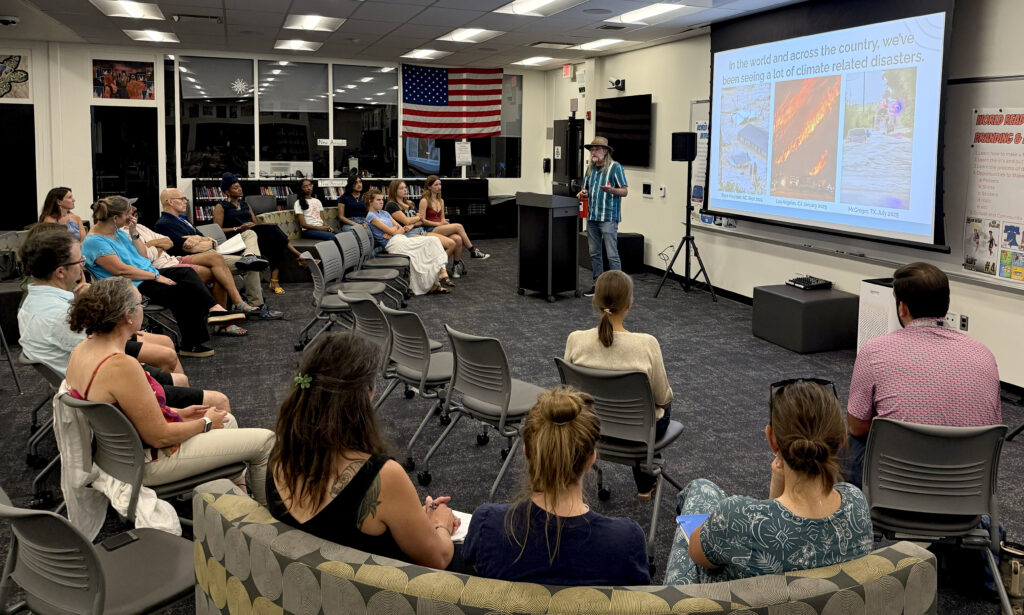
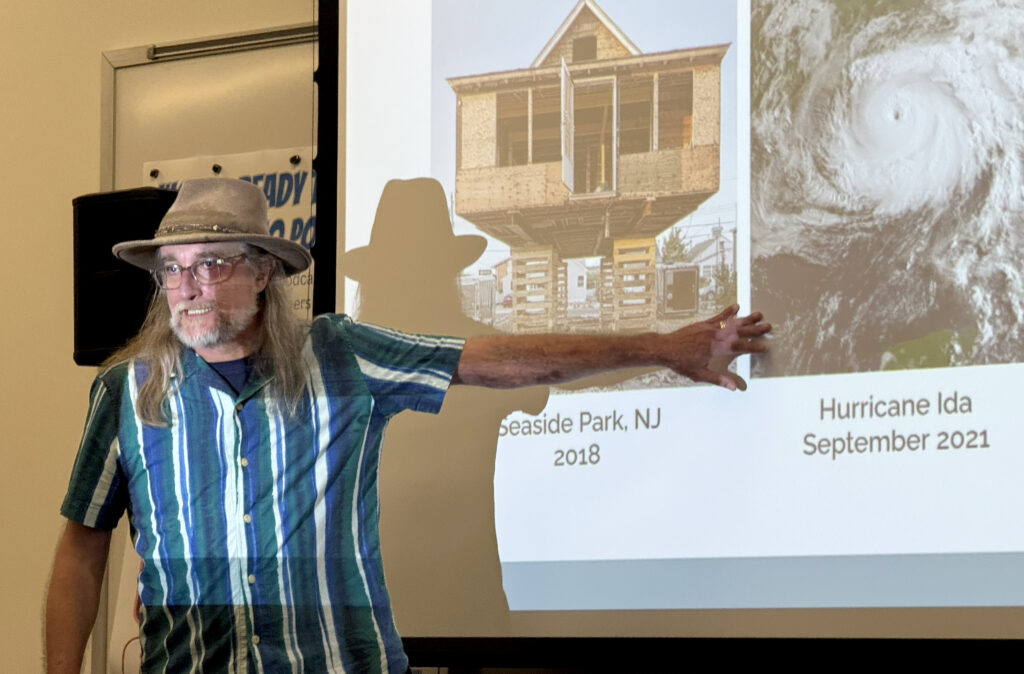
During the presentation, McGrath and Monmouth University Professor Peter Jacques showed photos of recent storm damage in the district—including scenes from Tropical Storm Ida and non-hurricane events that flooded basements, overwhelmed culverts, and damaged school property.
Superintendent Dr. Rosetta Treece said the grant’s focus on both curriculum and infrastructure offers long-term value.
“I love this because it’s addressing infrastructure and embedding into the curriculum, which is what we’ve always wanted to do,” Treece said. “This doesn’t stop with the grant. It’s a foundation for what we want to keep doing—not just for stormwater, but for teaching systems thinking, stewardship, and sustainability.”
Six School Sites, One Growing Idea
Each of the six schools—Hopewell Valley Central High School, Timberlane Middle School, Toll Gate Grammar, Bear Tavern, Stony Brook, and Hopewell Elementary—has done some preliminary field work to find a site for a rain garden that will be designed with student input.
At the high school, a spot that regularly floods outside of the Black Box Theater was selected. Toll Gate had an underused bed in the front of the school that meets the qualifications. And at Bear Tavern Elementary the strip of grass in between the parking lots may become a rain garden.
The project team used GIS mapping and site surveys to identify runoff issues and accessible locations near classrooms. The goal is for each rain garden to serve as both stormwater solution and outdoor classroom.
Interdisciplinary Learning with Real-World Impact
The gardens will be integrated into a variety of classroom experiences next year:
- Third-grade STEAM units focused on problem-solving
- Eighth-grade energy & environment classes
- High school engineering and environmental science electives
- As well as language arts, social studies, and the arts
“We are really trying to encourage our teachers to collaborate across disciplines,” McGrath said.
The grant also funds teacher training, curriculum development, and a capstone student showcase at Monmouth University, a partner in the statewide Climate Change Learning Collaborative (CCLC). Community partner The Watershed Institute is also providing technical and ecological expertise in addition to being involved as resource for the students to learn and visit.
Native Plants, Not Just Landscaping
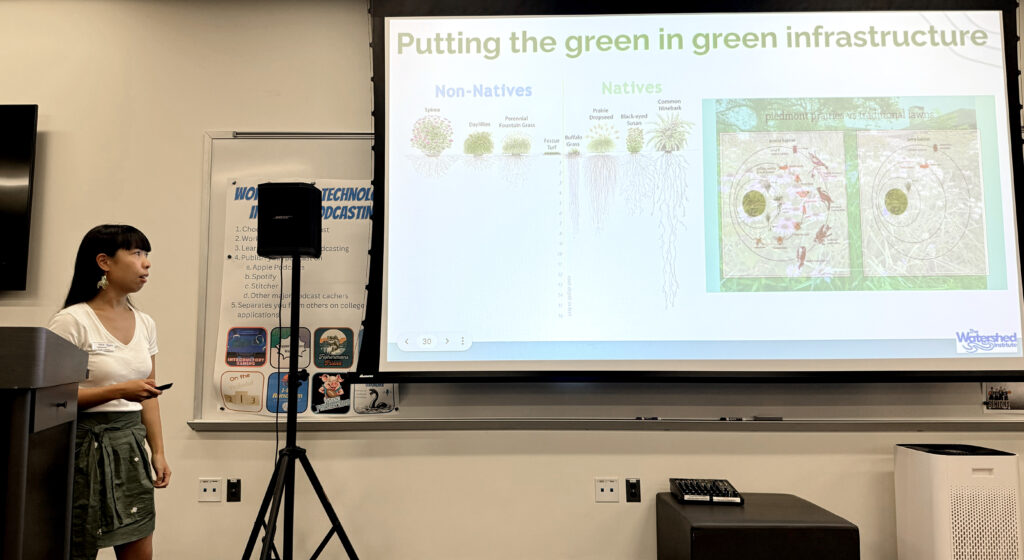
Olivia Spildooren, River-Friendly Coordinator at The Watershed Institute, explained how native plant species have much deeper root systems and help absorb stormwater, prevent erosion, and support biodiversity. She shared ideas and information about how green infrastructure including rain barrels, bioswales, pervious paving, and downspout planters can help slow down water and prevent flooding.
“Conventional stormwater management just doesn’t work anymore,” Spildooren said during the presentation. “Green infrastructure slows water down and soaks it in—rather than creating flash flooding or erosion.”
The rain gardens are scheduled to be installed in spring 2026, with students leading both design and planting, while working on other projects in classes throughout the year. The district hopes to apply for additional funding next year to maintain and expand the effort.
Photos by Seth Siditsky