
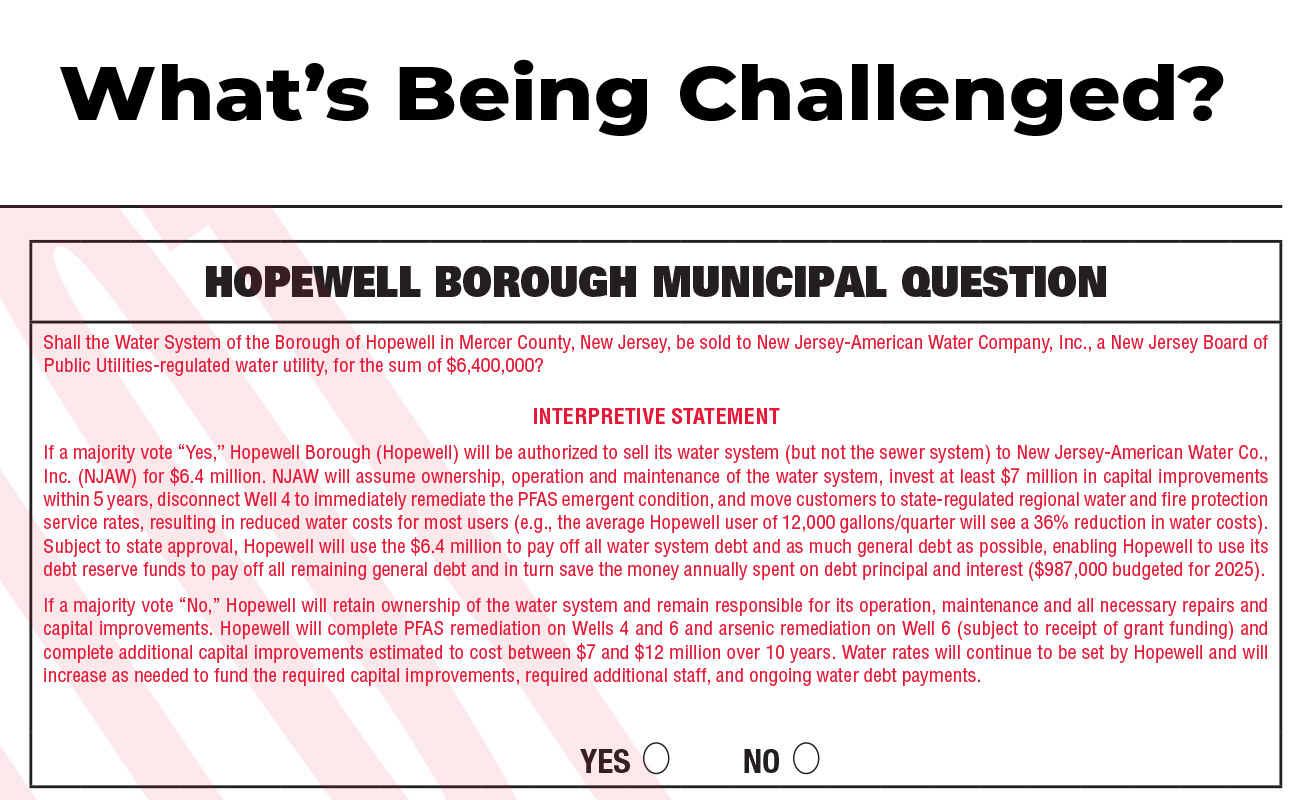
A Hopewell Borough resident has filed a lawsuit in Mercer County Superior Court challenging the ballot language used in the Nov. 4 referendum on whether to sell the Borough’s municipal water system to New Jersey American Water, arguing that voters are not being provided neutral or adequate information before casting their ballots.
The complaint was filed by J. David Waldman, a retired attorney who lives in Hopewell Borough and is active in the Hopewell Borough Public Water Alliance and the “vote no” campaign opposing the sale. The lawsuit claims that the interpretive statement printed on the ballot is misleading and that its wording favors approval of the sale.
Legal challenge centers on neutrality
Under New Jersey election law, interpretive statements must provide neutral and objective context about a ballot question. Waldman argues that Hopewell Borough’s statement improperly presents a “yes” vote as financially advantageous — citing debt payoff and lower water costs — while describing a “no” vote as costly and burdensome.
The interpretive statement describes approval of the sale as eliminating municipal debt and lowering rates, while warning that if the Borough retains ownership, it will remain responsible for capital improvements and operating costs. The lawsuit contends this framing is persuasive rather than explanatory, signaling a preferred outcome to voters.
Seeks to block certification, not voting
Mail-in voting is already underway, and in-person early voting begins this weekend, ahead of Election Day on November 4. Because ballots have already been printed and are being cast, the lawsuit does not seek to prevent the vote from taking place.
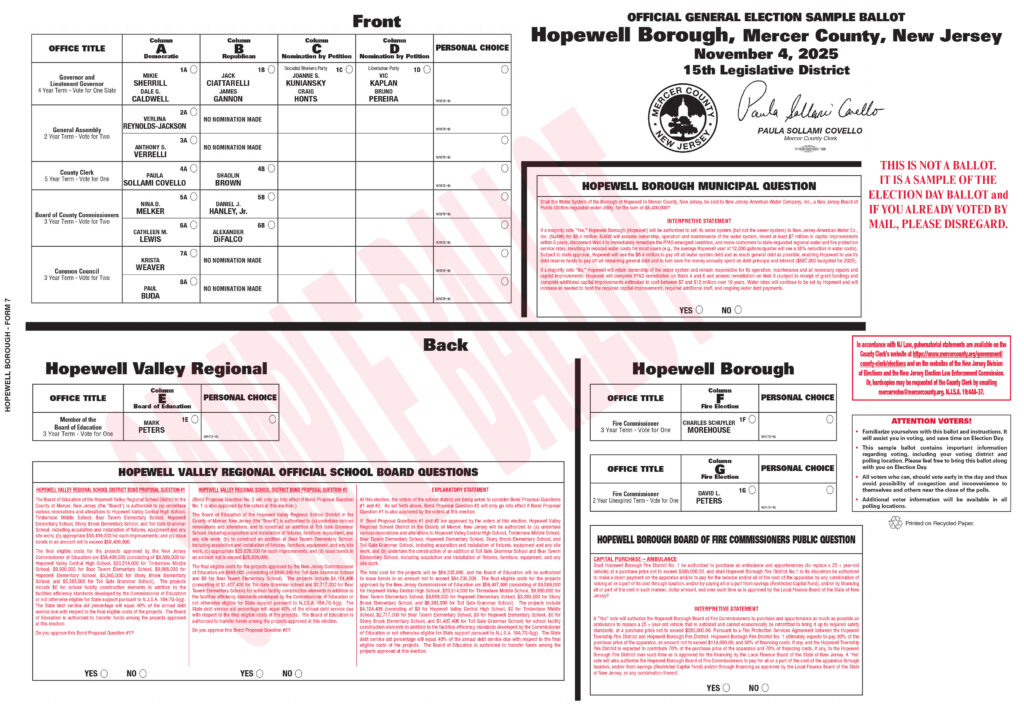
Instead, Waldman is asking the court to block certification of the referendum results unless the interpretive statement is corrected or supplemented with neutral information. The complaint argues that certification without neutral language would cause irreversible harm because the sale, once finalized, cannot be undone.
Borough response
Hopewell Borough Mayor Ryan Kennedy said the Borough has no official comment on pending litigation, but defended the process used to adopt the ballot wording.
“Election day is in less than two weeks, ballots have been printed and many people have already voted by mail,” Kennedy said. “The filing this week is political in nature and without merit: our Borough attorney will be responding to the litigation which objects to the interpretative statement that Borough Council introduced in June and approved at a public hearing in July, more than 100 days ago.”
Public pushback and alternative plan
The lawsuit comes after months of debate over the proposed $6.4 million sale, which supporters say would eliminate municipal debt, stabilize rates, and transfer costly regulatory obligations to a larger utility. Opponents argue the sale would permanently surrender local control and that the Borough has not adequately considered alternatives that keep the system public.
In early October, more than 120 residents filled First Calvary Baptist Church for a community forum organized by the Hopewell Borough Public Water Alliance — the first time the group publicly presented a detailed alternative plan. The event pushed a “vote no means pause” forum, arguing that a “no” vote would temporarily halt the sale and allow time for a community-based plan to move forward.
The Alliance outlined a five-part proposal centered on using federal grant money already awarded to the Borough, potentially creating a local utility authority, restructuring capital planning, exploring philanthropic support, and keeping long-term decision-making public. Several Borough officials, including the mayor and council members, attended as residents and engaged during public comment — a reflection of the highly visible and personal nature of the debate.
What the court will consider
In reviewing the lawsuit, the court will not decide whether the sale is good public policy, but whether the information provided to voters is legally neutral. Courts in New Jersey apply an “average voter test” — asking whether a typical voter reading the interpretive statement would clearly understand the issue without being steered toward one outcome.
Interpretive statements that emphasize benefits for one choice or highlight negative consequences for the other could be found to cross the line from explanation into advocacy. Waldman argues that Hopewell Borough’s statement does exactly that by promising savings under a “yes” vote while warning of ongoing costs under a “no” vote.
The judge will determine whether the current ballot language informs voters or attempts to persuade them.
What comes next
The referendum remains on the ballot, and voting will continue as scheduled. Voters should make their choice in the voting booth or with their mail-in ballot. No hearing date has yet been announced. If the court agrees with the challenge, certification of the results could be delayed, or the Borough could be required to provide additional neutral disclosure before the referendum outcome is made official.
If the lawsuit is rejected, the existing interpretive language will remain in place and the sale will proceed if it is approved by voters.