
Ecoanxiety—the growing fear that our environment is deteriorating beyond repair—has become increasingly common. It’s hard not to feel this way when environmental protections are weakened and vital programs are defunded at both federal and state levels. These setbacks can make it seem as though nature has little support on the horizon.
But at Friends of Hopewell Valley Open Space (FoHVOS), we hold a different perspective: even when top-down policies falter, bottom-up, grassroots action remains profoundly powerful. We’ve always believed that meaningful change begins in communities, neighborhoods, and backyards. And one of the most overlooked sources of environmental hope is right at home—in the spaces we steward every day.
One overlooked set of stakeholders—and a source of hope—is close to home. In fact, it’s right in your front or backyard. A lawn, or at least portions of it, is a perfect palette to begin making change.
Does your ½-acre yard matter?
The Watershed Institute experts informed me last year of an amazing statistic: when a ½ acre of lawn is converted to native meadow, it can absorb up to 500,000 gallons of water a year. Imagine how helpful it could have been if half of our residential properties (there are 3,000 in the Valley) had small meadows during Hurricane Ida. Up to 750,000,000 gallons of stormwater could have been held in the ground and slowly released instead of surging into our local streams and rivers.
If collaborating with your neighbors to reduce dangerous flooding isn’t your thing, maybe carbon sequestration is more your flavor. A lot of meadow plants have extensive root systems—many native grass species have roots that extend 6–10 feet into the soil—making them ideal carbon sinks. The majority of their biomass is underground, and they mature fairly quickly, at about three years of age. Trees, by contrast, have significant biomass above ground and take decades to mature. Planting a meadow in your yard reduces carbon emissions, reduces maintenance, and absorbs more carbon in a sustainable manner.
Studies suggest that for every acre of land converted from lawn to meadow, carbon in the air is reduced by half a ton, stormwater is reduced by 30% to 43%, and potentially hundreds of thousands of gallons of water are saved through reduced lawn irrigation.
While the deep-in-the-soil values of a native meadow are mind-blowing (we’ve just grazed the surface here), the simple and selfish part of me loves the butterfly and insect population I host each year in my yard’s not-so-perfect meadows. In 2025, I spent part of my birthday watching four individual monarch butterflies laying eggs on my milkweed plants—the perfect gift for a nature nerd. This winter, flocks of wintering birds—Dark-Eyed Juncos especially—were picking seeds from the flowerheads of my meadow plants; a great food source when a blanket of snow covers the ground.
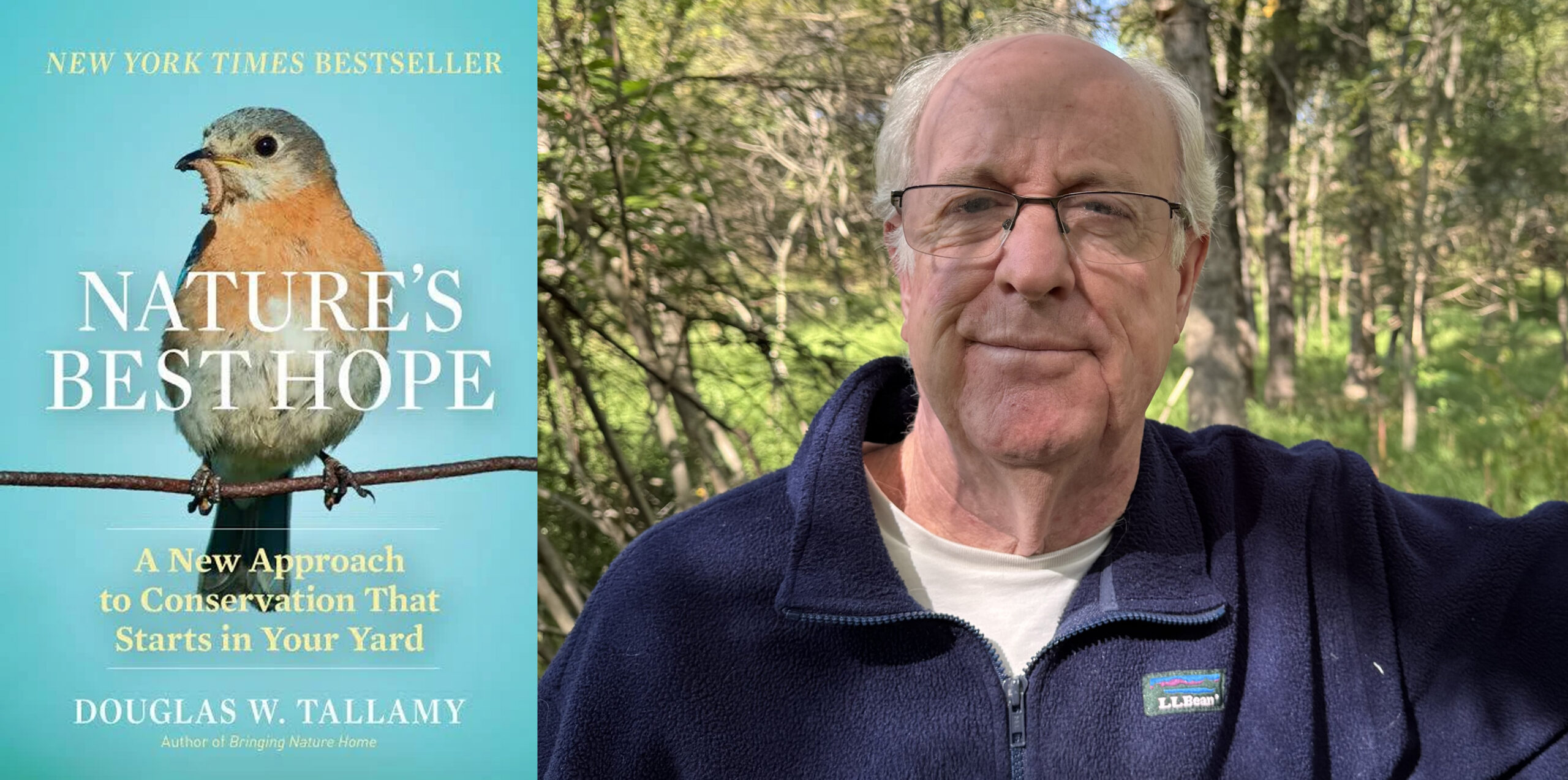
But don’t take my word for it. Regional and national experts are saying the same thing. Dr. Doug Tallamy, professor at the University of Delaware, New York Times best-selling author, and founder of Homegrown National Park, also believes that your backyard is one of nature’s best hopes:
“If Americans replanted half of their lawns with native plants, shrubs and trees, we would have more wildlife habitat than all the national parks combined… That’ll give us more than 20 million acres that we can restore right where we live.” —Doug Tallamy
FoHVOS has been supporting homeowners for nearly two decades in creating habitat at home through our Community Conservation program.
“In 2019, FoHVOS came to my property and gave guidance on how to plant a native meadow. Watching it grow over the years has been not only enjoyable but deeply meaningful—it’s created a stronger connection to the environment right in my own yard. Thanks to FoHVOS’s support, I now see an incredible variety of butterflies and countless types of bees and pollinators every day. I joined the Community Conservation program because I wanted to be part of something that restores and protects nature, starting at home.”
—Kate Dunham, Community Conservation Participant
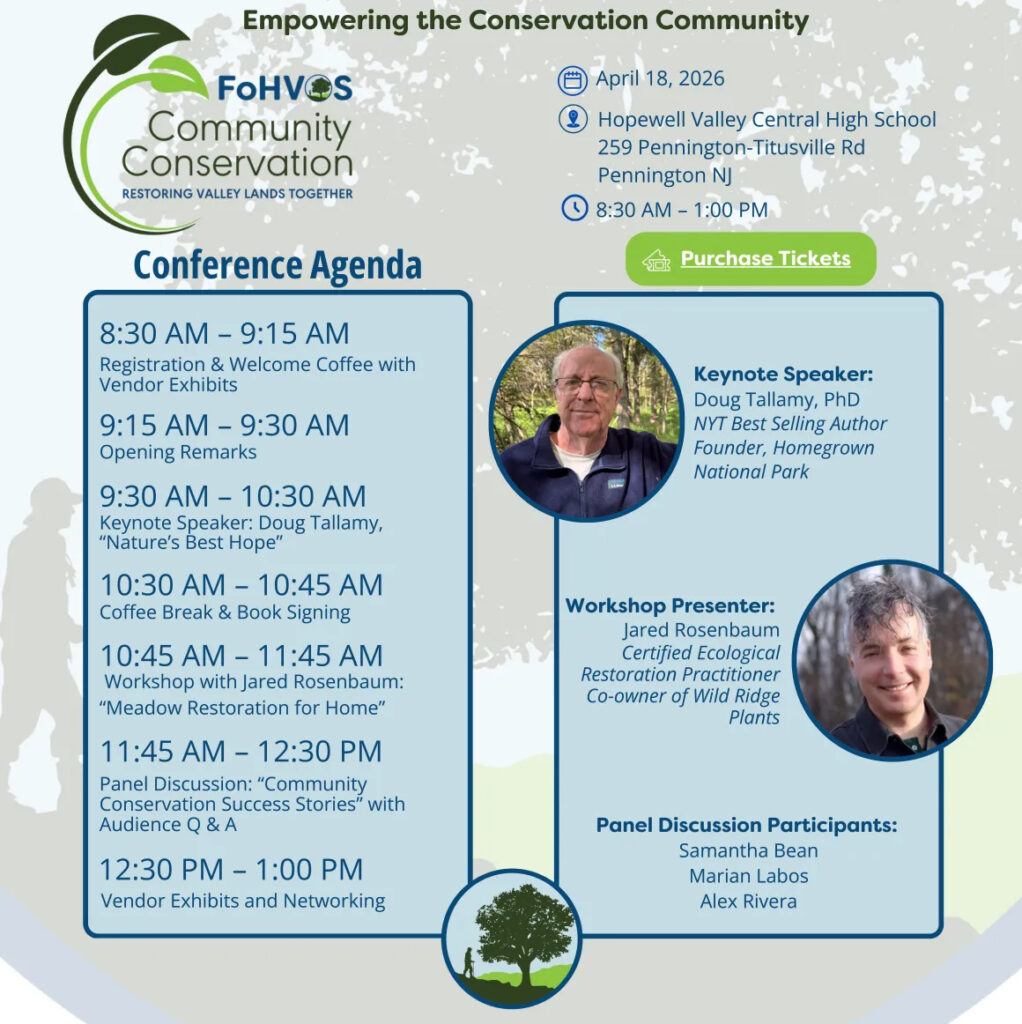
For 2026, we’ve redesigned the program to provide more support and education for our participants. We’ll kick off this relaunch with our first annual Community Conservation Conference, held at Hopewell Valley Central High School on Saturday, April 18. It is a half-day event featuring Dr. Doug Tallamy as our keynote, a morning of presentations, and exhibitors. Tickets are on sale—and we’ve extended the Early Bird ticket price through March 15 for those just hearing about the event. Purchase them online and learn more about the conference on the FoHVOS website.
P.S. For those looking for more hope, here’s one last quote from Doug Tallamy:
“Headlines about global insect declines and three billion fewer birds in North America are a bleak reality check… The good news is that none of this is inevitable. Choosing the right plants for our landscapes will not only address the biodiversity crisis but help fight our climate crisis as well.”
I choose to believe that the future is in our hands.
Put on your (native) gardening gloves.