
By Isabella Darcy, NJ State House News Service
Moria Kaminski and her husband try to make environmentally friendly choices. They strive to conserve water and electricity, and recently purchased a hybrid car. When she learned that she could be turned into soil through human composting after she dies, she began to consider the option.
Burial often requires chemicals like formaldehyde and non-biodegradable materials, and cremation emits greenhouse gases. By comparison, natural decomposition seems like a better choice for the planet, said Kaminski, a 32-year-old nurse from Linwood.
A gardener who composts at home, Kaminski has seen firsthand how new life springs from nutrient-rich soil derived from dead organic waste. All the work is done by bacteria, which consume the material and leave nitrogen, phosphorus and magnesium available to nourish plants.
“It feels full circle, almost, having your body become one with the Earth again, and something beautiful can be created from it,” Kaminski told State House News.
A local option
Right now, bodies heading for breakdown must be shipped out of state. Next year, though, New Jerseyans will have a local option, as the Garden State embraces its name in a new way. Human composting, also called natural organic reduction, was legalized on Sept. 11.
The bill, signed into law by Governor Phil Murphy, will allow funeral homes and other post-mortem businesses to obtain licenses and offer the service by July 2026. In the meantime, the state Board of Mortuary Science is making rules to govern the process.
The industry is a new one in the United States, with Washington the first state to legalize it, in 2019. New Jersey became the 14th state to authorize human composting, and bills are pending in about a dozen other legislatures, according to Earth Funeral, a Washington-based provider.
How it happens
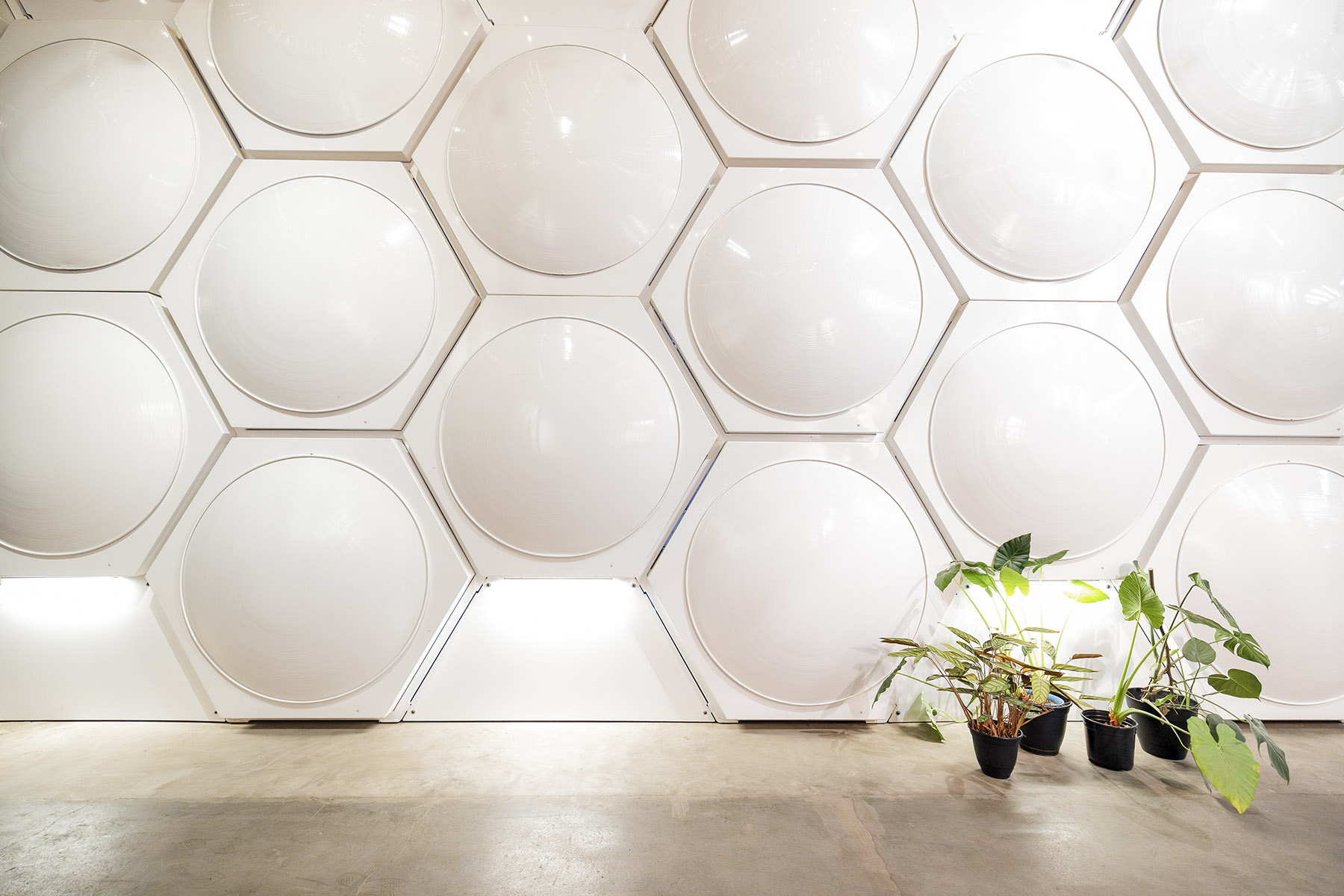
The transformation starts with placing remains in a vessel with other organic material — such as wood chips, alfalfa and straw — for five to seven weeks. Nitrogen, oxygen and carbon encourage microbes to break down the body. Added moisture and heat, as well as vessel rotation to promote aeration, speed the process.
The contents are then removed from the vessel and placed in a “curing bin” for three to five weeks until nutrient-rich soil is left. Some steps vary by provider.
Some human composting facilities have spaces for ceremonies if survivors wish to have a funeral service or spend time with their loved one before soil transformation begins.
Human composting typically costs $5,000 to $7,000, according to providers, and those fees may include legal and transportation fees. The median price of a funeral with casket and burial was $8,300 in 2023, and $6,280 for cremation, according to a National Funeral Directors Association study.
Human composting proponents – namely, the provider companies – consider the process a more environmentally friendly option than more traditional choices because it reduces land needed for human remains, does not require toxic chemicals and releases less carbon into the atmosphere.
Human-based soil can be used the same way as any other soil. Some who choose human composting specify what they want done with their remains, such as planting with a tree or flowers.
Not for everyone
While the industry is growing, composting isn’t for everyone. The Roman Catholic Church and Orthodox Judaism consider it disrespectful to the human body. It also runs counter to the Muslim faith, whose practice is to place a shrouded body directly into the ground.
Because of public-health risks, composting off-limits to people who have been embalmed, or who died with active tuberculosis, highly contagious ebola or neurodegenerative prion disease, such as mad cow.
In New Jersey, composting companies will have to pass a Department of Environmental Protection inspection. Providers also will be required to register annually with the state, and must be supervised by a mortuary scientist or funeral director.
‘Embracing the process’
The pioneer of human composting, Katrina Spade, said she’s “thrilled to see so many states legalizing the process, and so many people embracing the process.”
Spade founded Recompose, billed as the world’s first human composting company, in 2017 in Washington. Since Recompose started accepting bodies in December 2020, more than 600 bodies have been transformed, she said.
“There’s this interest in choosing something that feels more meaningful, and so it’s not only folks who are concerned about the environment. It’s also people who love the idea of returning to nature in some way,” Spade told State House News.
For Kaminski, the New Jersey nurse, death isn’t something she thinks about daily. She’s certain, though, that her final wishes will be respected – even if they include composting – because she and her husband agree on most matters, she said.
If Kaminski is turned into soil after she passes, she wants to be used to grow lilies, her favorite flowers.
“They’re perennials,” she said. “They come back year after year. So it’d be kind of nice to know that I’m a part of that.”
—-
NJ State House News intern Isabella Darcy is a College of New Jersey senior majoring in Journalism and Professional Writing and minoring in Communication Studies.