
Facing a state deadline this spring, Pennington officials will gather for a rare joint public meeting on Dec. 17 to outline a plan for meeting the borough’s affordable housing obligations — a process that could reshape local zoning and spur redevelopment.
The meeting comes after the borough released two major documents: a 12-page letter describing potential sites and zoning concepts for meeting state housing requirements, and a communitywide survey summary from the ongoing Master Plan update.
While the documents arrived at nearly the same time, officials said the release was not coordinated — but the combination now gives residents both the regulatory context and the community input framing this next phase of planning.
Mayor Jim Davy said the Dec. 17 session marks a critical step as the borough approaches a state-imposed deadline next March. “We’ve got to meet a March deadline,” he said, explaining that the borough must submit a full Fourth Round housing plan to the state. “We have to provide a plan… that shows how we are going to meet our fourth round need as well as… cut into our unmet need.”
Davy emphasized that the borough is not being asked to ensure construction, but to show that zoning will allow compliant development if pursued by property owners.
“This is providing the possibility — the opportunity — to create affordable housing, and that’s what we have to show,” he said. “It may or may not come to pass… a property owner may decide they don’t want to proceed…but we’re making the possibility.”
State Requirements Driving the Process
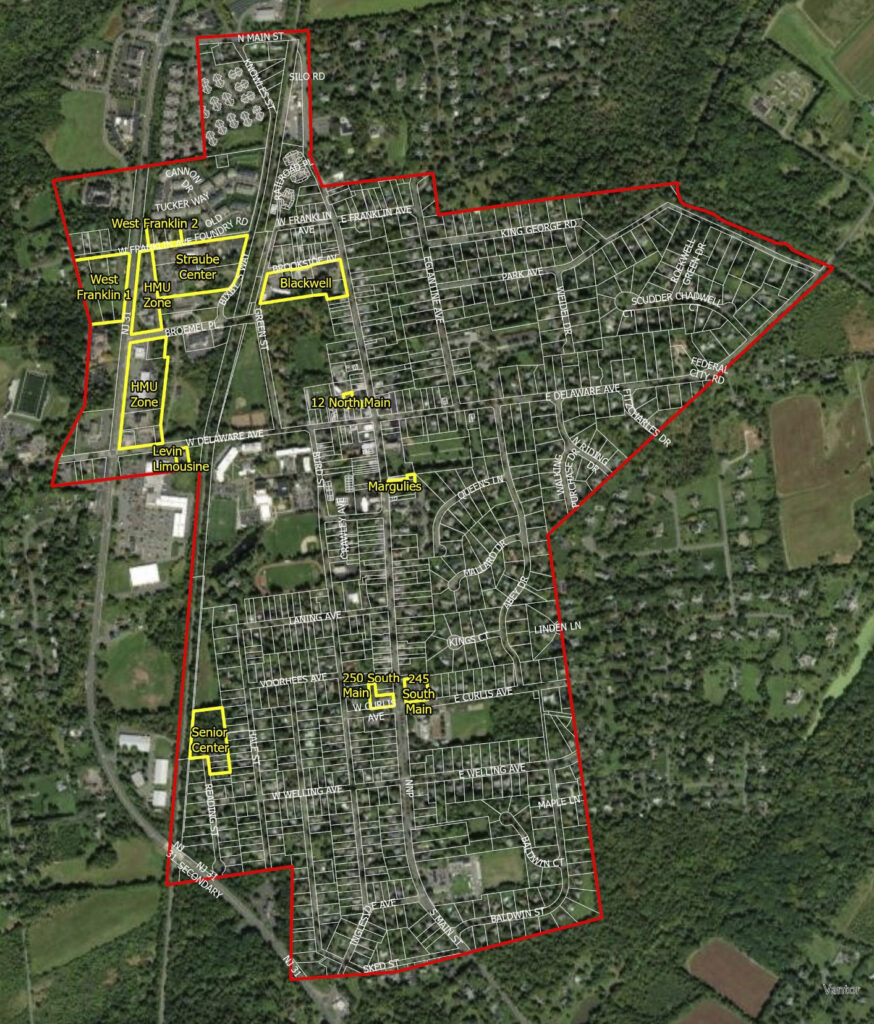
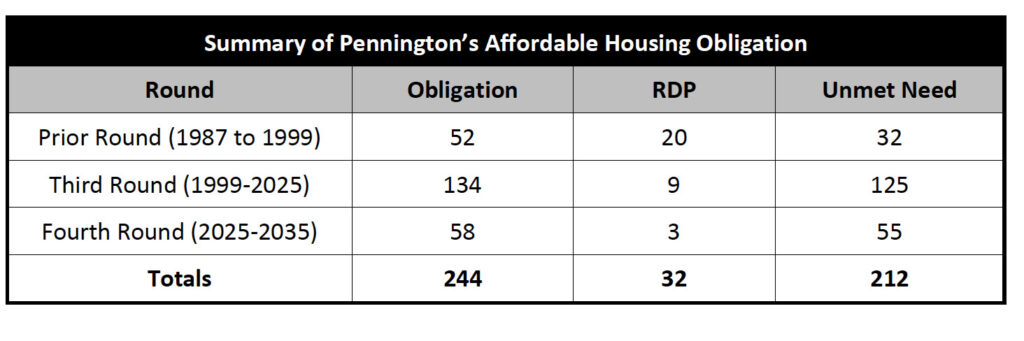
New Jersey municipalities were required to submit draft affordable housing plans by June 2025 and must finalize supporting ordinances by March 15, 2026. Pennington’s Fourth Round obligation is 58 affordable units, but because the borough must also address earlier obligations, its total “unmet need” rises above 150 units.
“What we’ve been told from a legal standpoint is that we do need to show and demonstrate that we are working on prior round needs as well,” Davy said.
The concepts released this week — maps, site descriptions, and potential zoning changes — represent possibilities, not approvals.
“These aren’t detailed plans. These aren’t development plans,” Davy said. “This is a high-level idea of where affordable housing could happen in the borough.”
The borough planner developed those concepts based on community input and discussions held throughout the Master Plan process.
“I think the planner has gone through a lot of conversations… and this is the planner listening and coming back based on everything that he’s heard,” Davy said. “Here’s how we can meet our fourth-round obligation and eat into our previous unmet need.”
Davy noted that the plan remains flexible and subject to public input. “This is one way, and this could be adjusted, tweaked, and modified in any number of ways before it’s finally done,” he said.
A Joint Meeting Not Seen Often
The Dec. 17 gathering brings together both the Borough Council and Planning Board, a format officials say they rarely use.
Planning Board Vice Chair Andy Jackson, who also chairs the Master Plan Committee, said the unified format is intended to streamline communication.
“Instead of the planning board trying to go out and explain what it is and then having council explain what it is, we all sit there in one meeting open to the public,” Jackson said.
Jackson said the borough must balance community preferences with the risk of noncompliance. Without an approved plan, Pennington could lose zoning protections under New Jersey’s “builder’s remedy.”
“The state has said this is what we have to produce… otherwise, we could be putting the whole town at risk in terms of how it looks,” he said.
Survey Results Provide Public Input — Even if the Timing Was Coincidental
Alongside the affordable housing letter, the borough also released a summary of 550 responses to the Master Plan community survey that was distributed over the summer. Jackson stressed that the timing was coincidental — the survey analysis simply took time to complete — but said having both documents available now gives the public a clearer picture.
Survey respondents strongly favored:
- Walkability and mixed-use development
- Redevelopment of existing sites rather than outward expansion
- Reuse of buildings
- Improved pedestrian and cycling connections
- Village-scale housing types such as duplexes, accessory units, and cottage courts
Respondents expressed the most concern about:
- Large apartment buildings and townhouse-heavy patterns
- Traffic, stormwater, and school impacts
- Preserving neighborhood character
Davy said that public input will shape the plan as it moves forward.
“We need to come together as a community and take public input,” he said. “Make sure the public has a say… and provide their comments and their ideas.”
Potential Zoning Concepts Under Discussion
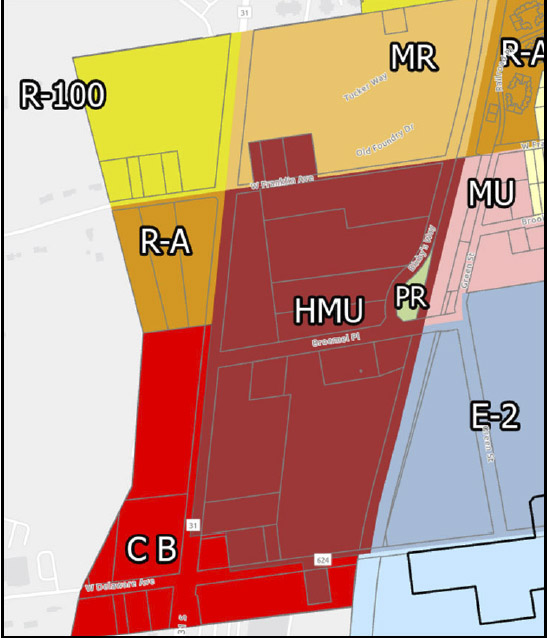
The Dec. 17 meeting packet includes several conceptual zoning tools that could support affordable housing opportunities and update the borough’s land-use framework:
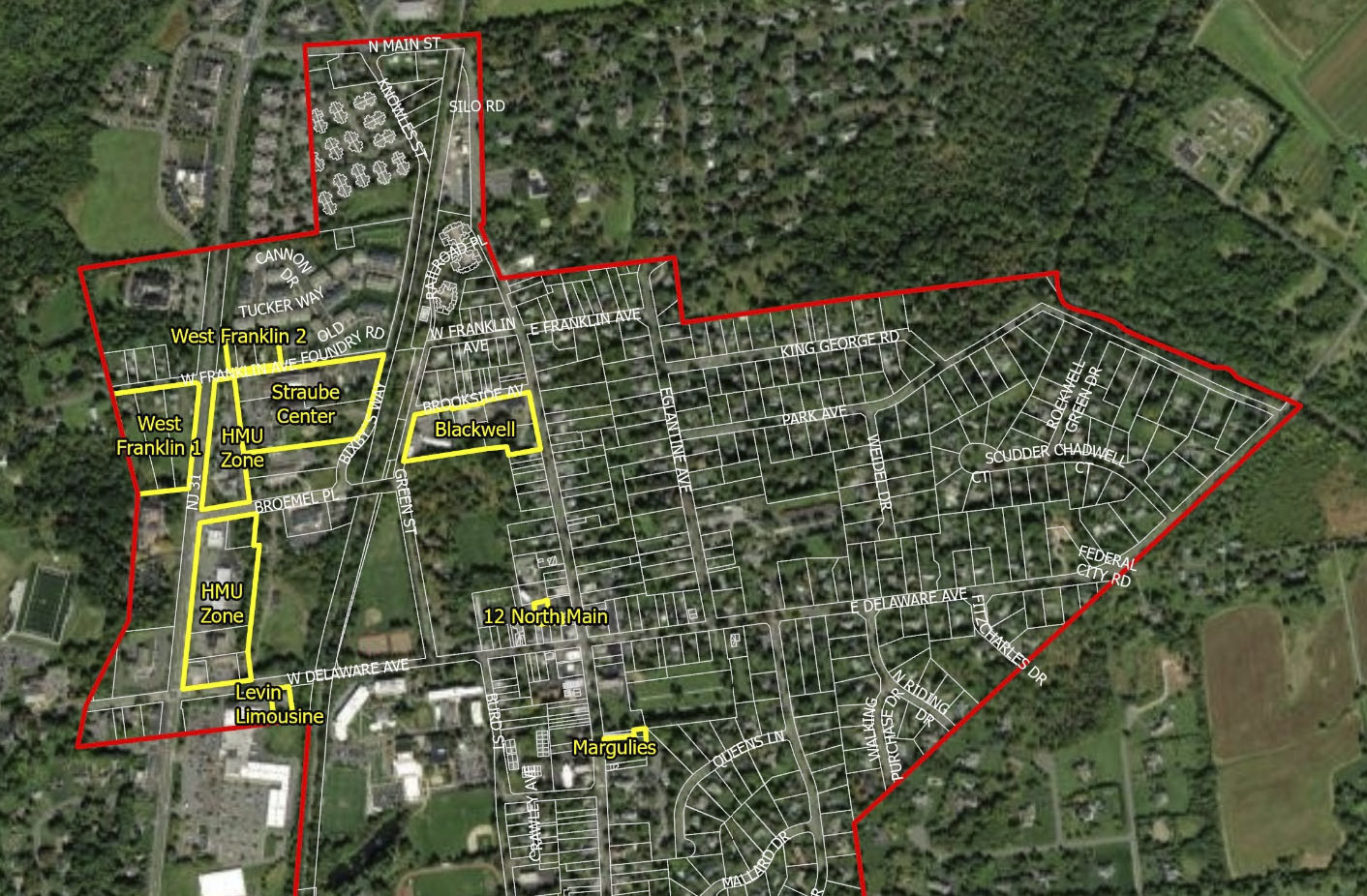
- Highway Mixed Use (HMU) along Route 31, allowing upper-floor housing and mixed-use redevelopment on appropriate parcels off the highway frontage.
- Mixed Use (MU) zoning in parts of South Main and existing Office-Business districts, enabling residential units above commercial space and supporting smaller-scale infill.
- R-A Apartment/Townhouse zoning on portions of West Franklin Avenue, where the Master Plan Committee concluded moderate-density housing would be more appropriate than higher-density development originally proposed by a property owner.
- Supportive housing at the Senior Center site, where conversion of the building could provide bedrooms for individuals with developmental disabilities.
- 12 North Main Street, where redevelopment could allow residential units above the existing ground-floor commercial structure.
- Straube Center, where concept plans show a mixed-use or multifamily building with structured parking replacing an existing accessory structure and surface lot.
- Blackwell / Brookside / Green Street area, already designated in need of redevelopment, with potential for future housing depending on NJDEP flood-hazard boundaries.
- Crossroads Business (CB) District – Route 31/Delaware Avenue, covering the intersection area including the Wells Fargo property. The Master Plan Committee has recommended updating the CB zone to address longstanding circulation and access issues, modernize permitted uses, and establish clearer redevelopment standards for one of the borough’s most constrained commercial nodes.
“These are all high-level proposals… an opening conversation,” Davy said. “Our property owners in Pennington might have other thoughts about how we meet those obligations.”
The joint meeting marks the start of several public checkpoints.
“We’ll take what we hear from that meeting and make adjustments if that’s necessary,” Davy said. “The planning board is having its meeting to adopt an affordable housing plan in January… then it gets referred to the council… and ordinances will be introduced in February, with another public hearing in March.”
Both Jackson and Davy encouraged community participation as Pennington confronts decisions that will shape its land use for decades.