

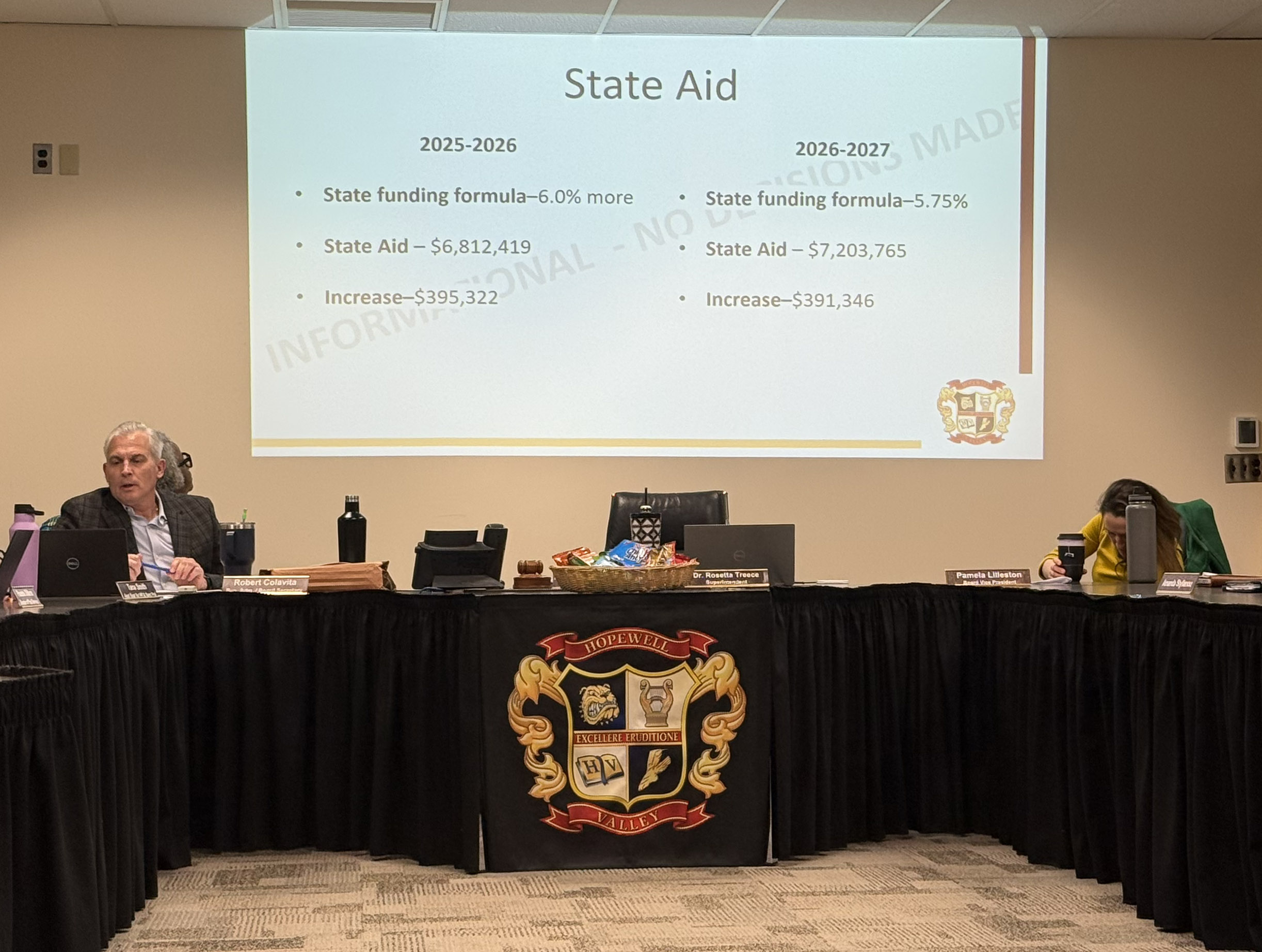
The Hopewell Valley Regional School District will receive an increase in New Jersey state aid for the upcoming school year, offering some financial relief but doing little to change the district’s continued reliance on local property taxes to fund its operations.
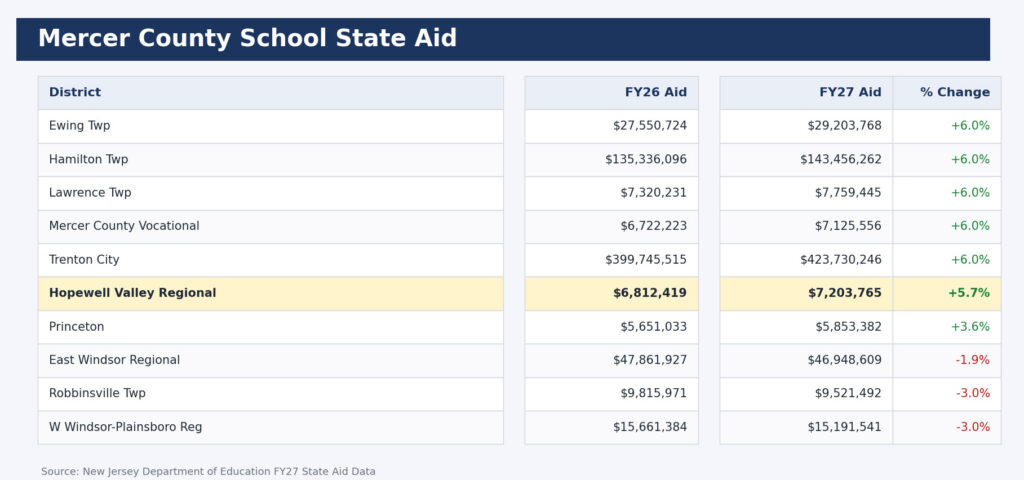
According to newly released state funding figures for the 2026–27 school year, Hopewell Valley is slated to receive about $7.2 million in total state aid, up from roughly $6.8 million this year. The increase of approximately $391,000, or about 5.7 percent, places the district among those in Mercer County seeing additional support rather than reductions.
District leaders said the timing of the state’s announcement helped shape local budget planning.
Superintendent Dr. Rosetta Treece told board members during work session on Monday that the district scheduled its initial budget discussion after receiving the state aid figures in order to have “a more pointed conversation” about next steps before introducing a preliminary spending plan to the public on March 23.
While the increase is welcome, officials say it is not large enough to significantly alter the district’s broader financial outlook. Unlike some school systems that receive substantial equalization aid to support general operating budgets, Hopewell Valley’s state funding is largely tied to specific categories such as special education, transportation, and security.
As a result, the district continues to depend heavily on local property taxes to fund the majority of its annual spending — a reality that has become more visible as administrators outline the likelihood of both a tax increase and potential program reductions in the coming budget.
Mercer County context
Across Mercer County, the state aid picture is mixed. Several districts are receiving increases this year as New Jersey continues to phase in its revised school funding formula, which directs more aid toward districts with higher levels of student need and limited local tax capacity.
Hopewell Valley’s increase stands in contrast to districts such as Robbinsville, which has faced reductions in recent years and recently asked voters to approve additional local funding to stabilize its finances. Robbinsville officials warned that without new revenue the district could face layoffs, larger class sizes, and cuts to extracurricular programs and academic offerings. Robbinsville voted down a $5 million referendum to help plug financial holes earlier this month. It was the second referendum in as many years that were proposed just to close budget gaps.
Robbinsville is expected to cut many extracurricular activities and layoff around 30 teachers.
Rising costs remain a dominant factor
Hopewell Valley school board members have emphasized that many of the district’s largest financial pressures are driven by factors outside local control.
Board member and finance committee chair Mark Peters said during the budget workshop that escalating expenses tied to statewide policies and broader economic conditions are shaping local decisions, describing some of the district’s cost drivers as “things that are crazy right now.”
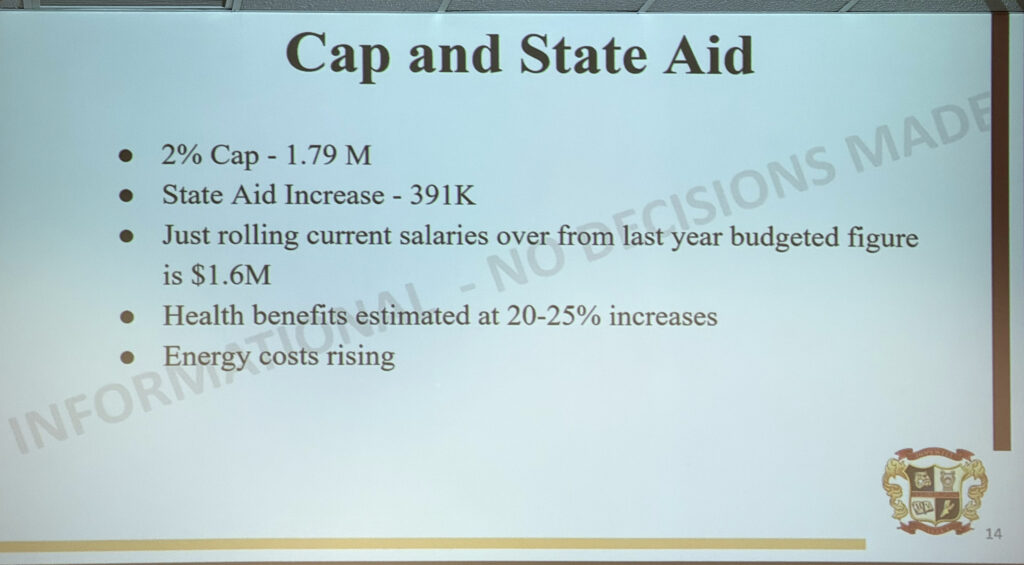
Those pressures include sharply rising employee health care costs, transportation expenses, and other mandated services that continue to grow faster than available revenue.
Business Administrator Robert Colavita noted that projected increases in health benefits alone are expected to add hundreds of thousands of dollars to next year’s budget, limiting the district’s flexibility even as state aid rises.
Increase does not eliminate need for difficult choices
Even with the additional state funding, district officials have indicated that balancing the next budget will likely require both a tax increase and targeted reductions.
The board discussed at their work session that lowering the proposed tax increase below the range currently under discussion (around 5.7-5.8%) would require identifying additional cuts, while even higher increases would not necessarily restore programs already under review.
The district is expected to introduce a preliminary budget next week at the Board of Education Meeting, after which residents will have an opportunity to review the proposal and provide public comment ahead of final adoption this spring.
For now, administrators say the state aid increase is a positive development — but not one that resolves the structural challenges facing the district as it works to maintain educational quality while managing rising costs.
As Peters cautioned, even relatively small budget gaps can “exponentially rise” in future years if underlying cost pressures remain unchanged, underscoring the importance of careful long-term planning for both schools and taxpayers in Hopewell Valley.