

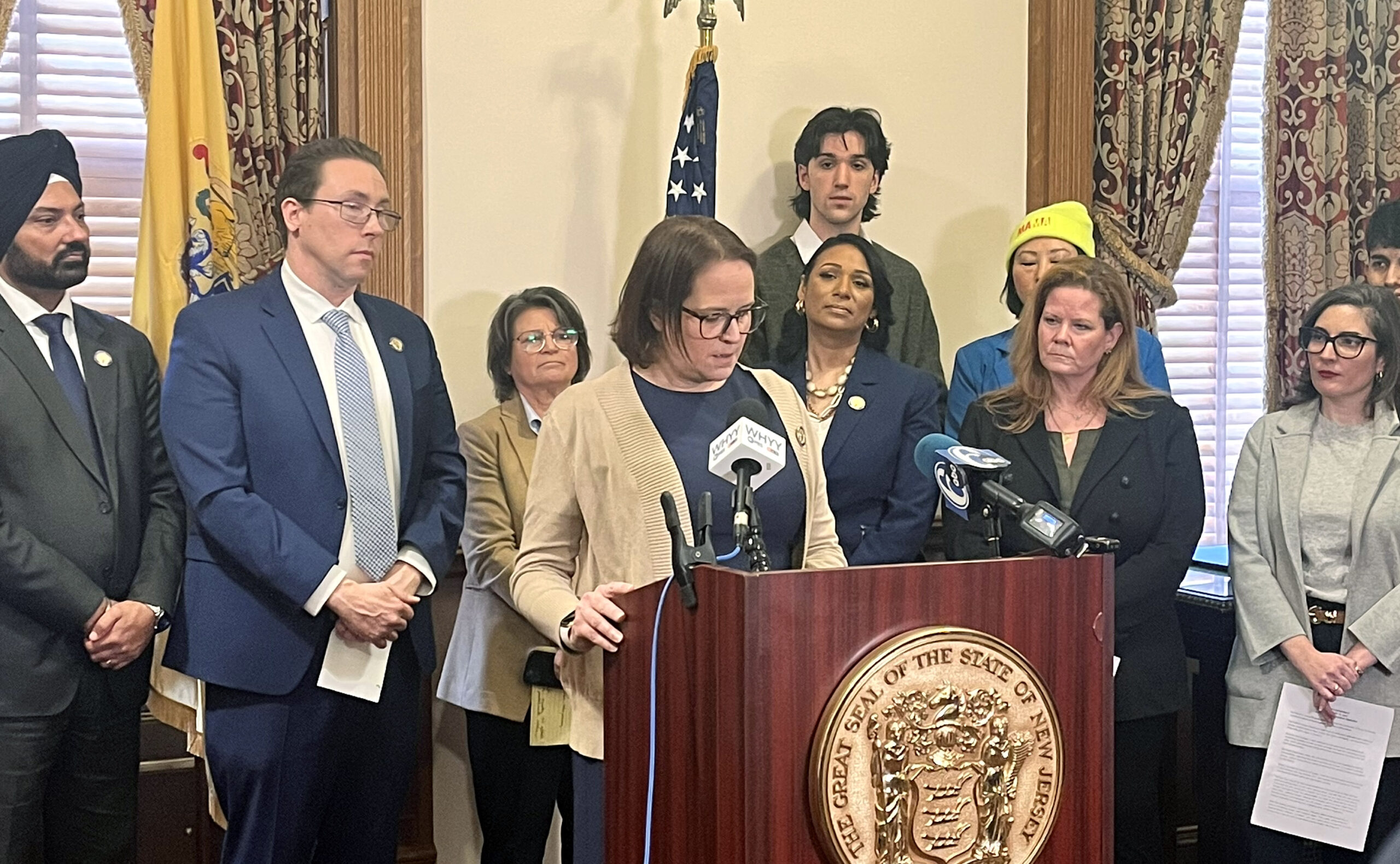
Inspired by her own children, Assemblywoman Andrea Katz advanced measures Thursday to protect children from the growing influence of social media and unpredictable algorithms.
“No kid should bury their head in a computer all day long or on an iPad,” the Chesterfield Democrat said Thursday. “When they go home, they’ll have more opportunities to do their homework instead of constantly scrolling on social media. So I do think this is going to have a huge impact on the way that education is delivered to our kids.”
Katz received unanimous, bipartisan committee support Thursday for a three-piece package of legislation that would protect children from prolonged social media use. Assembly members, advocates and other parents testified in support of the measures.
“While these social media apps can offer meaningful opportunities to connect and learn, we know they can expose young people to the kinds of pressures that affect their well-being,” Assembly Speaker Craig Coughlin, a Woodbridge Democrat, said in advance of the hearing.
Bill A4013 requires certain social media platforms to warn users of possible negative mental health impacts and monitor covered users’ activity for problematic behaviors with mental health consequences. Bill A4015 also known as “New Jersey Kids Code Act,” requires certain online services to implement measures to protect minors’ online privacy. Bill A2738 criminalizes using social media to endanger a child.
Katz spoke candidly about social media affecting children’s personal lives and academics at a Thursday press conference. She said she has seen it affect her teenagers’ school life and demeanors firsthand.
“This did not happen by chance,” said Julie Scelfo, journalist and founder of Mothers Against Media Addiction. “Children are exposed to over 50 million pieces of dangerous, unhealthy content on those platforms annually. Is it a surprise our kids are suffering? Of course not.”
But Vidushi Dyall, senior director of legal analysis at the Chamber of Progress, a tech industry coalition devoted to technology’s progressive future, testified in opposition to the proposed requirement that online services protect minors’ privacy and requires service providers to produce annual, public reports that would include how algorithms were used.
“One of the biggest problems with A4015 is as written it requires such a demanding amount of user action, and the default for youth is either a chronological feed or just a complete absence of an algorithm that would curate or introduce them to new content,” said Dyall. “…This puts youths in a bubble and they are deprived of the benefits that a curated feed or algorithms can offer.”
However, Dr. Lauren Venuto, a psychologist and founder of a group of parents in Madison, New Jersey, worried about screen addiction called Dodgers Delay, said families need meaningful protections for their children in digital environments.
“The legislative package under consideration today…would take vital steps to shield children from the most exploited and harmful features of these addictive platforms, while ensuring parents have more information about the risks this poses to their children,” said Venuto. “As both a psychologist and a parent, I implore you to support policies that shift some of the burden of safety away from individual families and onto companies designing these digital environments.”
Assemblyman Christopher DePhillips, a Wyckoff Republican and father of an 18-year-old daughter, asked two witnesses – Saahir Vazirani and Hanzla Ahmed from the youth-led coalition Design It For Us that favors greater regulation, whether warning labels on social media platforms would be useful.
“I do personally think they are a good idea. We have examples in society for cigarettes, alcohol…they are relatively very effective,” Ahmed replied. “Another reminder would make us much more aware and a reminder that tells us where to look at resources for our mental health would definitely help.”
A fourth measure sponsored by Katz, A4014, would establish a Social Media Research Center at a New Jersey four-year public institution of higher education. The measure passed 5-1, with Michael Inganamort, a Chester Township Republican voting no, because he said institutions in other states were already conducting similar research. DePhillips abstained, agreeing with Inganamort’s stance.
The committee passed several additional related bills Thursday, including A3064, sponsored by Bergenfield Democrat Chris Tully, which would require social media platforms to cooperate with nonprofit organization initiatives to remove non-consensual intimate images or video; and A2312, sponsored by Longbranch Democrat Luanne Peterpaul, which would create a separate crime for items depicting sexual exploitation or abuse of children, through computer generated or manipulated sexually explicit images.
By Brinda Patel, NJ Statehouse News Service