

A heated Trenton City Council meeting Tuesday night underscored continuing tension over the future of Trenton Water Works (TWW), as the governing body voted to table a series of water-related resolutions after debate about transparency, state involvement, and the city’s control of its utility.
Although no final action was taken, the discussion made clear that most members of council remain firmly opposed to any regionalization or privatization of Trenton Water Works — a theme that has defined the city’s uneasy relationship with state regulators for months.
Hamilton Mayor Urges Broader Oversight
Just hours before the meeting, Hamilton Township Mayor Jeff Martin sent a letter to the full council urging members to expand participation and transparency in any new oversight structure. Martin thanked council for acknowledging TWW as “a regional public water utility,” but asked that representatives from all five service municipalities — Hamilton, Ewing, Lawrence, Hopewell, and Trenton — be included on any proposed ad hoc committee being considered.
He also cautioned against authorizing yet another study, writing that the city-funded Picco Report and NJDEP’s 2024 technical-managerial-financial reviews “already reached remarkably similar conclusions.”
“Rather than spend money on a third report,” Martin wrote, “please use the money on more necessary items as outlined in the two independent reports.”
Martin said Hamilton and the other municipalities “stand ready to assist” while continuing to pursue a regional, publicly owned utility model. His letter was copied to NJDEP Commissioner Shawn LaTourette, Mercer County Executive Dan Benson, and the mayors of all four suburban towns.
Council Pushes Back on Process
Inside City Hall, Council President Yazminelly Gonzalez confirmed that she, Vice President Jasi Mikae Edwards, and Councilwoman Crystal Feliciano met Monday with Commissioner LaTourette, Mayor Reed Gusciora, and city attorneys to discuss TWW including the state’s offer to fund a comprehensive financial assessment.
Gonzalez said the group “made clear we are not agreeing to regionalization,” but other members objected that they were not notified beforehand.
Councilman Joseph Harrison said, “So we’re voting tonight on an ad hoc committee, but yesterday was an ad hoc committee meeting we hadn’t voted on yet… It’s called Trenton Water Works, not anything else.”
Edwards defended the smaller-group approach as a way to move progress along under Sunshine-law limits and emphasized her opposition to any sale or privatization: “No one … has any interest in selling Water Works or doing a regionalization.”
Councilwomen Jennifer Williams and Teska Frisby countered that the full council and public must remain engaged.
“This is our opportunity to fix it,” Williams said. “We shouldn’t be in a rush… We can save Water Works as a team.”
By a 6-1 vote, the council agreed to table all three resolutions, including the proposed ad hoc committee and a measure urging the administration to proceed with a new financial assessment.
Public Voices: Coalition for HELTHy Water
Public comment reflected growing impatience among residents inside and outside the city.
Frank Cusack, of Hamilton, founder of the Coalition for HELTHy Water — representing Hamilton, Ewing, Lawrence, Trenton and Hopewell— said his petition, signed by more than 400 residents, seeks “fair representation and a seat at the table” for all communities served by TWW.
Becky Taylor, a Trenton resident, warned that rate increases would disproportionately burden city residents and said she fears “the system could fail at any time.”
Mark Leckington, who manages a community blog on TWW, cited chronic understaffing and low pay:
“There are people in technical positions earning $45,000 a year … That’s the issue this all comes back to.”
Background: State Pressure and Systemic Failures
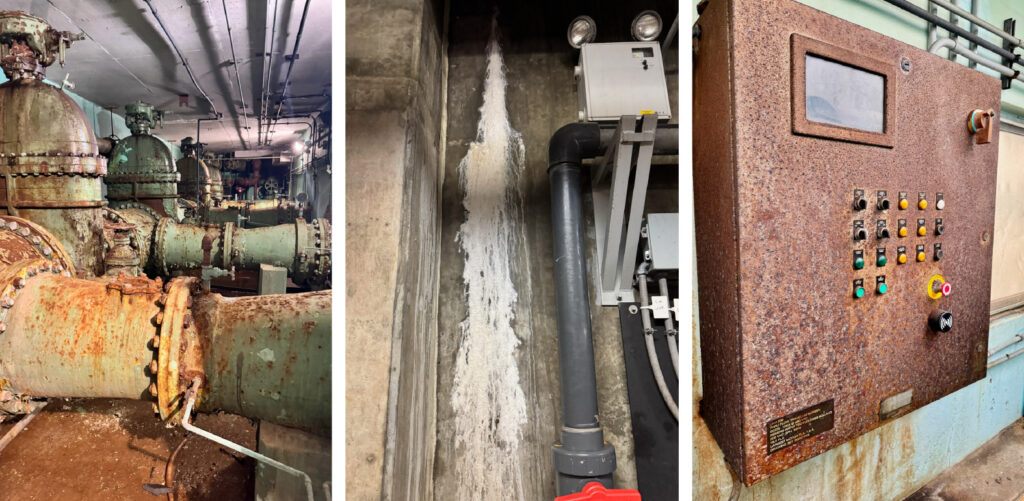
The council’s debate followed months of escalating tension since the NJDEP’s Aug. letter warning that TWW remained “on the brink of catastrophic failure.” In that sharply worded notice, Commissioner LaTourette accused city leaders of jeopardizing public health by resisting even the exploration of regional governance options and cited more than $570 million in capital needs, $23 million in unpaid bills, and a treatment plant with failing infrastructure and no redundant pumping capacity.
Mayor Gusciora’s response defended Trenton’s ownership but said the city was open to studying governance reforms. LaTourette replied that rejecting any such process would “predetermine failure.”
At a follow-up meeting on Aug. 19, LaTourette faced hours of pointed questioning from council members. He said privatization was not on the table and framed the issue as a public-health emergency, not a property dispute:
“It’s not about taking something of value from the people of Trenton. It’s about protecting public water, public health.”
He urged an 18- to 24-month, public process to evaluate a regional, publicly owned authority with Trenton as a majority stakeholder — a concept that remains deeply unpopular among council members.
When MercerMe reached out to the NJDEP before Tuesday’s meeting for comment on the pending resolutions and recent discussions, the department declined to comment.
A Legal Fight Still on Hold
Complicating the policy debate is a lawsuit the State filed against Trenton and TWW in 2020, seeking court-ordered compliance with the Safe Drinking Water Act. The suit, announced by then-Attorney General Gurbir Grewal and DEP Commissioner Catherine McCabe, accused the city of failing to replace lead service lines, protect its open finished-water reservoir from contamination, and complete long-delayed maintenance obligations.
At the time, state officials said council’s refusal to approve millions in bonding “left [the State] no choice but to file this suit.” The complaint demanded immediate steps to curb lead exposure and pathogens, noting that TWW had replaced only 828 lead lines — roughly 2 percent of those required — and continued to operate an uncovered, 78-million-gallon reservoir vulnerable to contamination.
That litigation, which sought a court order compelling Trenton to meet its legal obligations, was effectively paused in recent years as the city, DEP, and surrounding municipalities explored potential governance reforms. It remains unclear whether the State will now move to reactivate the case.
Five Municipalities, One Utility
Trenton Water Works supplies roughly 29 million gallons of drinking water daily to about 225,000 people across Trenton, Hamilton, Ewing, Lawrence, and Hopewell Townships. While headquartered in Trenton and wholly city-owned, about 55 percent of its customers live outside city limits.
State reviews have documented persistent noncompliance dating back more than a decade, including repeated administrative consent orders requiring upgrades, staffing, and recordkeeping improvements. A 2024 technical-managerial-financial assessment cited “insufficient staffing, outdated infrastructure, unreliable financial controls, and deteriorating facilities,” warning that the system’s resilience “cannot be assured without structural reform.”
LaTourette has said the department’s role has shifted from direct operational aid to enforcement and oversight, emphasizing that “technical improvements alone do not amount to TMF capacity.”
Next Steps
Council President Gonzalez said the tabled resolutions — including the proposed ad hoc committee and the financial assessment request — are expected to return later this month at their next meeting.
For now, council members appear united only on one point: keeping Trenton Water Works public and city-owned, even as NJDEP and neighboring towns urge faster action before year’s end.