
In a sharply worded letter delivered this week, the New Jersey Department of Environmental Protection warned Trenton City Council that the city’s water utility remains on the brink of catastrophic failure—and urged members not to block a public process that could lead to regional reform.
The letter, dated August 6 and addressed to the full Council, comes in response to Mayor W. Reed Gusciora’s August 1 letter to the department defending the city’s ownership of Trenton Water Works and pushing back on what he described as coercive tactics. While reiterating his support for studying governance changes, Gusciora said the city should not be pressured to cede control of the utility without a full public process and input from the Council.
But in his response, NJDEP Commissioner Shawn LaTourette warned that rejecting even the exploration of new governance models would “predetermine failure” at a utility already struggling to meet basic legal and operational standards.
“We strongly encourage the Council to support this process and allow it to help you ‘consider strategies’ that meet your shared obligation to ensure safe and reliable drinking water,” LaTourette wrote. “Please do not predetermine an outcome by rejecting regionalization at the outset.”
Although NJDEP had been listed on the agenda for the Council’s August 7 meeting, department officials did not attend.
“They sent a letter. They did want to meet with each individual council member individually, and as a collective we have all disagreed to do that,” said Council President Yazminelly Gonzalez during Thursday’s meeting. “We have offered for them to come on Aug. 18. We are hoping to secure Aug. 18 for a special meeting just for that.”
Details of the proposed special meeting are unknown at this time as the Council waits to hear from NJDEP.
NJDEP Cites Collapse Risks, Hundreds of Pages of Evidence
LaTourette’s letter was accompanied by hundreds of pages of documentation, including a 360-degree review and a technical, managerial, and financial (TMF) capacity assessment, both commissioned by NJDEP in 2024.
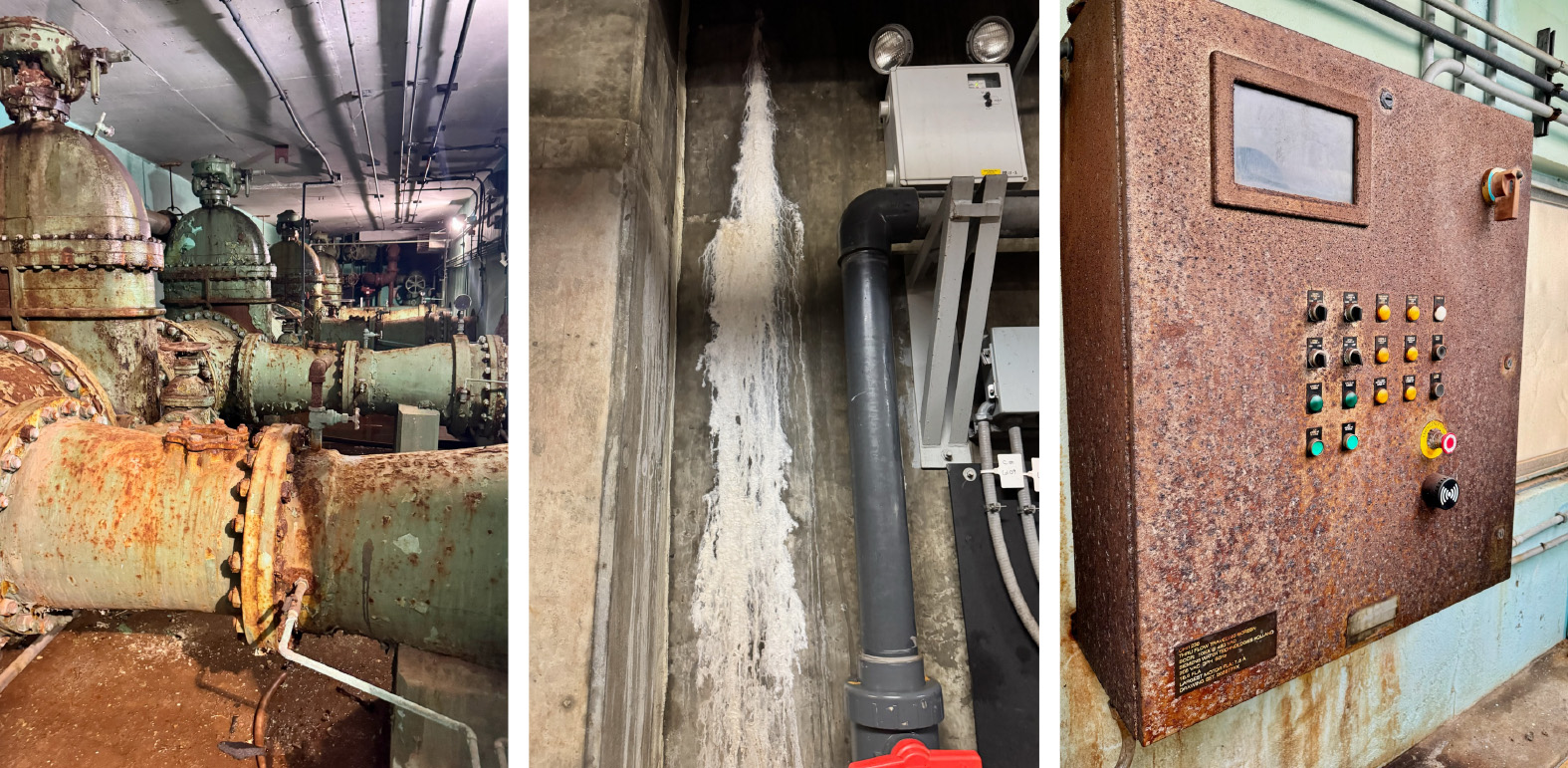
The documents paint a dire picture of Trenton Water Works’ condition, citing persistent failures in staffing, maintenance, billing, and compliance. Among the findings:
- Over $570 million in capital needs expected over the next decade
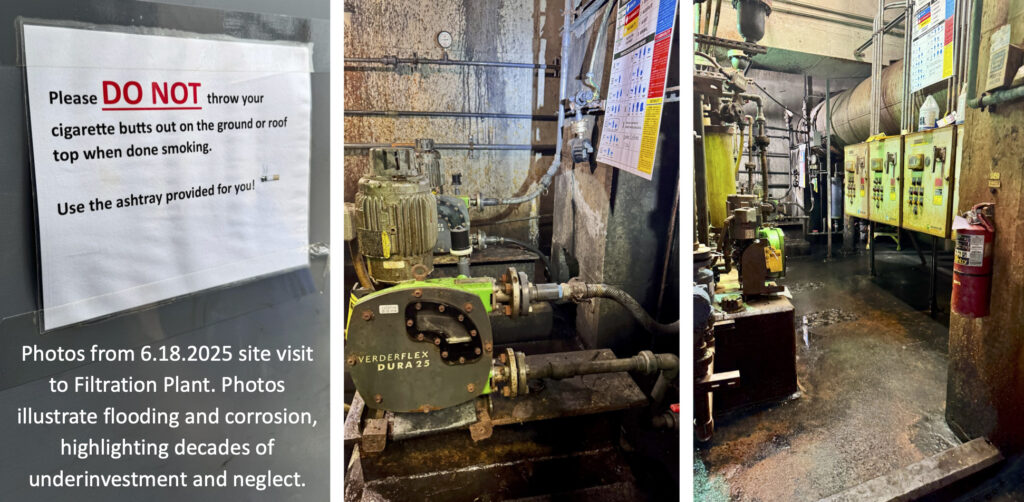
- A leaking roof and failing HVAC system at the water treatment plant
- A central pump station with no backup, risking system-wide failure
- An antiquated electrical system, with active components submerged in water
- $23 million in unpaid customer bills and no reliable financial controls
- A documented history of falsified compliance sampling and poor recordkeeping
Despite progress on several infrastructure projects—many of which the mayor highlighted in his August 1 letter—NJDEP maintains that Trenton Water Works still lacks the foundational capacity required under state and federal law.
“Technical improvements alone do not amount to TMF capacity,” the letter states. “The City’s continued opposition to this public process threatens its viability.”
NJDEP is calling on the city to allow a third-party consultant, selected through a public request for proposals, to lead a regional study evaluating options such as a Municipal Utilities Authority (MUA) or a Special Purpose Entity (SPE). Both models scored highest in terms of public health outcomes, transparency, and long-term sustainability.
The agency also reaffirmed that its 2022 Unilateral Administrative Order against Trenton Water Works—triggered by what it described as “imminent and substantial endangerment to human health”—remains in effect. NJDEP has said it is shifting away from direct technical support and will instead focus on enforcement and capital planning oversight moving forward.
What’s Next
Trenton City Council is asking to have NJDEP come to council for a special meeting. They have suggested August 18, but that was just requested, and it is not on the schedule yet.
Hamilton Township Mayor Jeff Martin, who has been a vocal proponent of regionalization, has emphasized that the current crisis cannot be resolved by Trenton alone. “The hole is too big for one entity to dig out of on its own,” Martin said, adding that all five mayors and both state commissioners had already agreed to a transparent, public process to explore governance and compensation models.
Martin said he remains hopeful that Trenton’s Council will move forward with the study and help initiate a solution supported by all communities served by the utility.
Additional reporting by Mary Galioto