
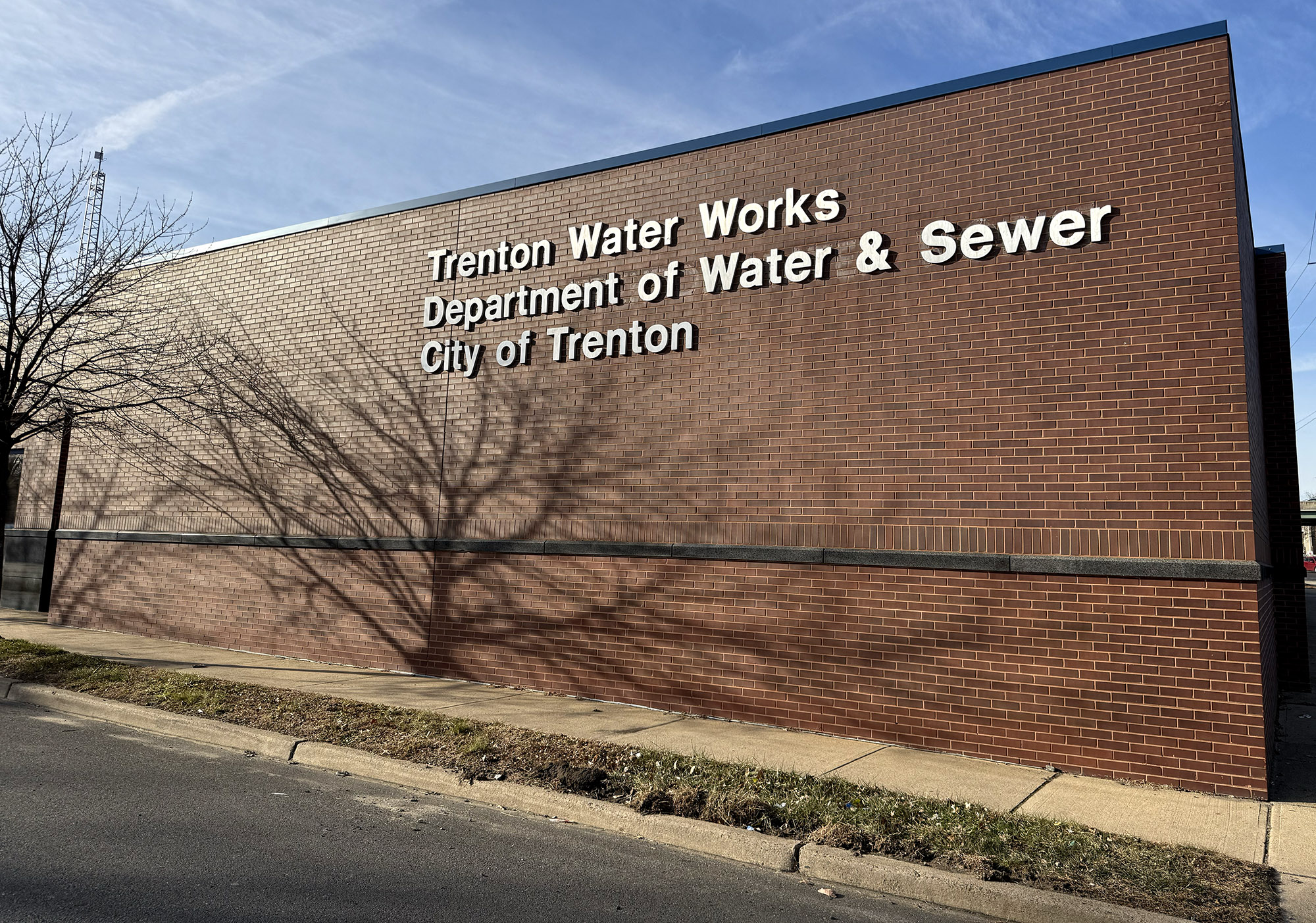
Days after frazil ice once again disrupted operations at its Delaware River intake and triggered a regionwide Water Conservation Advisory, Trenton Water Works (TWW) has issued a request for proposals seeking outside engineering firms to evaluate—and potentially redesign—its troubled raw water intake system.
The move marks the utility’s most formal acknowledgment to date that the $9 million intake structure rehabilitated between 2021 and 2023 is not performing reliably during winter conditions, despite months of internal troubleshooting and repeated direction from the New Jersey Department of Environmental Protection (NJDEP) to address frazil-ice vulnerabilities.
A Three-Year Engineering Contract to Fix a Critical Weak Point
According to the bid documents (CC2026-03), TWW is seeking a firm for a 36-month engagement to assess the intake’s design assumptions, hydraulic performance, and support systems and recommend engineering improvements. The contract includes evaluation, design revisions, and ongoing support—signaling that TWW expects the work to span multiple winters.
A pre-proposal inspection meeting will be held at the Trenton Water Filtration Plant on December 29, and sealed proposals are due January 9 at a public virtual opening.
In its announcement, TWW said inspections and operational data show no indication that operator error caused the recent failures. Instead, Director Sean Semple said “cold-weather conditions exposed design limitations that were not anticipated,” particularly related to frazil ice, supercooled river water, and seasonal biological loading.
Frazil Ice Again Forces Conservation Advisory
The engineering solicitation follows last week’s frazil-ice event, when supercooled slush once again reduced hydraulic capacity at the intake and forced TWW to slow pumping—similar to the shutdowns seen last winter. On December 18, NJDEP directed the utility to issue a Water Conservation Advisory to more than 200,000 customers across Trenton, Hamilton, Ewing, Lawrence, and Hopewell Township.
The advisory remains in effect, and customers are asked to limit water use to essentials such as drinking, cooking, sanitation, and emergency needs.
NJDEP’s December 12 enforcement letter warned that frazil ice continues to demonstrate that TWW’s intake is a “critical point of failure” and ordered daily reporting through March, emergency diver capacity, and updates on the redesign effort.
Mayors: A “Bad Comedy Show” with Real Consequences
Municipal frustration intensified after the latest shutdown. The mayors of Hamilton, Ewing, and Hopewell Township issued a sharply worded joint statement calling the latest disruption predictable and preventable.
“If it did not have real world impacts, we would think this is a bad comedy show,” they said. “Under their current leadership, TWW has failed time and time again… If we weren’t already worried about brown water or legionella; now we again must worry if we even have any water.”
They also made their strongest statement yet about future governance options:
“We will work with the State to explore whether the TWW-serviced municipalities can create their own water utility and permanently divorce ourselves of TWW’s incompetence.”
While the four suburban towns are already co-plaintiffs with NJDEP in litigation over TWW’s longstanding infrastructure failures, this is the clearest indication that local officials are now weighing structural separation from the Trenton-run utility—not only legal enforcement.
Redesign Effort Underscores Winter Vulnerabilities
Last winter, frazil ice clogged the intake so severely that TWW had to bypass the structure entirely and rely on high-capacity diesel pumps for several weeks. This season’s early cold snap has already produced similar conditions, despite recent diver inspections, sediment removal, and evaluations of the compressed-air blow-off system.
The RFP’s three-year timeline suggests that any intake redesign—and subsequent construction—will not provide relief this winter or next. For residents, that means water conservation advisories, frazil-ice disruptions, and infrastructure instability may remain seasonal challenges for the foreseeable future.
What Comes Next
Engineering firms will inspect the intake on December 29 and submit proposals by January 9. TWW is expected to select a contractor early in 2026. NJDEP’s emergency directives remain active through March, and TWW must continue providing daily updates on reservoir levels and interconnections.
Meanwhile, suburban municipalities say they will continue pressing lawmakers and state regulators for deeper oversight reforms—and will begin exploring whether a new regional utility or other governance structure could eventually replace reliance on TWW.