

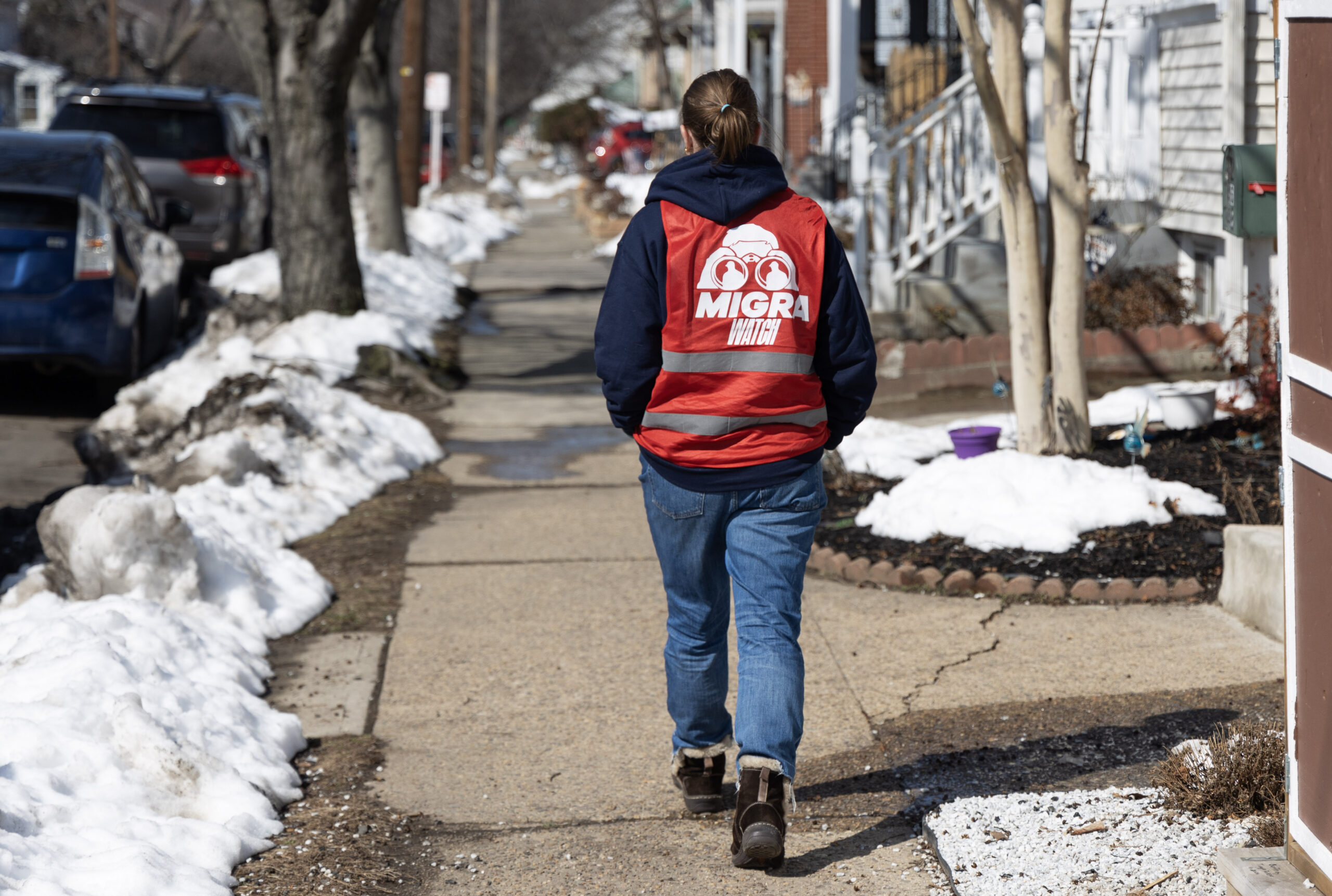
Emery Coppola, a hydrologist who lives in Lawrenceville, remembers the first time he witnessed a raid by immigration officials.
It was last August on Bayard Street in Trenton, he recalled. A person had fled into his home as a group of ICE agents tried to stop his car. When Coppola arrived, ICE had surrounded the house.
Coppola remembers “I was about the fourth observer to arrive. ICE did not have a warrant for this person, so they could not enter the house.”
Over the next six hours more than 100 people had gathered, including Congresswoman Bonnie Watson Coleman, Trenton Mayor Reid Gusciora, Trenton police, local press and Philadelphia television. “Everybody was talking. Police were putting up caution tape to keep demonstrators at a distance from ICE officers. There was a lot of activity in one extremely small area.” Coppola said.
“People were really charged up and extremely supportive,” Coppola said, referring to the man in the house.
“I was told that ICE could not get a warrant from a judge because the man was not a criminal. So, ICE eventually left,” he said.
A witness becomes a volunteer
Coppola is one of over 100 volunteers with Resistencia en Acción, a small volunteer-led non-profit based in Princeton, whose mission is to organize and support immigrant communities in New Jersey.
Responding to the federal government’s crackdown on immigration, Resistencia organized a Rapid Response Team to monitor and record ICE activities in Mercer County.
How the Rapid Response network works
The Response Team maintains a 24-hour hotline that receives calls from community members to report ICE presence. Alerts are broadcast to volunteer responders, who go to the area where ICE agents were seen.
Volunteers also patrol neighborhoods and industrial areas frequented by ICE.
Shane, a software engineer from the Hopewell Valley who requested we not use his last name, was quick to join the network. “I had been looking for a way of supporting folks targeted by ICE, and then I met a friend at Porchfest who told me about Resistencia en Acción,” he said.
Volunteers report that they look for unmarked cars with blacked out windows, missing front license plates, or individuals, sometimes in plain clothes, carrying high-power weapons.
To prevent misunderstanding, responders are trained to ask the officers who they are and who they are looking for to verify that the officers are with ICE and not local police or other law enforcement. They then turn on video and report back to Resistencia, who inform the community via social media.
“Sometimes that is enough to make them leave,” Shane said. “Sometimes we get a call about ICE cars in the area and guys in vests who grab a person, put them in cuffs, shove them into a car and drive away. Sometimes someone returns home after work to find their spouse gone,” he reported.
Responders confirmed that ICE agents are frequently reluctant to draw attention or interact with community members and often leave a site rather than be videoed.
Coppola recalls “One of the agents told me directly that they don’t want to be filmed. They don’t want to be on video. They don’t want it on Facebook.”
On patrol: volunteers track ICE presence
Asma Elhuni, who coordinates the Rapid Response Team, said that volunteers are trained to understand their rights and what they can and cannot do.
“They can film, they can yell,” said Elhuni. Volunteers are cautioned against physically interfering with ICE operations.
Volunteers are often jittery on their first time out, said Elhuni.
“I remember my first call. My voice shook and I was really nervous. As volunteers gain more experience, the process seems more normal,” Elhuni said.
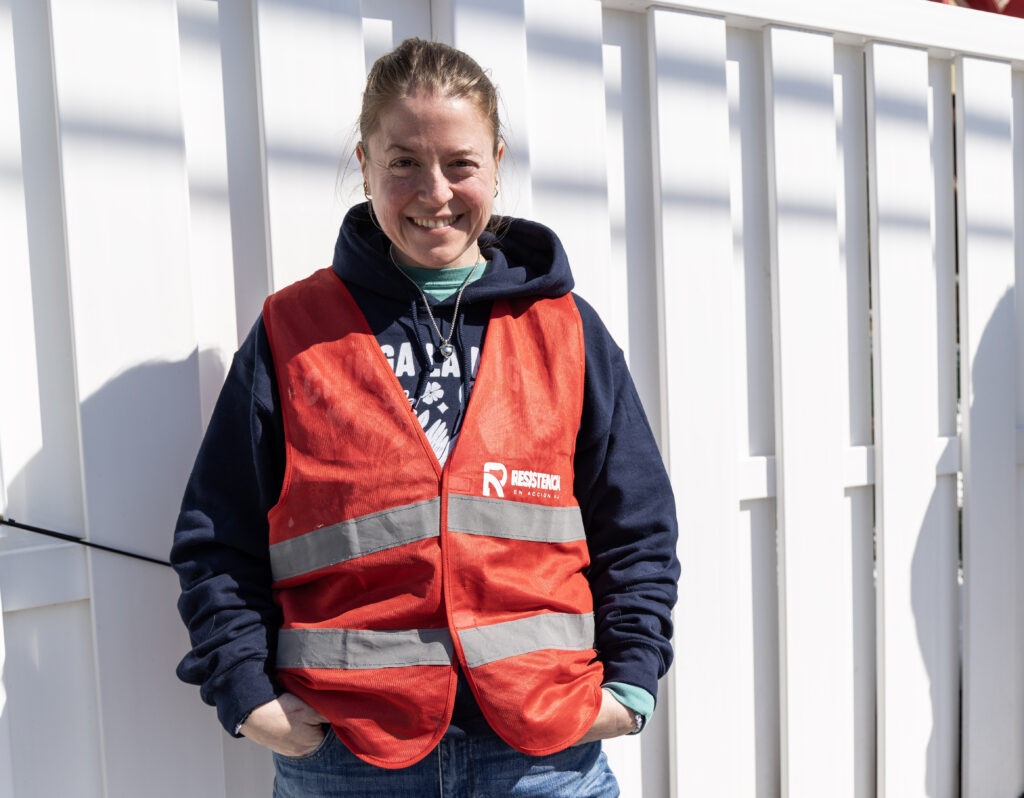
Joanna Lloyd, a veterinarian in Robbinsville, joined the Rapid Response Team last fall. Remembering her first encounter with ICE, Lloyd said “I was scared. But not just for myself. I was more scared for the members of the community,” she said.
Paulo Almiron, spokesman for Resistencia en Acción, noted that the Response Team also helps weed out misinformation.
“Somebody posts an ICE location on social media, and people believe it, so they don’t go out. This results in chronic problems like missed work or school that reverberate through the community,” Almiron said.
Families and neighborhoods feel the impact
Resistencia keeps videos of ICE encounters and information on ICE presence in a data base. Videos are shared with detainees’ lawyers if they are needed for hearings or court cases.
While ICE activity has been reported throughout Mercer County, Princeton, Hightstown, and Trenton have been most affected. According to police reports, two people were recently abducted in Princeton. Both are fathers of young children.
Responders say that many ICE abductions occur between 5:30 and 8:30 in the morning, so volunteers are out early to patrol known target areas.
In describing the patrols, Shane said, “We drive around for three or four hours. We visit Hispanic cafes, talk to people, and tell them about what we are doing. We rely on community reports to know what ICE is doing,”
While no one has an exact count of how many calls go out to Responders, several report at least one and sometimes multiple alerts a day, with a fewer number on extremely cold days.
Responders agree that the ICE raids have had a traumatizing effect on families and neighborhoods.
Resistencia works with families after a raid to make sure children are cared for and the family’s basic needs are met. “We also provide referrals to trusted legal services,” Almiron added. “There are a lot of scams out there.”
An expanding network of volunteers
Following the January killings of Renee Good and Alex Pretti by immigration agents in Minnesota, volunteers report being a little more cautious, a little more anxious.
Joanna Lloyd said that while her fear level has gone up, “It is not the center of this story. The fear I feel pales in comparison to what the immigrants in our community feel.”
At the same time, Elhuni notes an increase in volunteers in the last month. ICE behavior in Minnesota “has had the opposite effect,” Elhuni said, “It has energized us.”