

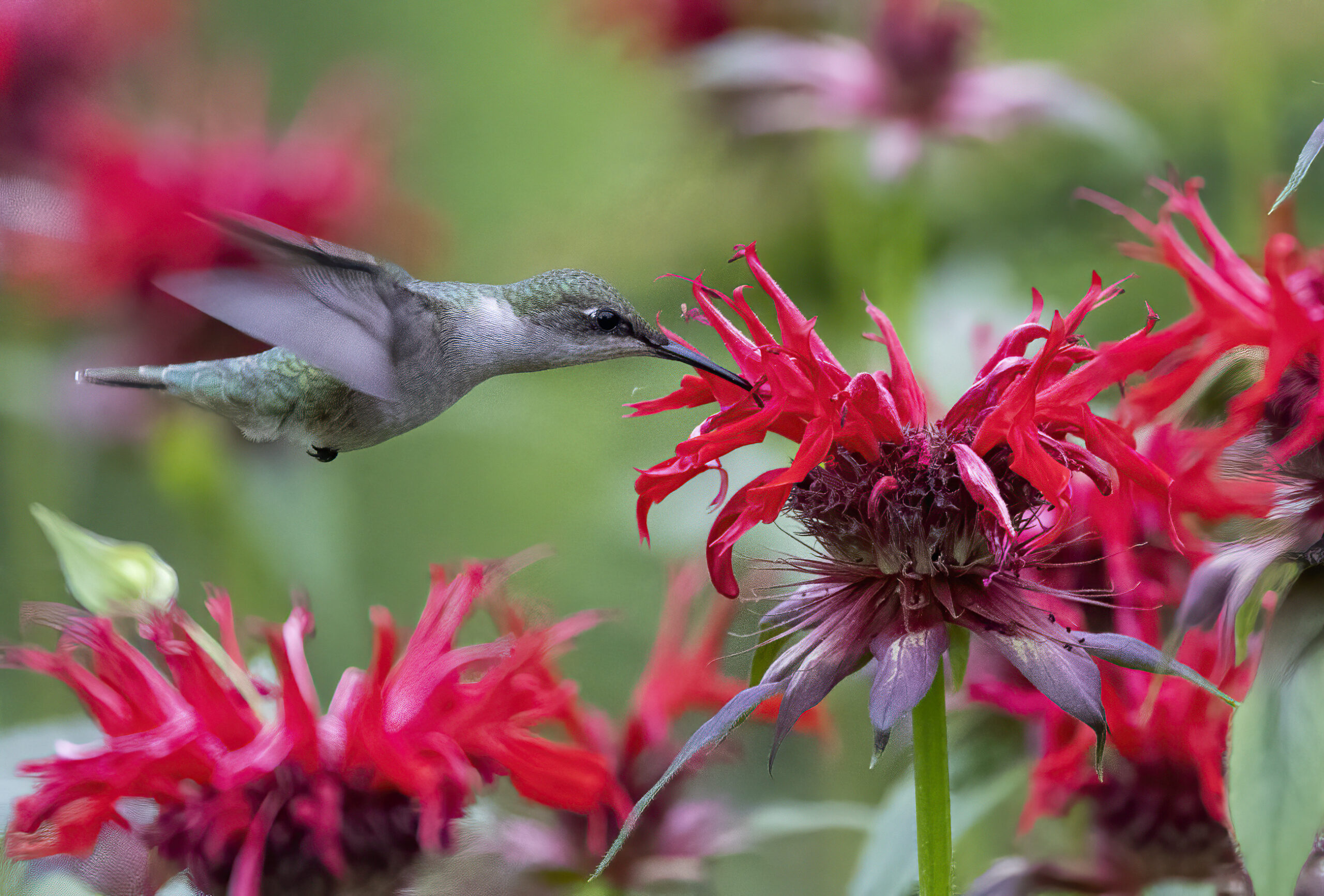
The flash of a tiny bird darting through your backyard—iridescent green, a throat like a jewel, wings buzzing like a bee—signals the presence of one of New Jersey’s most beloved summer visitors: the Ruby-throated Hummingbird. Weighing less than a penny and fiercely territorial, this small but mighty pollinator brings energy, ecological value, and a touch of magic to gardens across the state.
Though incapable of song, Ruby-throated Hummingbirds communicate with sharp chirps and twitters, often heard as they defend feeding spots or chase rivals from their territory. Their hovering, drone-like flight includes a rare ability among birds—the power to fly backward. A faint buzzing, reminiscent of a bumblebee, accompanies them in motion. Males display bright green backs, white bellies, and the namesake ruby-red throat, while females are similar but less vibrant and lack the bold coloring.
From May through September, these hummingbirds can be found across New Jersey in lush backyards, woodland edges, and forest thickets. Males vigorously protect their territories while females build tiny nests to raise their young. Given their size and high metabolism, Ruby-throated Hummingbirds must migrate each year—flying from their northern breeding grounds to wintering habitat in southern Mexico and Central America. Their migration includes an extraordinary nonstop flight across the Gulf of Mexico.
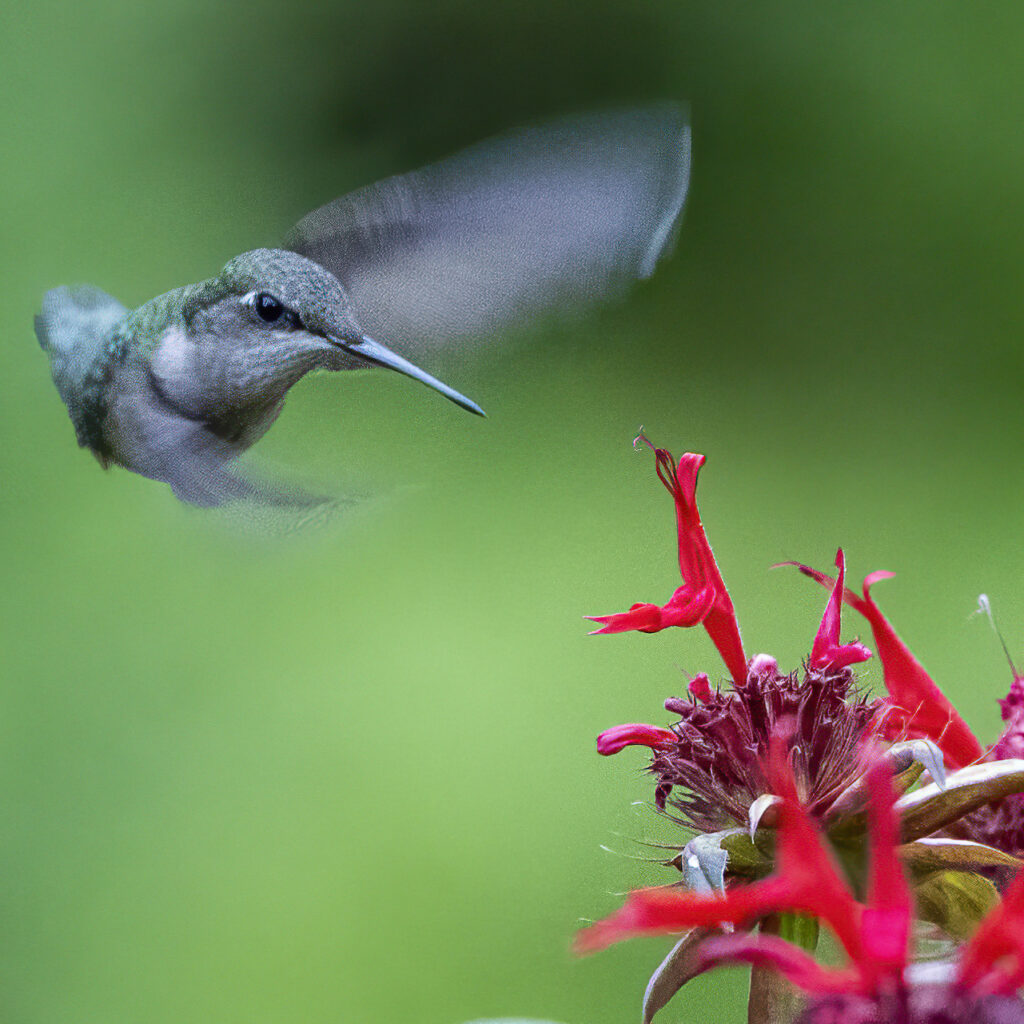
In early May, Ruby-throats typically arrive in New Jersey before many flowers are in full bloom. To bridge the gap, they’ve been observed feeding at sap wells drilled by Yellow-bellied Sapsuckers—woodpeckers that create neat rows of holes in tree bark to access sap and insects. The hummingbirds capitalize on this work, sipping sap and occasionally snacking on the insects attracted to it. Throughout the warmer months, they supplement their nectar intake with small arthropods. Like warblers, they glean insects and eggs from tree branches, and like flycatchers, they sometimes “hawk” prey—swooping out from a perch to snatch insects in mid-air. Even spiders and their prey are fair game, although those snacks come with risk.
Their long, slender bills and specialized tongues are adapted for extracting nectar from tubular flowers—especially red, orange, or yellow blooms that tend to be scentless and less appealing to bees. These flowers, often bird-adapted or “ornithophilous,” include native species such as Cardinal Flower, Beebalm, Wild Columbine, and Coral Honeysuckle. As the birds forage, pollen collects on their foreheads, bills, or throats and is transferred from bloom to bloom, making them effective pollinators.
Artificial feeders have become a reliable supplement to natural food sources. Some biologists believe feeders have helped stabilize hummingbird populations, even as many other bird species decline. However, recent research on Anna’s Hummingbird—a western species—suggests that reliance on feeders may have evolutionary effects. A study measuring museum specimens over time found that the birds’ bills have become longer and more slender, with males developing pointed shapes that may aid in feeder defense. Feeders also appear to have influenced the species’ range, pushing it further north where supplemental food is now available.
While similar studies have not been done for Ruby-throated Hummingbirds, there’s no doubt we can support these birds in meaningful ways. The best approach? Plant native.
Native plants offer high-quality nectar and support the insects that hummingbirds and other pollinators depend on. Once established, they require little water and minimal maintenance, making them both beautiful and practical. By incorporating native blooms into your garden, you provide essential habitat and help ensure that hummingbirds continue to return—nesting, feeding, and dazzling us with their presence year after year.
Native plants to support Ruby-throated Hummingbirds:
- Cardinal Flower – Full sun, moist soils
- Beebalm – Full to partial sun, mesic to dry soils
- Wild Columbine – Sun to partial shade, dry soils
- Coral Honeysuckle – Sun to partial sun, mesic to moist soils
- Trumpet Creeper – Full sun, adaptable to wet or dry soils
- Jewelweed – Partial sun, moist soils