

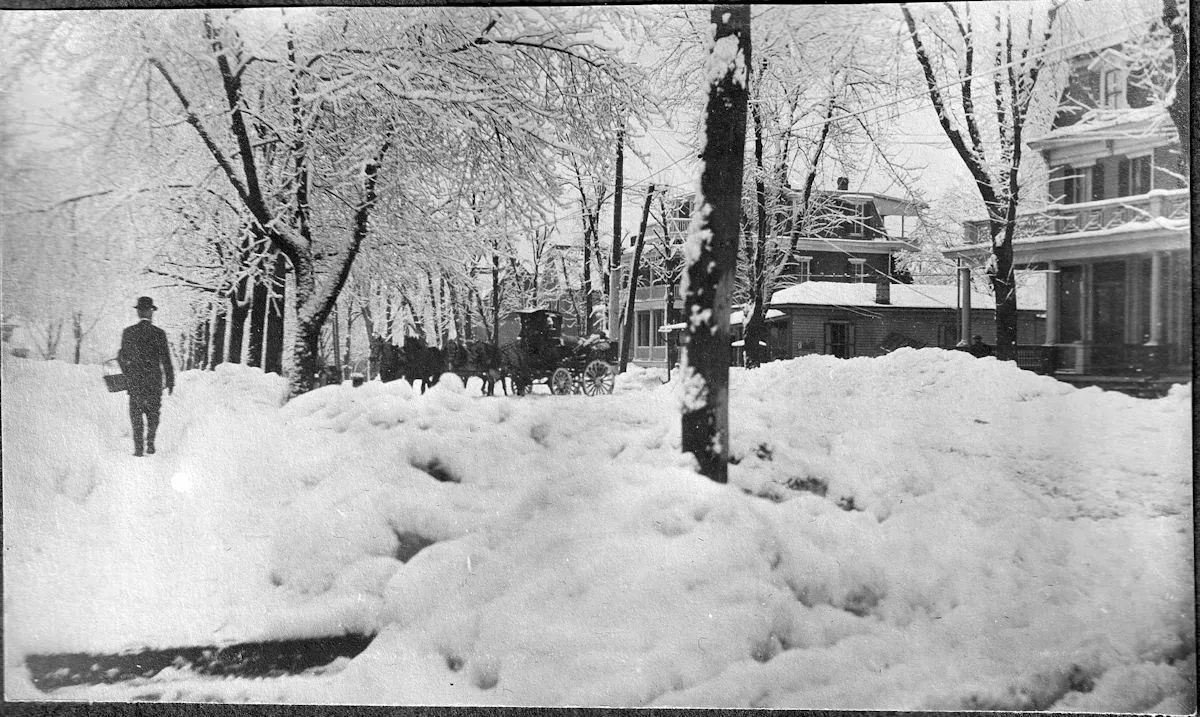
By the last days of December 1894, Hopewell Borough had endured weeks of cold, dark winter weather. Snow, rain, and hail had battered the region, and residents were ready for something — anything — to break the monotony.
Then the storm clouds cleared.
As the Hopewell Herald gleefully reported at the time, it wasn’t long before the “merry jingle of bells” echoed through the borough’s main streets. Horses were hitched to sleighs, crowds gathered downtown, and Broad Street quickly transformed into the center of an impromptu winter spectacle that lasted four days and drew hundreds of spectators.
What followed was a series of sleigh races, friendly rivalries, and town-wide excitement that culminated in a judged New Year’s Day competition — complete with a bottle of champagne for the winner.
A Town Comes Alive
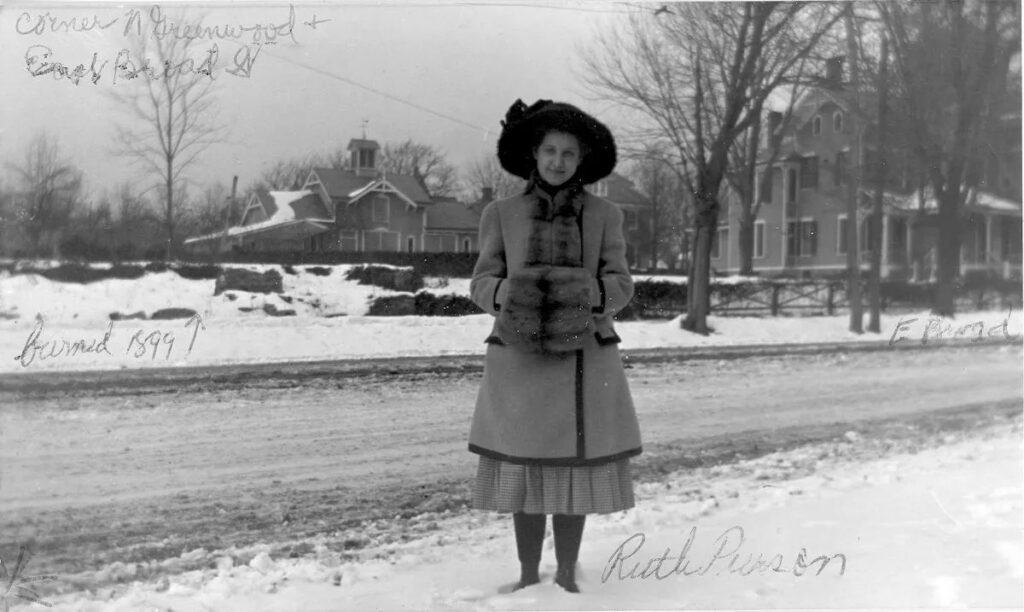
The action began on Thursday afternoon, December 27, 1894, when the sun finally broke through after a morning storm. Residents poured into the streets, and sleigh riders began dashing along Broad Street, bells ringing as horses picked up speed.
One early highlight involved a spirited “brush” between Paul Arnold, Hopewell’s popular barber, and John Studdiford, a farmer from Branchburg Township. Arnold’s horse proved no match that day, and Studdiford — accompanied by his wife, Lucy — glided past amid snowballs flying and good-natured teasing.
By Friday, the cold intensified but spirits rose even higher. Crowds packed the corner of Broad Street and Greenwood Avenue near Cook’s Block to watch speed trials between local physicians Dr. Theodore Pierson and Dr. George Van Neste. Despite the biting cold, the sleighing conditions were ideal, and Dr. Pierson emerged as the crowd favorite.
Saturday’s Crowds and Sunday’s Pause
Saturday brought even larger crowds, with horses and spectators lining Broad Street. Among the favorites were the sleighs driven by Dr. Pierson, Dr. Van Neste, Dr. John A. Miller, and others well known in the community.
Then came Sunday.
In a reminder of the era’s social norms, the newspaper noted that “a proper observance of the Sabbath day was accorded,” and no racing took place.
The Build-Up to New Year’s Day
By Monday afternoon, December 31, activity resumed “in force.” More drivers joined in, including participants from nearby towns, and informal races continued throughout the afternoon.
But all eyes were on Tuesday — New Year’s Day — when the most anticipated event took place.
Peter Van Fleet, proprietor of the Hopewell Hotel (today’s Hopewell House), offered a bottle of champagne to the winner of a judged race between the top drivers. At 3 p.m., an estimated 600 spectators lined Broad Street between the post office and the hotel, an impressive turnout for a borough of Hopewell’s size.
Seven judges were stationed at the start and finish. After five heats, John Studdiford emerged victorious, with Dr. Pierson finishing second. Paul Arnold, expected by many to win, struggled to control his high-spirited horse.
Celebration, Champagne, and Local Color
After the race, judges and drivers retired to the Hopewell Hotel to finalize results, then gathered for a celebratory meal prepared by Van Fleet. Studdiford was presented with the bottle of champagne, which, the paper noted, was “greatly relished by the participants.”
The evening didn’t end quietly. Once the horses were stabled, the liveliest “races” moved indoors — to stores, hotels, and gathering places — where storytelling and spirited debate replaced sleighs and speed.
Remarkably, despite the crowds and competition, the newspaper reported that no serious accidents occurred. The enjoyment, it concluded, was “unsurpassed.”
A Snapshot of Winter Life in Historic Hopewell
More than a century later, it’s hard to imagine Broad Street closed to cars and filled instead with horses, sleighs, and spectators packed along the street. But the streets, buildings, and landmarks remain — from the former site of Cook’s Block to the Hopewell House — offering a reminder that Hopewell’s downtown has long been a gathering place, shaped as much by shared moments of joy as by the rhythms of daily life.
This story was adapted from Doug Dixon’s work with the Hopewell Valley History Project and the Hopewell Herald. Read the original blog post here. The Hopewell Valley History Project is a volunteer effort to collect, digitize, organize, and share the history of the Hopewell Valley.