
It’s Pollinator Week! A time to celebrate, bring awareness to, and enjoy the incredible variety of creatures that perform the vital function of pollination—in our meadows, woodlands, farms, and backyards.
For those of us who could use a refresher: pollination is the process of fertilizing flowers so they can produce fruit and seeds, allowing plants to reproduce or feed us. Pollen from male flowers, or the male parts of flowers, must be transferred to the stigma, the female receptor within the flower. After contacting the stigma, a pollen tube forms and transports the pollen to the ovum—and poof—fertilization occurs.
Here in New Jersey, pollination is performed by a wide range of insects, Ruby-throated Hummingbirds, and… wind. (This week, wind is not being celebrated.)
While butterflies often steal the spotlight—thanks to their showy appearance—many species of flies, bees, wasps, beetles, and moths also play essential roles in this process.
Meet the Black Swallowtail
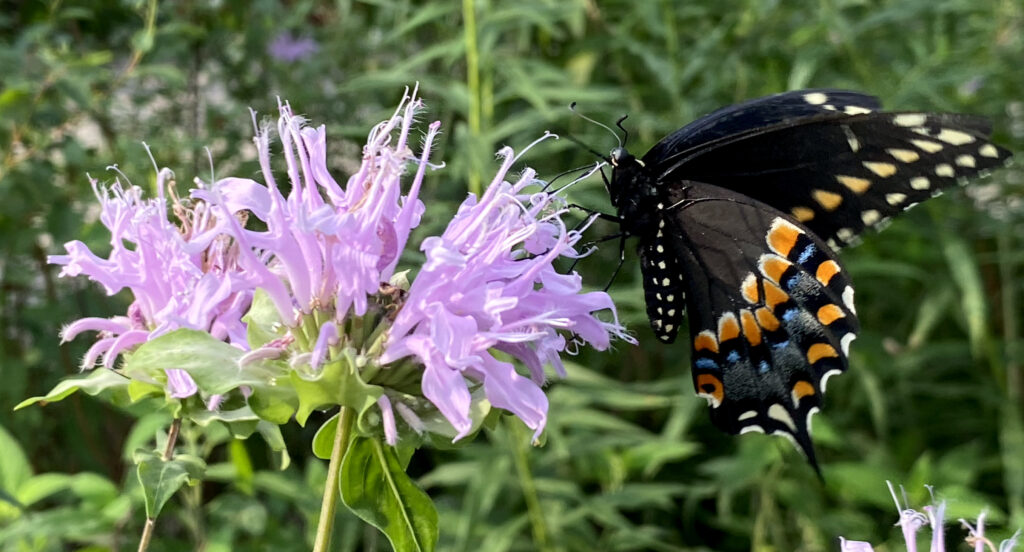
Each week this month, we’ll highlight a local pollinator. To kick things off, we’re featuring New Jersey’s state butterfly, the Black Swallowtail.
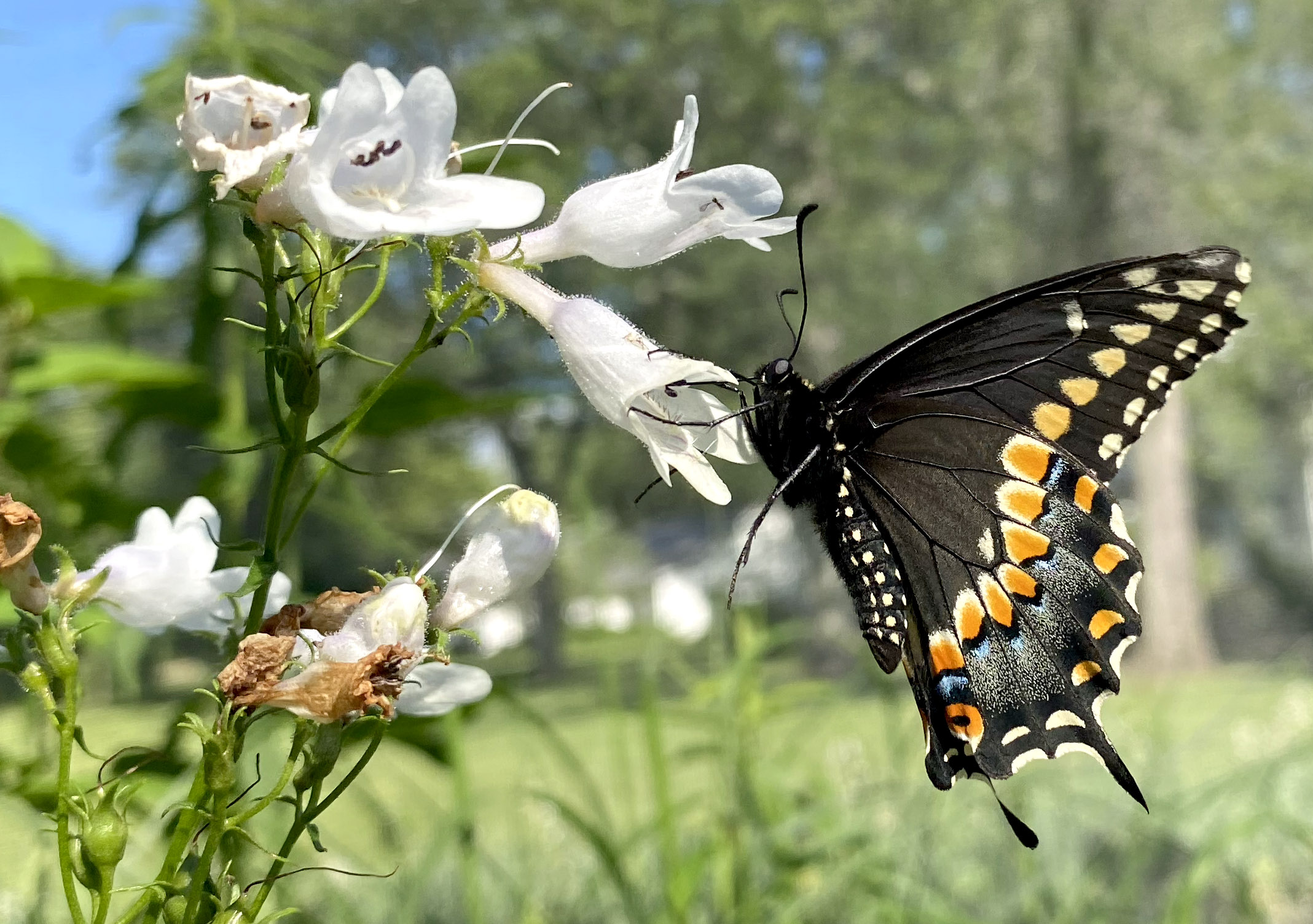
Designated as the official state butterfly in 2016, the Black Swallowtail is a striking species with a wingspan of about 3 inches. Its black wings have bright yellow edging and iridescent blue markings on the dorsal side, with orange, yellow, and blue details underneath. The hind wings end in elegant tails or streamers. Males have more dominant yellow edging, while females typically show more prominent blue markings. Like all butterflies, they undergo complete metamorphosis—egg, caterpillar, pupa, and winged adult. Wings are essential for reproduction, enabling these small organisms to find one another.
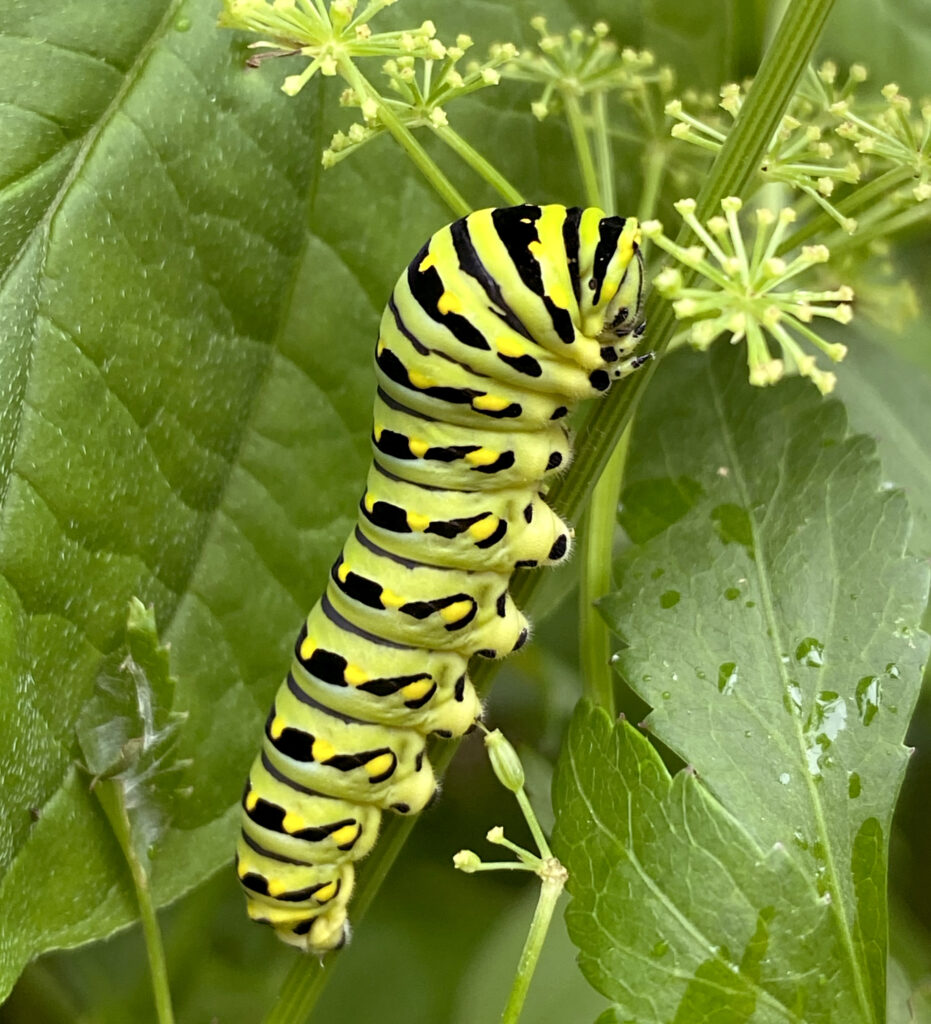
While the adult butterfly is a lovely airborne sight, the caterpillar is equally fascinating. In early stages, it mimics bird droppings—a clever disguise against predators. As it matures, it transforms into a plump, smooth larva adorned with vertical stripes of bold green and black, accented by yellow spots. When threatened, it deploys a bright orange, antennae-like gland behind its head to scare off predators.
This species relies on a few key plants to feed its rapidly growing caterpillars, including golden alexander (Zizia aurea), parsley, dill, carrot, and Queen Anne’s lace. Female butterflies use taste receptors on their feet to identify the right plants for laying eggs. Check out this female laying eggs on golden alexander earlier this year!
In New Jersey, Black Swallowtails typically have three broods per year. The final brood overwinters as a pupa (in its chrysalis), with the first adults emerging in April and peak populations in May and July.
As adults, they nectar from and pollinate a variety of wildflowers—typically showy, colorful blooms. They’re particularly fond of red clover, coneflower, and milkweeds.
The Bigger Picture
A recent Science study published earlier this year analyzed overall and species-specific butterfly population trends across the U.S. from 2000 to 2020, using data from more than 76,000 surveys. The findings were sobering: total butterfly abundance declined by 22%. In the Northeast, butterfly populations dropped by 1% annually—and nearly 4% in the Southwest. Habitat loss, pesticide use, and climate change were identified as major threats.
Here’s how a few common species fared in the Northeast during the study period:
- Monarch: Little change, increased by 10%
- Tiger Swallowtail: Little change, decreased by 4%
- Black Swallowtail: Population decline, decreased by 16%
- American Lady: Population decline, decreased by 58%
What You Can Do
While these findings are concerning, there are steps we can all take to help reverse butterfly loss. Eliminating pesticide use on your property is an easy first step. Habitat restoration—even on a residential scale—can positively impact butterfly populations. Transitioning a section of lawn into a wildflower meadow or native plant garden provides essential habitat.
Because many butterfly species have multiple broods each year, they can rebound quickly—if we provide the right conditions. It’s never too late (or too early) to bring biodiversity home.
Need help getting started? Our Community Conservation program is here to support you. Reach out to our team at FoHVOS at [email protected] or visit fohvos.info/residential-cc for more information.
photos by Seth Siditsky