

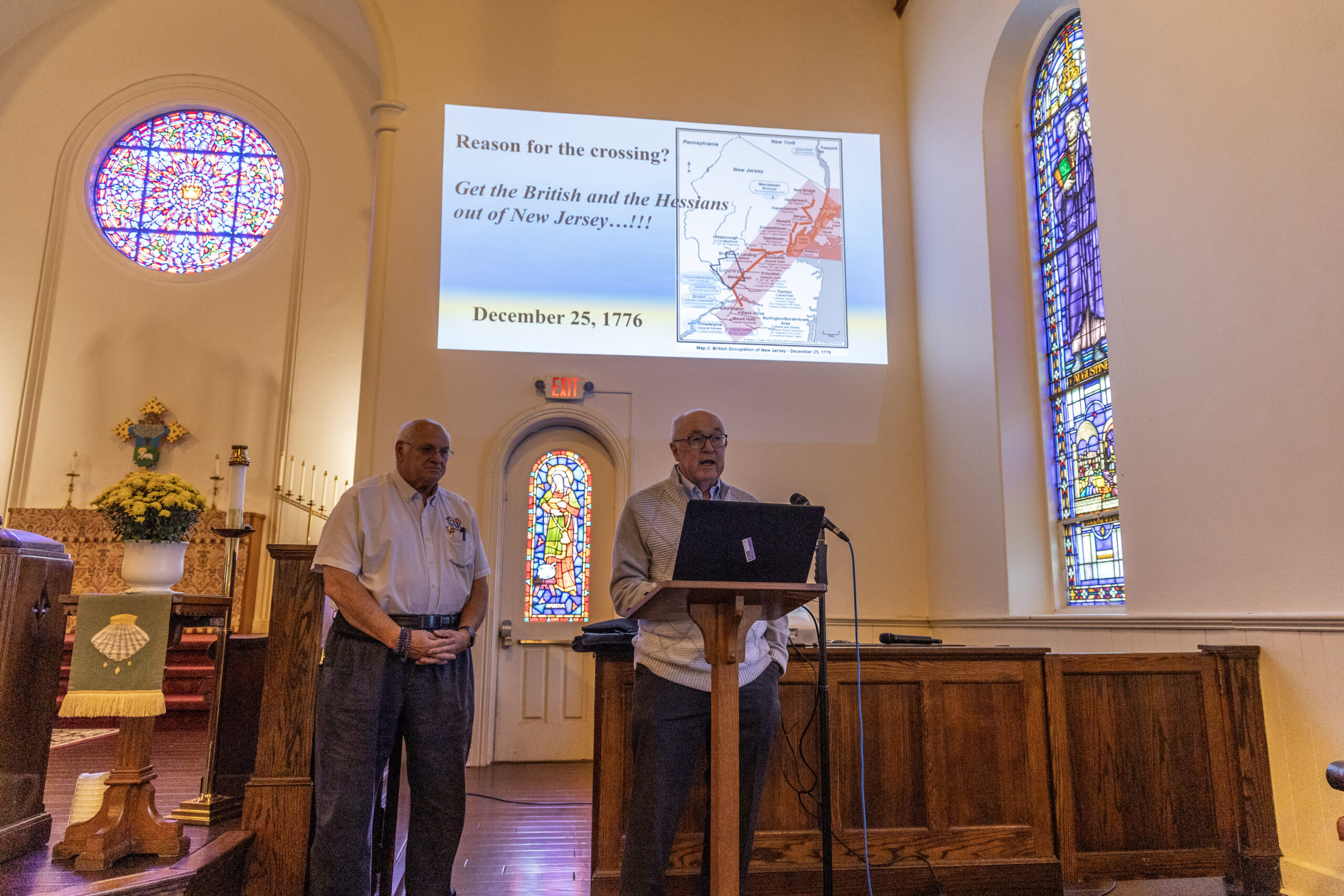
Central New Jersey’s role in the nation’s founding took center stage Sunday as local historical organizations gathered at the 1867 Sanctuary in Ewing for a lecture tracing George Washington’s night march from the Delaware River to Trenton — the pivotal movement that set up the Continental Army’s first decisive victory and turned the course of the Revolutionary War.

The talk, “Just After the Crossing: Washington’s Night March to Trenton,” marked the official kickoff of the region’s America250 commemorations ahead of the nation’s 250th anniversary in 2026. It was co-hosted by the Ewing Township Historic Preservation Society, the Hopewell Valley Historical Society, the Hopewell Museum, and the Lawrence Historical Society, with support from Mercer County’s Cultural and Heritage Commission.
The setting carried symbolic weight. The sanctuary’s surrounding cemetery is the final resting place of 39 Revolutionary War soldiers — a reminder that the area was not merely influenced by the Revolution but lived inside it. As host Joanne Durham noted from the podium, “we are on sacred ground … because there are 39 revolutionary soldiers who are buried in the cemetery around us.” She urged the audience to see the afternoon as an invitation to “your part in this continuing journey called the American Experiment.”
Linking 1776 to the roads of today
The presentation was led by historian and author William “Larry” Kidder and public historian Roger S. Williams, who walked the audience through the nine-mile route taken by Washington’s forces after the Delaware crossing. A unique feature of the program was the way the speakers overlaid the 1776 march on modern-day geography.
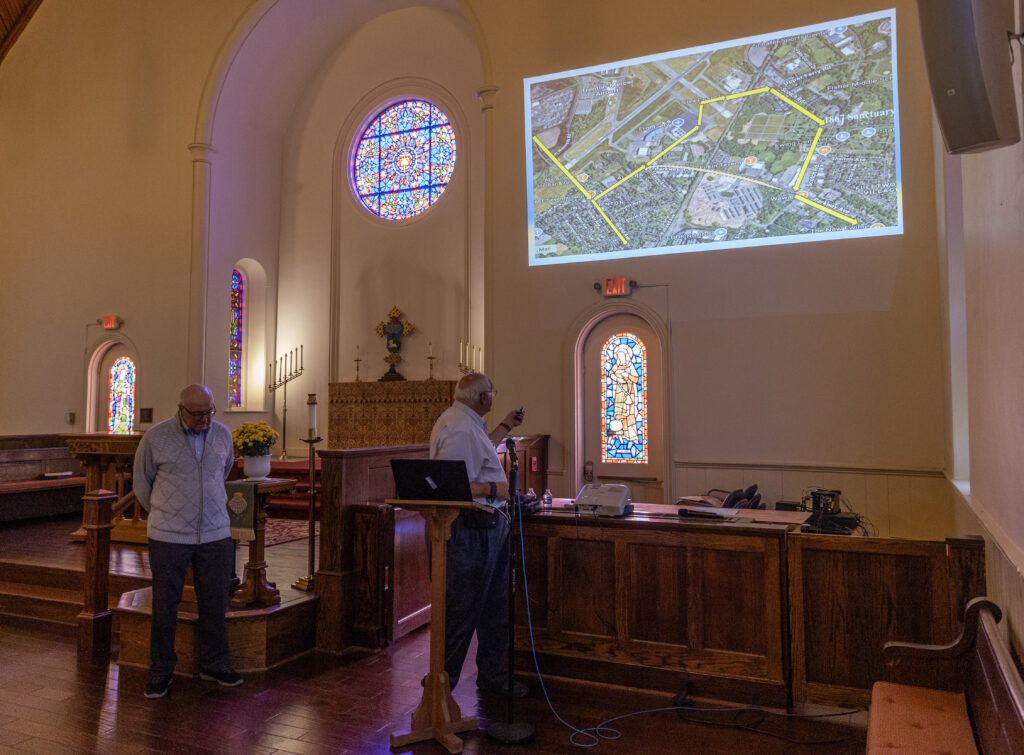
The roads Washington’s troops took are not metaphorically near today’s communities — they are today’s communities. Bear Tavern Road, Jacobs Creek, Scotch Road, the Pennington Road approach: all were used as narrative landmarks. The audience was shown how the Continental Army descended the steep ravine at Jacobs Creek, how artillery was hauled uphill through freezing wind, and where local Patriot militiamen acted as battlefield guides because the Virginia and New England troops did not know the terrain in the dark.
That experience unfolded across land that is now part of Ewing, Hopewell, and Lawrence townships — the very same landscape the audience had driven through to get to the talk.
A strong turnout and a shared start to the semiquincentennial
There were 165 people that registered to attend in person, with more joining virtually. The turnout reflected both an interest and a collaborative effort among local history organizations, who each emphasized that the 250th is not a single celebration but a sustained civic and educational arc.
Representatives from the Ewing, Lawrence, and Hopewell Valley organizations previewed upcoming programming — including historic house access, interpretive talks, and living-history experiences — building toward 2026.
Why this region matters
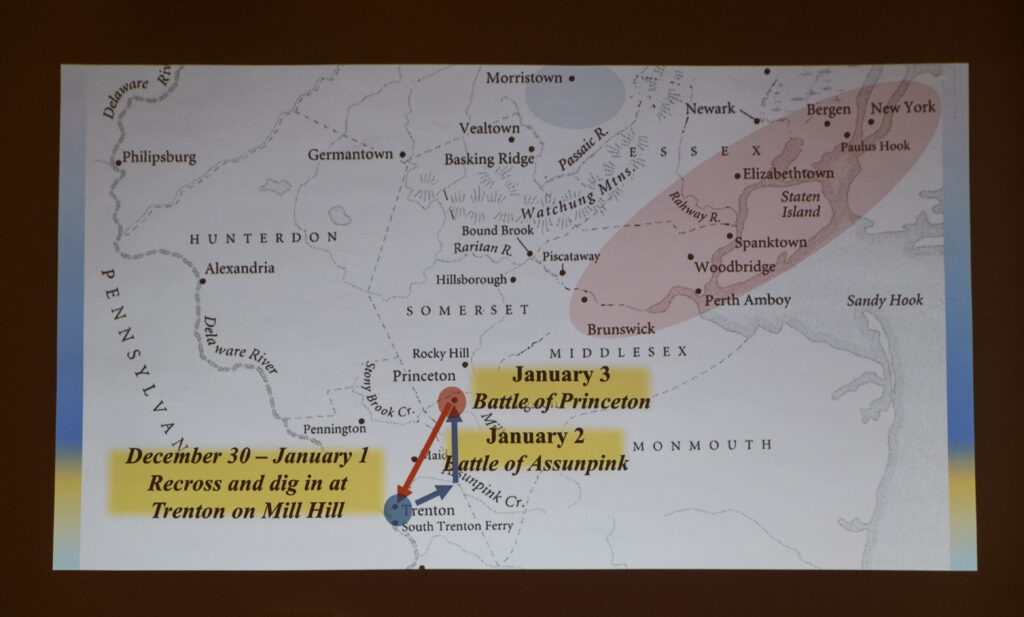
Kidder underscored that while “Washington’s Crossing” is widely known, it was the miles after the boats reached New Jersey that made the victory possible — and those miles were here. He explained that the victory at Trenton, followed by the fighting at Assunpink Creek and Princeton, ultimately forced the British out of New Jersey and marked the first sustained reversal of fortune for the Continental Army. As he told the audience:
“Washington accomplished what he wanted to do. And the British are never going to occupy New Jersey again.”
That turn — from retreat to momentum — is what historians regard as the hinge on which the Revolution survived long enough for independence to become politically real.
Looking ahead: history as local identity
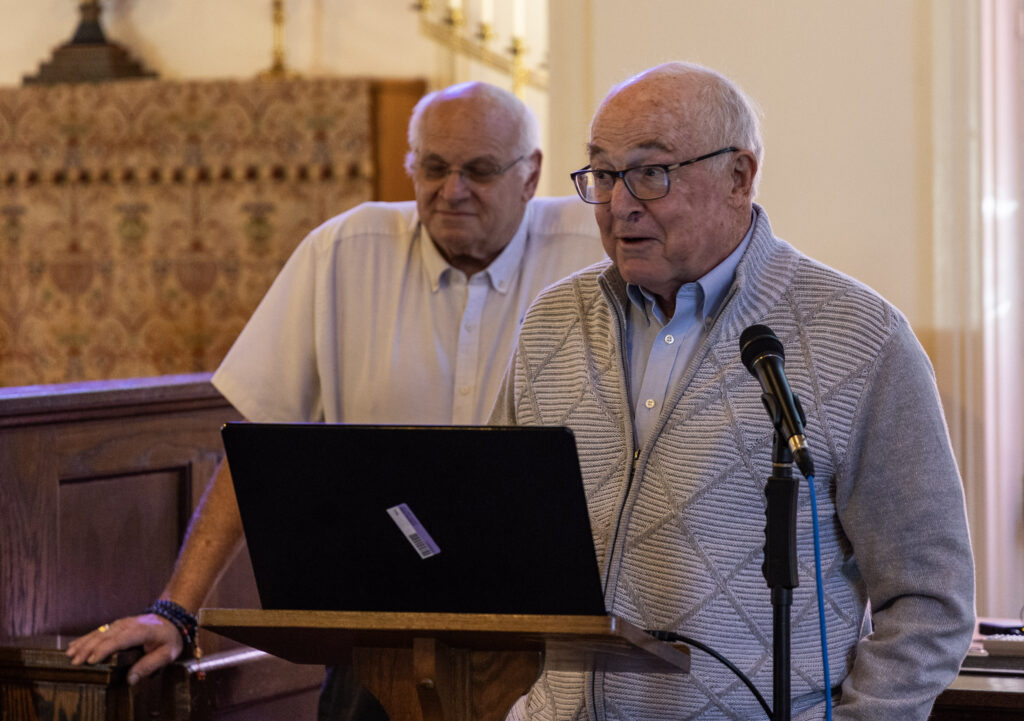
At the end of the program, Kidder spoke about what the milestone anniversary means to him personally. After decades of researching, teaching, and writing about the Hopewell Valley and central New Jersey during the Revolution, he said it is deeply meaningful to see the broader public beginning to embrace the same landscape-based story:
“I’m not from New Jersey… Now you couldn’t get me out. And part of it’s because of all these stories… it’s very meaningful to me to have this coming around.”
With Sunday’s event, the region’s 250th-year programming opened in the exact geography where Washington’s march unfolded and where the turning point of the Revolution began.
Learn more about each of these organizations: Ewing Township Historic Preservation Society, Hopewell Valley Historical Society, Lawrence Historical Society, Ten Crucial Days, The Hopewell Museum, and Larry Kidder