
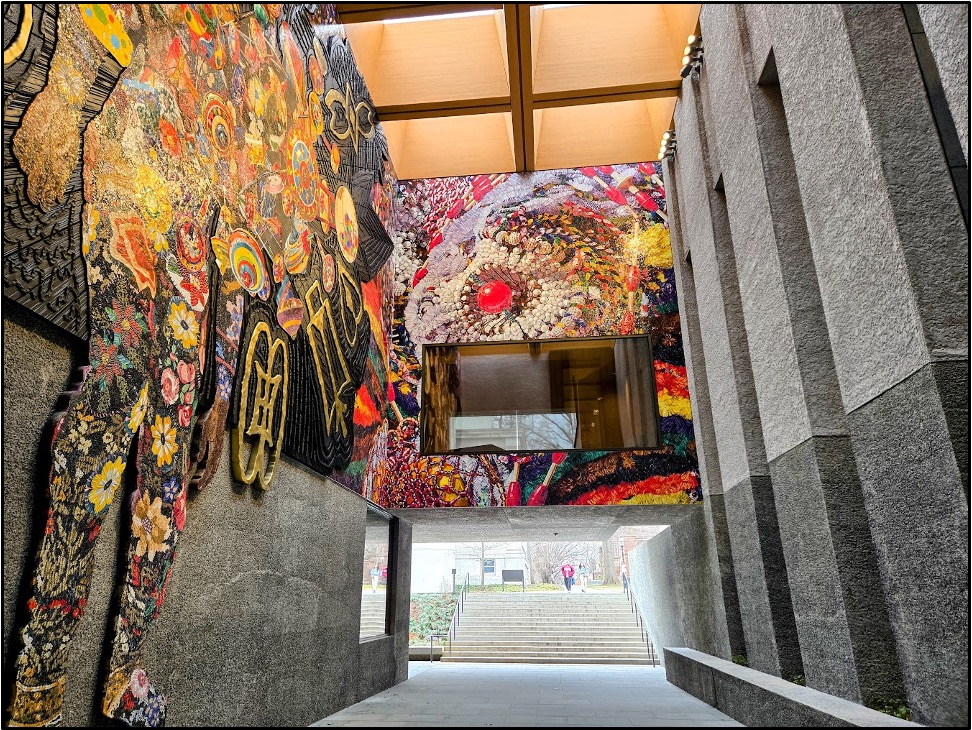
Princeton University has a long history of collecting art; it is one of the oldest collecting institutes in North America. Starting with one room in Nassau Hall, the current museum was rebuilt and reopened in the fall of 2025. It is open Monday-Wednesday 10:00 a.m – 5:00 p.m., Thursday – Friday, 10 a.m. – 8:00 p.m., Saturday 10:00 a.m. – 5: p.m., and Sunday 12:00 – 4:00 p.m.
After visiting the new museum briefly last fall, I went back last week, hitting (figuratively) as much as I could. The new museum’s exterior is not flashy in any sense of the word, but as they say…”It’s what’s on the inside that matters.” Whether you are into art of the Ancient Americas, European art, African art, Asian art, Mediterranean art, or Modern art, the Princeton Art Museum has you covered. I will try to present a variety of what I saw today, and I highly encourage you to visit!
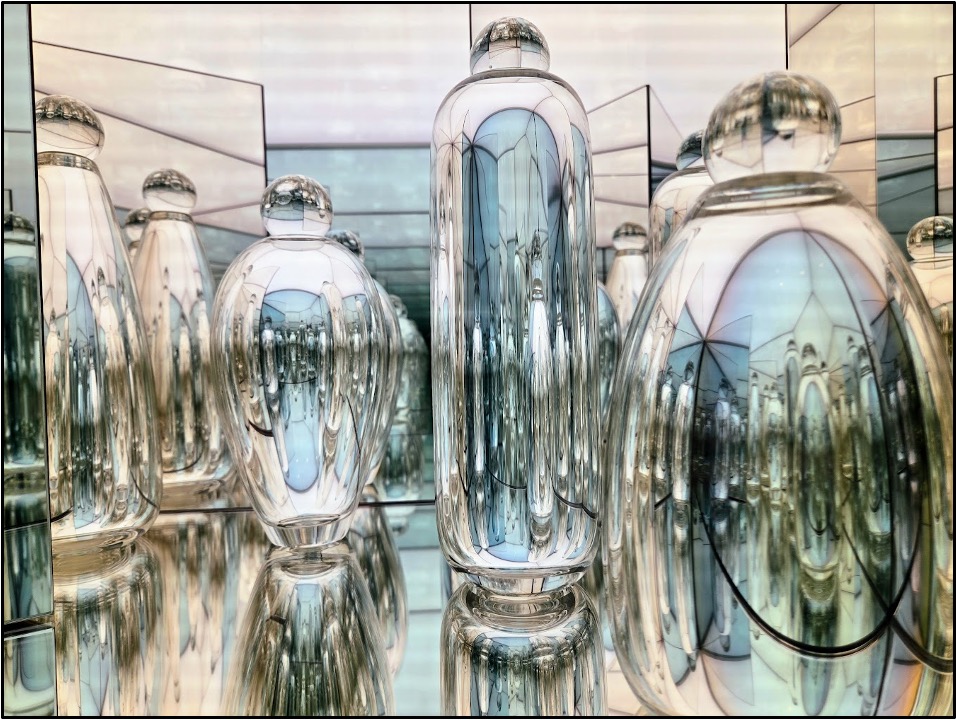
With 146,000 square feet, three stories, nine pavilions, 32 galleries, an education center, a restaurant, and more, the museum’s exterior esthetics don’t matter in the least. As soon as we entered, I was drawn to “A Twilight Labryrinth (Alchemy)” by Josiah McElheny – a display of handblown glass vessels, inside a lighted, mirrored space. The colors danced as you looked from different angles, and I stayed at that exhibit for a time, wondering if I could create something similar at home, but I highly doubt it.
The very first piece of art given to Princeton University (originally chartered as the College of New Jersey), was a full-length portrait of NJ Colonial Governor Jonathan Belcher, described in the gift as “my own Picture at full length in a gilt Frame”. This was joined shortly thereafter by a portrait of England’s King George II. As there are so many displays, I try here to give you a mere smattering of what the museum has to offer.
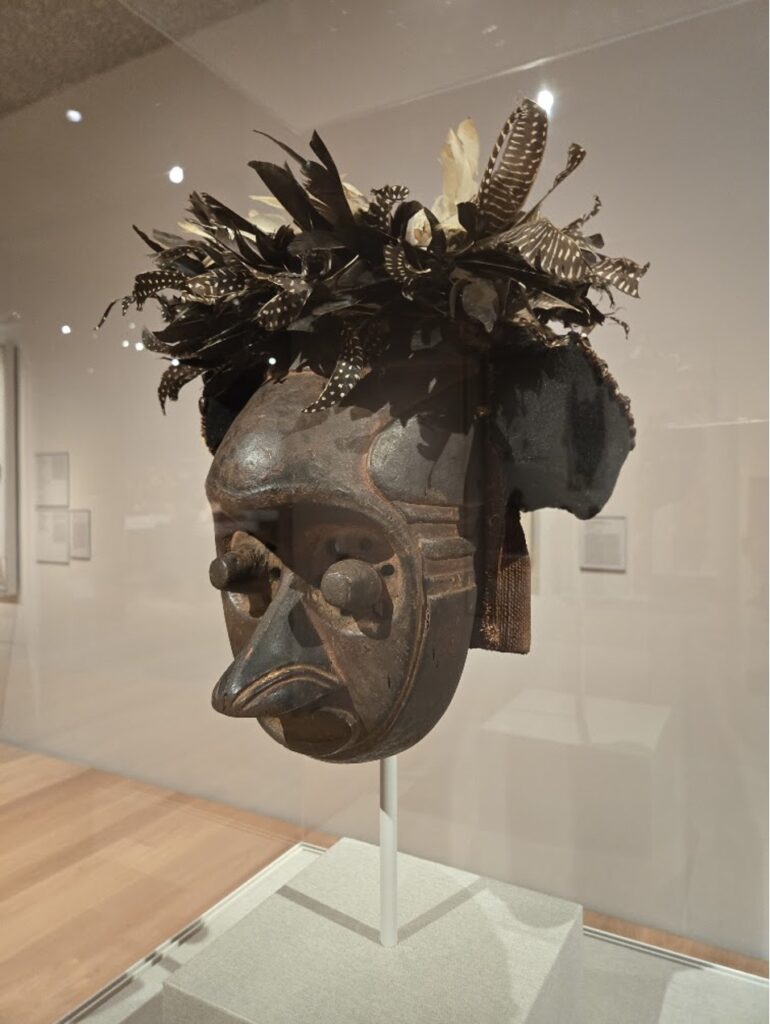
An Epa helmet mask, made before 1920. Carved from one block of wood, it is attributed to Bamgbose. Epa masks honor ancestral values and are worn during festivals.
James Steward has served as director of the Art Museum since 2009. He leads a staff of 185 and is responsible for a collection of approximately 117,000 works of art. During his tenure, he has overseen major expansion projects as well as the museum’s extensive collections and educational initiatives. Steward also serves as a professor in the Department of Art and Archaeology. Prior to his current role, he served as director of the Michigan Museum of Art.
Ancient Roman mosaic pavement unearthed during Princeton’s archaeological expeditions to Antioch in the 1930’s, and you can “walk” on them without fear; the mosaics are well-protected.
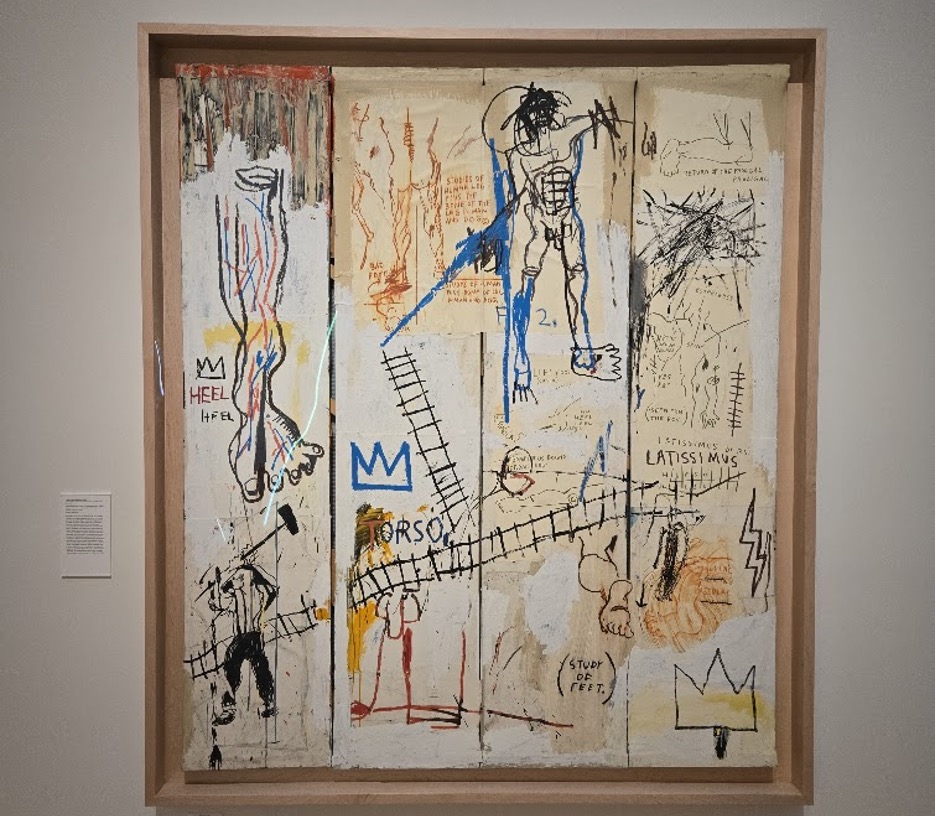
“Leonardo da Vinci’s Greatest Hits, 1982”, by Jean-Michel Basquiat. As the story goes, while Basquiat was recovering in the hospital from an accident, his mother gave him a copy of Gray’s Anatomy, and he became fascinated with how the body worked.
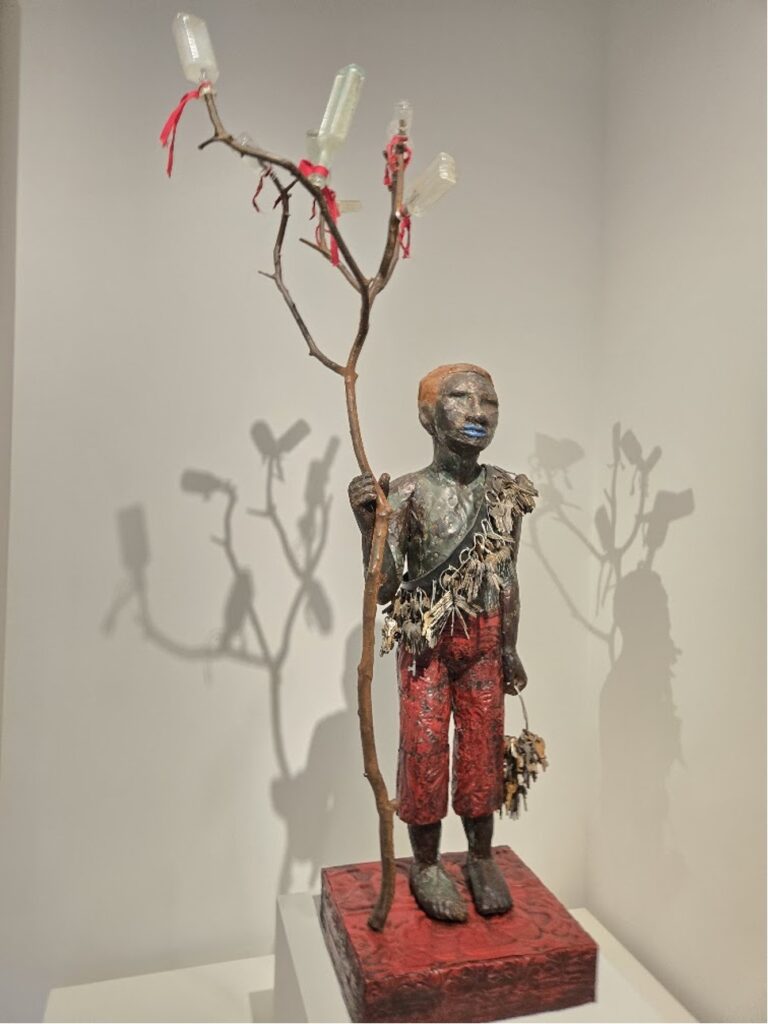
I was drawn to this piece, “conducere”, above, by Alison Saar. According to the card, the bottle tree, the blue lips, and a key ring, are drawn from hoodoo, an African American folk magic tradition rooted in West African spiritual practices.
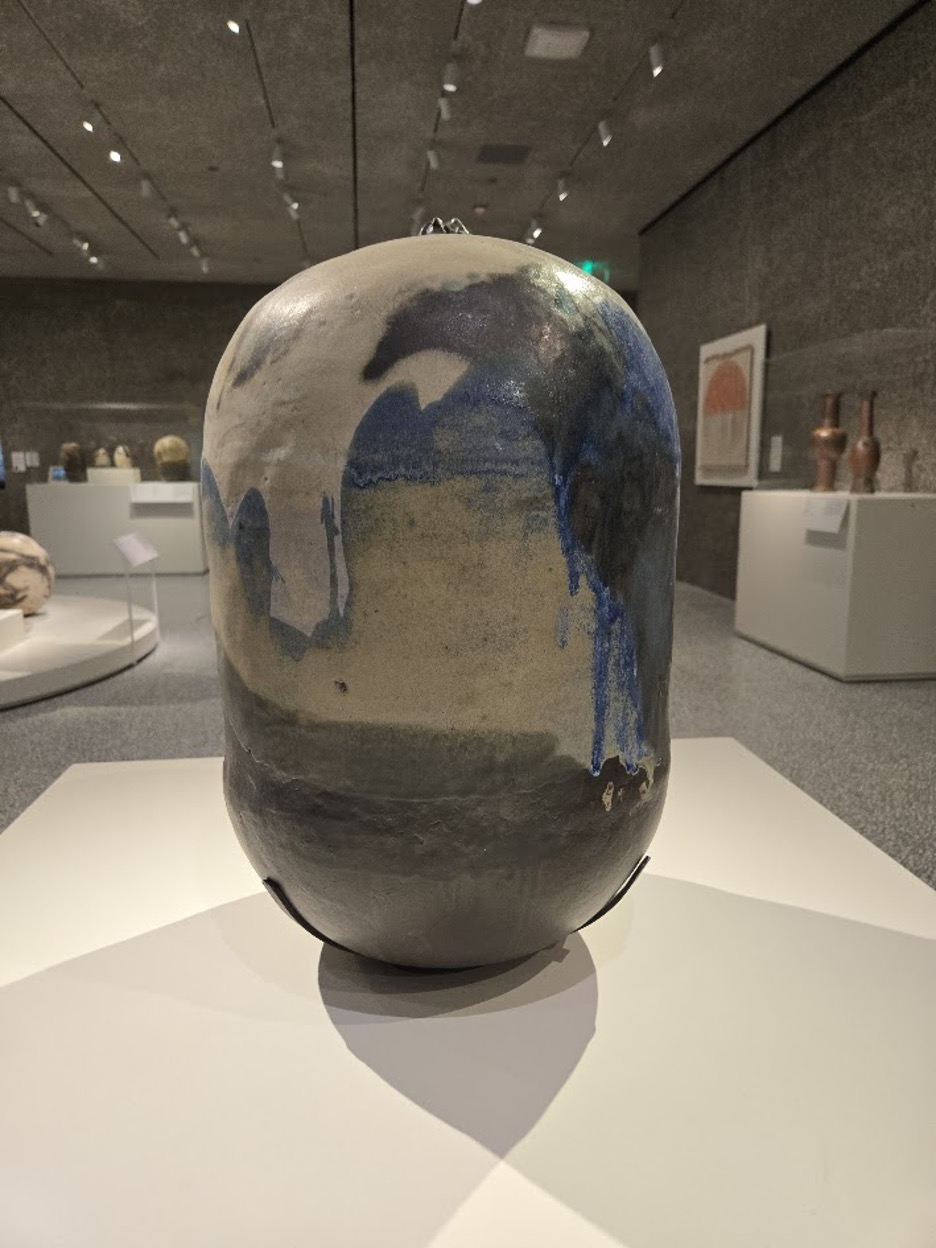
I also enjoyed Toshiko Takaezu’s “Dialogues in Clay” exhibit. A twentieth century artist, Takaezu developed what she called “closed forms”, bowls shaped into spheres or cylinders.
But there are so many cool things to see, let’s keep going.
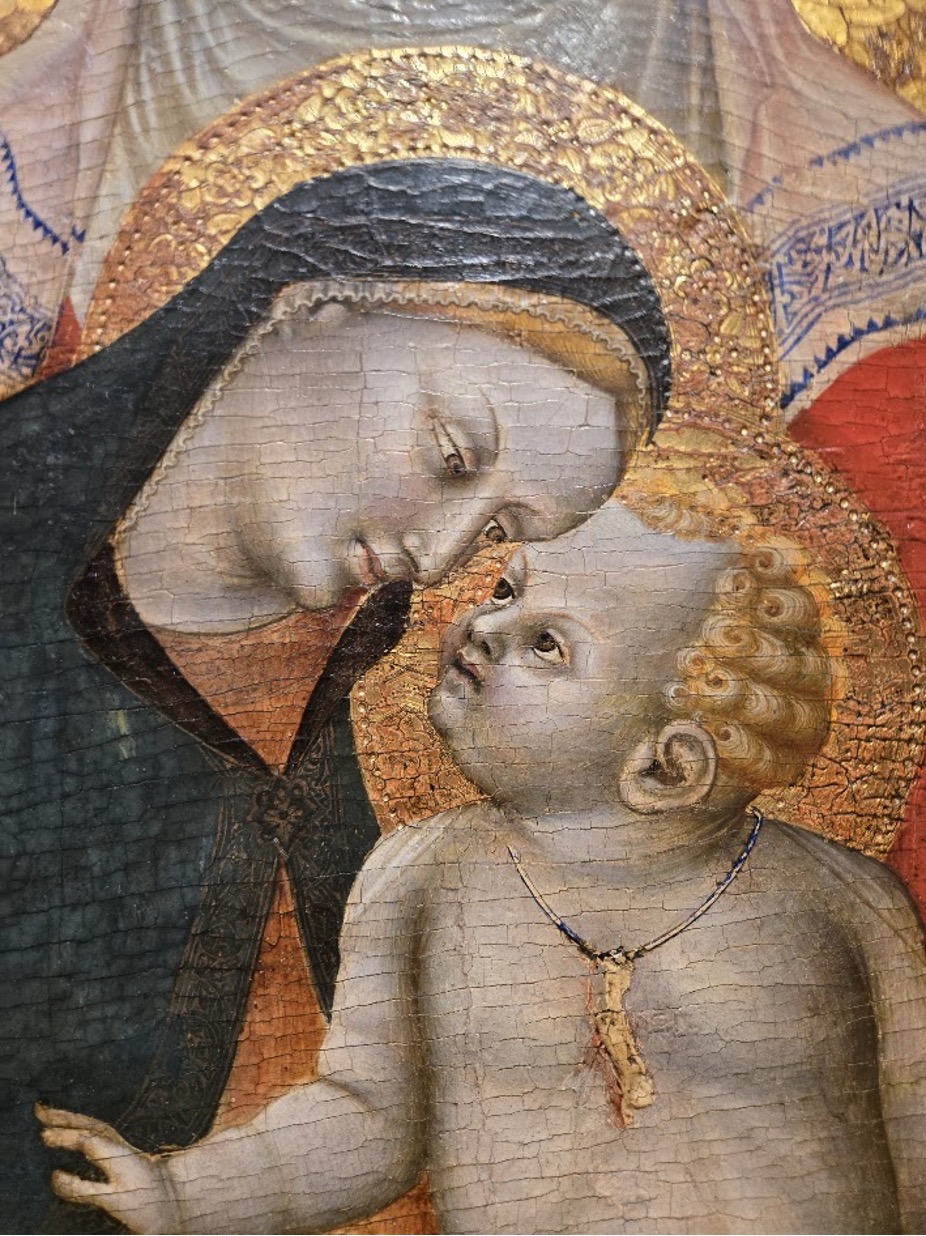
Looking for something a little earlier? How about “Madonna and Child with Saint Anne”, circa 1340-1345. There is no flash photography, but you can certainly get up close and personal with the vast majority of items on display, and cell phone pics (sans flash) are fine.
Rodan? Yes, they have that too.
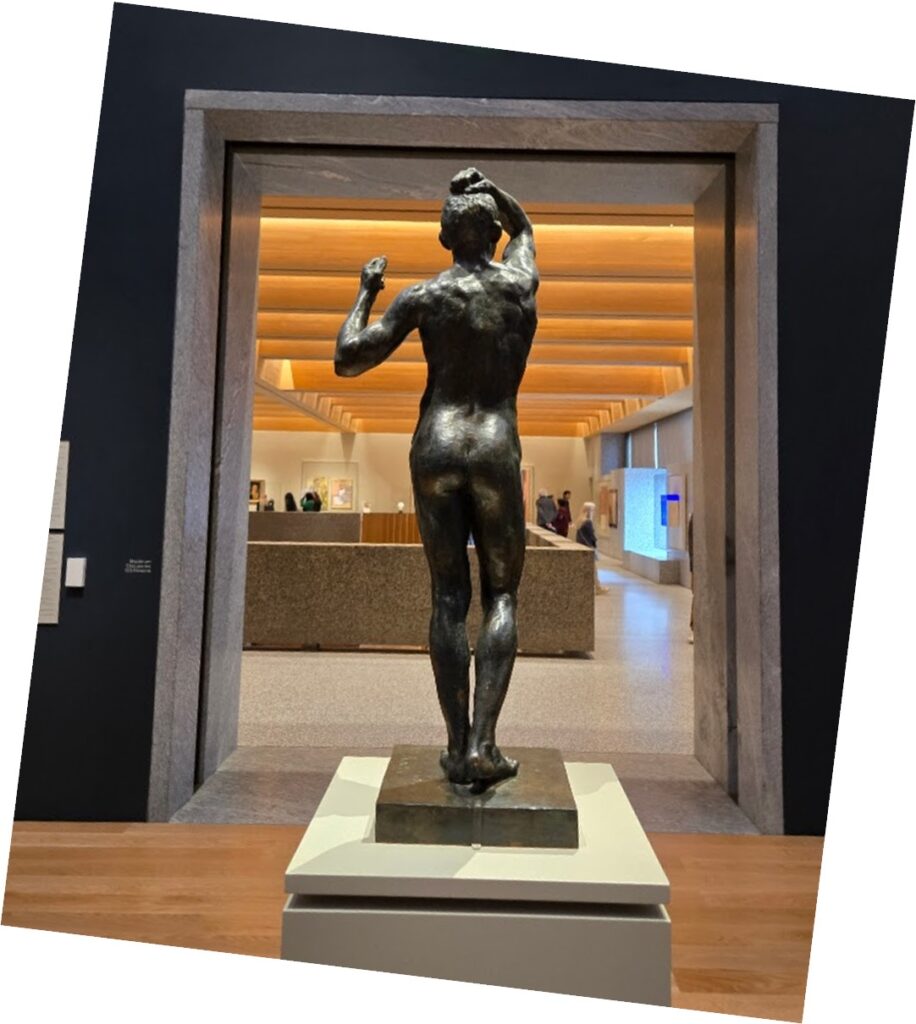
No, you’re not drunk. Somehow, I took a crooked picture of Rodin’s “The Age of Bronze”. Let’s just say I was making “new art” here. This piece shocked critics, by presenting not a king or general, but an ordinary, unnamed person.
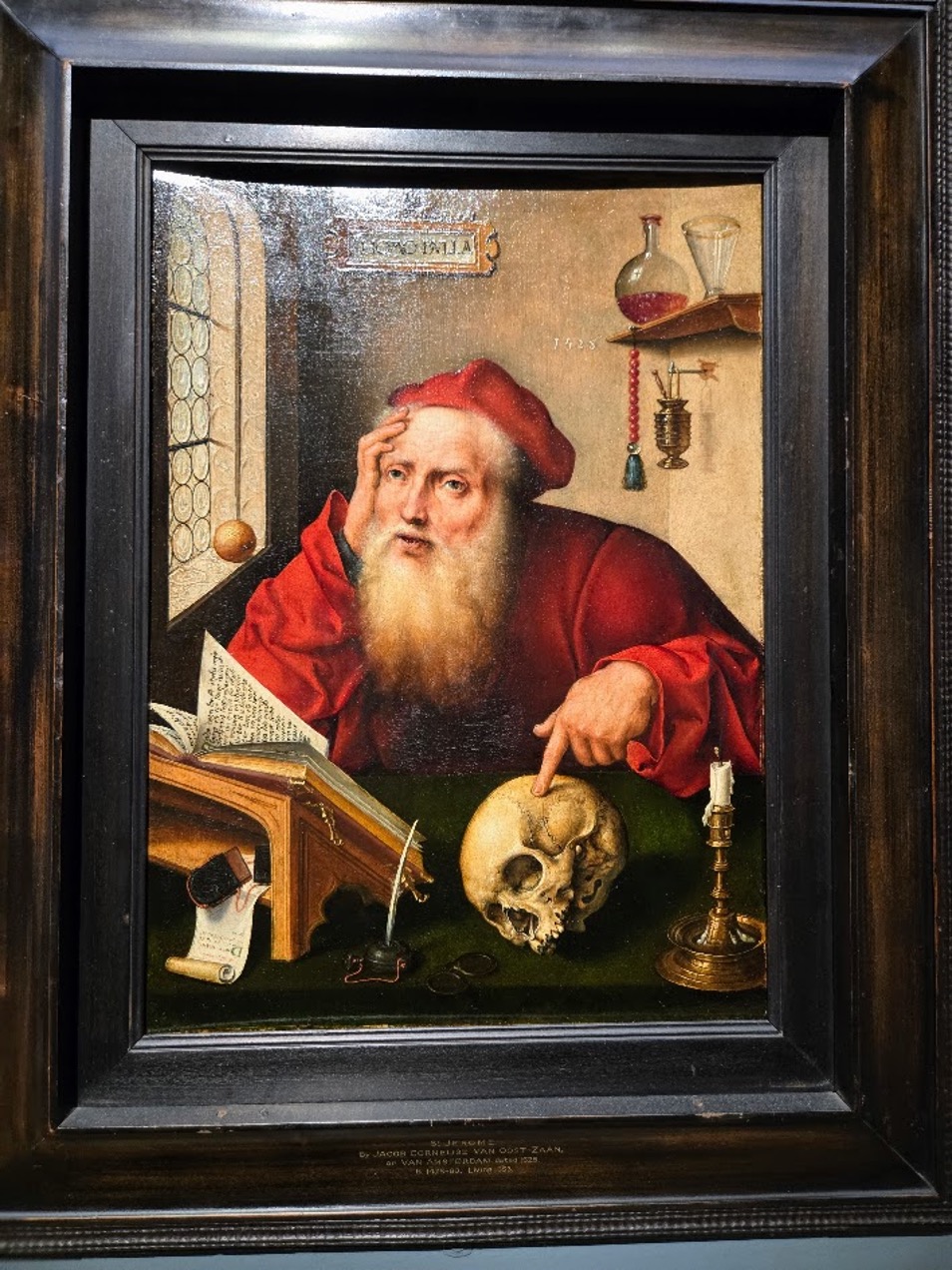
Now, how about something from 1419-1420? “The Penitent Saint Jerome”, by Joos van Cleve. I have to wonder if his penitence has to do with that skull he’s playing with.
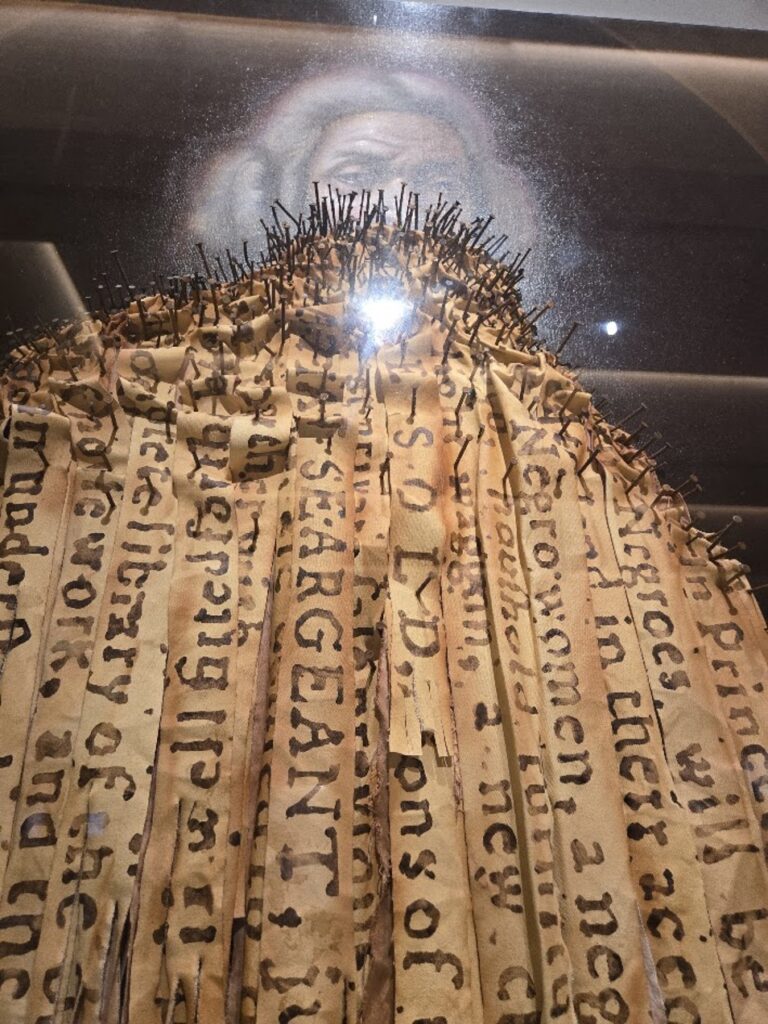
Arguably, the most moving piece I saw was titled “To Be Sold” by Titus Kaphar. This piece relates to a headline from 1766, announcing the sale of six African slaves at Princeton University’s Maclean House. Kaphar’s work includes nails, and strips of the advertisement, along the contours of a bust of Samuel Finley, president of the University from 1761 to 1766.
And from Princeton’s website, “The Museum and what is now the Department of Art and Archeology – the second oldest in the nation – formally came into being in 1882, founded on a philosophy that positioned Princeton at the cutting edge of scholarship in an era when the history of art was a new academic discipline, largely confined to the more advanced universities of Europe. Prime gave impetus to the establishment of a museum with the promise of his collection of pottery and porcelain upon the completion of a fireproof building to house it. From the beginning, the Museum was meant to serve a dual purpose: to provide exposure to original works of art and to teach the history of art through a collection of the world’s art. From the beginning, too, the Museum was to be a public good: The non-collegiate public was invited to view the collections, so long as they applied to the janitor of East Pyne for the key.”
From ancient art to modern art, and everything in between, please visit the museum. In fact, spend the day. You will be amazed! And it is free!
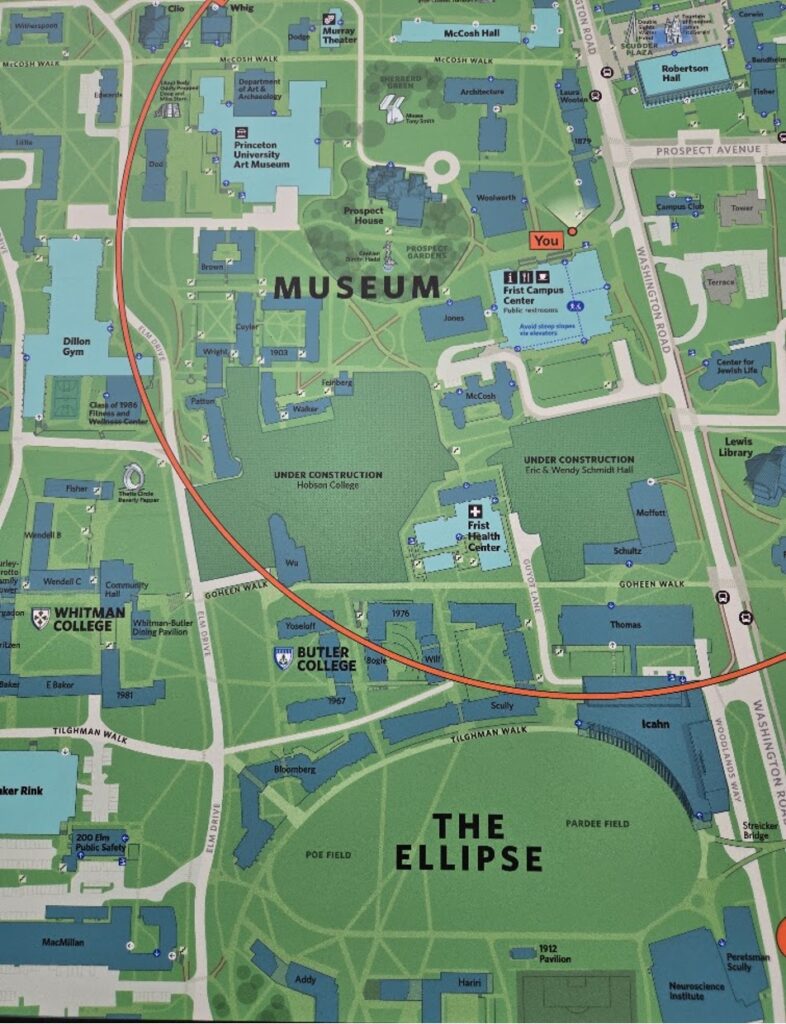
If you are not very familiar with downtown Princeton and the University, the map below may be helpful. We parked at the Stadium Parking garage, which is free, about one mile from the Museum.