

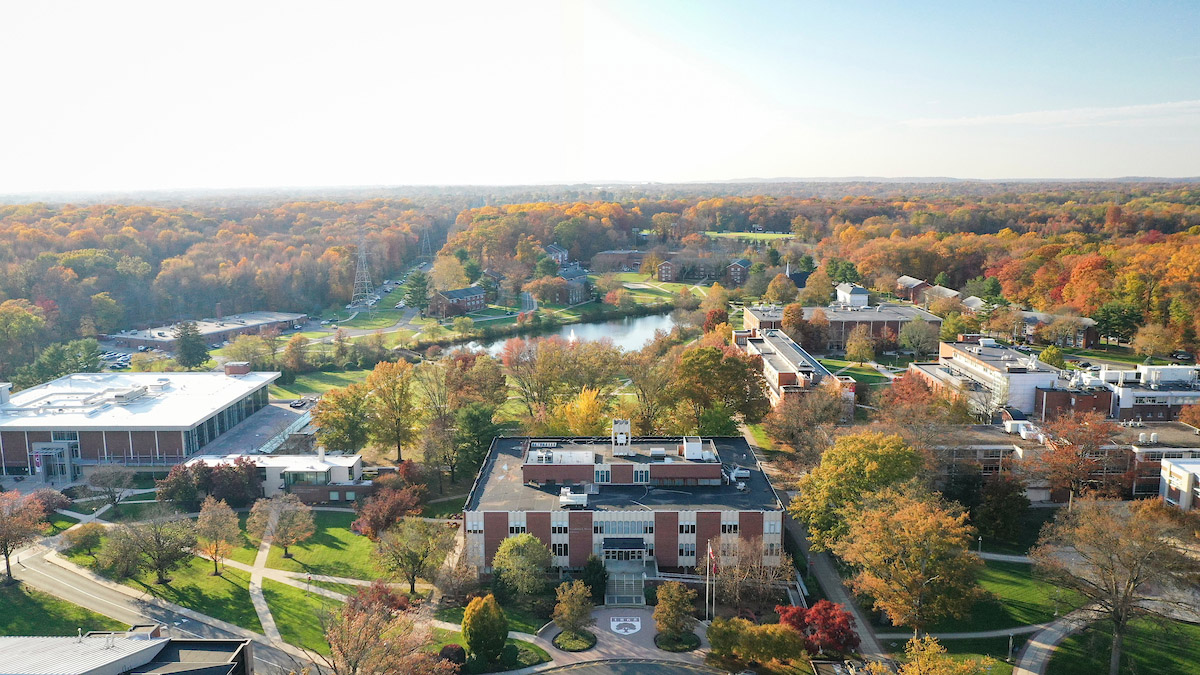
Mercer County plans to purchase 56 acres of land from Rider University in a deal that will preserve environmentally significant forest and wetlands while providing the financially struggling university with a needed infusion of cash.

County Executive Dan Benson, the Mercer County Board of Commissioners, and Rider University President John R. Loyack announced the agreement this week, describing it as a public-private partnership that supports both land preservation and the university’s financial recovery.
Under the agreement, Mercer County will purchase approximately 56 acres from Rider for about $8.5 million, using a combination of funds from the county’s Open Space Trust Fund and its capital budget. Lawrence Township will also contribute toward the purchase using its own open space funds.
County officials say most of the land will be permanently preserved as open space, making it eligible for up to 50 percent reimbursement from the New Jersey Department of Environmental Protection through the state’s preservation programs.

The transaction is part of a broader arrangement between the county and Rider that also includes a facility-use agreement allowing Mercer County to access university facilities for operational purposes and events. In total, the combined agreements represent roughly $10 million in financial support for Rider.
“Rider University is an invaluable asset to our community,” Benson said in a statement announcing the agreement. “I’m proud that we were able to sit down and work collaboratively with university leadership to reach an agreement that strengthens our partnership, and that’s a win-win for the school and for Mercer County residents.”
Rider has faced significant financial pressures in recent years and has been pursuing a series of strategies to stabilize its finances while maintaining its academic programs.
Rider’s financial challenges became public last fall when the university announced sweeping cost-cutting measures under its “March to Sustainability” plan. The restructuring included salary reductions for employees, faculty layoffs, increased teaching loads, and suspension of retirement contributions. University leaders said the steps were necessary after years of operating deficits and mounting financial pressures threatened the school’s long-term stability.
“This agreement represents another critical step in reimagining a meaningful Rider as we continue to swiftly rebuild our financial strength,” Loyack said. “The agreement demonstrates the ultimate in creativity and speed that can be achieved through meaningful public-private partnerships.”
The land included in the purchase contains the final surviving portion of “The Big Woods,” a beech forest historically associated with conservationist Aldo Leopold, widely considered the father of modern wildlife ecology.
Leopold explored the forest during his time as a student at The Lawrenceville School in the early 1900s, experiences that later influenced his ecological thinking and writings, including the influential conservation classic A Sand County Almanac.
In addition to the forest, the land includes environmentally sensitive wetlands. Mercer County officials say the preserved property will remain protected as open space and that the county plans to improve trails to allow for passive recreation.
County officials also said the agreement helped prevent the land from potentially being sold for residential development.
“Proposing this purchase allowed us to provide Rider with an alternative to selling off this important land to private residential developers,” Benson said.
Lawrence Township Mayor Christopher Bobbitt said the township supports the preservation effort and the partnership with Rider.
“Lawrence Township fully supports Mercer County’s efforts to preserve vital open space in our community and partner with Rider University during this difficult time for the school,” Bobbitt said. “The father of wildlife ecology, Aldo Leopold, spent his high school years studying the ‘Big Woods’ in Lawrence and I am delighted that they will now be preserved for future generations to enjoy.”
County and university officials said they are continuing discussions about additional potential partnerships, including a possible easement along the planned route of the Johnson Trolley Trail, which would eventually create a pedestrian and bicycle connection between Trenton and Princeton.