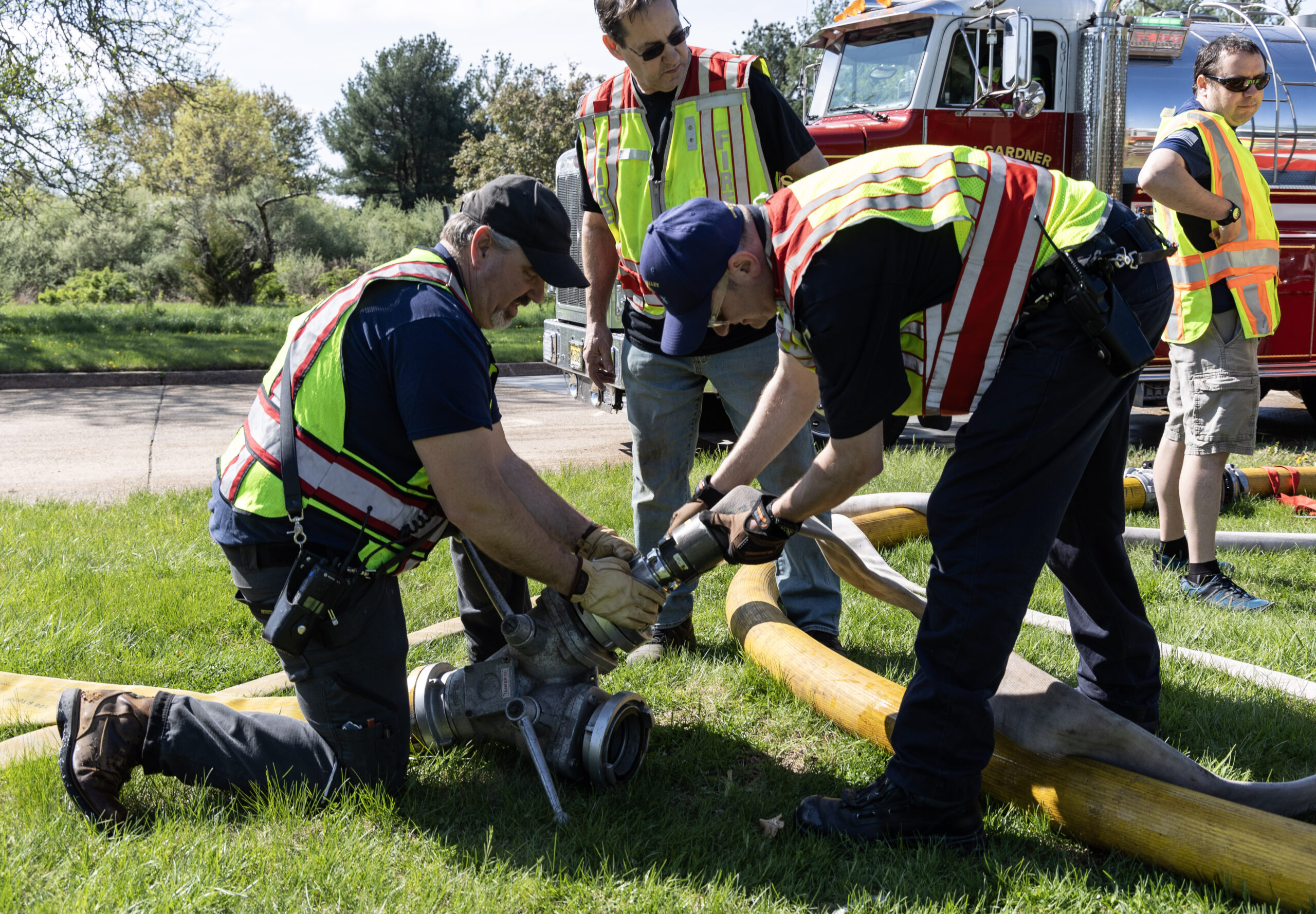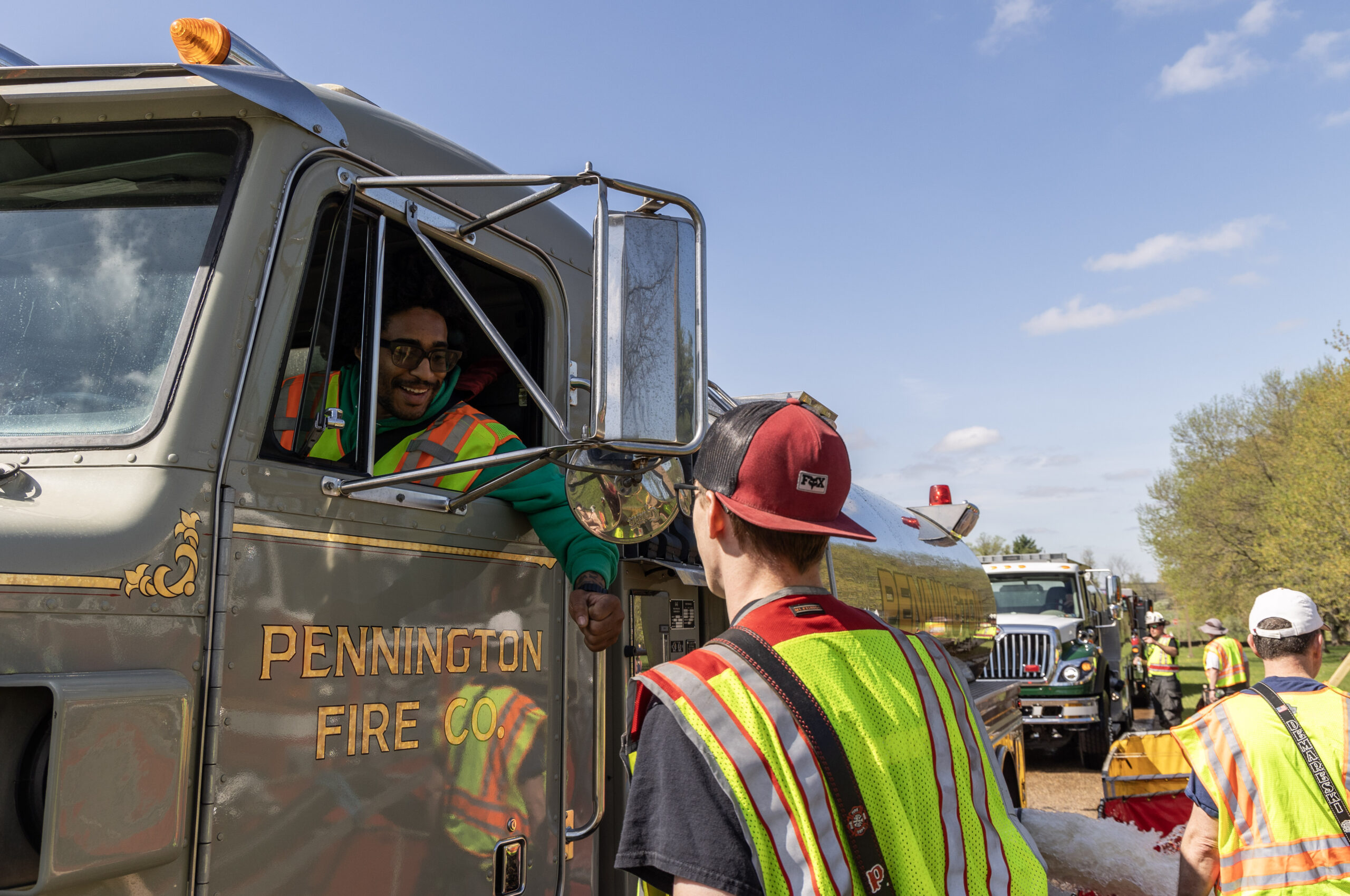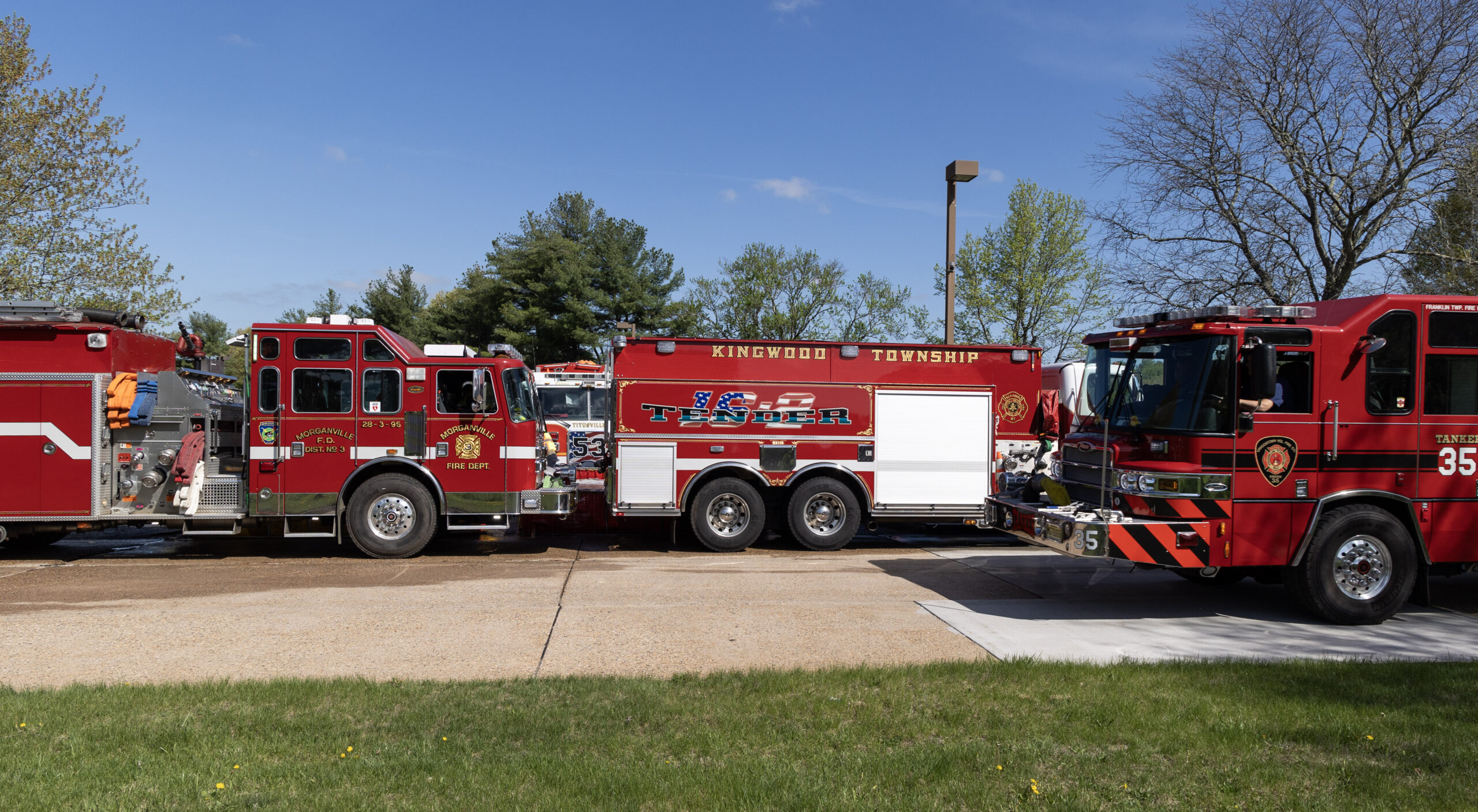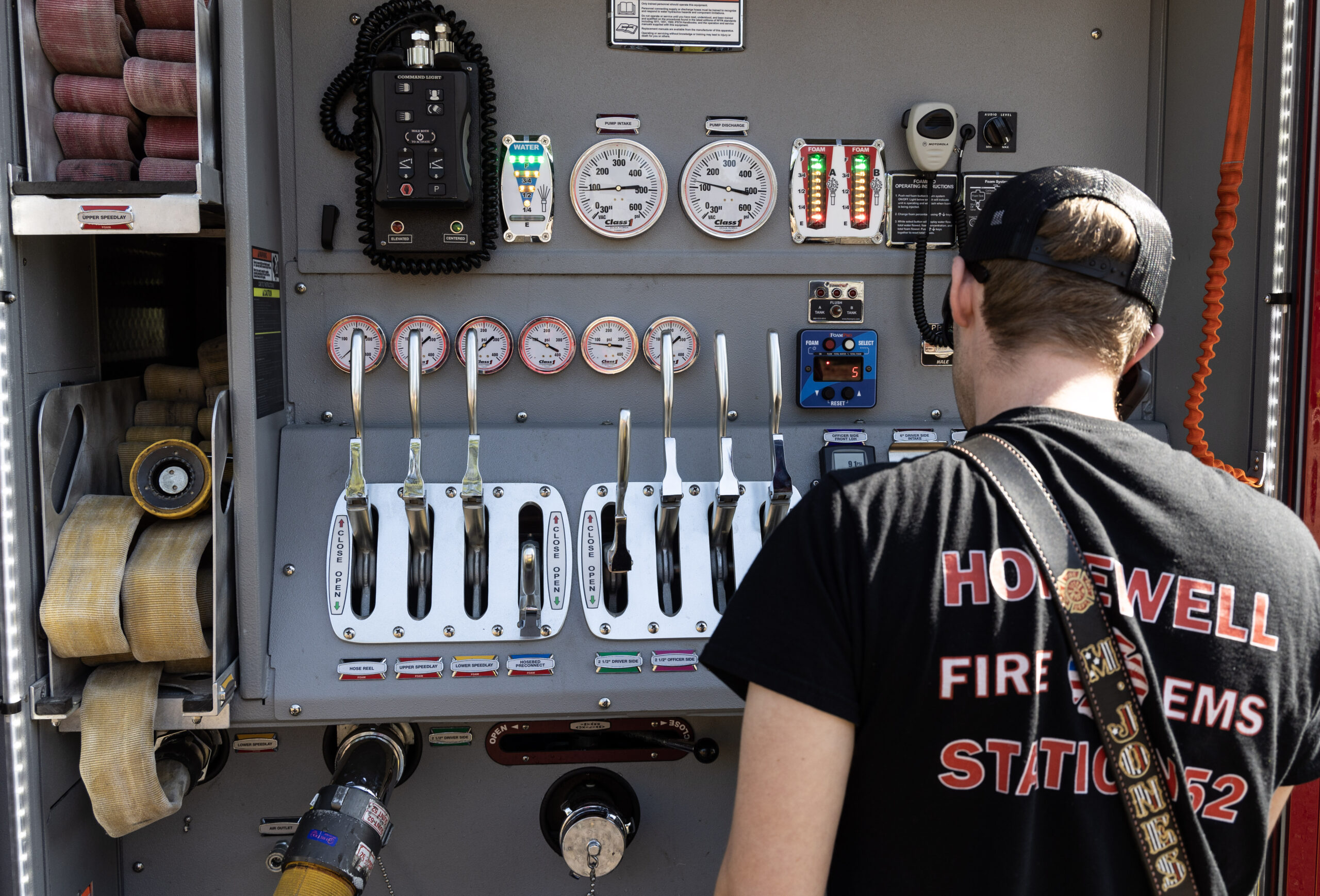

Firefighters from six counties converged in Hopewell Valley earlier this month for a large-scale water supply drill designed to simulate one of the most challenging scenarios local crews can face: a major fire in an area without fire hydrants.
By the end of the exercise, crews had moved approximately 160,000 gallons of water, sustaining a flow rate of about 2,800 gallons per minute — a level of coordination that fire officials say is critical to controlling large residential fires in the region.
The drill brought together departments from Mercer, Hunterdon, Somerset, Middlesex, Monmouth, and Bucks County, Pennsylvania, highlighting the regional nature of emergency response.
In total, 81 personnel participated, including 70 volunteer firefighters, three career staff members from Hopewell’s paid department, and additional instructors and county fire coordinators.
“What stands out most is the strength of our volunteers,” said Chief William Tunnicliffe of the Union Fire Company and Rescue Squad. “The vast majority of those participating are men and women who give their time—often hundreds of hours a year—to train and be ready when our community needs them.”
Why Hopewell?
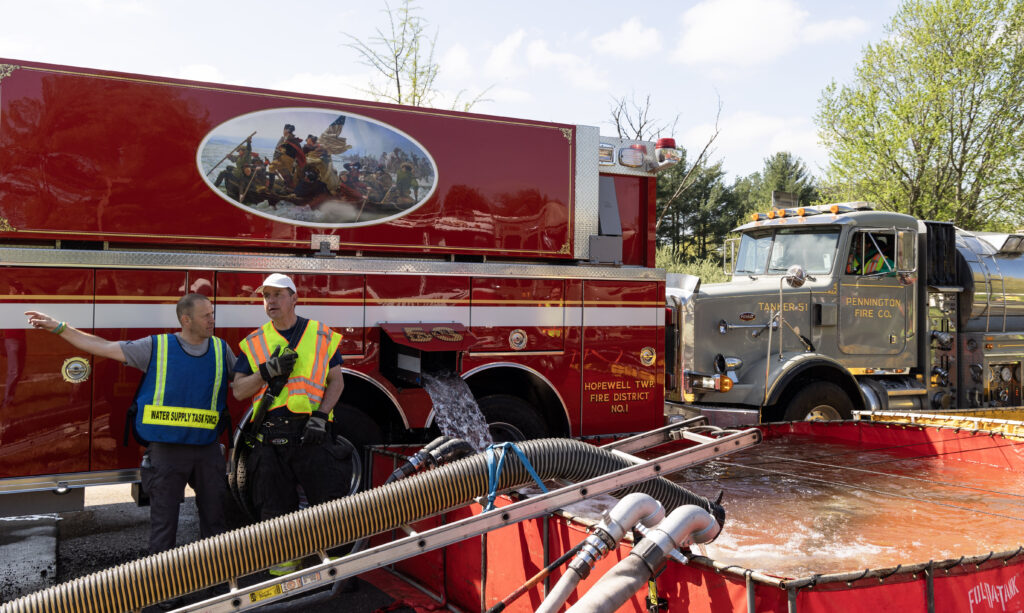
The drill was hosted locally because of a key reality in Hopewell Valley: many homes are located in areas without nearby hydrants.
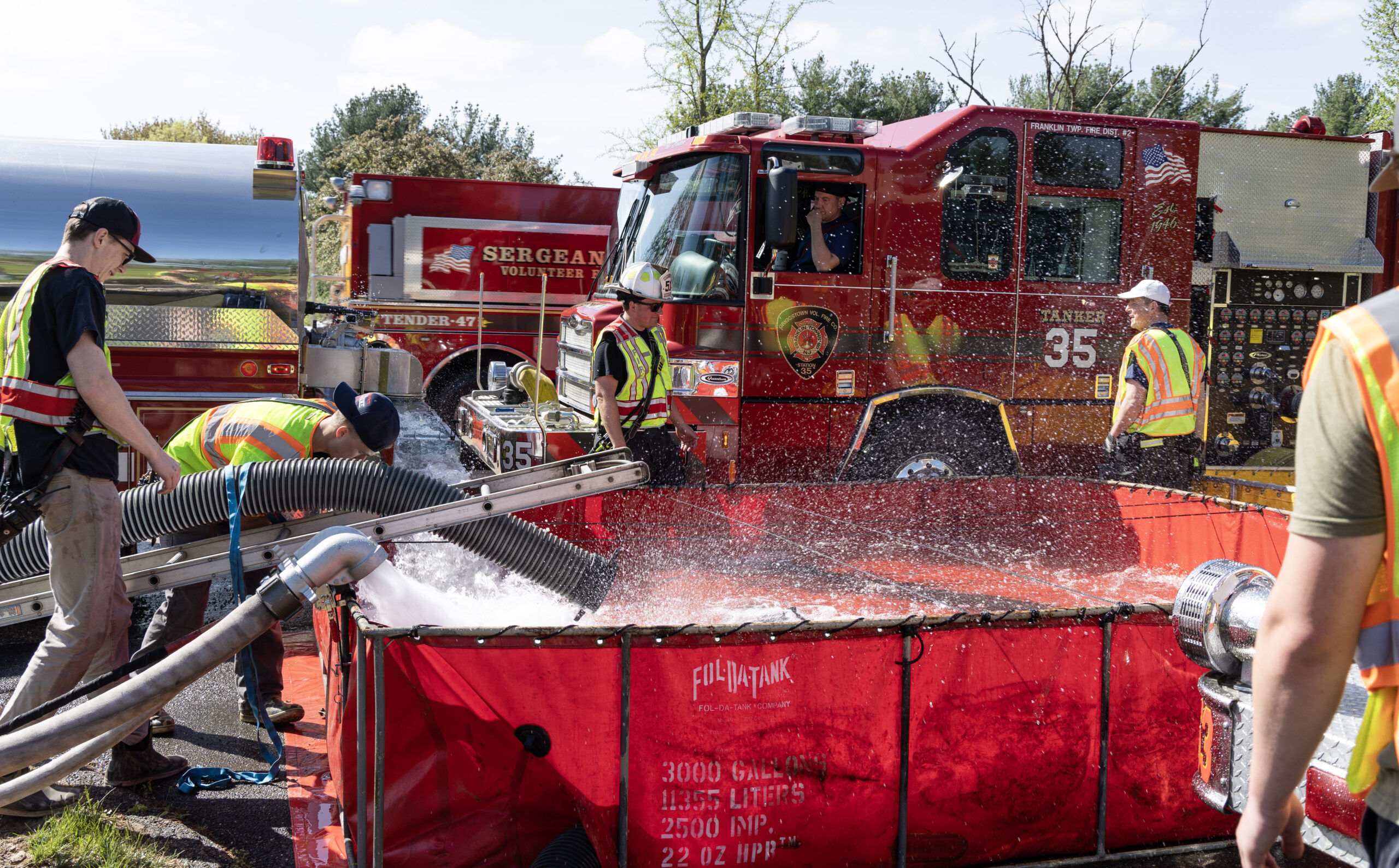
Instead of relying on a fixed water system, firefighters must create what’s known as an “outside water supply” — transporting water to the scene using tankers and coordinating a continuous flow.
“This was designed around what we call ‘needed fire flow,’” Tunnicliffe said, describing a scenario involving a large home of more than 8,000 square feet fully involved in fire.
“That level of flow is what would be needed to control a fire of that size and intensity.”
How it works
To simulate that scenario, crews set up a complex water shuttle operation involving:
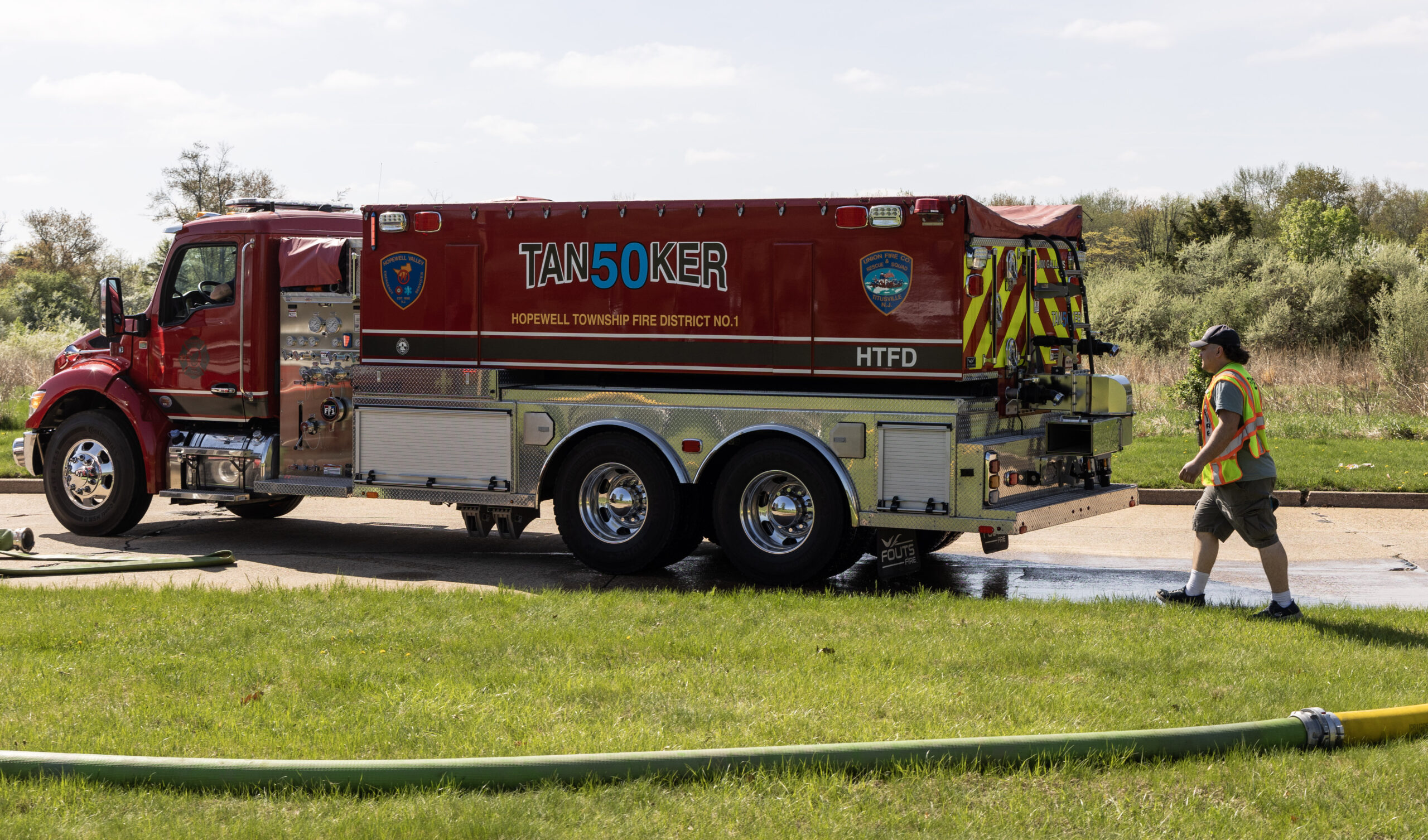
- 19 tanker trucks
- Three separate fill sites
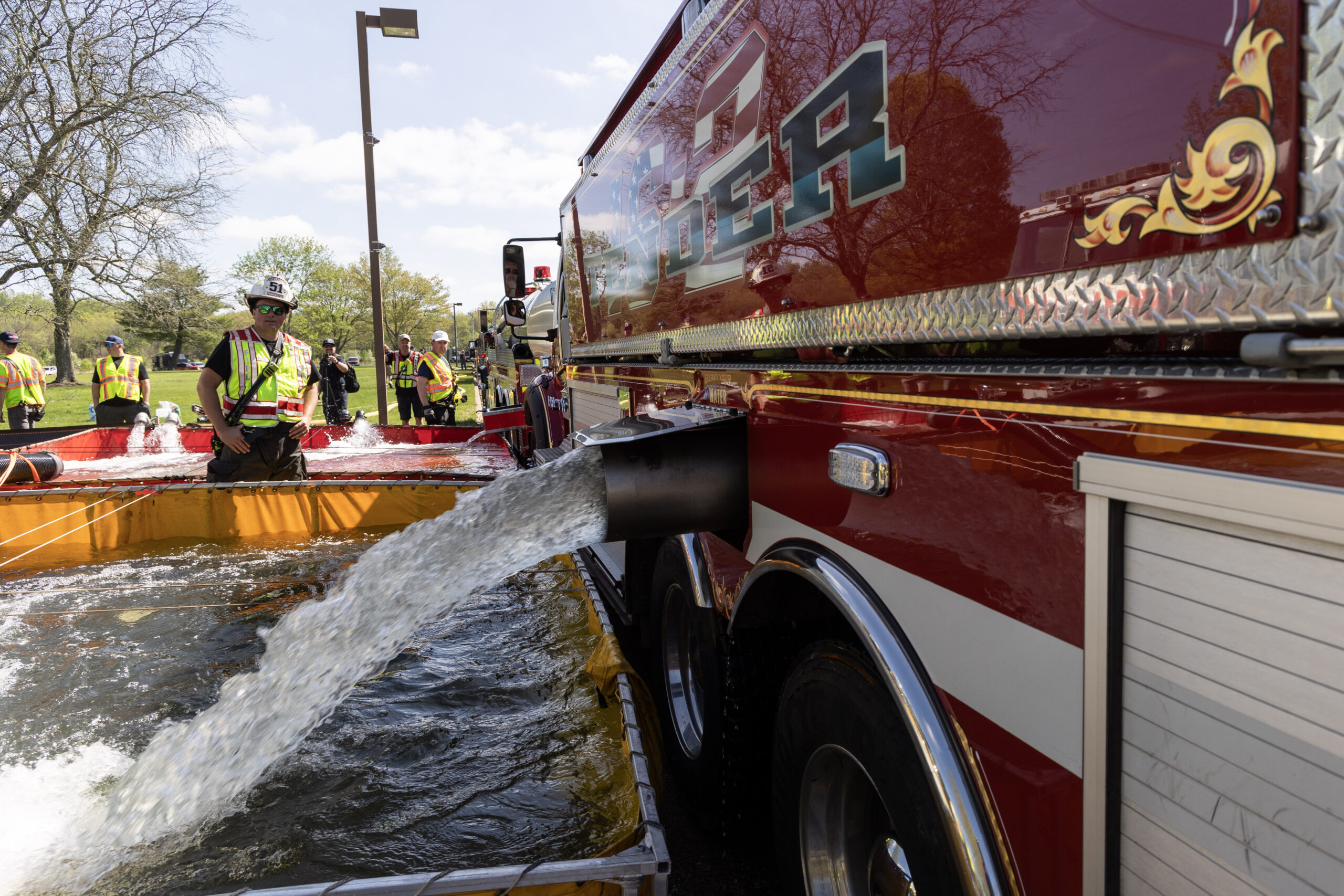
- Portable dump tanks at the fire scene
Tankers continuously cycled between fill sites and the simulated fire location, dumping water into portable tanks where it could be pumped onto the fire.
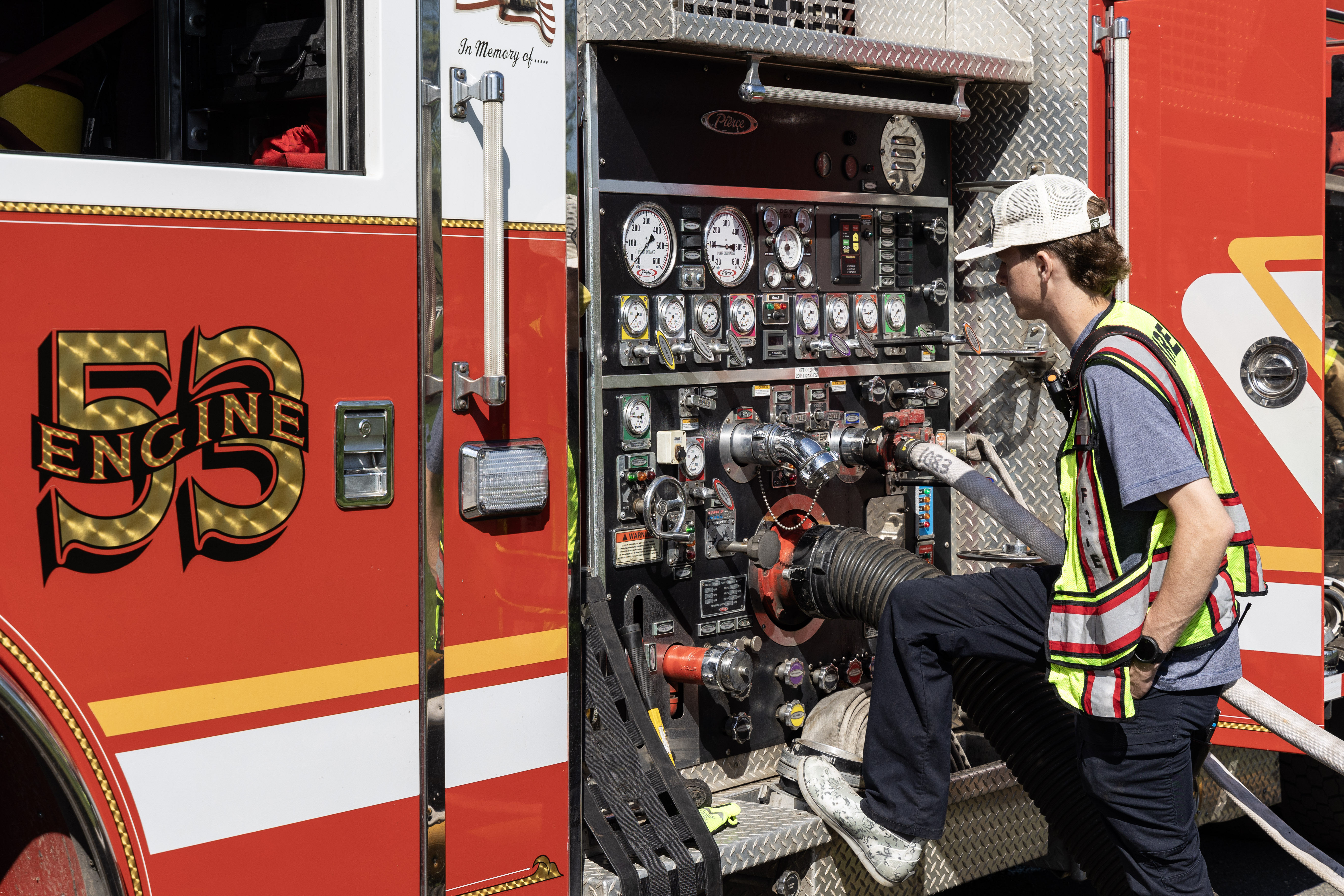
The goal: maintain a steady, uninterrupted supply of water — something that can determine whether a fire is contained or spreads.
“With this system in place, we can continue delivering that volume of water — and even expand operations — for as long as the incident requires,” Tunnicliffe said.
Regional coordination
While the numbers are striking, fire officials emphasized that the drill was just as much about coordination as capacity.
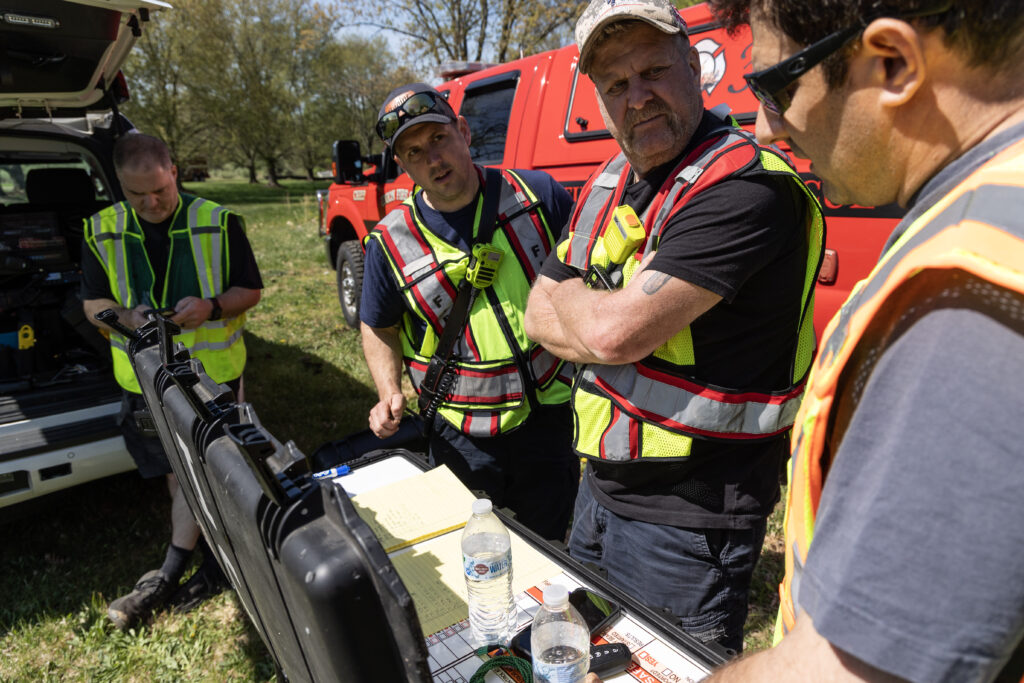
Planning began at the start of 2026, with communication intensifying in the weeks leading up to the event. Organizers had to coordinate apparatus assignments, water routes, staging areas, and safety oversight across multiple counties.
During the drill itself, county fire coordinators worked together in real time to manage resources — ensuring departments could participate while still maintaining coverage in their home communities.
Drills of this scale are not everyday events, but they are a critical part of maintaining a functioning mutual aid system.
“When large incidents occur, it takes a coordinated regional response,” Tunnicliffe said.
Why it matters
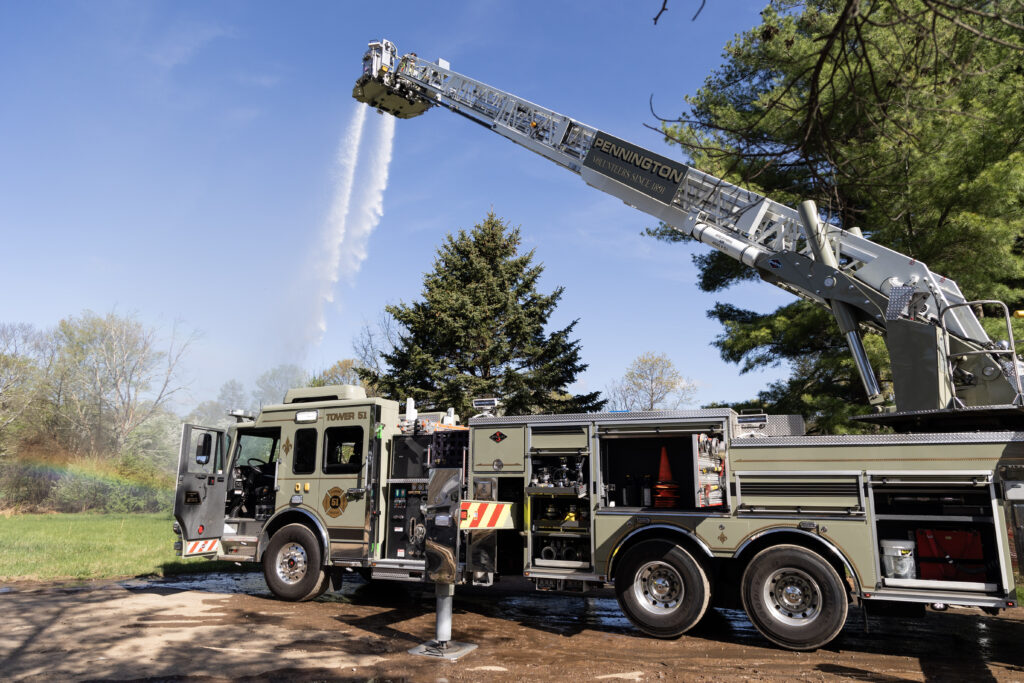
For residents, the takeaway is simple: in areas without hydrants, firefighters must bring the water with them — and bring enough of it, quickly.
That’s where training like this becomes essential.
“In a real fire, having a reliable and continuous water supply can mean the difference between containing a fire to one home or losing it entirely,” Tunnicliffe said.
The drill also underscores the role of volunteer firefighters, who made up the majority of participants.
“This is a system built on teamwork and reciprocity,” Tunnicliffe said. “No community stands alone.”