
Shad. Love it or leave it, shad is almost synonymous with the town of Lambertville, and probably with the names of many towns along the Delaware River. When the shad are running, you’ll see people fishing along the riverbanks, shad dishes featured on local restaurant menus, and of course you will see it everywhere during the annual two-day Shad Fest that spans the river.
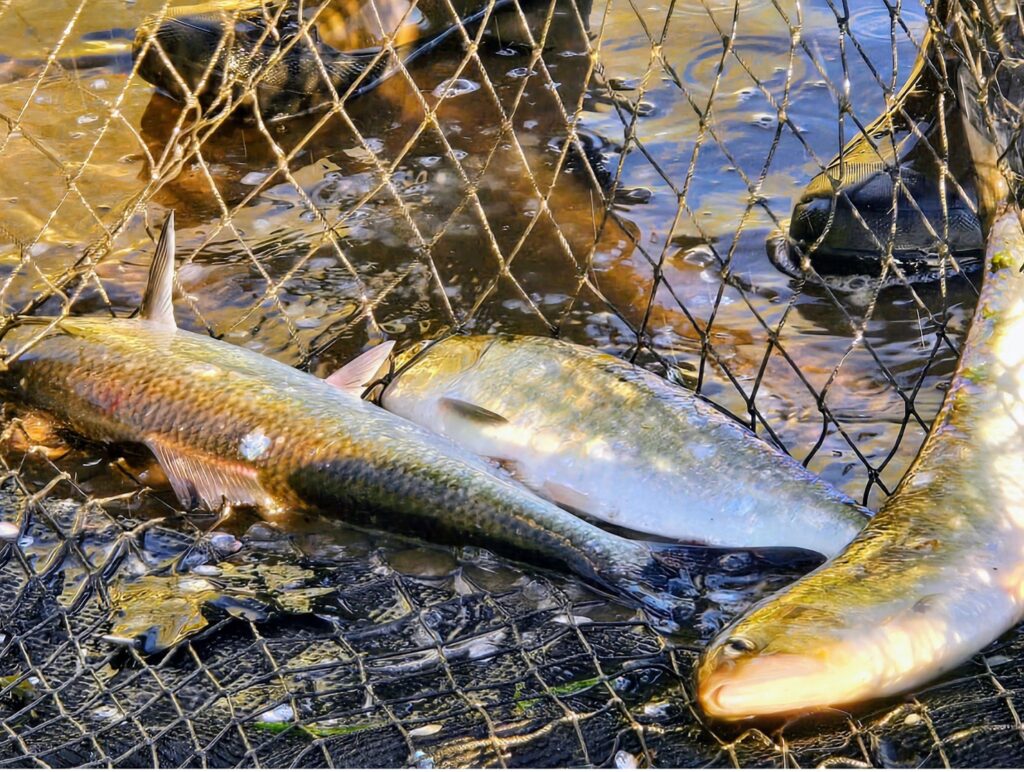
But exactly are shad? Well, sometimes called “the salmon of the East”, the American shad (Alosa sapidissima), are a member of the anadromous clupeid fish family found up and down the East Coast. They are born in fresh water, migrate to the ocean, and then return to fresh water in the Spring to spawn. This cycle may occur several times during their lives. And believe me… the shad have been here way longer than any of us have. Records literally date back to the 1740’s regarding the Delaware Shad! Now I don’t know if the shad are good parents, but they are certainly prolific parents. They leave their eggs in batches, ranging up to 30 thousand at a time, and in the 1890s, the Delaware River had the largest annual commercial shad harvest of any river on the Atlantic Coast.
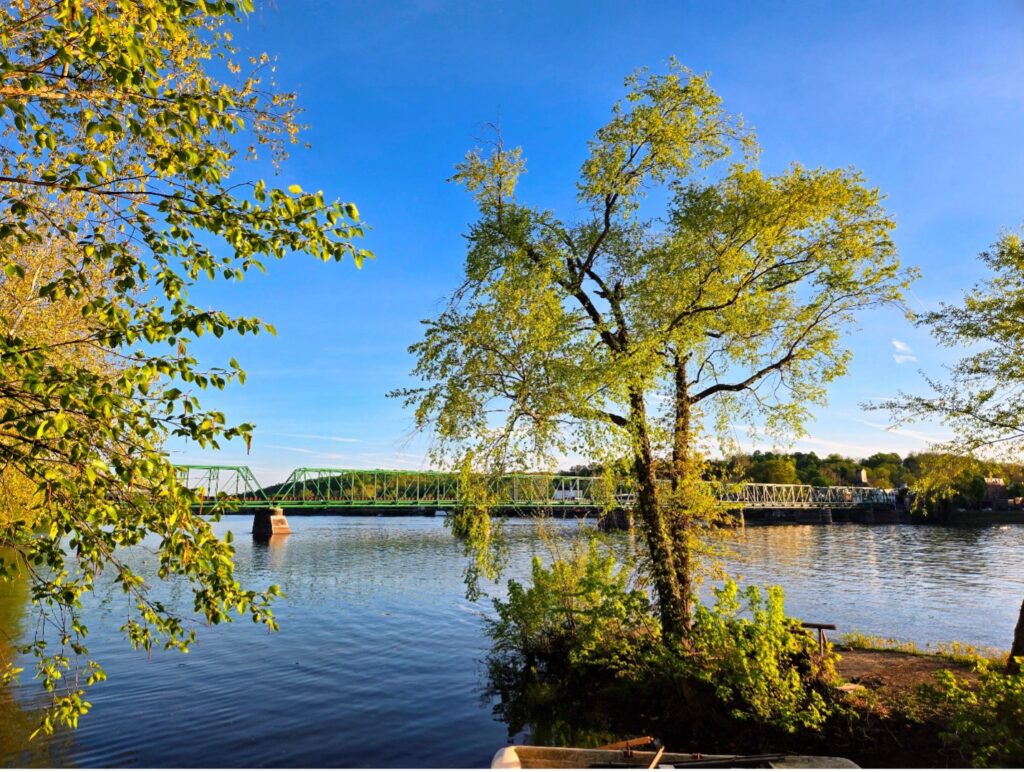
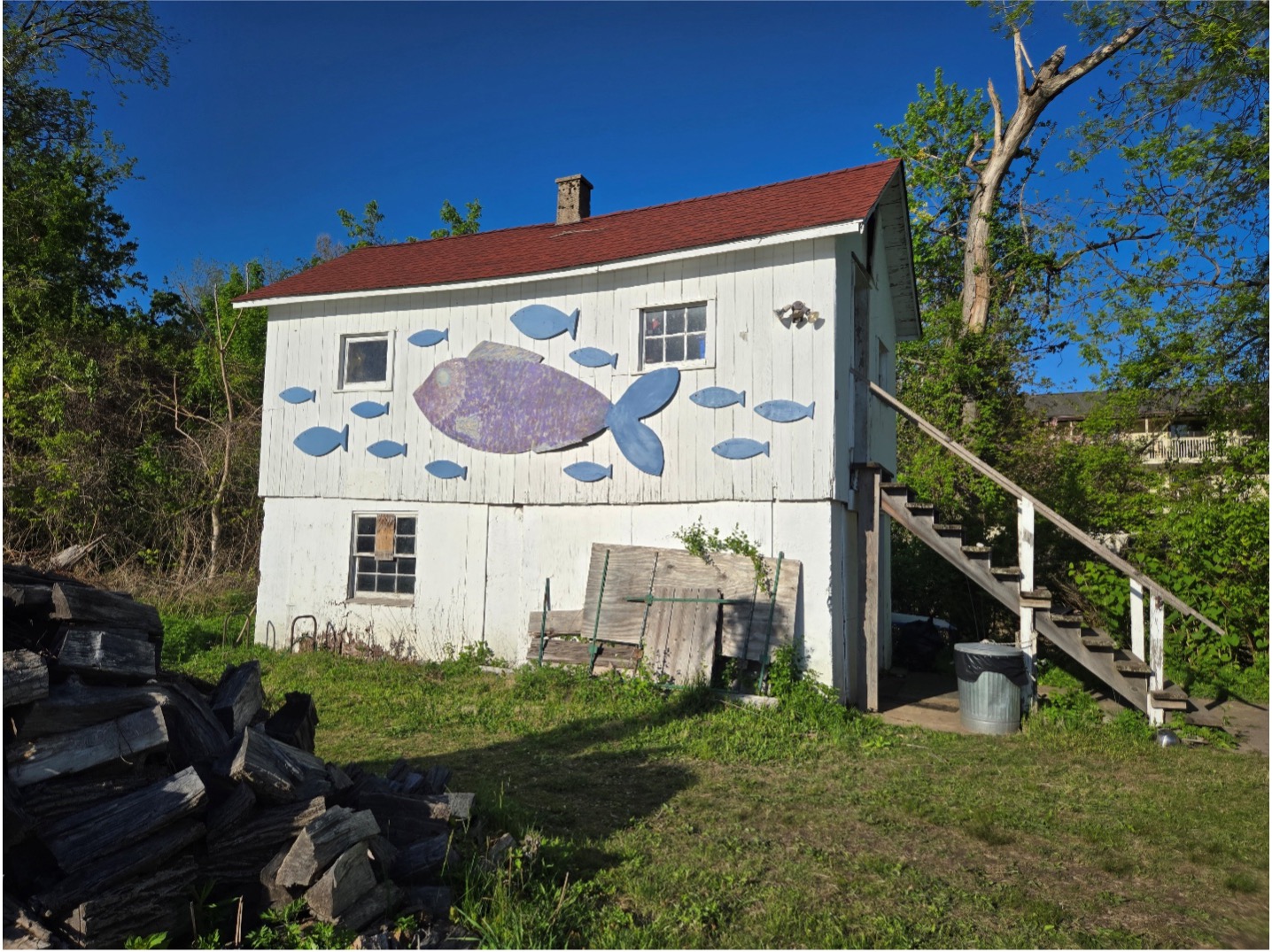
The Lewis Family Fishery, located on Lewis Island, was started by Captain Bill Lewis in 1888, and the fishery has operated for over 130 years, using centuries-old techniques. The Fishery also acts as a steward of the Delaware River, collecting data and doing research, highlighting the importance of the shad population.
Unfortunately, the age of industrialization introduced severely polluted water to the Delaware, and to the shad breeding grounds. In 2020, the American Shad and River Management Board found American Shad stocks depleted, and the adult female mortality rate in the Delaware River Basin unsustainable. The shad, who made a bit of a comeback a few years ago, are in trouble again, and the creel limit for shad on the Delaware was reduced from 3 fish to 2 fish, due to the unsustainable adult female mortality rates in the river basin. Efforts were also made to remove some of the dams in our rivers and streams to help encourage their upstream travel.
During the spring spawning run, typically from April to mid-May, the Lewis Fishery is out nearly daily fishing for shad. Fish that are caught are sold on demand to the local community or returned to the river. Importantly, the data the Fishery collects on the shad and other fish in the river are shared with state fisheries and biologists, providing a vital, century-long dataset on overall shad numbers, males vs. females and more.
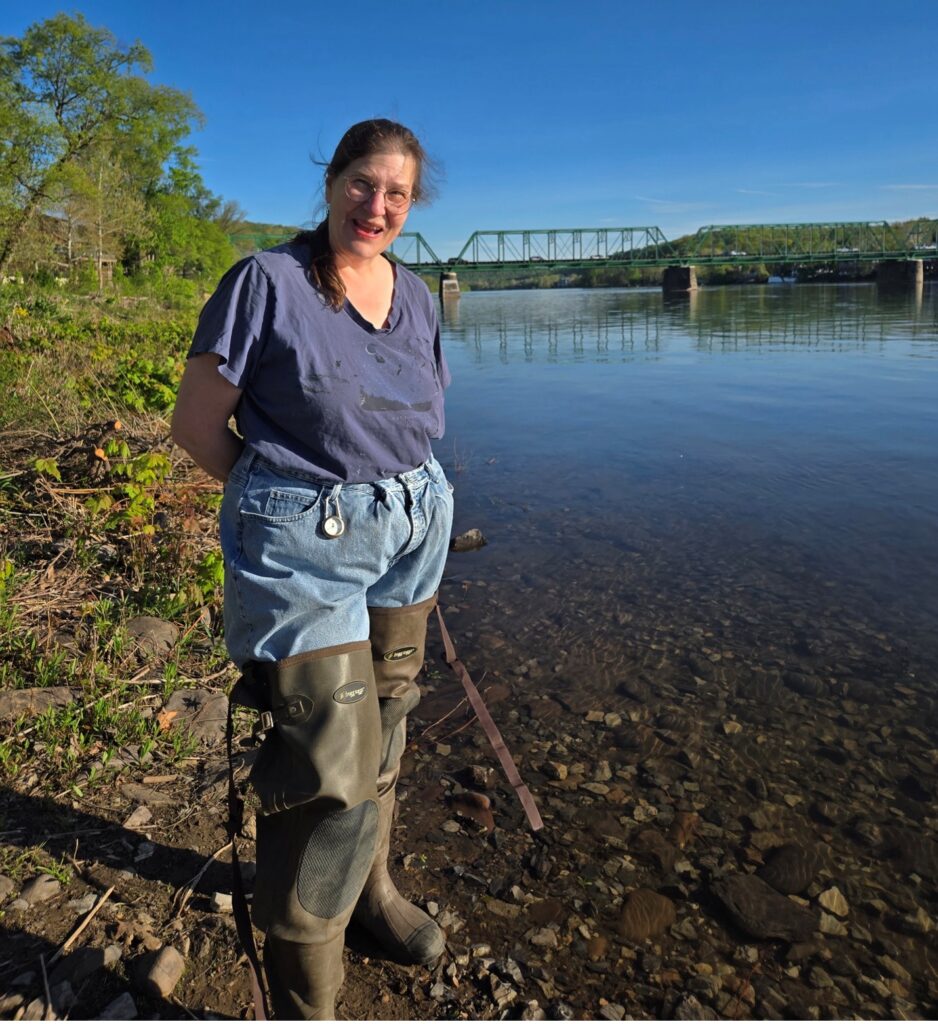
I went to learn more about this special fish on Lewis Island from a High School Classmate of mine, Dr. Charlie Groth, pictured above, who, with others on the island, work with and study the American Shad in the Delaware.
The Lewis Fishery in Lambertville, NJ, is the last licensed commercial haul seine fishery on the Delaware River, operated by the Lewis family since 1888. Located right on Lewis Island, the fishery uses traditional, over-a-century-old techniques to catch shad during the spring run (March-May). Led by fourth-generation fisherman Steve Meserve, it serves as a historic, environmental, and cultural staple.
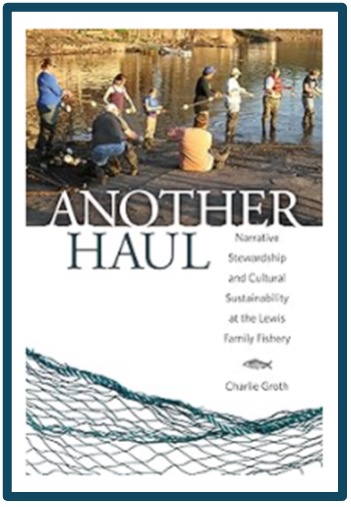
Now, Charlie is not just a friend from high school; she is pretty well-known to others as well. She has her PhD from the University of Pennsylvania and has been a professor of Literary Studies at Middlebury College, MA, an English Professor at the College of New Jersey, and a Professor at the University of Pennsylvania. Now she has a new book, recently published, called Another Haul: Narrative Stewardship and Cultural Sustainability at the Lewis Family Fishery. The book explores the Lewis family’s historic shad fishery on the river, using their story to examine how tradition, storytelling, and daily work sustain both community and the environment.
“The shad connect people to a precise place, giving them a sense of place and identity that grounds them in community,” Groth said. “This fishing method is not solitary; it requires a group that collaborates and commits to this shared activity. Then there’s the environmental sustainability aspect — generations of the Lewis family have helped monitor the river’s health and deepen scientists’ understanding of this fish. That’s important, but so are the cultural values of commitment and community.”
I have to say, I had no idea just how large the seine nets are that are put into the river, but if you look at this photo, you can see that they reach a good way toward the Lambertville Bridge.
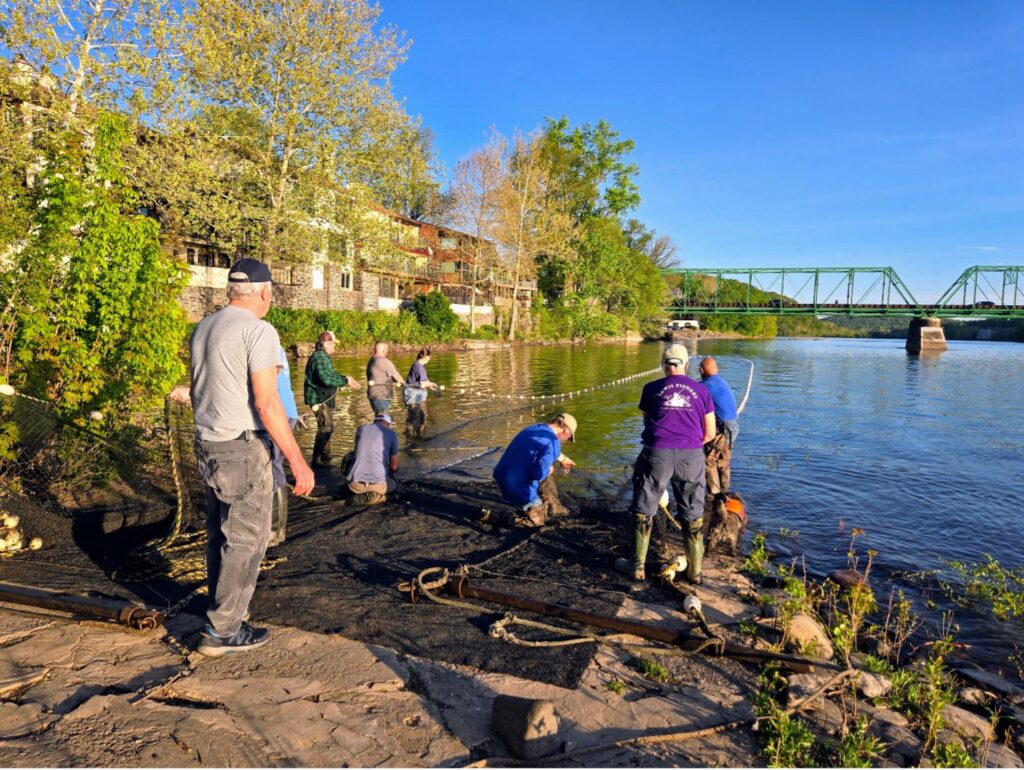
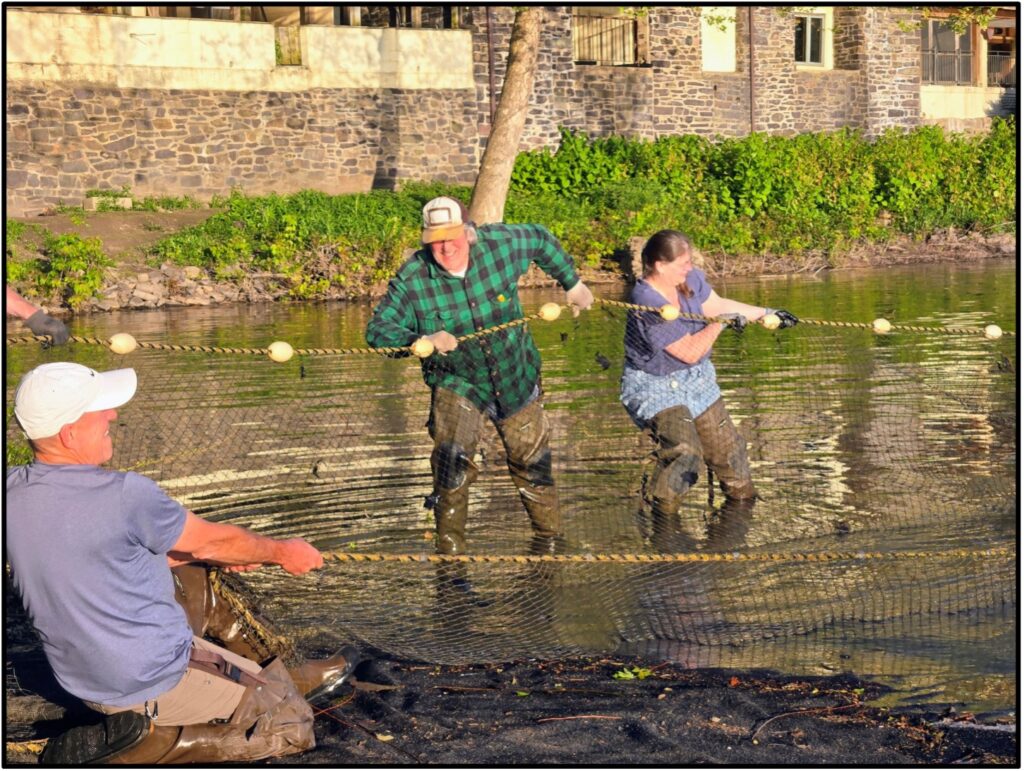
Seine nets, sometimes called “dragnets”, are long, vertical nets that have weights on both the top and the bottom. Seine nets are one of the oldest fishing methods, with origins dating back over 10,000 years. Originally crafted from natural fibers like flax and willow, these nets act as vertical barriers to surround the fish. Handlers encircle the fish and haul them to shore. And while highly effective, they can be indiscriminate in nature, resulting in the catch of non-target species. The crew at Lewis Island are very attuned to this risk. On the day I visited, the crew harvested around a dozen fish total, with any non-shad being put back in the river.
Of course, it is “all hands-on deck” for hauling those nets (and the shad) back in; a helpful assist was given by the crew of the rowboat.
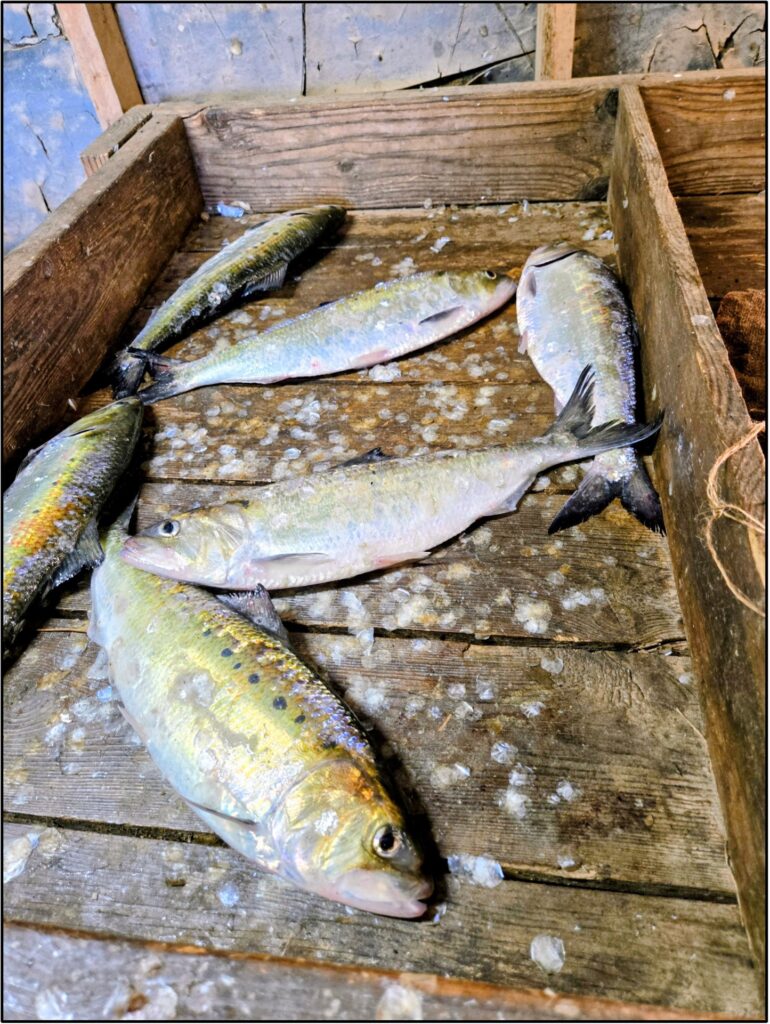
Now, as soon as the workers started hauling in the shad, people started walking to the dock. Within literally 2 to 3 minutes, the shad was gone. Many people continued walking up to see if they had made it in time; most had not.
I am now fascinated by the story of the shad, and I think you will be too.
Many, conservationists, however, are worried about the future of the shad, including Professor Daniel Stich, who works in the Biology Department of SUNY Oneonta. At a recent presentation at the Upper Delaware River Confererence, Dr. Stich was unfortunately less than enthusiastic for their future, referring to a 2020 assessment by the Atlantic States Marine Fisheries Commission, which concluded that the shad population was not sustainable… essentially, new shad being spawned won’t make up for their rate of mortality.
I also spoke to Maya Van Rossum, the Delaware Riverkeeper. She said, “I’m very sad for the shad and disheartened by the ongoing struggles they face as a species and population. Shad populations along the east coast and in the Delaware River continue at very low levels, facing challenges from pollution, dams that prevent access to critical spawning habitats on tributary streams, invasive species, and more. If we want to save the shad that are such a beautiful, important, and iconic part of our River community we must do more, and that means our government officials need to step it up in terms of putting in place the critical protections, and addressing the ongoing harms, the shad face.”
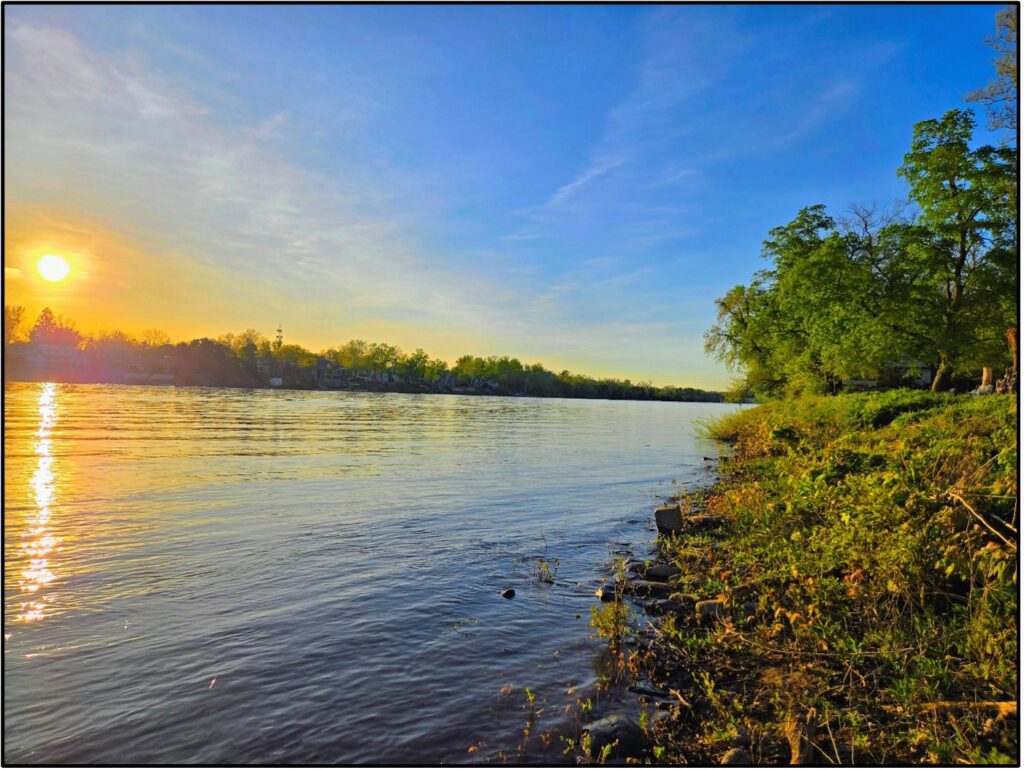
As I left Lewis Island, tiny waves were lapping up against the shore, and all “seemed” right with the world. Except, maybe, for the shad.
If you would like to visit Lewis Island, here’s the deal. There is a stop sign midway down Lambert Lane; if you look to the left at that stop sign, you will see the gate and bridge to Lewis Island. If the gate to the bridge is closed, there is no visiting allowed. If the gate is open, you can cross the bridge on foot to the island.
Note: there is no parking near the bridge to Lewis Island; the best parking is down by the brewery on Lambert Lane (There is free parking if you go far enough!)
Charlie’s book is available on Amazon, but you can also buy it at Howling Basset Books, 45 North Main Street, right in Lambertville. (The entrance is on Coryell Street.)
Charlie has graciously provided MercerMe readers us an email if you would like to learn more about the Lewis Family fishery or have any questions. She can be reached at: [email protected]