
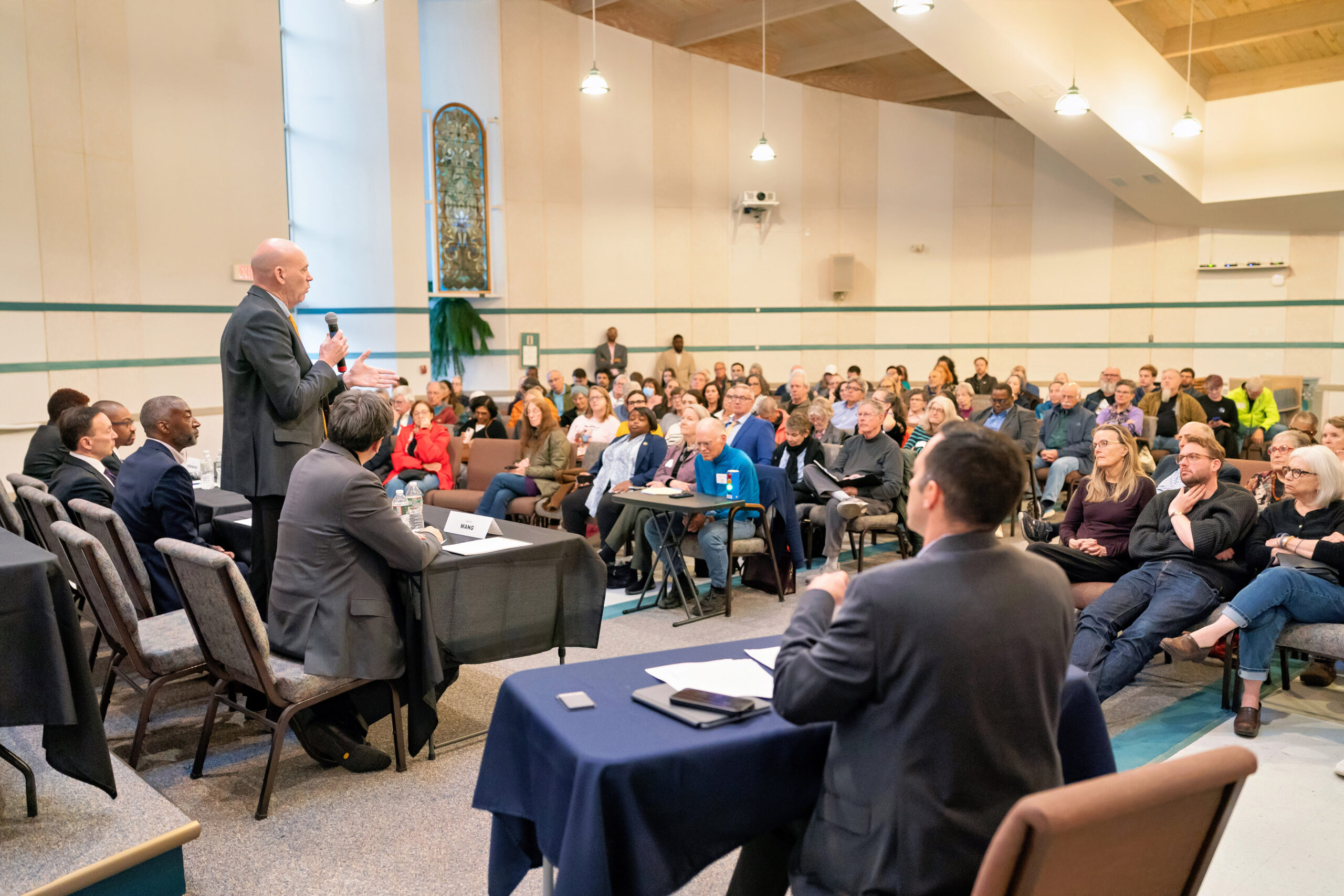
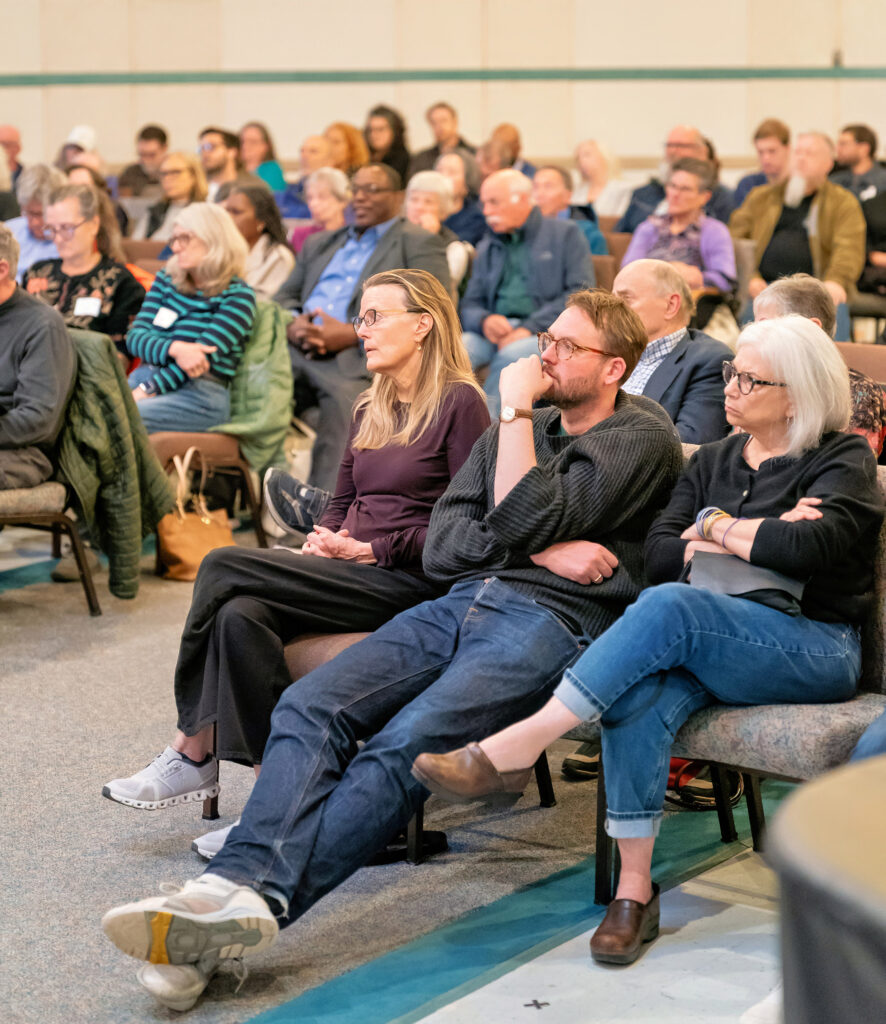
Democratic candidates competing for New Jersey’s 12th Congressional seat offered a range of approaches to climate policy, healthcare, and the role of Congress during a wide-ranging forum in Hopewell Township — but shared a common message: the country is at a turning point.
The April 22 forum, hosted by the Hopewell Valley Democratic Club and moderated by MercerMe, brought together eleven candidates vying to succeed longtime Congresswoman Bonnie Watson Coleman, who is retiring after more than a decade in office. While the tone of the discussion reflected broad agreement among candidates on key priorities, the details of how to address those challenges revealed meaningful differences.
Across four questions — focused on the environment, checks and balances, Social Security, and healthcare — candidates outlined competing visions for how they would approach federal policy and represent the district.
Environment: urgency, investment and local impact
Held on Earth Day, the forum opened with a question about environmental protection — an issue with particular resonance in Hopewell Valley, where preserved land, development pressures, and water quality concerns intersect.
Candidates largely agreed on the need for stronger federal action on climate change, but emphasized different strategies.
Some, including Adam Hamawy and Matt Adams, pointed to sweeping policy approaches such as the Green New Deal, calling for a transition away from fossil fuels and investment in renewable energy.
Others highlighted experience navigating environmental policy at different levels of government. Jay Vaingankar referenced his work in the Department of Energy, while Shanel Robinson pointed to land preservation efforts at the county level.
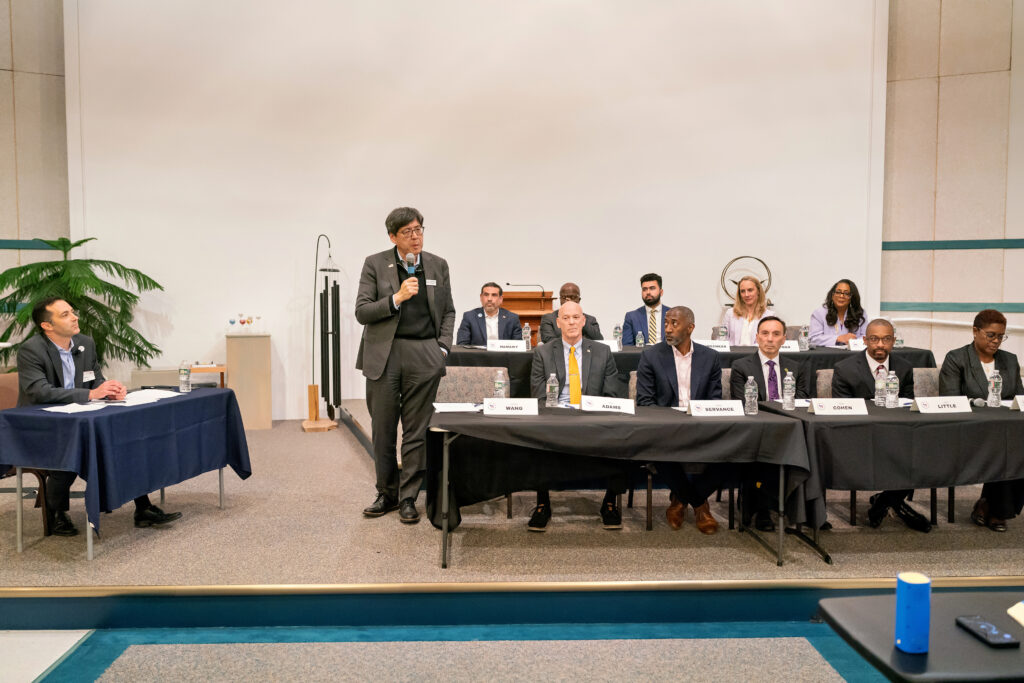
Sam Wang focused on the role of science and research, warning that cuts to federal research funding could undermine long-term environmental progress.
“The reason why we have all of these things is because of scientific research over the decades,” Wang said. “Knowledge itself is under attack.”
Checks and balances: agreement on oversight, different approaches
Candidates showed the strongest alignment on the role of Congress in checking executive power, with broad agreement that stronger oversight is needed.
Several framed the issue in terms of protecting democratic institutions and responding to what they described as overreach by the executive branch.
Jay Vaingankar pointed to the importance of how Congress prioritizes its actions.
“If the government wanted to bomb a country tonight it could easily do that,” he said. “If it wanted to create a vaccine, it could do that too. It’s about what we choose to prioritize.”
Others emphasized legislative tools, including hearings, oversight, and changes to federal law, while some stressed that regaining Democratic control of Congress would be a prerequisite for many of those efforts.
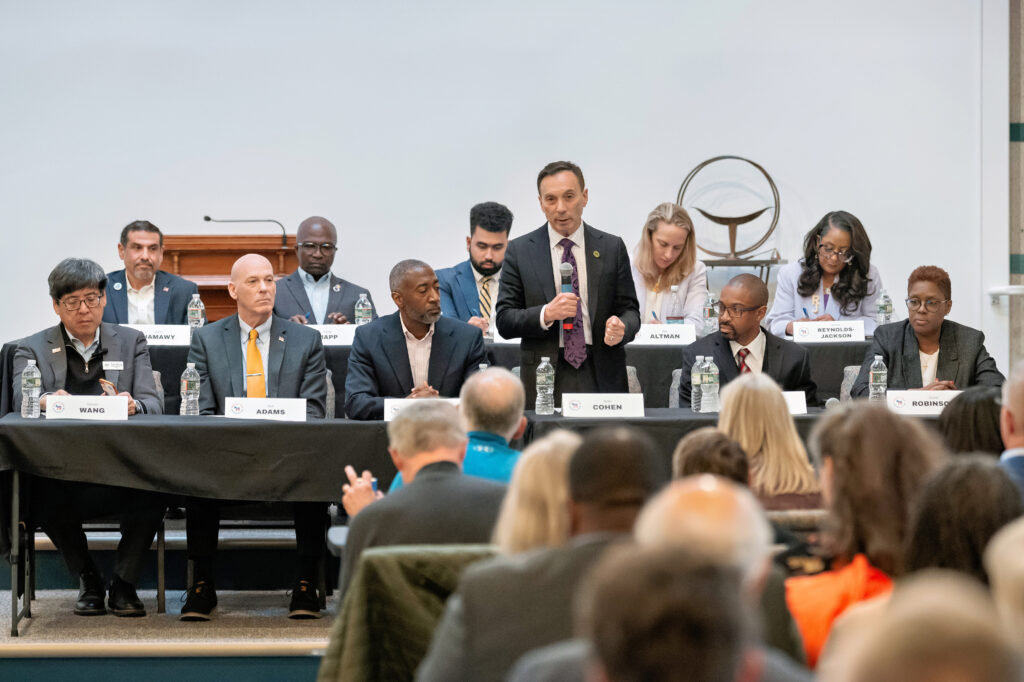
East Brunswick Mayor Brad Cohen underscored that point.
“Everything that everyone has mentioned here tonight is exactly what we need,” Cohen said. “That does not happen unless Democrats take back control of Congress.”
Social Security: consensus on protection, differences on funding
On Social Security, candidates were largely unified in their position that benefits must be protected, but differed in how to address long-term funding challenges.
Several candidates, including Adrian Mapp and Vaingankar, pointed to tax policy as a key lever, calling for higher taxes on corporations and wealthy individuals.
“We have to make sure that corporations and billionaires pay their fair share,” Mapp said.
Vaingankar added that closing tax loopholes would be essential to ensuring those policies are effective.
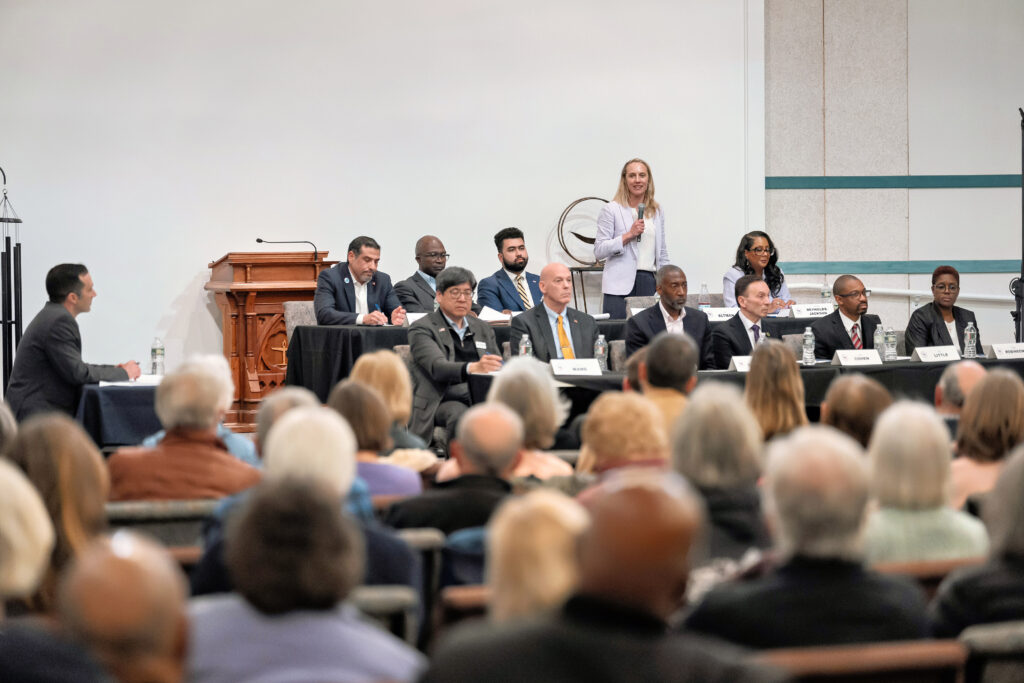
Sue Altman framed the issue through her experience working for Sen. Andy Kim, describing it as one of the most common concerns she heard from constituents.
“People on a fixed income are concerned,” Altman said, noting that calls about Social Security came from across the political spectrum.
Healthcare: cost, access and system reform
Healthcare — the final question of the night — highlighted both shared concerns and differing approaches to reform.
Candidates pointed to rising costs, insurance challenges, and access to care as central issues for voters across the district.
Some candidates, including Cohen, voiced support for broader systemic changes, including universal healthcare models.
“As a physician for over thirty years, I was never taught how to spend half a day arguing with insurance companies,” Cohen said. “That’s the reality of the system we’re in.”
Others focused on funding priorities and structural reforms, including shifting federal spending and improving access to care through policy changes.
Military veteran Matt Adams emphasized the need to carefully balance reductions in defense spending with investments in domestic priorities, including healthcare.
“We have the wealth,” Adams said. “It’s about where we choose to spend it.”
Democratic Candidates in NJ-12 Primary
Matt Adams
Former Middlesex Borough councilman; U.S. Army veteran
Sue Altman
2024 congressional candidate (NJ-7); former state director for Sen. Andy Kim
Brad Cohen
Mayor of East Brunswick; physician
Adam Hamawy
Surgeon; U.S. Army veteran
Kyle Little
Small business owner; adjunct professor
Adrian Mapp
Mayor of Plainfield; accountant
Verlina Reynolds-Jackson
New Jersey Assemblywoman (15th District)
Shanel Robinson
Somerset County Commissioner Director; U.S. Air Force veteran
Squire Servance
Attorney; entrepreneur
Jay Vaingankar
Former U.S. Department of Energy staffer (Biden administration)
Sam Wang
Princeton University professor; neuroscientist
Not in Attendance at Hopewell event
Sunjit Singh
Technology consultant; former West Windsor mayoral candidate (scheduling conflict)
Elijah Dixon
Trenton-based activist (withdrew prior to forum; endorsed Hamawy)
Sam Wang again pointed to the role of research and information access, arguing that better data and transparency could help families make more informed healthcare decisions.
A shared message, different paths
While candidates approached each issue with different policy solutions and personal experiences, a consistent theme emerged throughout the evening: a belief that the current political moment demands action.
That shared sense of urgency — often described as “meeting the moment” — framed the discussion, even as candidates offered different visions for how to do so.
With mail-in ballots already being delivered and early voting set to begin in late May, those differences are likely to become more pronounced as the campaign continues.
The Democratic primary will be held June 2.