


The New Jersey Department of Environmental Protection (NJDEP) this week announced proposed changes and a revised timeline for adopting its long-awaited REAL (Resilient Environments and Landscapes) coastal flood protection rules—even as the state reels from deadly flash flooding that claimed at least two lives.
The changes, set to be published in the July 21 edition of the New Jersey Register, include a controversial reduction in the required building elevation in coastal flood zones—from 5 feet to 4 feet above FEMA’s base flood level—and a new provision allowing developers until mid-2026 to submit projects under the current, less stringent regulations.
Environmental advocates say the delays are indefensible, especially as extreme weather becomes more deadly and frequent.
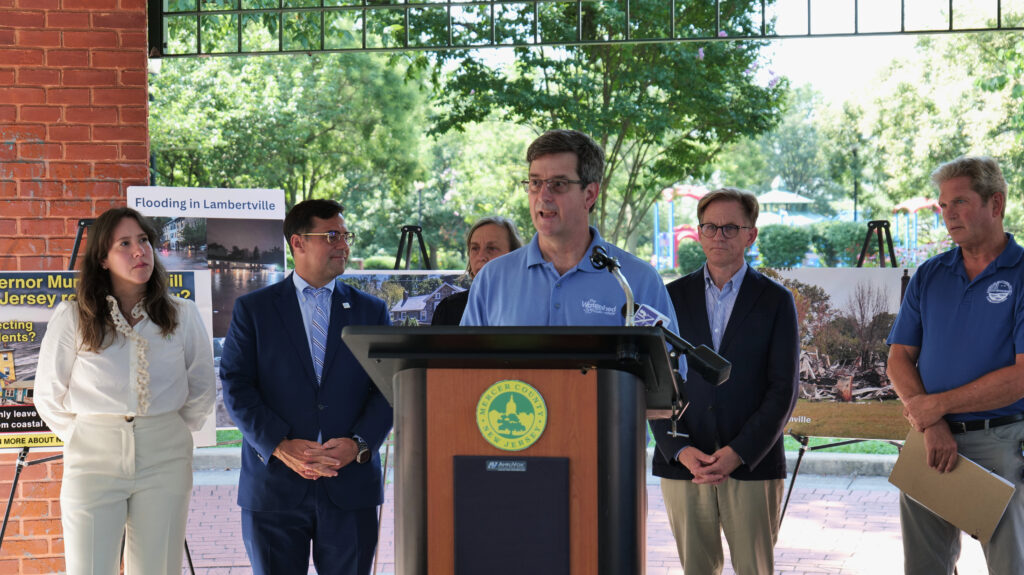
“I think the delay in adopting these rules is a capitulation to the development community,” said Michael Pisauro, policy director at The Watershed Institute. “Delaying policies that will help reduce flooding over time is unconscionable—especially in light of the flooding we just experienced and are anticipating again.”
Flooding Turns Deadly in NJ
The DEP’s announcement came just hours before a series of intense storms brought widespread flash flooding across parts of New Jersey. In Union County, two women were killed when their vehicle was swept away by rising water. Elsewhere, dozens of residents had to be rescued from submerged homes and vehicles, and a house exploded in Middlesex County after floodwaters reportedly compromised utilities. The rapid onset and severity of the flooding left communities scrambling to respond and underscored the increasing risks posed by extreme weather events.
A Decade in the Making, Delayed Again
The REAL rules were first proposed in August 2023 and build on nearly a decade of stakeholder discussions about improving stormwater, wetland, and coastal development standards. One of the rule’s cornerstone ideas—requiring on-site retention of stormwater during development—has been under discussion since 2014.
“These are not new ideas,” Pisauro said. “We’ve been asking for on-site stormwater retention for over a decade. And now we’re going to delay implementation until at least July 2026. That’s another year for developers to get projects in under the old rules.”
Although the DEP could technically adopt unchanged parts of the REAL rules by August 4—one year from the original proposal—it has opted instead to delay full adoption until late 2025 or early 2026, while seeking comment on the latest revisions. A 60-day public comment period will open July 21, with a virtual hearing expected in September. A pre-recorded informational webinar is scheduled to go live on July 18.
Business Community Also Pushes Back
The changes also drew sharp criticism from the business community. Ray Cantor, Chief Deputy Government Affairs Officer at the New Jersey Business & Industry Association (NJBIA), said the revised rules still pose significant economic risks.
“The DEP is simply doing a great economic disservice to the state that will greatly add to our lack of affordability in New Jersey,” Cantor said in a statement. He argued that the expanded flood zones will drive up insurance costs, hurt development in urban and coastal areas, and impose unnecessary permitting burdens.
While NJDEP revised the sea-level rise projection from 5 feet to 4 feet by 2100, Cantor said even that lower figure is “not based on credible science” and will remain cost-prohibitive for many property owners.
“Until then,” Cantor said, “don’t say we didn’t warn you.”
Uncertain Oversight, Uncertain Future
The DEP’s updated plan includes a provision requiring sea-level rise data to be revisited every five years. But Pisauro remains skeptical about how those reviews will translate into policy action, especially in a volatile political climate.
“Let’s say the next report shows climate change is worse than expected—what’s the political will to adjust the elevation standard back up?” he asked.
While environmental advocates say the changes don’t go far enough to address the worsening climate crisis, business leaders argue the rules already go too far and threaten affordability and growth. That rare convergence of criticism from opposite ends of the policy spectrum could further complicate the rule’s future.
More details on the proposed changes, webinar, and public comment process are available at https://dep.nj.gov/njreal.