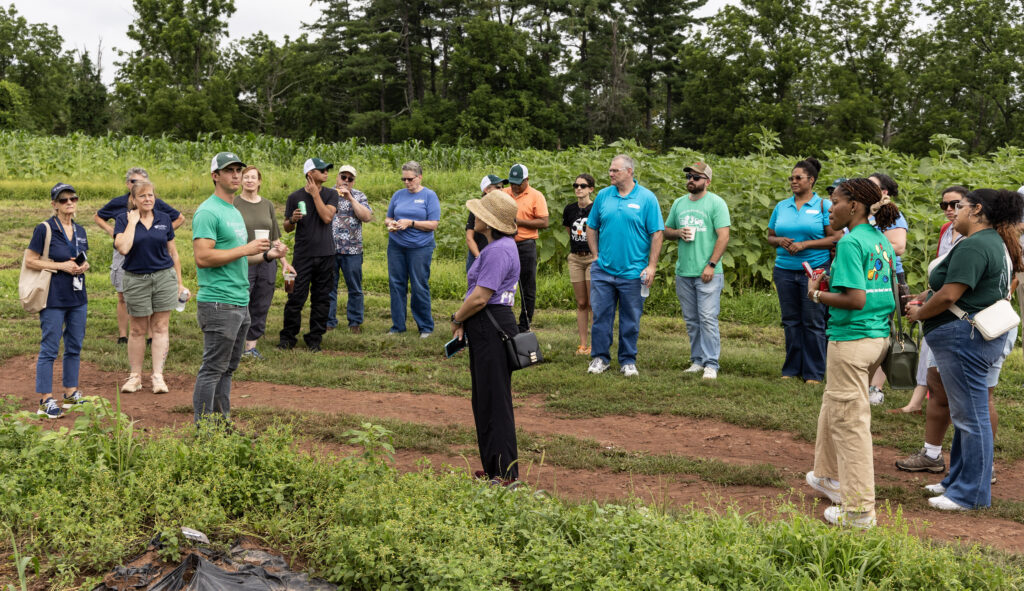

Food security advocates from across New Jersey gathered at Fairgrown Farm in Hopewell Township on Friday, July 11, for a collaborative summit aimed at strengthening relationships across the state’s local food distribution network in the face of growing demand and shrinking federal support.
Held at the farm’s location on The Watershed Institute’s preserved farmland, the event brought together representatives from the New Jersey Department of Agriculture, Mercer Street Friends, the Community FoodBank of New Jersey, MEND Hunger Relief Network, The Chubby’s Project, CUMAC, NOFA-NJ, the New Jersey Farm Bureau, and the Office of the Food Security Advocate — along with other farmers, pantry directors, and grant administrators.
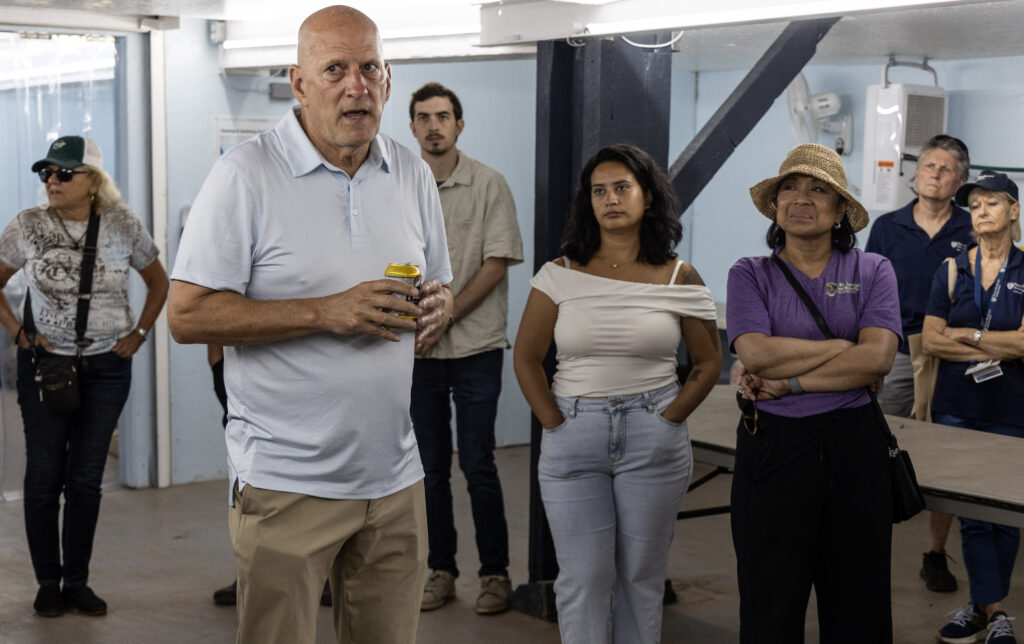
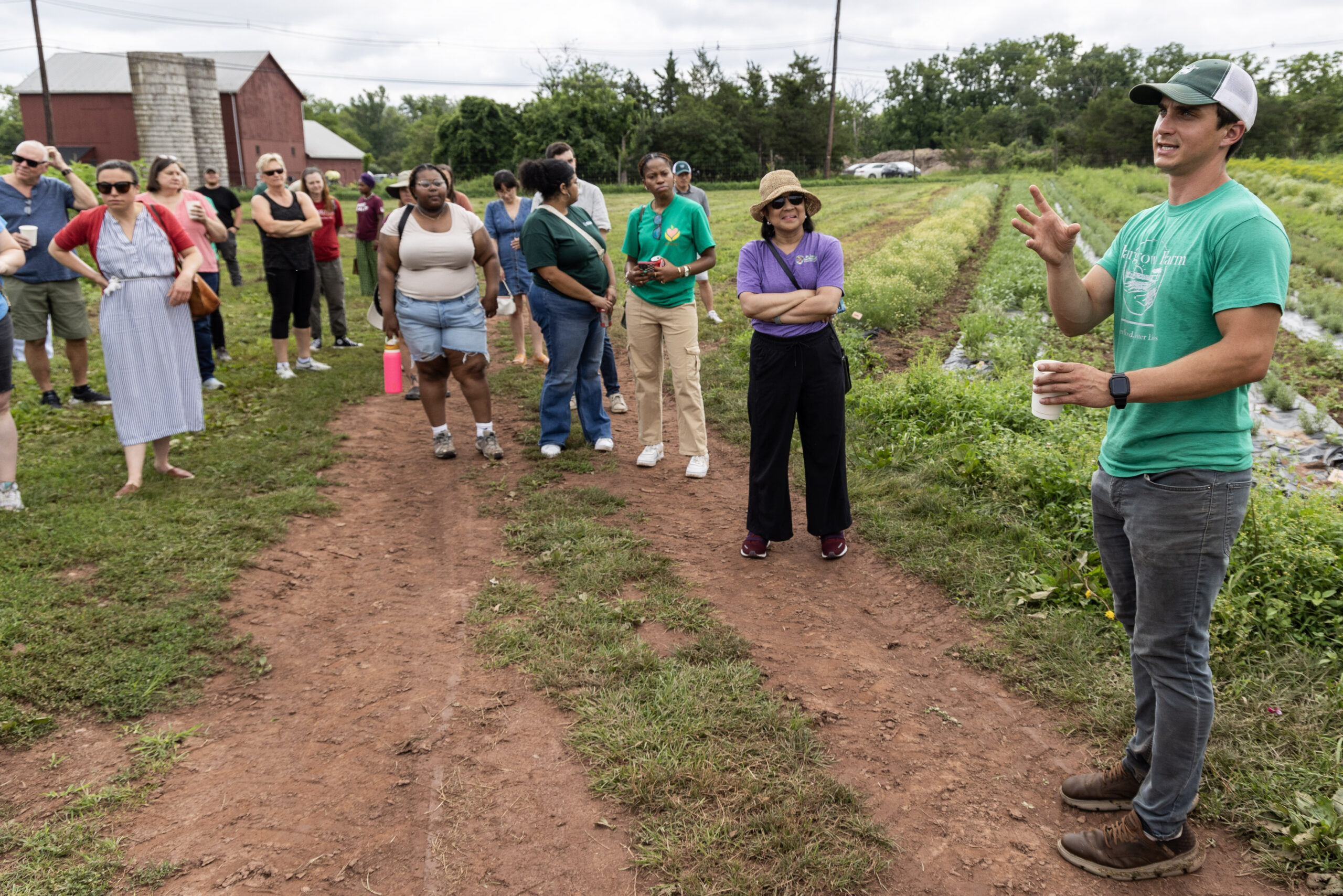
Participants toured Fairgrown’s fields, packhouse, cold storage, CSA pickup area, and delivery fleet — many vehicles acquired through public grants — before gathering under a shaded tent for wood-fired pizza and frank discussions about the worsening food insecurity crisis in New Jersey.
“This is about connection,” said James Klett, co-founder of Fairgrown Farm. “We all know the need. We all know the urgency. The question is: how do we work together to move more food to more people — and do it in a way that supports New Jersey farms.”
A growing crisis
In 2022, more than 994,000 New Jersey residents experienced food insecurity — a 10.7% rate that has worsened steadily since 2018. Among children, the numbers are even starker: 263,000 kids, or 13.2%, lacked consistent access to food. Black (21%) and Latino (20%) communities are affected at more than triple the rate of white residents (6%).
Food banks, pantries, and nonprofit leaders at the event spoke with urgency about the rising demand they’re seeing across the state — more families, more frequently, and often with fewer resources to meet their needs. At the same time, many expressed how valuable it has been to source fresh produce directly from New Jersey farms.
One of the nonprofits shared the story of a client moved by something as simple as a bag of local spinach. “I was so excited to say, ‘This is spinach from a local farm. It was just picked yesterday. We know the farmer. He loves his work,’” she said during the discussion.
That connection — knowing where the food comes from and being able to share that story with clients — is one of the lasting impacts of recent state and federal support programs. But with LFPA funding set to expire this fall and SNAP cuts now taking effect nationwide, many organizations are bracing for what comes next.
The recently signed federal budget includes what researchers have called the largest cut to SNAP in U.S. history — nearly $186 billion over 10 years — eliminating or reducing benefits for more than 22 million families. The Urban Institute estimates the average household loss at $146 per month. Meanwhile, the USDA’s Local Food Purchase Assistance (LFPA) program — which funded partnerships between local farms and food access organizations — will lose federal funding after October.
Kristen Stockwell, office manager at the Flemington Area Food Pantry, said her organization receives food from Fairgrown and values the ability to offer fresh produce in a client-choice setting. Although her pantry doesn’t directly rely on federal dollars, she said the impact of recent SNAP changes will be felt by both their food bank partners and the families they serve.
Fairgrown’s model for local supply
Fairgrown Farm, founded by brothers James and Alex Klett, has grown from just a CSA into a CSA and a key logistical hub connecting more than 30 New Jersey farms with hunger relief organizations. Over the past year, the farm has moved hundreds of thousands of pounds of produce, aided by USDA and NJDA grants.

“We started with a shovel and $400,” James Klett said. “Now we’re running a full-scale operation with trucks, a walk-in fridge, and a packing house that moves both CSA shares and food bank deliveries. But we didn’t get here alone — we got here because of trust and funding.”
Staff from the Community FoodBank of New Jersey praised Fairgrown’s flexibility and attention to quality. “This kind of collaboration lets us provide food that’s not just calories — it’s nutrition, dignity, and reliability,” one CFBNJ staffer said.
Real conversations, real stakes
The roundtable discussion gave attendees the opportunity to speak directly with New Jersey Secretary of Agriculture Ed Wengryn and each other. While many praised the department’s responsiveness, others raised concerns about the complexity of grant reporting, the uncertainty of funding cycles, and the absence of long-term federal support.
“You’re the people in the field every day,” Wengryn told attendees. “The more we understand it, the better we can shape programs.” He emphasized that state funds are still available and said the department is looking at ways to stretch remaining federal dollars to support food access and infrastructure.
Jemmell’z Washington-Rock of the Office of the Food Security Advocate framed the day’s message clearly: “We can’t think of food security as an afterthought. It has to be embedded in every conversation — from agriculture and logistics to health and policy. It’s all connected.”
Across the state, on one farm
Participants came from every corner of the state — from Paterson and Essex County to Trenton and South Jersey — with some traveling hours to attend. Many lingered after the program ended, holding team meetings under shade trees, walking the fields again, or swapping contact information for future collaboration.
The event concluded not with answers, but with a sense of alignment.
“There’s no one-size-fits-all answer,” said Klett. “But there are a lot of people in this room who care — and if we can keep building trust and working together, we can get closer to a system that feeds everyone well.”
For many, it wasn’t just a day on the farm — it was a reminder of what’s possible when farms, nonprofits, and state leaders work toward the same goal: nourishing every New Jerseyan, with dignity and resilience.