

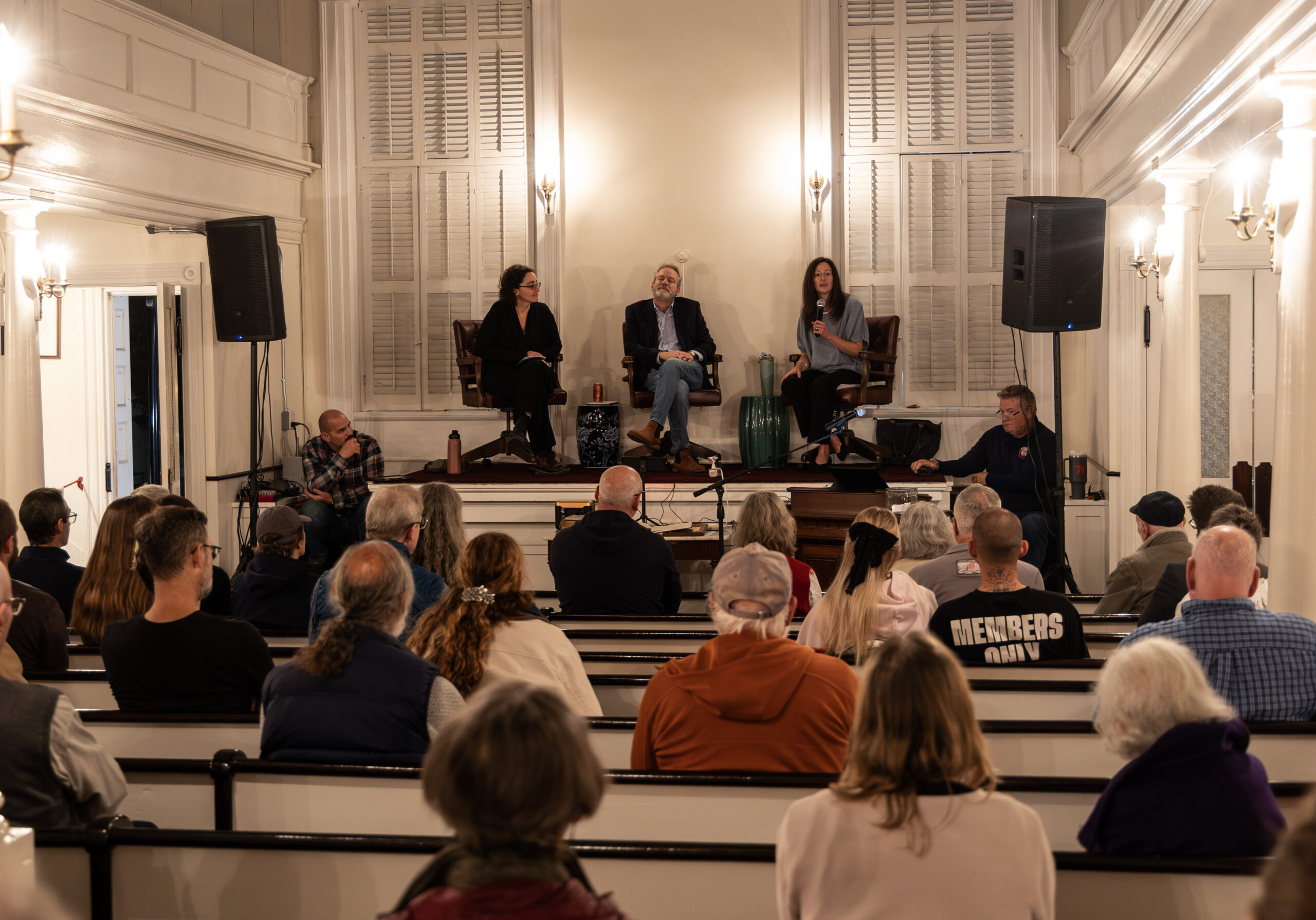
With less than a week before voters choose two members of Hopewell Borough Council, all three candidates gathered Wednesday evening to discuss the town’s future, offering differing perspectives on redevelopment, municipal finances and how residents should be involved in local government.
The Oct. 28 forum at the historic Old Baptist Meeting House brought incumbent Councilwoman Sheri Hook and challengers James Higgins and Justine Levine together for questions about Hopewell 57, the sale of the borough’s water system, downtown businesses, pedestrian safety and other local concerns.
Despite disagreements over some of the borough’s most consequential recent decisions, the evening remained civil. Candidates followed the agreed-upon format, and audience members listened respectfully throughout the discussion.
Hopewell Borough resident Mark Peters, who organized and personally funded the nonpartisan forum, opened by encouraging neighbors to see one another as people rather than political opponents. He used the history of the meeting house, built on land donated by Declaration of Independence signer John Hart, to emphasize the importance of respectful disagreement.
Peters invited audience members to introduce themselves to someone nearby, an exercise intended to reinforce the community connections that extend beyond an election.
“Nobody asked how the other person voted,” Peters said afterward. “Nobody checked the party registration before shaking a hand. You just met a neighbor.”
All three candidates received the same six prepared questions and rules in advance. The forum also included questions submitted by audience members.
Different views of recent decisions
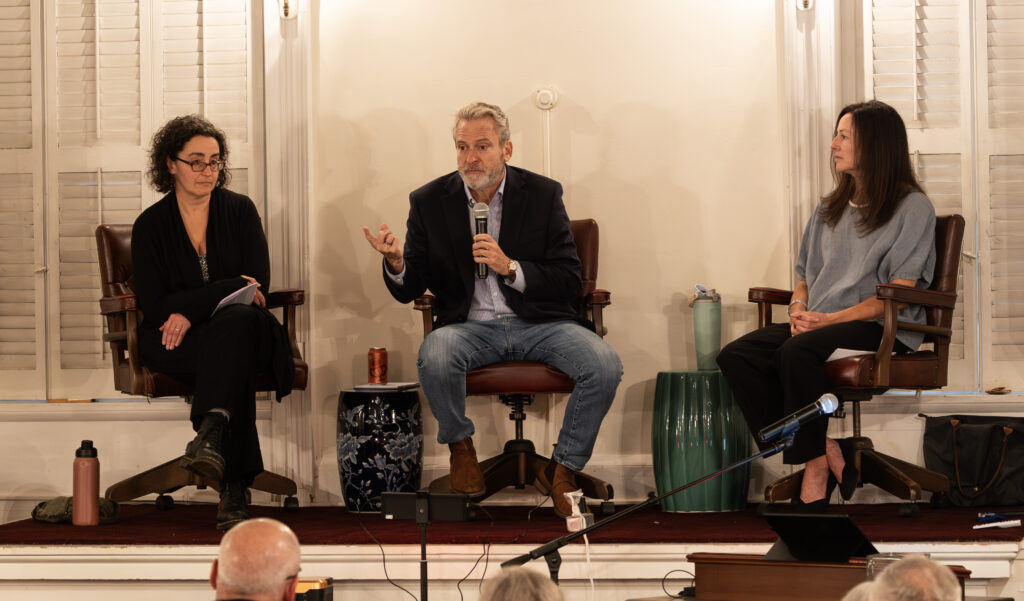
The candidates’ opening statements established a central divide in the race: whether recent decisions involving the borough’s water system and Hopewell 57 have strengthened the community or created problems that could have been avoided.
Hook defended the council’s record, pointing to the water system sale, which eliminated municipal debt, and the approval of Hopewell 57 as accomplishments that improved the borough’s financial outlook and positioned it for the future.
But she acknowledged that some residents remain unhappy with the decisions and said the council could have communicated more effectively.
“Sometimes the way you get to a decision can be just as important as the decision itself,” Hook said.
Higgins, who has regularly attended and spoken at council meetings, said frustration with the decision-making process prompted him to run.
“I’m not angry. I’m disappointed,” Higgins said, arguing that major decisions moved too quickly and residents had too little opportunity to influence them.
Levine, who ran as a write-in candidate last year, emphasized her experience in higher education and community organizations and said she wants to help rebuild trust.
She framed the borough’s challenge as balancing preservation with change while considering what Hopewell should look like in 20 years.
Hopewell 57 and the challenges of growth
The Hopewell 57 redevelopment project, which will add 120 apartments on Hamilton Avenue, was a recurring subject.
Asked what the borough should prioritize as the development moves forward, Higgins suggested reviving a neighborhood welcome wagon to help new residents become part of the community.
“I am not against development. I’m for thoughtful development,” he said.
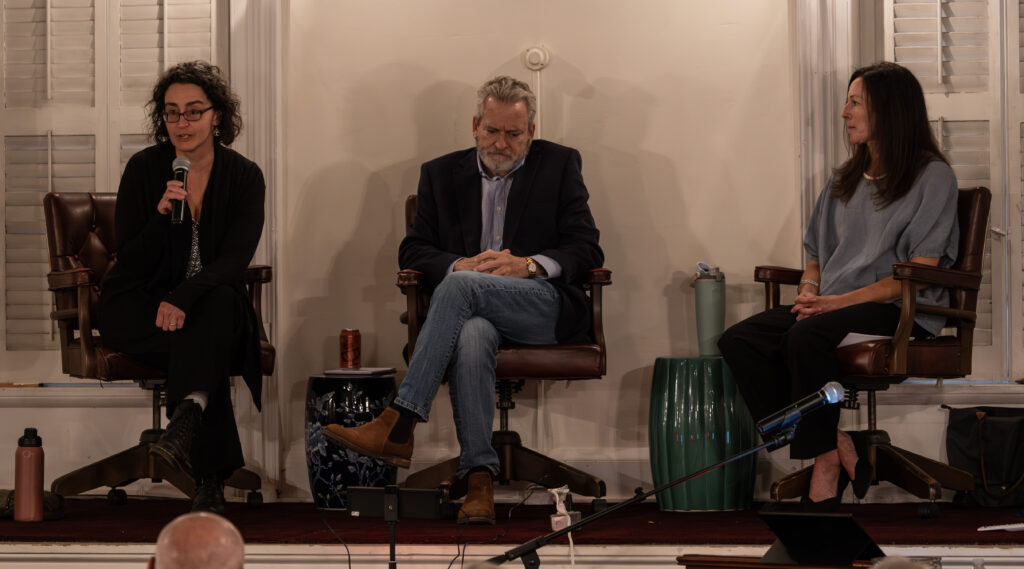
Levine also emphasized welcoming new residents and connecting them with community organizations and activities, while addressing the increased importance of traffic, bicycle and pedestrian safety.
Hook focused on monitoring the development’s effects on borough infrastructure and services, including parking, roads, sewer capacity and emergency response.
“We know that projections aren’t real life,” Hook said, explaining that the borough would need to evaluate conditions once residents move in.
The candidates also revisited the project’s 30-year payment in lieu of taxes, or PILOT, agreement.
Higgins argued that the borough accepted substantially less revenue than conventional property taxation might have generated and questioned the potential cost of additional students attending the Hopewell Valley Regional School District, which receives no direct share of PILOT payments.
Hook disputed that comparison, saying the development would not have been financially feasible without the agreement.
“It’s like getting 10 percent of something instead of zero percent of nothing,” she said.
Levine suggested considering whether future PILOT revenue could help support the schools but said she would need more information before recommending a specific amount.
Borough finances and the DPW facility
The water system sale, which eliminated municipal debt, has given the borough additional financial flexibility, raising questions about tax relief, infrastructure investment and future spending.
Higgins said tax relief deserved consideration but called for an independent review of borough finances before deciding how much money could responsibly be returned to taxpayers.
Levine emphasized maintaining reserves for emergencies and addressing flooding, storm preparation and deferred maintenance.
“I think there’s things that are probably deferred maintenance that we need not to defer any longer,” she said.
Hook cautioned that using all the borough’s additional financial capacity for immediate tax relief could require borrowing for future infrastructure projects, increasing long-term costs.
An audience question about the proposed Department of Public Works facility brought those differing approaches into sharper focus.
Higgins questioned the approximately $3.2 million project’s cost and whether plans developed before the water system sale still reflect the borough’s needs. He suggested regular town halls to give residents more input on major expenditures.
“I’m not against the investment on the DPW,” Higgins said. “My bigger question is, how did it get so bad and not taken care of over the years?”
Hook defended the improvements, describing employees eating lunch near vehicle maintenance operations, repairing equipment outdoors during winter and working with inadequate facilities.
“We’re not building them something new because they wanted something new,” she said.
She argued that providing appropriate facilities for essential municipal employees is a responsibility of elected officials, rather than a discretionary improvement requiring a public budgeting exercise.
Levine questioned whether the project should be considered discretionary and emphasized relying on the expertise of public works employees, architects and engineers.
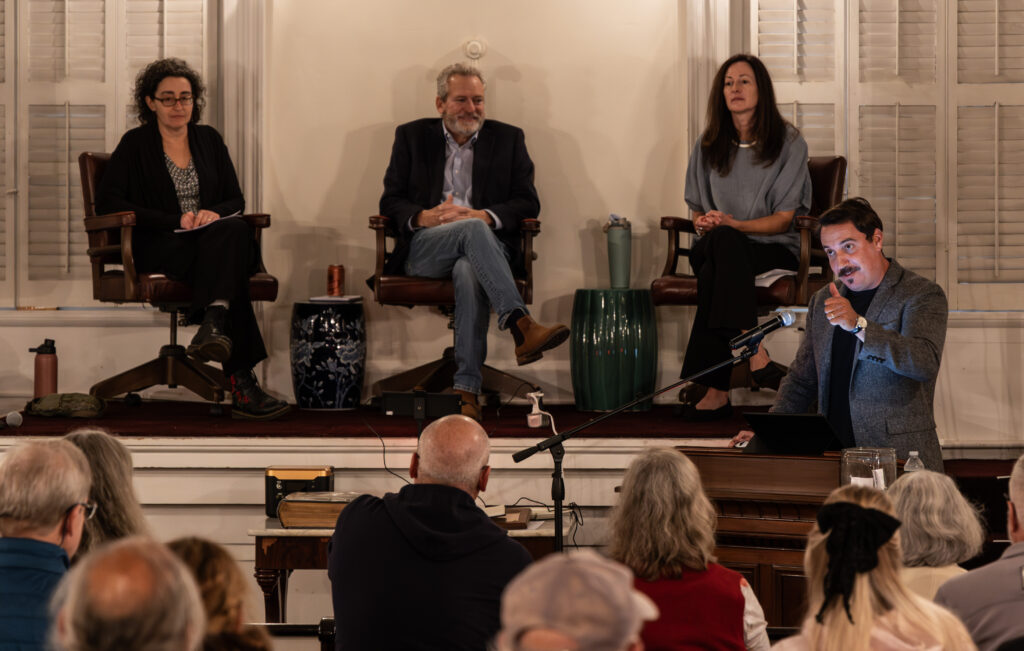
“I know what I know and I know what I don’t know,” Levine said.
She also noted that construction costs can increase significantly over time and cautioned against assuming the proposal was excessive without understanding the department’s needs.
The exchange highlighted a shared recognition that the DPW needs adequate facilities, but different views on evaluating the expense and involving residents in the decision.
Downtown vitality and pedestrian safety
All three candidates supported strengthening downtown businesses, although they emphasized different approaches.
Hook pointed to improved communications about road closures, efforts to address zoning and construction approval challenges, and the need to examine parking.
Higgins said he had spoken with merchants who felt the borough could do more to support them. He proposed regular contact between council members and local businesses and studying successful approaches in other downtown communities.
Levine emphasized residents’ role in supporting local businesses and suggested exploring additional options, including a possible food cooperative, that could serve people within walking distance.
Pedestrian safety brought considerable agreement.
Levine advocated revisiting recommendations from the borough’s Pedestrian and Bicycle Safety Advisory Committee and exploring ways to slow vehicles.
Hook supported reestablishing the advisory committee, addressing damaged sidewalks and increasing police presence during busy periods.
Higgins said the borough already has studies identifying traffic problems and should move more quickly toward enforcement and practical solutions, particularly on residential streets affected by speeding and cut-through traffic.
Parking, redevelopment and shared services
Audience questions returned to concerns about parking and lessons from Hopewell 57.
Hook defended relying on professional planning research supporting lower parking ratios for multifamily housing, saying excessive parking requirements could create unnecessary paved surfaces.
Higgins challenged those projections, arguing the development could generate more vehicles than anticipated.
Levine said she would want to examine the evidence more closely, particularly given existing parking pressures.
Looking ahead, Levine suggested a community visioning process for future redevelopment, potentially including the Castoro property, so residents could help establish priorities before proposals move forward.
Hook acknowledged the need for clearer communication during redevelopment, while Higgins called for greater scrutiny of developers and more willingness to delay decisions when residents raise questions.
The candidates also discussed cooperation with neighboring municipalities.
Levine and Hook emphasized preserving the borough’s local public works operations, while Higgins suggested examining whether existing shared-service arrangements provide the responsiveness residents expect. Hook also called for greater regional cooperation on school funding challenges.
Civility and the election ahead
The increasingly contentious tone of local political discussion was another focus of the evening.
Higgins described personal remarks made on social media during the campaign and said some had affected his family. He said he had tried not to respond in kind and would represent all residents regardless of political affiliation.
Hook said disagreement with a council decision does not mean residents’ comments were ignored. She urged neighbors to recognize that people may share the same goals while disagreeing about how to achieve them.
Levine said she prefers direct conversations to online exchanges and often approaches disagreements by asking what she might be missing from another person’s perspective.
In her closing statement, Levine returned to the importance of listening and learning from residents and people with relevant expertise.
“I haven’t pretended to have all the answers. I think that would be unwise,” she said. “I’m somebody who likes to do research and likes to listen to people who know more than I do.”
Higgins reiterated his concerns about decisions made too quickly, while Hook emphasized preserving the borough’s character and building on recent financial and infrastructure improvements.
The evening ended with applause for the candidates, following a discussion that demonstrated substantial policy differences without the personal confrontations organizers had hoped to avoid.
Voters will choose two of the three candidates for Hopewell Borough Council on Tuesday, Nov. 3. Read MercerMe’s candidate questionnaire and the rest of the election guide here.