



New Jersey environmental regulators have formally proposed delaying implementation of key portions of the state’s landmark climate resilience regulations for another year, setting up a summer debate over how the state should balance flood protection, development and affordability.
The proposal, published June 1 in the New Jersey Register, would extend the “legacy period” for the state’s Resilient Environments and Landscapes, or REAL, rules from July 20, 2026, to July 20, 2027. If adopted, many projects submitted during that period could continue to be reviewed under older land-use and flood-hazard standards rather than the new regulations.
The REAL rules are part of New Jersey’s broader Protecting Against Climate Threats initiative, known as NJPACT. They were designed to update environmental permitting standards to account for future flooding, sea-level rise and other climate-related risks when new development is proposed.
The regulations were formally adopted on Jan. 20, 2026, the final day of Gov. Phil Murphy’s administration. Gov. Mikie Sherrill was sworn into office later that day.
The rules were adopted by then-NJDEP Commissioner Shawn LaTourette after a rule making process that began with a proposal in August 2024 and included revisions following additional public comment in 2025.
While the rules took effect upon adoption, many of their practical requirements were delayed through a six-month legacy period intended to allow projects already in development to proceed under previous standards. DEP is now proposing to extend that transition period by another year.
Why DEP Wants More Time
In the proposal, the New Jersey Department of Environmental Protection said it is reviewing the adopted regulations to determine whether targeted amendments could improve efficiency and streamline permitting while maintaining the rules’ underlying goals.
The agency said it plans to engage residents, municipalities, developers, environmental organizations, business groups and other stakeholders as part of that review. NJDEP also cited Gov. Sherrill’s Executive Order No. 5, which calls for improvements to state permitting processes.
The department wrote that extending the legacy period would help avoid “confusion, unpredictability, and cost” while it evaluates possible amendments and conducts additional public outreach.
Under the proposal, projects with complete applications submitted before July 20, 2027, could still qualify for review under the standards that existed before the REAL rules were adopted.
A public hearing on the proposal is scheduled for July 7, and written comments will be accepted through July 31.
Environmental Groups Push Back
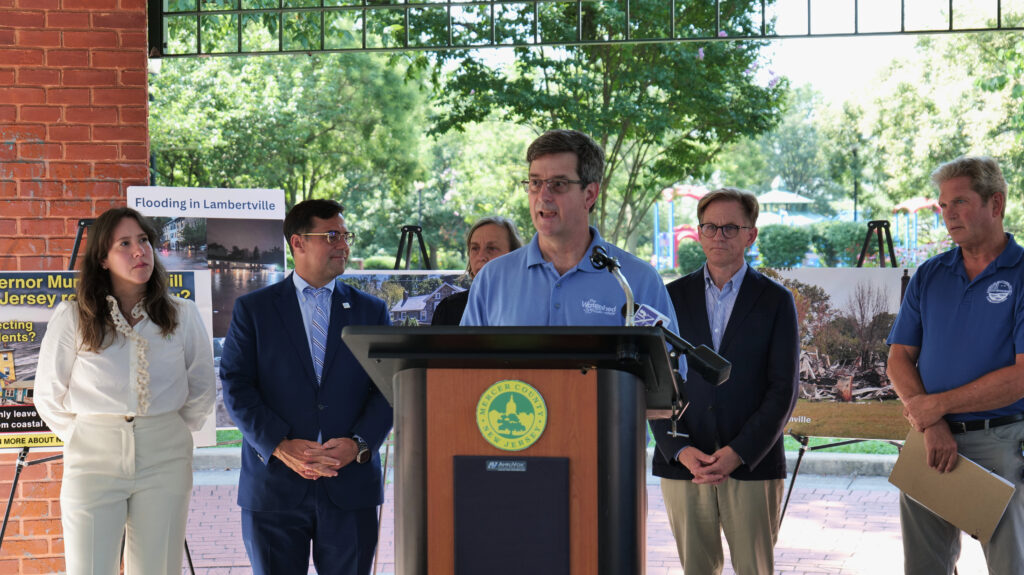
The proposal has drawn strong criticism from environmental organizations, including The Watershed Institute, which has long supported the REAL rules.
Michael Pisauro, policy director for The Watershed Institute, said the regulations have already undergone years of review and public engagement.
“These probably have received more scrutiny and more misinformation than I have seen in the past,” Pisauro said in an interview with MercerMe. He noted that the rules were first proposed in August 2024, modified in 2025 after additional public comment, adopted in January 2026 and already included a six-month implementation delay.
Pisauro said the rulemaking process included extensive outreach by DEP before adoption.
“There was already more outreach and meetings to develop the rule than anything in the twenty-some years of advocacy work I’ve done,” he said.
The proposal has drawn additional attention because NJDEP Commissioner Ed Potosnak previously supported the regulations before joining the Sherrill administration. As executive director of the New Jersey League of Conservation Voters in 2024, Potosnak called the proposed REAL rules “an important step in the fight to protect homes and critical buildings” and said updating how and where New Jersey builds would help address sea-level rise and chronic flooding.
In announcing the proposed extension last month, however, Potosnak said the department wants to conduct a comprehensive review to ensure the rules balance public safety, responsible development, infrastructure needs and government efficiency while engaging stakeholders from across the state.
In a joint statement issued by environmental organizations following the announcement, The Watershed Institute and several statewide groups argued that delaying implementation could leave communities more vulnerable to future flooding.
“Every permit issued under outdated, legacy standards puts people and property at greater risk,” said Jim Waltman, executive director of The Watershed Institute. “Every redevelopment project that fails to account for worsening flooding conditions locks in future damage.”
Other environmental groups, including Environment New Jersey, also opposed the delay, arguing the regulations already underwent years of scientific review, technical analysis and public input before being adopted.
The coalition argued that delaying implementation of the rules could increase long-term costs for homeowners, municipalities and taxpayers by allowing development to continue under outdated flood standards in a state that already experiences some of the nation’s highest levels of flood-related insurance claims.
Business Community Welcomes Review
Business organizations, meanwhile, welcomed the proposed extension.
The New Jersey Business & Industry Association has been among the most vocal critics of the REAL rules and has challenged them in court.
Following DEP’s announcement, NJBIA Deputy Chief Government Affairs Officer Ray Cantor praised the Sherrill administration’s decision to revisit the regulations.
“We are grateful to the Sherrill administration for its plans to extend the legacy period in these rules and we look forward to working with them over the next year on practical and pragmatic solutions to provide our residents and businesses flood protection, while also accounting for affordability, fewer burdens and our overall economy, as well as an emphasis on resiliency,” Cantor said in a statement provided by the organization.
Earlier this year, Cantor testified before lawmakers that the REAL rules were developed without sufficient collaboration with affected stakeholders and argued that meaningful engagement could have produced a more workable result.
What Happens Next
The proposal does not repeal the REAL rules. Instead, it would postpone implementation of key regulatory standards while DEP reviews potential changes and gathers additional feedback.
Whether the extension ultimately remains in place will depend on the outcome of the public comment process and any final action taken by DEP later this year.
For now, the proposal has reopened a debate that has simmered for years: how New Jersey should prepare for rising flood risks while balancing development, affordability and economic growth in one of the nation’s most densely populated states.