
I heard the acronym PILOT for the first time when I attended a school board meeting and two former public officials, Jon Edwards and Harvey Lester voiced their concerns about these “payments-in-lieu-of taxes” agreements. Since 2018 they have expressed these same concerns during public comment before the Hopewell Township Committee. Will these 30-year tax exemption agreements with developer Lennar for 2,356 residential units (Hopewell Parc 1,077, Collection 379, Woodmont 300, Venue 600) result in unfair treatment of regional taxpayers and cause the Hopewell Valley Regional School District to lose millions in ratable tax base to fund our children’s education?
I am not an accountant and PILOTs can be difficult to understand. To me, these tax abatement agreements seemed similar to going out for lunch at Vitos with five friends. Initially you agree to split the bill evenly. The bill is $100 so each person pays $20. But then one person has a ” lunch abatement exemption ” which alters the agreement. Now four people have to pay $25 each for the $100 lunch bill.
I know PILOTs are not as simple as that analogy. So, I tried to learn more about PILOTs from people who are accountants. I hoped they could answer these questions:
1. Do the Lennar PILOTs result in lost rateable tax base needed to provide classroom space and fund our children’s education, our public safety and our infrastructure?
2. Do the Lennar PILOTs shift the tax burden to support our schools, public safety and our infrastructure to conventional taxpayers who do not have PILOTs and result in higher annual property taxes for these residents?
3. Do the Lennar PILOTs unfairly distribute the payments so that the Township receives 95%, Mercer County receives 5% and the school district receives nothing?
Before answering these questions, it is important to know how Hopewell Township distributes the taxes they receive from residents who pay taxes conventionally (without a PILOT). The school district receives about 57%, Mercer County is paid 24%, Hopewell Township gets 14%, the fire district is given 3.67% and open space receives about 1%.
From the Lennar payment-in-lieu-of-taxes for all four developments the township will receive 95% of the revenue, Mercer County 5%, and the school district, fire district and open space receive nothing.
Help to answer these questions is available from two accountants.
In 2010, State of NJ Comptroller A. Matthew Boxer wrote a Programmatic Examination of Municipal Tax Abatements because he realized that “tax abatements result in significant foregone revenue and introduce tax inequalities that deserve closer scrutiny”. His report states that “under long-term tax abatement arrangements property taxes on the development – which normally are split among several entities – are eliminated and 95% of the negotiated PILOT is kept by the municipality (Hopewell Township), with 5% for the county (Mercer) and nothing for the school district. This system distorts the costs and benefits of an abatement deal, as municipalities may receive greater funds while other entities, particularly school districts absorb costs”. The report also states that “PILOTs shift the tax burden among regional taxpayers. If selected properties (2,356 residential units from the four developments) are exempt from taxes, then any necessary revenue MUST BE OBTAINED FROM THE REMAINING TAX BASE”.
Each year Robert Colavita, Assistant Superintendent for Business/HVRSD Board Secretary, must file an Annual Comprehensive Financial Report. In his report in 2024, he made comments about Tax Abatements (page 67). He states, “If a municipality entered into tax abatement agreements, those agreements will not directly affect the school districts local tax revenue because New Jersey Statutes require that amounts so forgiven must effectively be RECOUPED from other taxpayers and remitted to the school district”.
A. Matthew Boxer made recommendations about PILOTs based on his research and findings to insure prudent management of taxpayer dollars. In the absence of new legislation from the Governor and State Legislature who are reluctant to make changes, local officials can implement many of these recommendations through their own processes and ordinances.
Boxer’s first suggestion is that PILOT agreements should be restructured. “Allowing municipalities to keep almost the entire PILOT amount creates a perverse incentive whereby the municipality may gain revenue while other entities lose out. PILOT collections should be split along the same distribution lines and percentages as normal (conventional) tax collection”.
The current Township Committee believes PILOTs are the way to finance a better future. They also believe, based on demographic study in 2022 using Rutgers University Center for Urban Policy Research, that only about “250 new students will be from new neighborhoods associated with the Township’s affordable housing mandate” (over the next ten years) and that there was plenty of classroom space to accommodate them. – from The Town Crier 2024-Q4 – Mayor Courtney Peters-Manning. Yet according to the School Board, as of September 2025, 278 new students have already enrolled from these PILOT developments. Only 250 over ten years was predicted. 278 have actually enrolled. We warmly welcome these new neighbors and students, but the Township Committee cannot claim that these projects will have little impact on our school. Will the Township Committee recognize that these tax abatement developments should provide their equitable share of revenue for the ongoing costs for our regional school district? And for public safety, infrastructure, and open space?
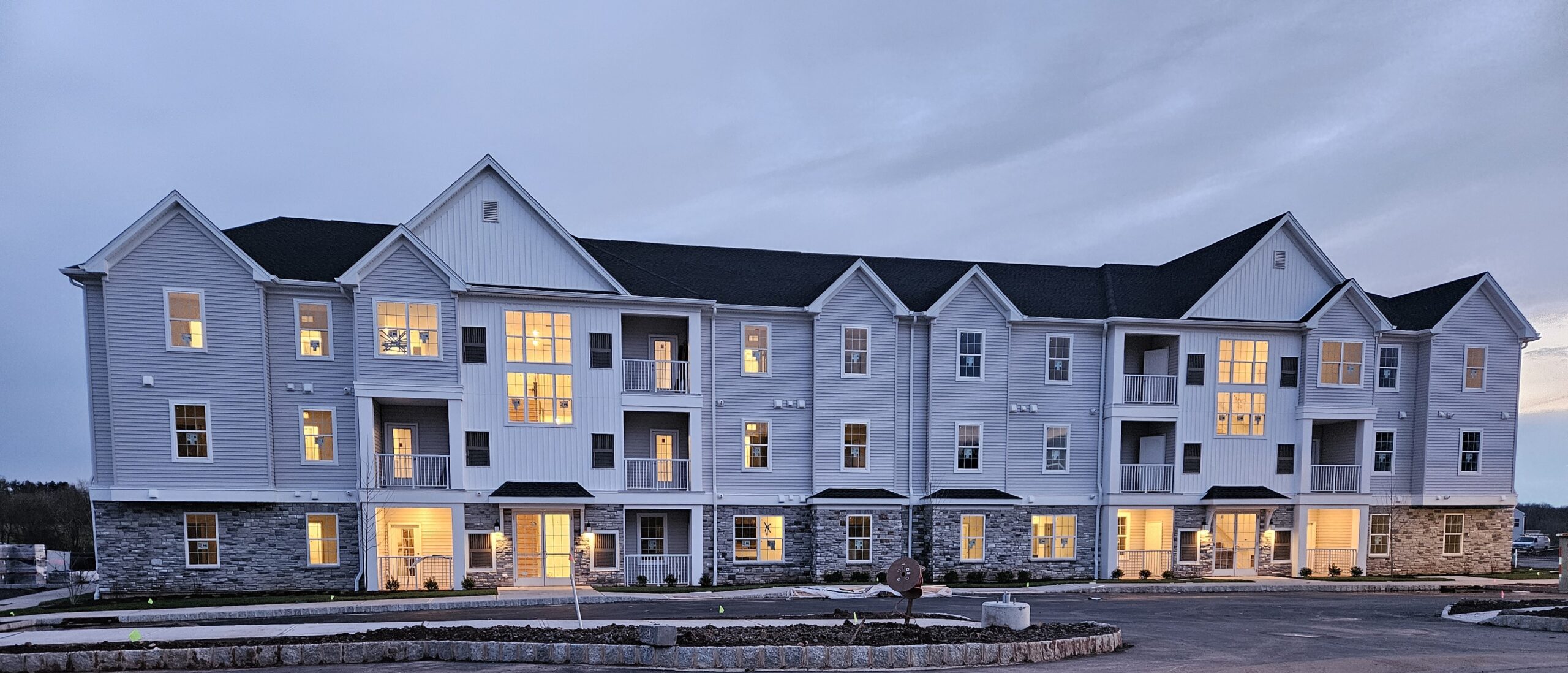
According to the 2023 census report, Hopewell Township had 6,504 housing units. The four PILOT developments mentioned above will add 2,356 new residential units. Of that total, 1,894 will be market rate and 462 will be affordable. If these housing units paid taxes conventionally 57% of that revenue would support the yearly and long-range costs for our schools. Instead, class sizes are increasing, programs are being cut, fees are collected for extra-curricular activities, maintenance projects are delayed, and new classroom space is needed.
PILOTs may be legal, but they do not seem to be a fair way to finance a better future.
Two candidates running for the Hopewell Township Committee, Steve Niederer and Ed Jackowski, agree with Pennington Borough Council that the current 30-year tax exemption agreement with developer Lennar (PILOTs) for over 2,356 new housing units ” fundamentally undermines the principle of fairness and regional cooperation that should govern how municipalities treat their neighbors”. According to Census data, between 2010 and 2020 Hopewell Township had a 3% increase in the number of residential housing units. The four PILOT developments will add 2,356 new housing units over 10 years. Hopewell currently has about 6,504 housing units. That is an increase of 36% and all these units will be exempt from funding our school district, our public safety and our infrastructure needs. Steve and Ed are committed to protecting all taxpayers, ensuring responsible development, restoring balance and common ground on the Committee and that PILOT payments should fund our schools.
Sylvia Kocses
Pennington, NJ