
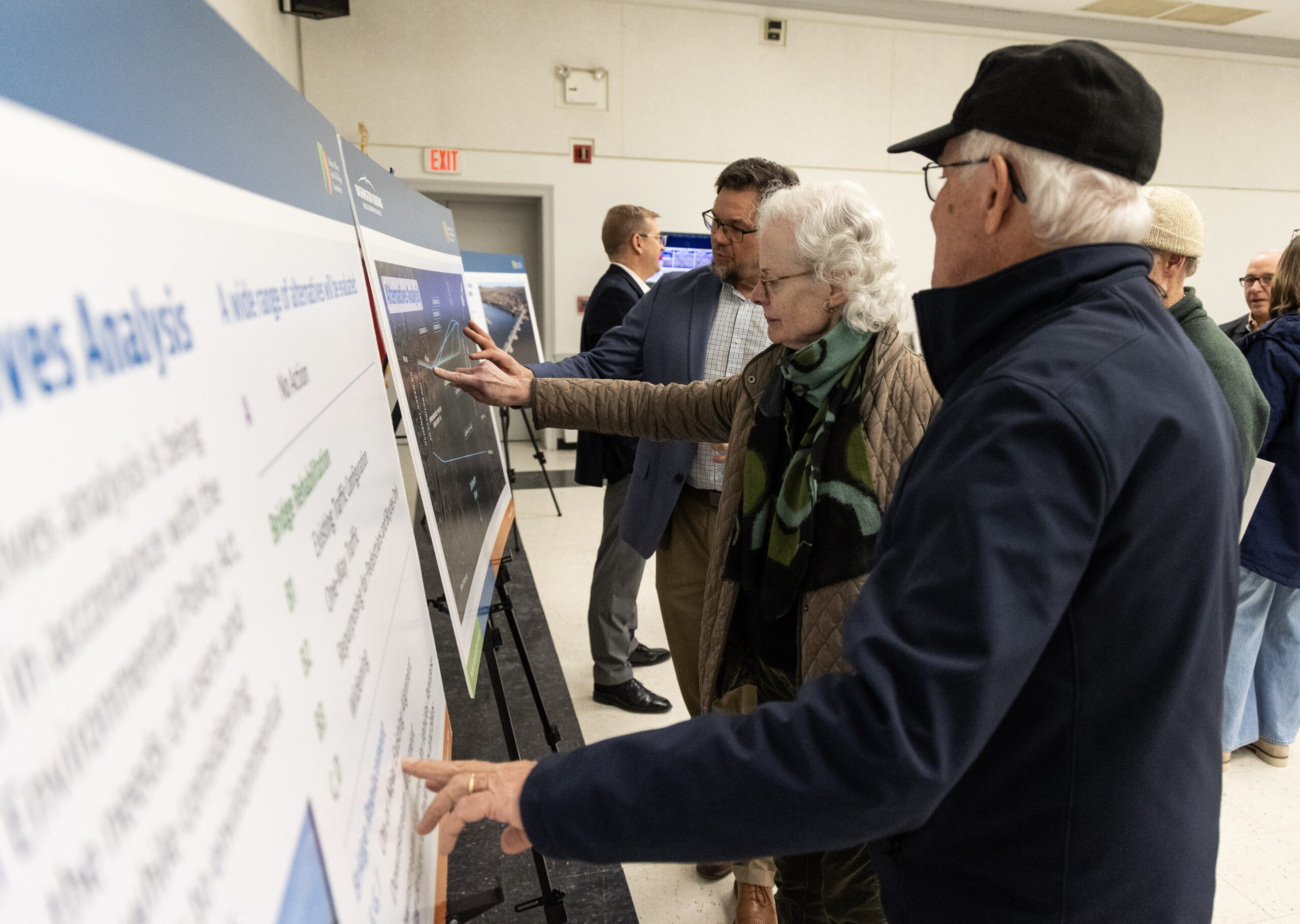
A regular stream of visitors stopped into the Union Fire Company hall this week for the first local public session introducing potential replacement options for the aging Washington Crossing Bridge — a process transportation officials say is still in its early stages with years of analysis ahead.
The meeting marked what Delaware River Joint Toll Bridge Commission Executive Director Joseph Resta described as the public’s first meaningful opportunity to react to conceptual alternatives for the nearly 200-year-old river crossing.
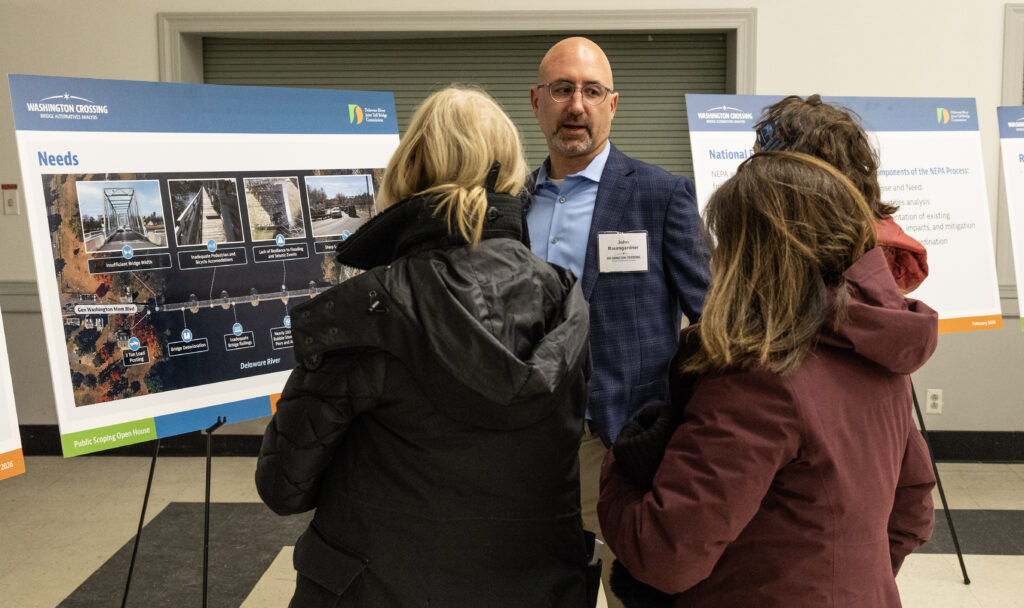
The Washington Crossing Bridge operates at the absolute minimum width standards for a two-lane crossing — a constraint that contributes to frequent mirror strikes and driver hesitation on the span. At the Feb. 11 meeting, staff displayed tables of vehicle side mirrors collected after being knocked off during crossings, an illustration that reflects the bridge’s narrow 7.5-foot travel lanes and lack of shoulders. The commission has described it as effectively the narrowest configuration at which two-way vehicular traffic can still function.
“This evening and last night (in PA) are really, from a public perspective, the beginning of a long process,” Resta said.
The commission is roughly one year into a three-year environmental review under the federal National Environmental Policy Act (NEPA) to determine whether the historic truss bridge should be rehabilitated or replaced — and if replaced, how and where.
Alternatives still conceptual
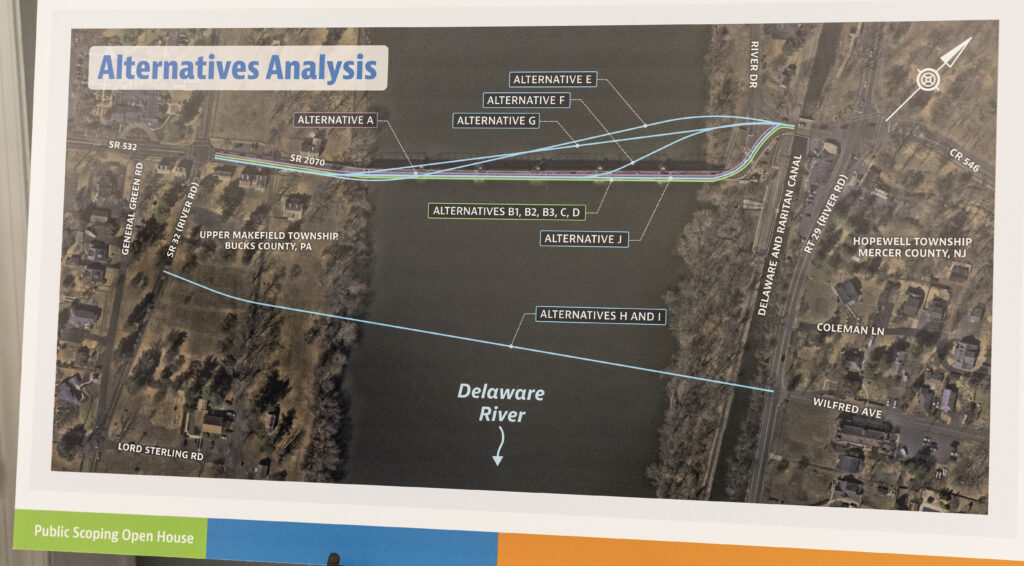
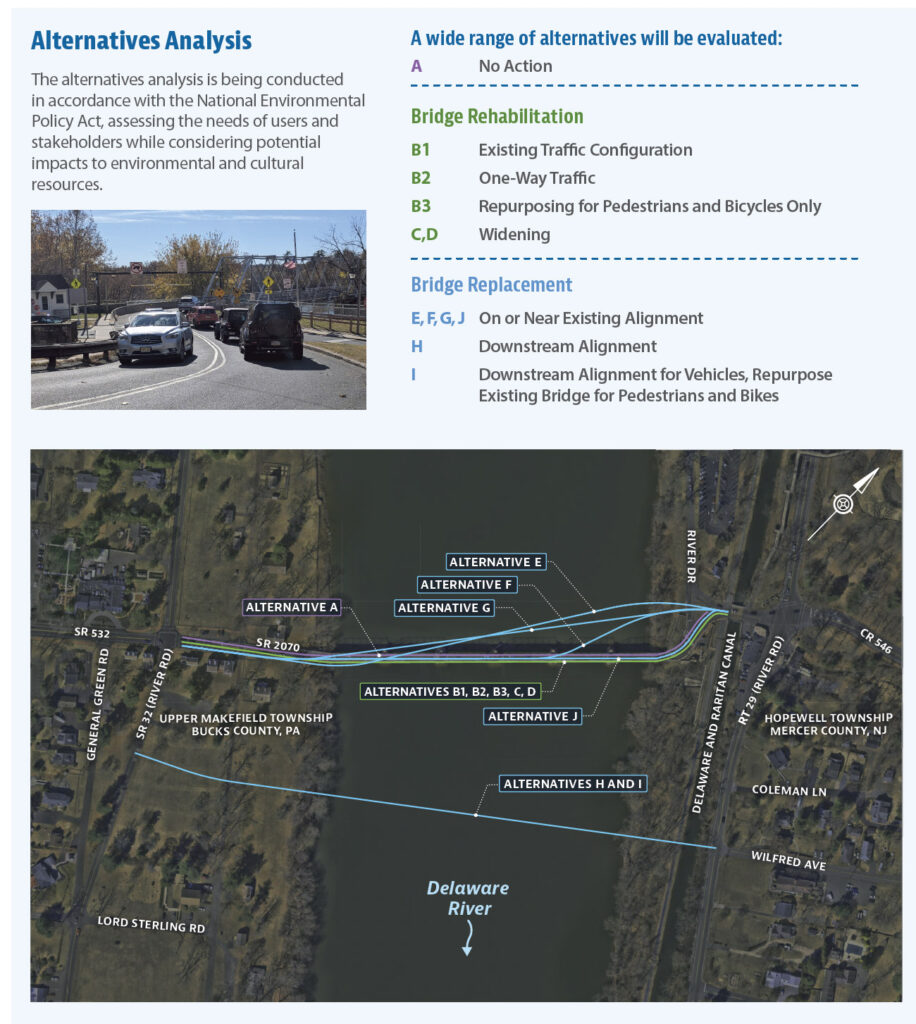
Large boards displayed at the meeting showed multiple possible alignments, including options that would rebuild on the existing footprint and others that would shift the crossing upstream or downstream to address safety and traffic constraints.
Resta emphasized that none of the alternatives shown are designs or final proposals.
“Right now they’re conceptual,” he said. “They still have to be fleshed out. We still have a lot of data gathering to do. We still have a lot of environmental analysis to do.”
The study must evaluate impacts on historic landscapes, parklands, river ecology, traffic circulation, and nearby neighborhoods on both the Hopewell Township and Upper Makefield sides of the Delaware River.
Public comments sought now
Commission officials are collecting public comments into March on all alternatives — including ideas not currently shown.
“We’re looking for opinions,” Resta said, noting residents may raise concerns about alignments affecting homes, parks, or riverfront areas.
He said public input can still influence the range of options considered.
“This process could yield a different alternative,” he said.
Anyone interested can review the plans and submit public comment at the website that was developed for the project washingtoncrossingbridge.com.
If you are looking specifically for the public comment form you can find it here.
Aging bridge driving study
The single-lane steel truss bridge, opened in 1904 and rebuilt after flood damage in 1957, carries about 6,500 vehicles per day — less than nearby crossings but constrained by its narrow width and weight limits.
Commission materials presented at the meeting cited structural deterioration, flood vulnerability, inadequate pedestrian and bicycle space, and substandard roadway approaches as key deficiencies.
Resta said the agency views inaction as untenable.
“We know the obsolescence and the fact that this asset is obsolete. It’s got a lot of deficiencies,” he said.
“Doing nothing to that bridge is like the beginning of the end — it’s almost like putting the bridge in hospice care.”
Long timeline ahead
The current phase focuses on environmental studies and narrowing alternatives to a single “preferred alternative,” which would then undergo detailed impact analysis before any construction decision.
Resta said residents seeking a quick outcome should expect a multi-year process.
“I think folks are yearning for a finality to the process,” he said. “And it’s just something we have to go through.”
According to the project schedule, a draft environmental document identifying a preferred alternative is anticipated in 2027, followed by public hearings and a final decision.
No funding or toll decisions yet
Although the Delaware River Joint Toll Bridge Commission funds capital projects through toll revenue from its other crossings, Resta said financing and potential tolling questions are separate from the environmental review.
“It’s not necessarily part of this environmental process,” he said.
He noted the Washington Crossing Bridge’s relatively low traffic volumes would not support a stand-alone tolled replacement.
Next steps
After the current comment period, engineers and environmental consultants will continue field studies, seasonal ecological surveys, and conceptual design work needed to evaluate impacts.
The next major public milestone will come when a preferred alternative is identified and presented with detailed effects on communities and parklands.
“We have to determine the impact of any one of these alternatives,” Resta said. “That’s really where the complicating factors come.”