

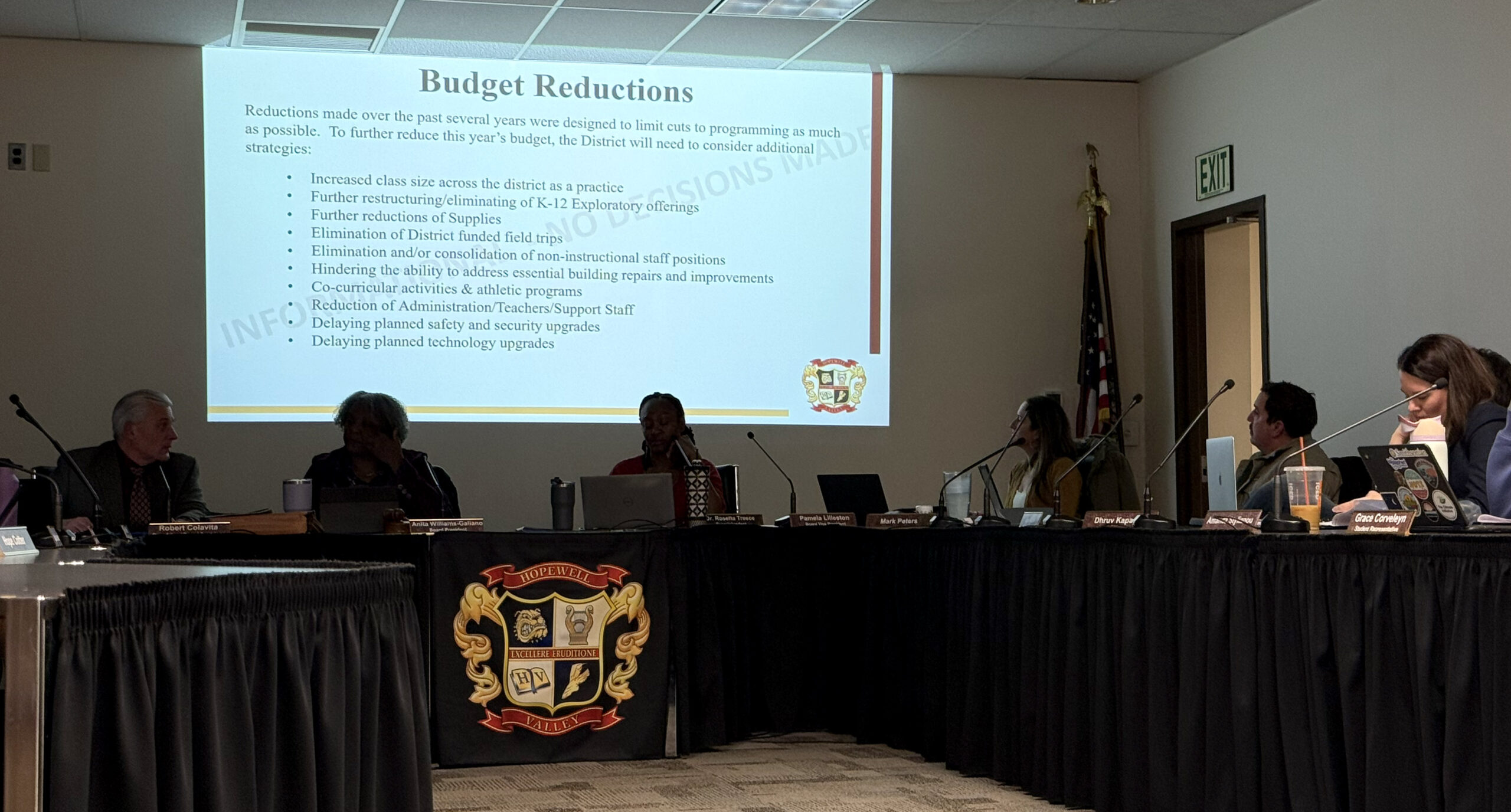
The Hopewell Valley Regional School District is entering what officials described as one of its most difficult budget cycles in years, with administrators warning Monday that program cuts are likely and financial pressures are intensifying across New Jersey schools.
Superintendent Dr. Rosetta Treece told the Board of Education the district is preparing for a challenging year marked by uncertain state aid, rising costs, and structural funding constraints.
“It’s going to be a heavy lift this year, not just for our district but for all districts,” Treece said, noting that state officials have advised districts to expect flat aid “if we’re lucky.”
Much of the district’s funding comes from the local tax base, she said, making outside revenue levels critical even though they represent a smaller share of the overall budget.
“We still don’t know what we’re facing right now,” Treece told the board. “So my team and I have contingency plans for every contingency plan as best we can.”
Cuts expected despite efforts to preserve programs
District leaders emphasized that reductions are likely unavoidable this year and in future budgets if state funding trends continue.
“I am trying to maintain as many existing programs and services as I possibly can knowing that something will have to go this year,” Treece said. “I am going to have to kill some of our darlings, some of the things that we love.”
Even maintaining current staffing levels creates pressure, she said, because negotiated salary and benefit increases alone already produce a structural deficit.
“If we just roll that over … [it] already puts the district at a deficit,” Treece said.
Assistant Superintendent for Finance Robert Colavita said districts statewide have already exhausted easier reductions.
“As Dr. Treece says, the fat has been removed from the bone,” Colavita told the board. “Now you are looking into real programs. The cuts are going to come from real programs.”
Staffing, special education, and health costs drive spending
Colavita said salaries and benefits together account for the vast majority of district costs.
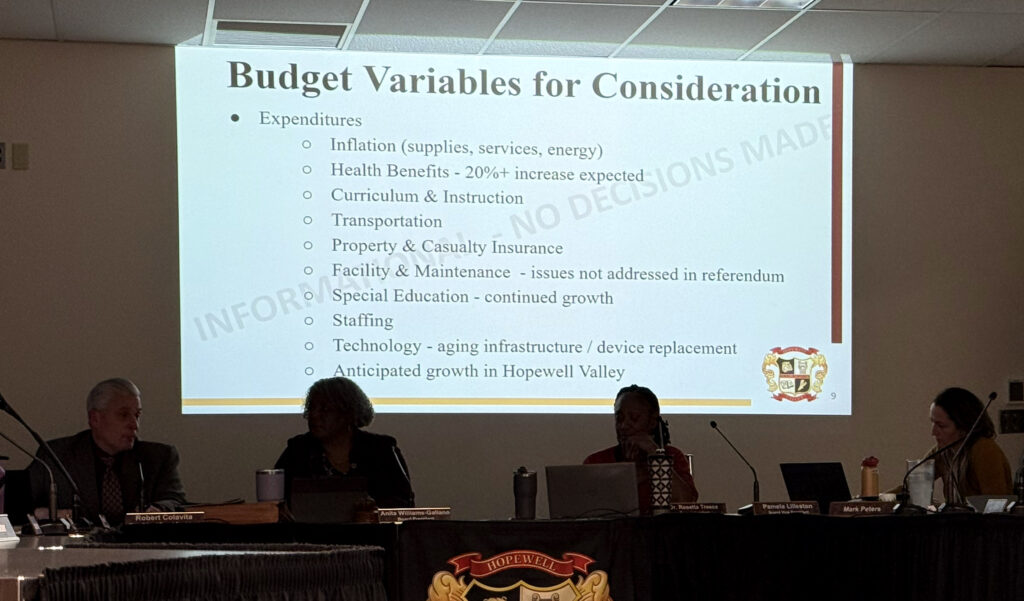
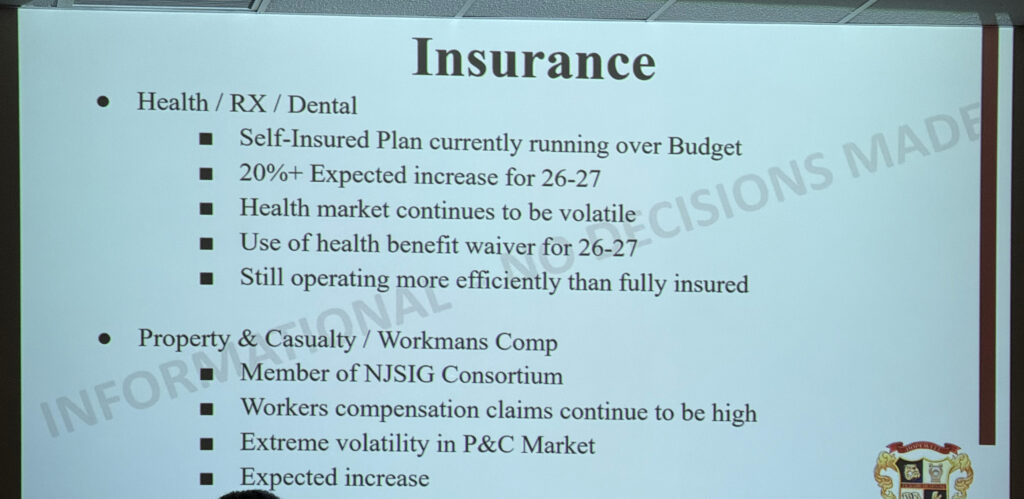
“Health benefits and salaries are the things that drive 85 percent of our budget,” he said, noting that health insurance costs alone are rising about 20 percent.
Special education services are another major cost driver, particularly when students must be placed outside the district.
“We’ve got tuitions that can range anywhere from seventy thousand up to three hundred thousand per year to educate,” Colavita said, adding that transportation costs for those placements can reach tens of thousands more.
It’s one of the reasons the district tries to keep students in the district.
“Sending them out not only costs a lot more money, but the transportation contracts driving them out too,” Colavita said.
Limited options: taxes or cuts
Administrators said the district’s core challenge is that most school funding comes from local property taxes, leaving few levers to close budget gaps.
Treece noted that state aid remains uncertain and constrained, while costs continue to rise annually.
“Most of our budget comes from the tax base here,” she said, adding that the district still depends on state and federal funding “however little that is.”
At the same time, officials acknowledged that significant tax increases are unlikely to be viable following voter approval of the $84 million school facilities referendum in November.
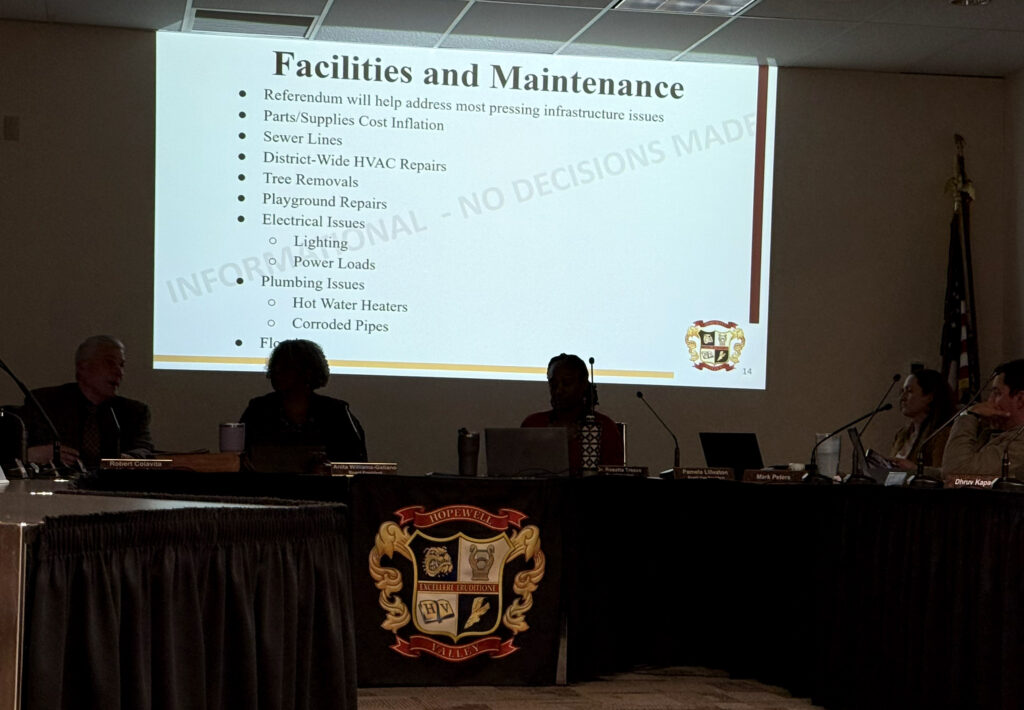
“We did just pass a referendum and yes, we have to be cognizant of the taxpayer,” Treece said. The referendum that passed does not handle the annual operating budget for the district. It is for facilities improvements across all of the school buildings including HVAC, roof replacements, and additions at Bear Tavern Elementary and Toll Gate Grammar School.
As a result, district leaders said the realistic scenarios involve some combination of tax increases and program reductions rather than relying on revenue alone.
Treece said the district’s goal is to preserve core academic offerings while balancing community affordability.
“Our primary responsibility are our children,” she said, “so making sure that we maintain as much as possible.”
Fiscal pressures statewide
Treece said Hopewell Valley’s situation reflects broader statewide trends, with many districts confronting severe funding gaps after years of formula shifts and cost growth.
“We’ve been having workshops for years … talking about approaching this fiscal cliff,” she said. “But we’re hanging on now with our fingers. Our knuckles are white. We’re over the cliff now.”
She cited examples of districts cutting athletics, clubs, staffing, and services to maintain basic operations.
“All athletics and clubs, they’re looking at getting rid of … they’ve cut over a hundred staff members over the course of the last few years,” Treece said of one neighboring district’s situation.
Colavita added that budgets across the state are increasingly unstable.
“The budgets right now are very tenuous,” he said. Treece and Colavita did not indicate where the cuts were going to come from and in the coming weeks the details will be figured out with the board.
Timeline uncertain as state aid delayed
The district’s budget planning timeline is also shifting after Gov. Mikie Sherrill delayed the state budget address, which determines school aid allocations.
Colavita said the address is expected March 10, with aid figures likely arriving March 12 — later than usual and closer to local budget deadlines.
“That would mean that the receipt of state aid would be March twelfth,” he said, noting districts still must finalize budgets shortly afterward.
Treece said the district may schedule additional work sessions as numbers become clearer.
“We may need to add other retreats as we get more and more information about what funding is going to be available to us,” she said.
Board: financial outlook worsening
Board members said the administration’s warnings reflect a longer-term deterioration in school funding conditions.
“I’ve become more and more of a pessimist about just the financial outlook of things,” board member and chair of the finance committee Mark Peters said, attributing pressures largely to state policy and funding shifts rather than local decisions.
Treece said the district’s priority remains preserving academic quality while navigating fiscal realities.
“A school is our educators and our support staff,” she said. “That’s what makes a school.”
The board is expected to review budget scenarios in the coming weeks before tentative adoption in March.
Also at the Board Meeting
District approves multi-year Chromebook replacement purchase
The board approved the purchase of 2,400 Lenovo Chromebooks as part of the district’s ongoing multi-year device replacement cycle for its one-to-one technology program.
The contract, valued at $1,339,200, will be financed through a lease-purchase arrangement spread over four years rather than paid in a single budget year, administrators said.
District officials said the purchase replaces aging student devices across grade levels to maintain reliable classroom access as older Chromebooks reach end-of-support status.
Public comment: EcoPTO initiatives and environmental programming
Marian Labos, co-treasurer of the district’s EcoPTO, updated the board on the organization’s progress since becoming an incorporated nonprofit last year.
Labos said the group received grant funding from Green Matters to continue restoration of a wetland meadow at Hopewell Elementary School, including a schoolwide planting event during a fall SEL day.
“Students were greeted in the meadow by volunteers … and then each volunteer assisted groups of students to plant one small plant,” she said, noting participation from families, local businesses, and environmental organizations.
She also described a community native seed event held at the high school that drew regional environmental groups and residents.
“Hundreds of native seed-filled jugs were sold,” Labos said, with proceeds supporting the group’s nonprofit registration and insurance costs.
Treece thanked the group for its work and encouraged expansion across schools.“You are doing amazing things,” she said. “Any parents out there at the other schools, we need others involved in your work.”
Public comment: classroom conversations on current events
Dr. Suze Palinski, a Hopewell Valley pediatrician and parent involved in the district’s Digital Wellness Initiative, urged the district to continue supporting classroom discussion of major current events affecting students and families.
Palinski said even students not directly affected by national immigration enforcement or political events are aware of them through media and peers.
“Whether or not you and your family think that things happening to brown or Black or immigrant people in your country … affect you, you’re watching it,” she said. “Our kids are seeing these things happen.”
She said schools play an important role in helping students process complex issues.
“I would hope that we’re making it safe for teachers to answer these questions and that we’re supporting them,” Palinski said. “These are hard conversations to have, but we shouldn’t be avoiding them.”
Palinski encouraged the district to ensure courses addressing social and global issues actively engage with real-time events.
“If not now, when?” she said. “These high schoolers are being asked to think about these issues.”
Treece said the district supports teachers in addressing current events while maintaining neutrality and factual grounding.
“Our teachers have the freedom and the support to do that as long as they enter in those conversations … giving them the materials and the facts, and they come to their understanding on their own,” she said.
She acknowledged that teachers sometimes hesitate because of the polarized nature of current topics.
“My teachers continue to express fear because a lot of these conversations are polarizing and people get upset,” Treece said. “I say that we have to do it anyway.”
Treece said the district intends to continue facilitating discussions, so students are not left to interpret events solely through social media.
“They’re exposed to it anyway,” she said. “So, it needs to be an adult kind of facilitating that conversation.”