
A New Jersey Senate committee advanced legislation Thursday that supporters say could open a path toward restructuring governance of Trenton Water Works, while opponents — including elected officials from Trenton — warned that the proposal raises unresolved questions about local control, pension financing, and long-term accountability.
The Senate Budget and Appropriations Committee voted to move forward S-4875, the Senate version of the Citizens Fund Act, following a lengthy hearing that featured passionate testimony both for and against the bill. The committee advanced the measure with amendments, with Republican members voting no.
The identical Assembly bill, A5980, cleared the Telecommunications and Utilities Committee earlier in the week.
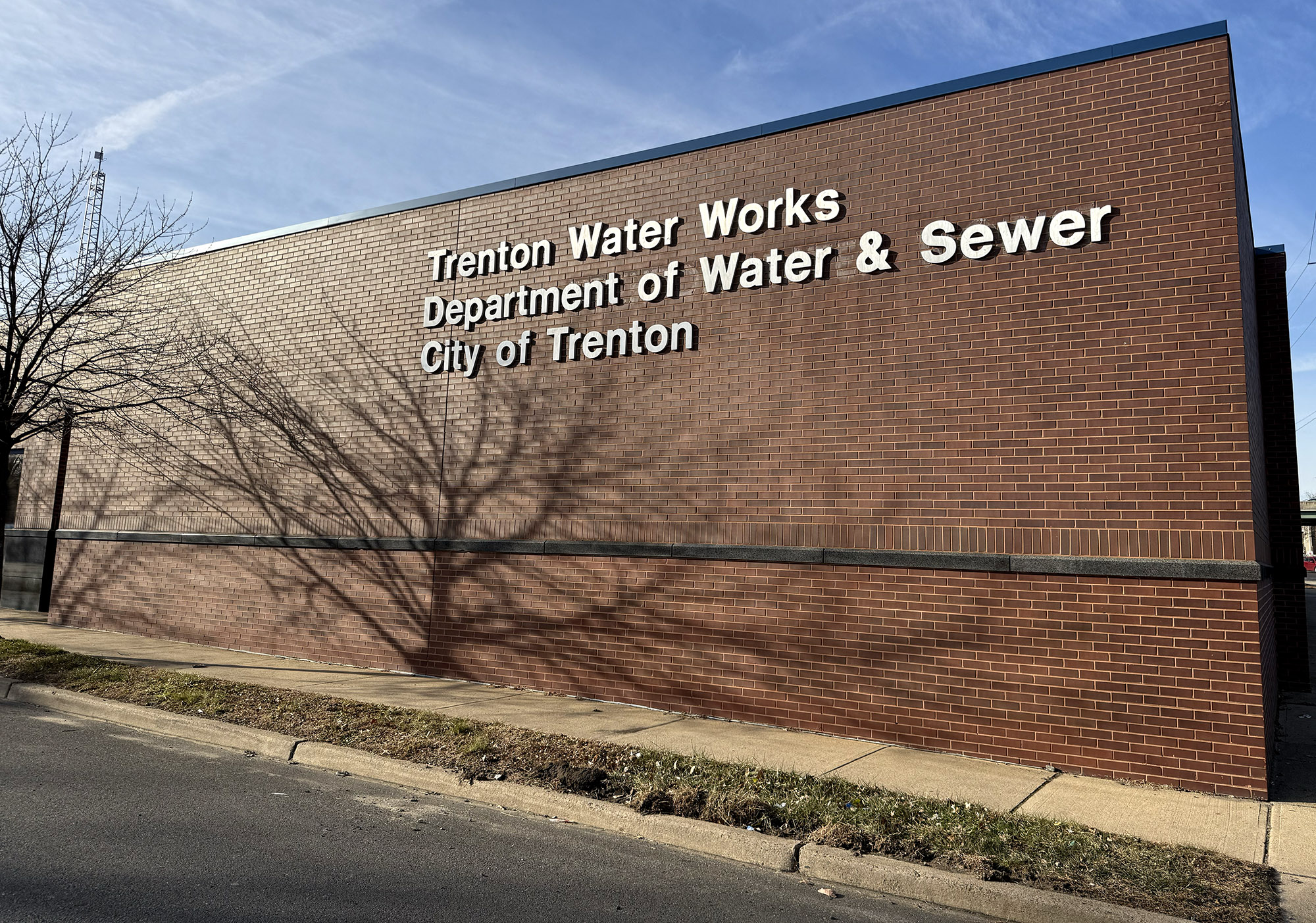
Senate Budget Chair Paul Sarlo described the proposal as a “creative solution” as lawmakers debated whether the bill offers a viable public-sector alternative to privatization for Trenton Water Works — a municipal system that has struggled for years with infrastructure failures, regulatory oversight, and repeated service disruptions affecting Trenton and the surrounding towns of Ewing, Hamilton, Hopewell, and Lawrence.
A bill shaped by Trenton Water Works’ failures
Although the Citizens Fund Act is written broadly, both legislative hearings made clear that Trenton Water Works (TWW) is the immediate and primary focus.
Assembly and Senate lawmakers repeatedly referenced recent crises at TWW, including frazil ice events, boil-water notices, aging electrical systems, and staffing shortages, as evidence that the current governance structure has failed to deliver reliable service to the roughly 225,000 customers who depend on the system.
More than half of TWW’s water serves customers outside Trenton, including parts of Hopewell Township, Ewing, Lawrence, and Hamilton, communities that currently have no formal role in governing the system.
Supporters argue the bill would create a voluntary mechanism — not a mandate — to establish a regional, publicly owned utility structure, while compensating Trenton for its assets and providing suburban ratepayers with representation.
Experts cite state-commissioned infrastructure findings
During the Assembly hearing, lawmakers heard from experts involved in state-backed assessments of Trenton Water Works’ condition.
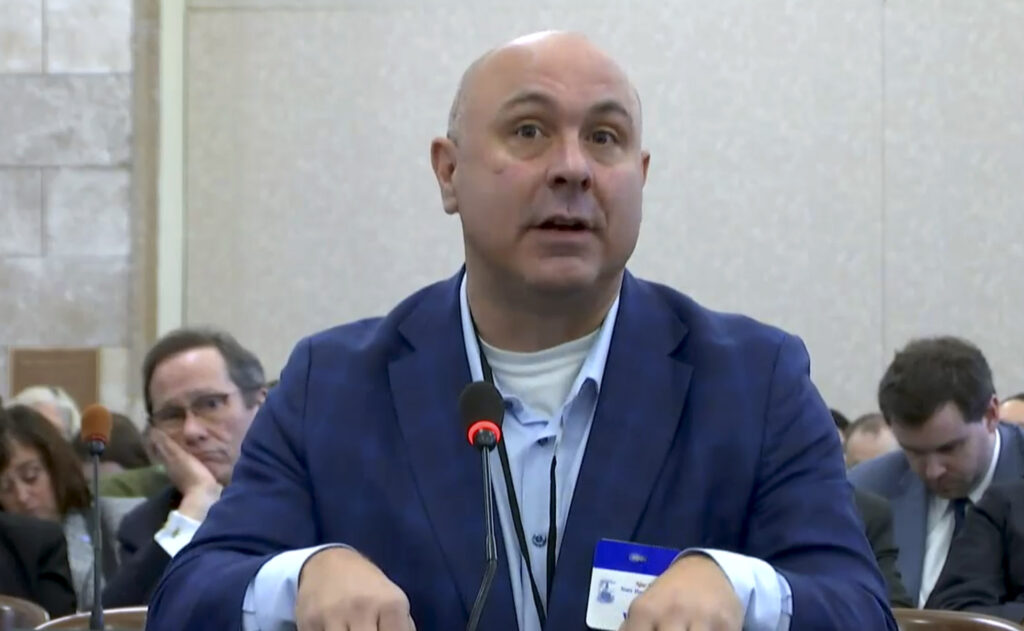
Landon Kendricks of Black & Veatch, one of the consulting engineers, testified that he served as project director for the electrical “360-degree” reviews conducted at the direction of the New Jersey Infrastructure Bank (I-Bank) last year, including a completed assessment of the Trenton Water Works filtration plant and an additional review underway for the central pumping station that serves surrounding communities.
The Electrical 360-Degree Review, commissioned by the I-Bank and conducted in coordination with the New Jersey Department of Environmental Protection, documented widespread deterioration of critical electrical infrastructure, obsolete equipment, limited redundancy, and long-standing underinvestment in maintenance — conditions that increase the risk of system-wide failure.
That review process also included multiple models evaluated for TWW, ranging from the municipal status quo to a municipal utilities authority, special-purpose entities, and other regional structures.
Kevin Drennan, a specialist representing American Public Infrastructure, testified in support of the bill in both hearings, describing the Citizens Fund Act as a framework that would allow public entities to use “assets-in-kind” — such as water systems — to support public benefit plans while maintaining public ownership. He emphasized that the bill does not require any municipality to participate and does not itself transfer Trenton Water Works.
The experts stressed that their work was conducted on behalf of the New Jersey Infrastructure Bank, in coordination with NJDEP, and that they were not representing Trenton Water Works or any private utility operator. Black & Veatch, which authored the Electrical 360 review cited repeatedly by lawmakers, was engaged to evaluate operational and infrastructure risks rather than to advocate for a specific ownership outcome.
Support from suburban mayors
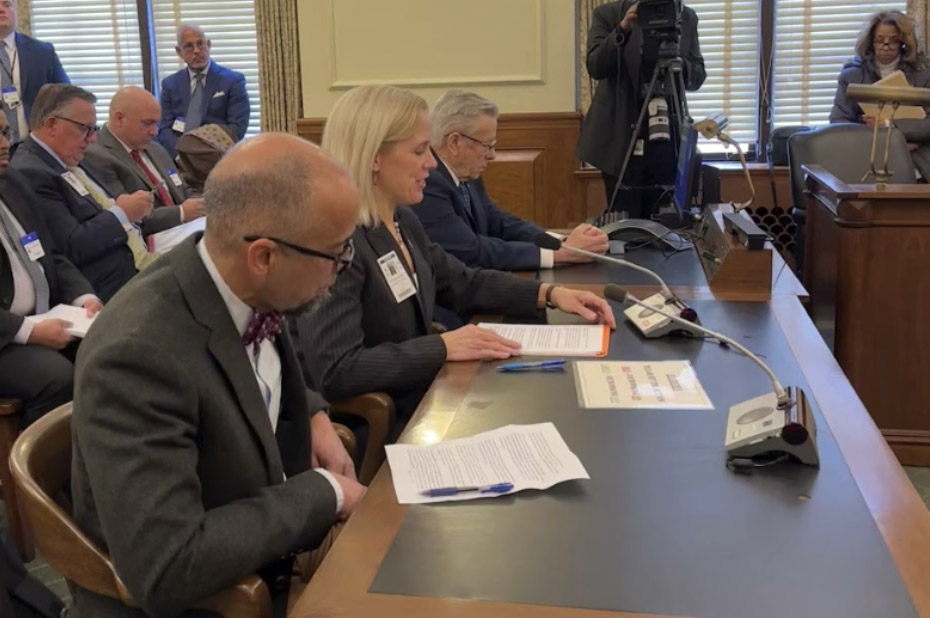
Local officials from municipalities served by Trenton Water Works voiced strong support during the Assembly Telecommunications and Utilities hearing.
Hopewell Township Committee member Courtney Peters-Manning told lawmakers that repeated failures at TWW have eroded public confidence and highlighted the need for structural reform. She argued that suburban customers make up a substantial portion of the system’s user base but lack representation in governance decisions, saying that cooperation requires representation.
Peters-Manning described the Citizens Fund Act as a first step that would create a pathway toward a regional utility model, not an immediate restructuring.
Ewing Township Mayor Bert Steinmann also testified in favor of the bill, emphasizing that Ewing is 100% reliant on Trenton Water Works and has no alternative source of water. After decades of deferred maintenance and unresolved infrastructure problems, Steinmann said Ewing residents need assurance that long-delayed repairs will finally move forward, regardless of the governance model ultimately chosen.
Lawrence and Hamilton officials were also cited as supporting the legislation, with Hamilton Mayor Jeff Martin noted for the record as favoring the bill without testifying.
Opposition from Trenton’s elected leadership
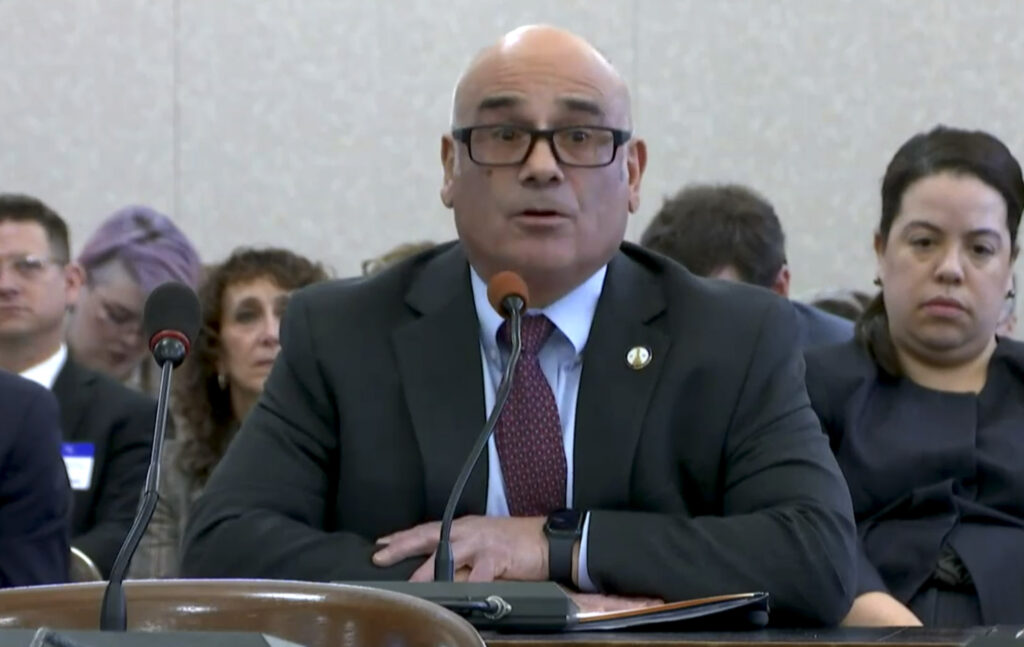
Opposition at the Senate hearing came from elected officials representing the City of Trenton, which owns and operates Trenton Water Works.
Trenton Mayor Reed Gusciora testified against the bill, warning that transferring a core municipal asset into a new state-created structure tied to pension funding could weaken local accountability and introduce financial risks that are not yet fully understood. He urged lawmakers to focus on direct investment, staffing, and infrastructure improvements rather than restructuring governance through what he characterized as an uncertain financial mechanism.
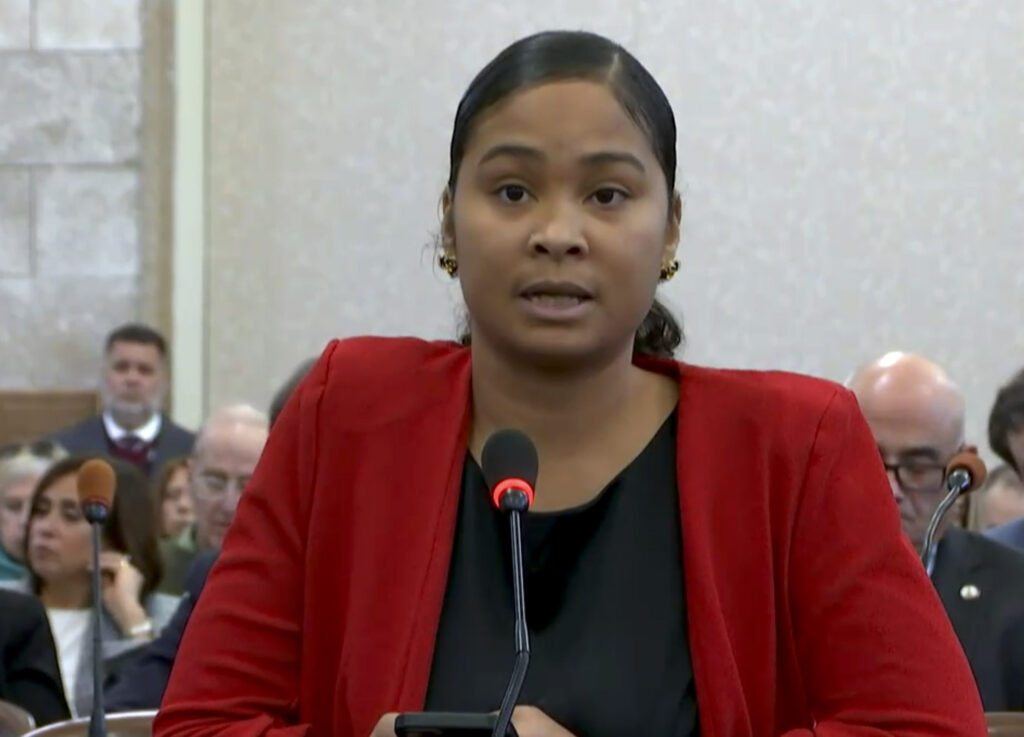
Trenton City Councilwoman Jasi Mikae Edwards also spoke against the legislation, raising concerns about whether the Citizens Fund model would truly address the underlying operational challenges at Trenton Water Works. Edwards questioned whether the proposal would move decision-making farther away from residents most directly affected by service disruptions and rate increases, rather than strengthening accountability within the system.
Their testimony underscored ongoing tension between Trenton officials and suburban customers over how responsibility, control, and costs should be shared.
Senate skepticism and ‘creative solution’ framing
During the Senate hearing, Sen. Declan O’Scanlon pressed supporters on whether the bill’s pension-related mechanisms amount to little more than an accounting exercise, questioning how valuing a physical asset like a water system improves pension stability without generating new cash or reducing risk. O’Scanlon ultimately voted against advancing the bill.
Supporters countered that the legislation simply provides an optional tool — one that could be used if Trenton and surrounding municipalities agree — and does not dictate outcomes.
Sarlo acknowledged the concerns while defending the bill’s advancement, calling it a “creative solution” worthy of further exploration given the severity of Trenton Water Works’ documented problems and the lack of effective alternatives to date.
What does S-4875 actually do?
Despite being discussed largely in the context of Trenton Water Works, S-4875 — the Citizens Fund Act — does not itself transfer or restructure Trenton Water Works, nor does it mandate regionalization, privatization, or any immediate change in ownership.
Instead, the bill creates a new state-authorized framework that could be used if Trenton and surrounding municipalities choose to pursue a regional public utility model.
The Citizens Fund, explained
S-4875 establishes a state-authorized public trust, known as the Citizens Fund, designed to hold public assets — such as infrastructure systems — for the benefit of public pension and benefit plans.
Under the bill:
- Public entities, including municipalities, may voluntarily convey assets or partial ownership interests into the fund.
- Assets may include utilities, infrastructure, or other revenue-producing public property.
- The fund is structured as a public entity, not a private company, and is intended to remain separate from the state’s general budget.
Supporters describe the model as a way to leverage the long-term value of public assets to support pension systems while keeping those assets in public-benefit ownership.
How this could apply to Trenton Water Works
In the case of Trenton Water Works, the bill would allow — but not require — the City of Trenton to:
- Place the water system into the Citizens Fund, after an independent valuation
- Receive compensation for the asset
- Use the fund as a vehicle to help establish a regional, publicly owned utility structure
The regional model discussed in legislative hearings would include:
- Shared governance among Trenton and its customer municipalities
- Professionalized management
- Oversight mechanisms tied to state investment and infrastructure standards
Importantly, no transfer can occur without Trenton’s consent, and no surrounding municipality is required to participate.
What the bill does not do
S-4875 does not:
- Automatically regionalize Trenton Water Works
- Privatize the water system
- Require municipalities to give up control of assets
- Set rates, approve capital projects, or dictate governance details
- Resolve existing infrastructure problems on its own
Those decisions would require separate agreements, approvals, and future actions by Trenton, customer municipalities, and the state.
Why pensions are part of the bill
A central feature of the Citizens Fund is its connection to public pension funding.
Rather than relying solely on cash contributions, the fund allows certain public assets to be treated as “special assets”supporting pension systems. Supporters argue this provides long-term stability and flexibility.
Critics, however, have questioned whether valuing physical infrastructure in this way meaningfully improves pension security or simply shifts financial risk — a concern raised directly during Senate committee questioning.
Why lawmakers call it a “creative solution”
Legislative leaders have described S-4875 as a “creative solution” because it:
- Attempts to address water system governance and pension pressures simultaneously
- Preserves public ownership while offering an alternative to privatization
- Creates a framework rather than imposing a single outcome
Whether that framework becomes a viable path forward for Trenton Water Works — or remains an unused option — depends on decisions that would come after the bill, not from the bill itself.
With the Senate committee vote, S-4875 now moves forward in the legislative process alongside its Assembly counterpart. The amendments adopted Thursday were not debated in detail during the hearing, and lawmakers indicated further discussion is likely as the bill advances.